

Starmer Warns Against A Leadership Challenge As Burnham Closes In On Westminster Return
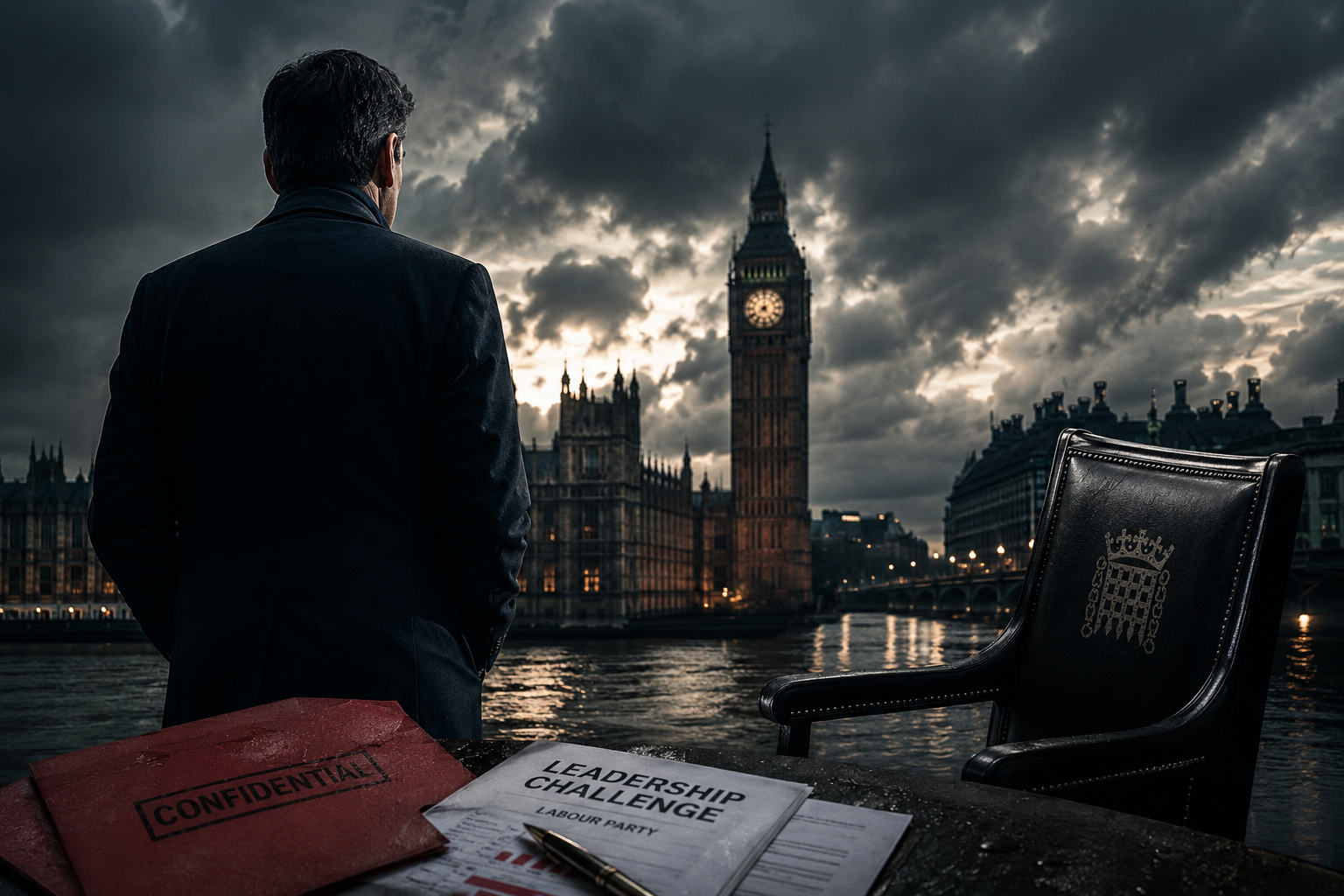
Starmer Warns Against A Leadership Challenge As Burnham Closes In On Westminster Return
A Single Constituency Has Suddenly Become The Centre Of British Power
Why Makerfield Is Critical
Most by-elections have little impact beyond the constituency involved.
Makerfield is different.
What should have been a straightforward contest to replace a departing MP has become one of the most politically significant votes Britain has seen in years. The reason is simple: Andy Burnham is not merely trying to win a parliamentary seat. He is trying to return to Westminster at a moment when many Labour MPs, activists and voters are openly questioning whether Keir Starmer should remain leader.
The result is that Makerfield has become far more than a local election. It has become a referendum on Labour's future.
Starmer Knows Exactly What Is At Stake
The Prime Minister has spent recent days publicly warning against any leadership challenge and insisting he would fight to remain Labour leader if challenged. He has also described Burnham as a major asset to the party and indicated he would welcome him into government.
That offer has been interpreted by many observers as an attempt to neutralise a growing political threat.
Burnham's allies have reportedly shown little enthusiasm for the idea of him entering Starmer's government. Instead, the perception inside Labour is increasingly that Burnham represents an alternative future for the party rather than a supporting figure within the current administration.
Starmer's problem is not simply Burnham himself.
It is what Burnham represents.
The Burnham Appeal
For years Andy Burnham has occupied a unique position in British politics.
Unlike many Westminster politicians, he has spent recent years building a profile outside Parliament as Mayor of Greater Manchester. During that time he developed a reputation as someone willing to challenge central government, particularly during the Covid era, while cultivating an image as a politician closely connected to working-class northern voters.
That matters because Labour's biggest strategic challenge is reconnecting with voters who feel ignored by Westminster politics.
Burnham's campaign has leaned heavily into this theme. He has repeatedly argued that communities outside London need a stronger voice and that politics must become more focused on affordability, jobs, economic security and regional investment.
Whether voters agree with him or not, the message is clear.
He is presenting himself as a different kind of Labour leader.
A Leadership Contest That Has Already Begun
Officially, there is no Labour leadership election.
In reality, many observers believe the contest has already started.
Burnham has publicly confirmed that if a leadership race were triggered after a Makerfield victory, he would seek to enter it. Meanwhile, other senior figures have openly discussed leadership scenarios and succession plans.
That is extraordinary.
Prime ministers are normally challenged by anonymous briefings and private plotting.
What is happening now is increasingly public.
The conversation is no longer whether Starmer faces pressure.
The conversation is whether that pressure becomes unstoppable.
Labour leadership rules mean a formal contest would still require specific parliamentary support or a resignation. However, politics often moves faster than formal rules. Once MPs begin to believe a leader cannot win the next election, loyalty can disappear remarkably quickly.
The Real Danger For Starmer
The greatest threat facing Starmer may not be Burnham himself.
It may be perception.
Politics is often driven by momentum rather than mathematics.
If Burnham wins convincingly, many Labour MPs could view the result as evidence that a different political style resonates more strongly with voters. If Burnham outperforms expectations while Starmer remains unpopular, pressure for change could accelerate dramatically.
Conversely, a poor Burnham performance would weaken the argument that he represents Labour's future.
That is why the stakes are so high.
Both men effectively have political capital invested in the outcome.
For Burnham, victory strengthens his route to national leadership.
For Starmer, it risks creating a rival with both a parliamentary platform and growing legitimacy.
Reform UK Is Changing The Entire Equation
There is another factor making the contest even more dangerous for Labour.
Reform UK.
The rise of Reform has transformed the political landscape across many traditionally Labour areas. Makerfield is no exception. Reform has built significant support in parts of the constituency and has forced Labour to defend territory that would once have been considered safe.
That pressure matters because it amplifies every internal Labour disagreement.
When a governing party is comfortably ahead, leadership tensions can remain hidden.
When an insurgent challenger is gaining ground, every disagreement becomes a potential crisis.
Many Labour MPs fear that continued internal conflict simply strengthens Reform's position.
Others believe Labour needs a new leader precisely because Reform's rise demonstrates current strategies are failing.
That disagreement sits at the heart of the current crisis.
The Bigger Story Behind Makerfield
The deeper significance of Makerfield is not really about one parliamentary seat.
It is about a growing argument over what Labour should be.
One side believes stability is the priority. They argue governments need time, difficult decisions are unavoidable, and leadership turmoil would damage the country.
The other side believes Labour risks drifting away from the voters who delivered power in the first place. They see Burnham as someone capable of reconnecting the party with communities that increasingly feel politically homeless.
That debate will not disappear after the votes are counted.
In many ways, Makerfield is simply the first public battlefield in a much larger struggle.
Whatever happens, the result is likely to shape political calculations across Westminster for months.
The constituency may contain fewer than 80,000 voters, but the consequences could reach all the way to Downing Street. If Burnham wins strongly, Labour's leadership question becomes harder to suppress. If Starmer survives this moment, he buys himself valuable time. Either way, the vote is no longer just about Makerfield. It is about who leads Labour into the next phase of British politics.
