Starmer Will Face Huge Pressure at Prime Minister’s Questions: Is This the Beginning of the End?
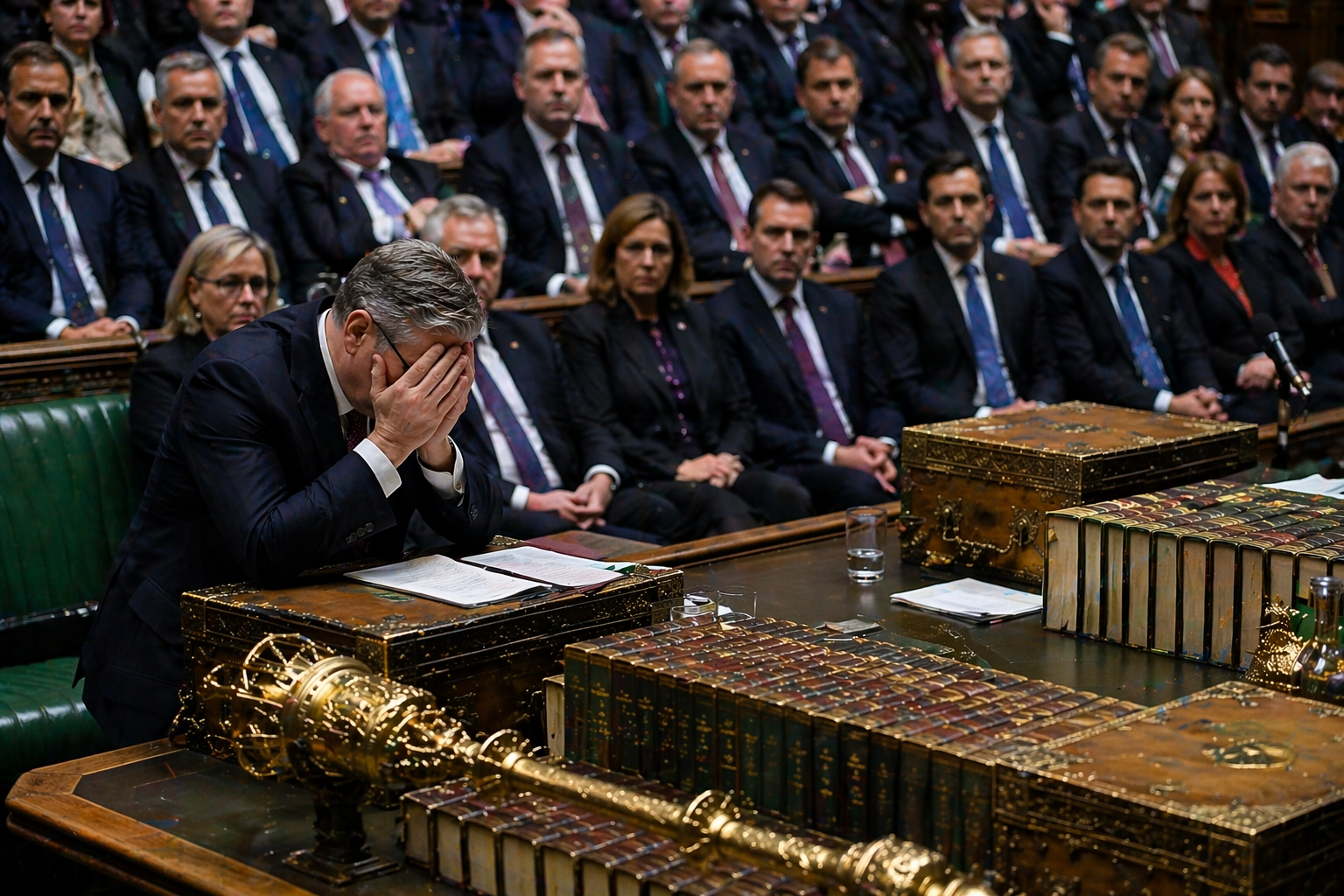
Pressure Mounts: Starmer Heads Into High-Stakes PMQs Amid Crisis
Inside Starmer’s Most Vulnerable PMQs Yet
The weekly Commons ritual has become something far more dangerous: a pressure test on a prime minister already fighting on multiple fronts.
Yes—Keir Starmer is scheduled to be at Prime Minister’s Questions today.
Parliament’s official schedule confirms PMQs are taking place at midday, with the Prime Minister listed to answer questions.
However, attendance is not the main focus.
The real story is what he’s walking into.
This is not a typical PMQs session. It is a convergence point—scandal, internal pressure, weak answers, and a growing perception problem—playing out live in front of the country.
The Atmosphere Has Shifted: PMQs Is No Longer Routine
PMQs are supposed to be theater. Predictable. Managed.
It no longer feels like that.
Recent sessions have already shown cracks:
Starmer has been repeatedly criticised for dodging direct questions
The Speaker has intervened publicly—multiple times
Opposition attacks are landing not just politically, but structurally
That last point matters.
When criticism comes from across the chamber—including figures linked to your policy framework—it stops being partisan noise and starts looking like credibility erosion.
Ranked: The Most Likely Lines of Attack Today
1) The Mandelson Scandal (Highest Probability, Highest Damage)
This is the center of gravity.
The controversy around the appointment of Peter Mandelson—particularly around vetting and what the prime minister knew—has already triggered the following:
Extended questioning in the Commons
Calls for resignation
Internal Labour unease
The attack line is simple and brutal:
Did Starmer mislead or lose control?
Either answer is damaging.
2) “He Doesn’t Answer Questions” (Narrative Entrenchment Risk)
This issue has quietly become one of the most dangerous themes.
Opponents are no longer just challenging policy—they are attacking process and credibility:
Repeated accusations he avoids direct answers
Public rebukes from the Speaker
Growing frustration across MPs
Once this narrative sticks, every answer becomes suspect—whether it’s strong or not.
3) Defence Spending & National Security (Cross-Party Pressure)
This is where things get uncomfortable.
Criticism is not just coming from opposition figures but from voices tied to defense strategy itself.
Key pressure points:
Lack of clarity on defence investment plans
Accusations of delay and complacency
Wider geopolitical tension feeding urgency
This argument is harder to deflect because it’s not ideological—it’s framed as competence.
4) Internal Labour Instability (Low Frequency, High Impact)
This issue won’t dominate PMQs—but it will hang in the air.
Reports of internal positioning and leadership speculation create a subtext:
Is Starmer fully in control of his party?
Even if not raised directly, it shapes how every answer is perceived.
5) Tone, Authority, and Control (Subtle but Critical)
PMQs are partly performance.
Recent sessions suggest:
Frustration creeping in
Visible tension with the Speaker
Occasional loss of composure
That matters more than policy detail.
Because leadership perception is often decided in moments, not arguments.
Could This Be His Last PMQs?
Short answer: unlikely—but no longer unthinkable.
Here’s the reality:
There is pressure—but not yet a clear successor
Internal dissent exists—but it is not fully consolidated
Timing matters—elections and external crises reduce appetite for immediate change
Even senior figures have suggested he may “stumble on” without an obvious alternative.
So, he will probably have more PMQs.
But it could be something more important:
The moment the narrative hardens.
What Media Misses
The focus is on individual clashes—questions, answers, moments.
That misses the deeper shift.
This is not about a bad PMQ.
It’s about cumulative pressure:
Weak answers becoming a pattern
Scrutiny turning into credibility questions
Political attacks aligning with internal doubts
When those layers stack, leadership doesn’t collapse overnight.
It erodes.
What Happens Next
Three paths from here:
Most Likely
Starmer absorbs the pressure, survives PMQs, and continues—damaged but stable.
Most Dangerous
A poor performance reinforces the narrative of weakness, accelerating internal maneuvering.
Most Underestimated
A single sharp exchange—clean, decisive, controlled—resets momentum and stabilizes perception.
PMQs is one of the few places that can still do that.
The Real Stakes
This is not about winning the chamber.
It’s about control.
Control of narrative.
Control of party.
Control of perception.
Because once those slip, PMQs stop being scrutiny—and become a countdown.
