

The Labour Leadership Rulebook That Could Decide Starmer’s Fate
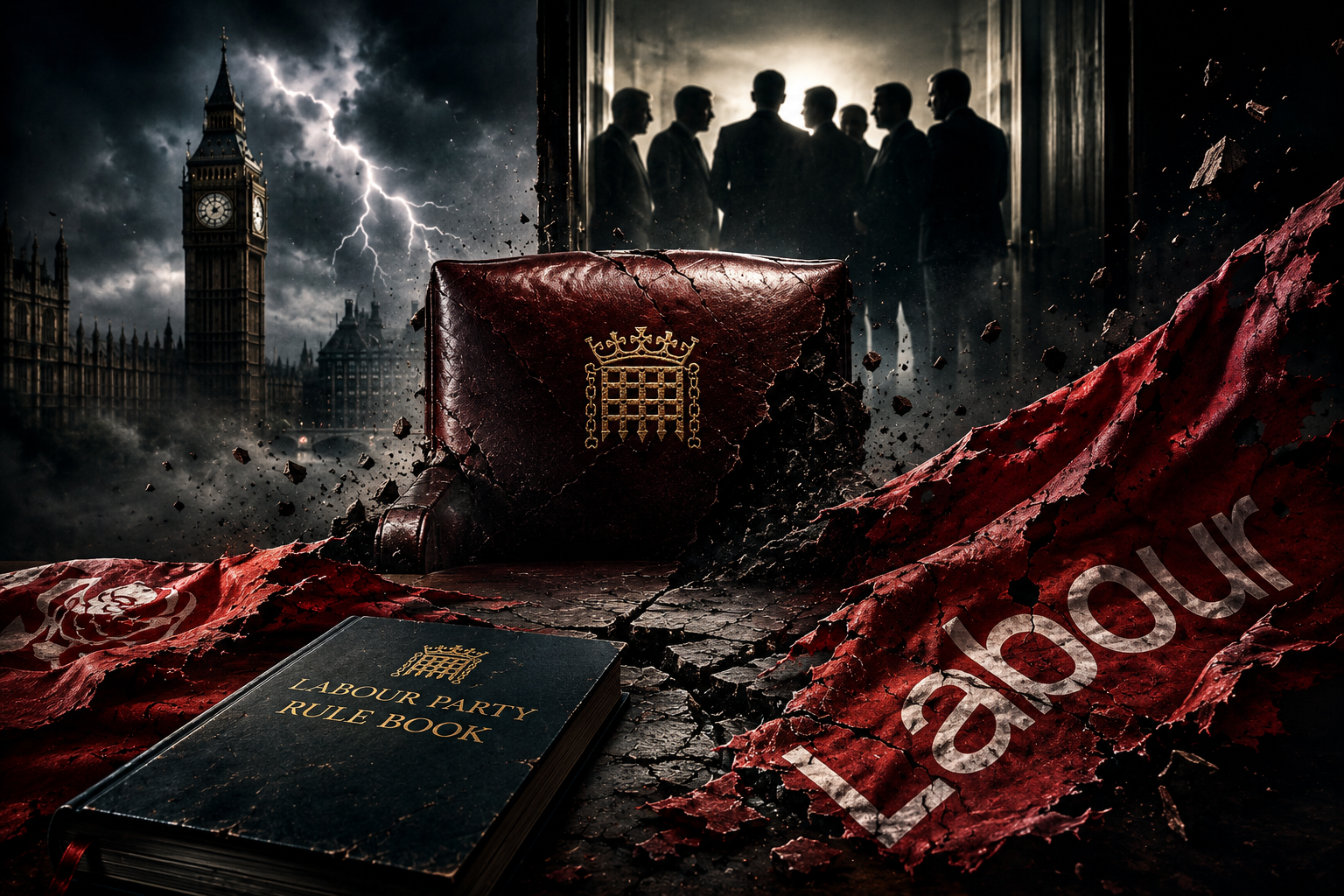
The Hidden Labour Rules That Could Shape Britain’s Next Prime Minister
The Fight For Labour’s Future Is Now A Procedural Trap
Keir Starmer’s leadership crisis is no longer just about mood, polling, speeches or internal frustration. It has reached the point where the practical question matters more than the emotional one: how would Labour actually choose a new leader if the pressure around Starmer finally breaks?
That matters because political crises often look chaotic from the outside, but parties are governed by rules. Labour cannot simply crown a new leader because MPs are nervous, activists are angry or a rival looks suddenly more powerful. The party has a formal process, and that process decides who can stand, who gets on the ballot, who votes, and how quickly the contest can move.
This is why the Starmer crisis is becoming more dangerous. Once a leadership row moves from speculation into procedure, the story changes. It stops being only about whether Labour MPs want change and starts becoming about whether they have the numbers, confidence and timing to force it.
There Are Only Two Real Ways A Contest Starts
A Labour leadership contest can begin if the leadership becomes vacant, usually through resignation, or if a formal challenge to the sitting leader is successfully mounted. That is the first crucial point. Labour MPs can grumble, brief, organise and threaten, but the formal machinery needs either a vacancy or a qualifying challenge.
If Starmer resigns as Labour leader, the vacancy route opens. If he refuses to resign, opponents need to use the challenge route. That means a challenger must secure nominations from at least 20% of Labour MPs before the contest can properly ignite.
That threshold is the first wall any challenger has to climb. It is not enough to be popular on television, useful to factional organisers or attractive to nervous backbenchers. The challenger needs a serious block of parliamentary support willing to put their names to a formal challenge.
This is where the crisis becomes brutal. Private discontent is politically meaningful, but public nomination is a different act. It turns opinion into rebellion.
Why Andy Burnham’s Return To Parliament Matters
Andy Burnham’s return to Parliament matters because Labour leadership candidates must be MPs. Until that barrier fell, Burnham could be a symbol, a pressure point and a possible alternative future, but he was not structurally placed to enter the race in the same way as a sitting MP.
The important point is not that Burnham automatically becomes Labour leader. He does not. The important point is that one of the obvious procedural objections to him has weakened. Labour’s internal argument can now move from “could he even stand?” to “can he get the numbers?”
That is why the Starmer crisis now feels different from an ordinary leadership wobble. A serious rival inside Parliament changes the psychology of the party. MPs who were previously discussing dissatisfaction in abstract terms can now imagine a named alternative walking through the same lobbies, speaking to the same colleagues and testing the same nomination arithmetic.
The Incumbent Does Not Start From Zero
If a sitting Labour leader is challenged successfully, the incumbent is automatically on the ballot. That detail matters because it prevents a challenger from using the nomination stage simply to exclude the existing leader.
That creates a very different contest from a clean succession. A resignation produces an open race. A challenge produces a direct confrontation between the leader and the insurgent candidate or candidates. The political cost of that is high because it forces Labour to stage its internal argument in public.
For a governing party, that is not just internal drama. It is a question of national authority. A Labour leader who is also Prime Minister is not merely fighting for a party office; he is fighting for control of the government.
The NEC Controls The Clock
Labour’s National Executive Committee plays a central role because it sets the exact timetable and procedures for the election. The rulebook gives the framework, but the NEC controls much of the practical calendar.
This is where process becomes power. A fast contest can create momentum for a frontrunner. A slower contest can give rivals time to organise, trade endorsements and expose weaknesses. In a crisis, the timetable is never just administrative. It shapes the battlefield.
If Labour is in government and the party leadership becomes vacant, the Cabinet, in consultation with the NEC, appoints one of its members to serve as party leader until a ballot can be organised.
That does not mean the public directly chooses the replacement Prime Minister in the party contest. It means Labour’s internal process can determine who leads the governing party and therefore who may be able to command confidence as Prime Minister.
Members Still Matter, But MPs Guard The Gate
Labour’s leadership system is not a simple MPs-only coronation. Once candidates qualify, eligible party members and affiliated supporters vote using a preferential ballot.
However, MPs guard the gate. The nomination threshold means the parliamentary party can decide who gets a serious route into the contest. A candidate with grassroots energy but insufficient MP support may never reach the membership ballot.
That dual structure is what makes Labour leadership elections so politically tense. The parliamentary party wants electability, discipline and control. The membership often wants identity, conviction and direction. The leader has to survive both worlds.
This is also why the crisis has continuous search interest. People are not only asking whether Starmer is in trouble. They are asking who actually has the power to replace him and whether MPs can force the issue.
The Public Drama Is Really About Legitimacy
The most explosive part of a governing-party leadership contest is not the ballot mechanics. It is legitimacy.
If Labour changes leader while in office, Britain could get a new Prime Minister because of an internal party process rather than a general election.
That is constitutionally normal in the UK system. Prime Ministers are not directly elected by presidential ballot. They hold office because they can command confidence in the House of Commons.
Politically, however, that distinction can still become toxic when voters feel they are being handed another leader through internal party management.
This is why Labour’s rulebook matters beyond Labour. It becomes the mechanism through which national power may change hands.
The Next Question Is Not Who Wants It, But Who Can Count
Leadership crises create noise. Names circulate. Allies brief. Rivals test the air. Supporters talk about momentum. Opponents talk about inevitability.
But in the end, Labour’s system strips the drama back to arithmetic.
A challenger needs MPs. A vacancy needs a timetable. Candidates need nominations. Members and affiliates need ballots. The NEC needs to manage the process. Every part of the machine has its own incentive and its own pressure point.
That is why the Starmer crisis now has a more serious shape. It is no longer only a question of whether Labour is unhappy. It is whether Labour’s unhappiness can organise itself through the formal machinery of power.
If Starmer survives, it will be because opponents cannot turn mood into mechanism. If he falls, it will be because Labour’s private panic finally finds the numbers, process and timing to become a transfer of power. The rulebook is not a footnote to the crisis. It is the battlefield.
