

The Labour Meltdown That Has Turned Starmer Into The Story
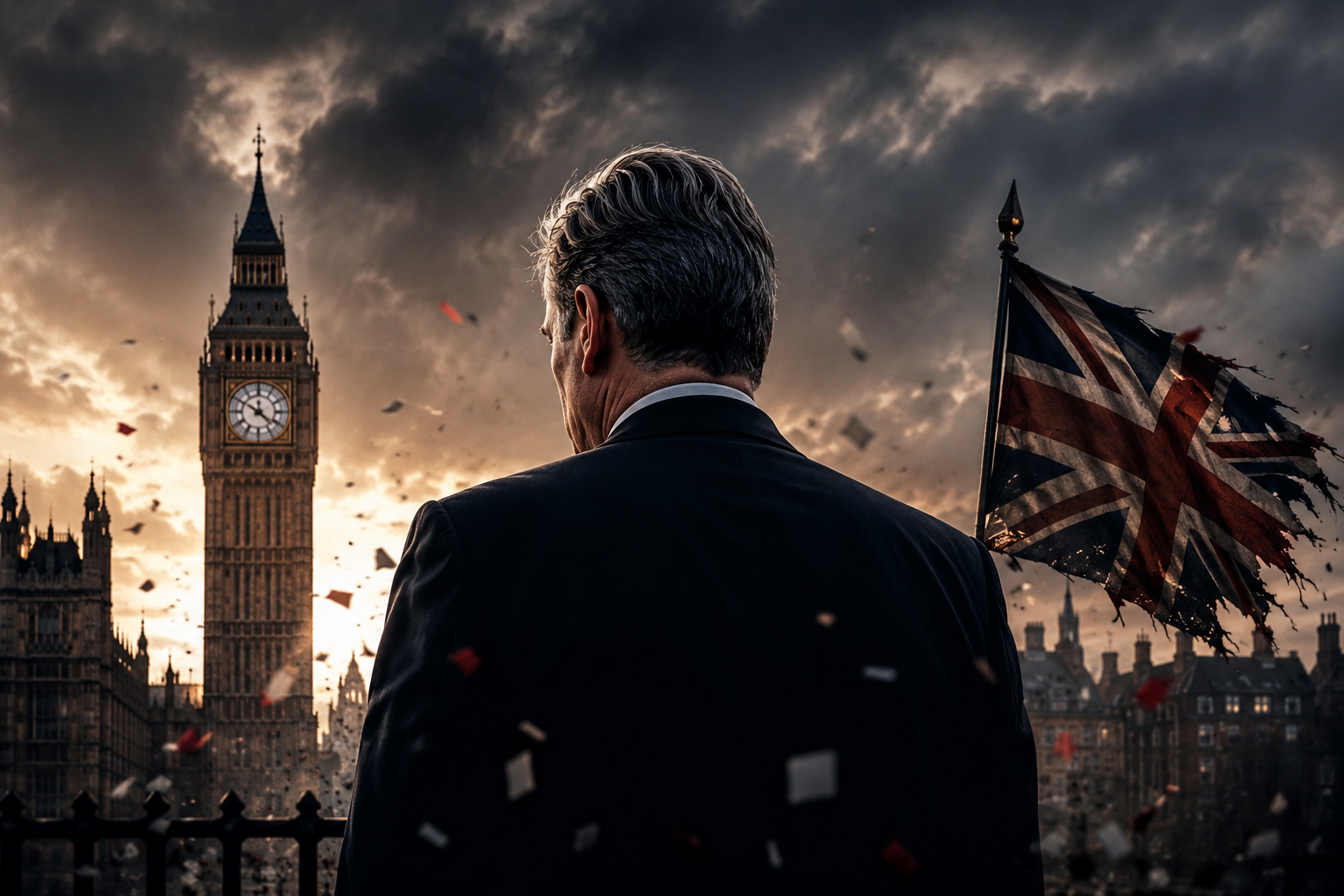
Why Labour’s Local Election Disaster Has Suddenly Put Starmer On Trial
The Local Election Shock That Left Labour Asking The Question It Feared Most
The Result Did Not Remove Starmer — But It Did Something More Dangerous
Keir Starmer has not been forced out. Not yet. But after Labour’s bruising local election performance, the most dangerous question in Westminster is no longer whether voters are furious. It is whether Labour MPs now believe Starmer himself has become the obstacle between the party and political survival.
The results landed with the force of a warning flare. Labour suffered heavy council losses, Reform UK surged into former Labour territory, and senior voices on the Labour side began openly questioning whether the prime minister could still lead the party into the next general election. Starmer’s answer was immediate and defiant: he said he was “not going to walk away” and accepted responsibility for a painful night. But that sentence does not end the crisis. It defines it.
The Anti-Starmer Mood Has Become The Main Event
Local elections usually do not remove a prime minister by themselves. They wound, expose and accelerate. This one has done all three. Labour’s problem is not simply that it lost councillors; it is where and how those losses happened. The party took blows in areas that matter symbolically: red wall territory, working-class councils and places. Labour had once been treated as emotional property rather than competitive ground. Reform UK’s gains cut directly into that story, turning the election into a referendum on whether Labour is losing contact with voters it once claimed to understand.
That is why the pressure on Starmer feels different from ordinary midterm turbulence. The argument against him is not only ideological. It is practical. If Labour cannot hold enough of its local base while in government, nervous MPs will start asking a brutally simple question: is the leader still an asset, or has he become a drag on the brand?
For Taylor Tailored readers following the wider collapse of two-party certainty, this episode connects directly to the deeper story of Britain’s anti-establishment political surge. Voters are not merely switching between familiar parties. They are increasingly using elections to punish the whole political class.
The Detail Labour Cannot Spin Away
The sharpest danger for Starmer is that Labour did not neatly contain its losses. Reports from the count showed Labour losing control of councils including Tameside, Redditch and Tamworth, while Reform made major advances and won hundreds of council seats. In Hartlepool, Reform won all 12 contested seats, a result with obvious symbolic weight because Hartlepool has already haunted Starmer’s leadership once before.
That matters because political panic rarely begins with one number. It begins with a pattern. A council here, a heartland there, a mayoralty slipping away, a challenger party gaining where it should not, and suddenly the leadership story changes shape. The question stops being "Was the result a bad night?” and becomes "Is this what the next general election could feel like if nothing changes?”
Starmer’s supporters will argue that governments often suffer in local elections and recover before the national contest. That is true. But recovery requires a story voters can believe. Currently, Labour’s story is being squeezed from multiple directions: Reform on the populist right, Greens and Liberal Democrats in progressive and urban territory, and a Conservative Party still trying to prove it can recover from its collapse. The danger is not one opponent. It is fragmentation.
Starmer’s Defiance Buys Time, Not Safety
Starmer’s public position is clear. He says he will continue, fight on and deliver the change he promised. That matters because leadership challenges do not usually succeed without a sense that the incumbent has lost institutional control. For now, key cabinet figures have urged unity and stability, giving Starmer a protective wall around his position.
But a protective wall is not the same as a secure foundation. The prime minister can survive the first wave of anger but still suffer damage from the second. The immediate danger does not involve a dramatic resignation speech tomorrow morning. It is a slow internal calculation: MPs looking at their majorities, local activists hearing voters on the doorstep, donors losing confidence, advisers demanding a reset, and potential successors waiting for the moment when silence becomes permission.
That is why “will he go?” is the wrong question if it means “will he resign instantly?” The sharper question is whether this result has opened a leadership countdown. On the evidence available now, Starmer is unlikely to be forced out immediately. But he is now under much heavier pressure to prove that Labour’s collapse in local contests is a warning he can answer, not the first act of a wider unravelling.
Reform Has Turned Labour’s Weakness Into A Weapon
Reform UK’s performance is the reason this result feels so politically electric. A normal Labour defeat to Conservatives or Liberal Democrats would hurt. A Labour defeat in former Labour territory to Reform changes the emotional meaning of the night. It suggests that the anger is not just administrative. It is cultural, economic and anti-establishment.
Nigel Farage framed the results as a historic shift, and even if that language is politically loaded, the direction of travel is difficult for Labour to dismiss. Reform made advances in areas that should terrify both Labour and the Conservatives, including councils in England and parts of outer London.
For Labour, the nightmare is not just that Reform wins protest votes. It is that reform begins to look like a permanent vehicle for voters who feel ignored, patronised or priced out of mainstream politics. Once that happens, Labour cannot solve the problem with messaging alone. It has to convince voters that government can materially improve their lives. That is much harder than a slogan, and much slower than an election cycle.
Readers tracking the rise of populist politics may also want to connect this with the wider UK political realignment after Brexit, because the forces behind Reform’s rise did not appear overnight. They have been building through distrust, migration politics, cost-of-living pressure, cultural resentment and a deepening sense that established parties speak a different language from the public.
The Labour Fear Is Bigger Than One Bad Night
Every political party has a public script after defeat. Leaders say they are listening. Ministers say the message has been heard. MPs insist the government must go further and faster. None of that is meaningless, but voters have heard it before.
The deeper fear inside Labour is that Starmer’s political identity may be turning brittle. He was sold as competence after chaos, seriousness after drama, and order after years of instability. That offer worked brilliantly in opposition. But in government, competence has to be felt. It has to show up in bills, services, wages, housing, public safety, waiting lists and confidence. If voters experience the government as slow, distant or technocratic, Starmer’s greatest strength can curdle into his greatest weakness.
That is where the anti-Starmer pressure becomes dangerous. His critics do not need to prove that he is hated everywhere. They only need to make the party believe he cannot reconnect emotionally with the voters Labour needs. Once a leader is framed as the problem, every bad poll, by-election, council loss and awkward interview becomes evidence.
Could Starmer Actually Be Removed?
The immediate answer is:‘possible, but not the most likely short-term outcome based on what is publicly known now’’ Starmer has said he will not quit, and cabinet support gives him room to attempt a reset. Leadership collapses usually require more than a bad local election night. They require sustained polling panic, organised parliamentary rebellion, credible successor momentum and a belief among MPs that doing nothing is more dangerous than moving.
But the risk has clearly increased. Open criticism from Labour figures, especially after symbolic losses, changes the atmosphere. It tells ambitious MPs that the subject is no longer taboo. It tells journalists where to look. It tells activists that discontent has permission to travel upwards. It tells the public that even Labour people are not fully convinced by Labour’s direction.
That is how leadership crises often begin: not with a single fatal blow, but with a new permission structure. One day a leader is safe because nobody serious is saying the quiet part aloud. The next day everyone is discussing what was previously unsayable.
The Hidden Problem Is Trust
The most damaging version of this crisis is not that voters temporarily punished Labour. It is that voters may have stopped believing Labour understands the country’s mood. That is a harder wound to close.
Starmer’s challenge is therefore not just electoral arithmetic. It is emotional repair. He has to persuade frustrated voters that Labour is not merely managing decline in a calmer voice. He has to show visible delivery quickly enough to silence internal panic, while avoiding desperate moves that make the government look unstable. That balance is brutally difficult.
If he shifts too little, critics will say he has learned nothing. If he shifts too hard, critics will say he is panicking. If he attacks Reform too aggressively, he risks amplifying them. If he ignores Reform, he risks looking detached from the revolt happening in front of him. That is the trap now closing around Labour.
The Verdict Labour Will Hate Hearing
Starmer is not gone. But he is weaker. Labour has not entered an automatic leadership contest. But it has entered a more dangerous phase: the phase where every disappointing result becomes a character judgement on the prime minister.
The local elections have handed Labour a warning it cannot safely dismiss as mid-term noise. Reform’s surge has exposed a rupture in Labour’s relationship with parts of its old base. The Greens and Liberal Democrats are applying pressure elsewhere. The Conservatives are not dead. The electorate is fragmented, volatile and increasingly willing to punish anyone who sounds too comfortable in power.
That is why this result matters. It did not end Starmer’s premiership in one night. It did something more politically corrosive: it made his survival a live question. For a prime minister who built his appeal on control, that may be the most dangerous loss of all.
