The UK Is Preparing The Entire Nation For War — Not Just The Military
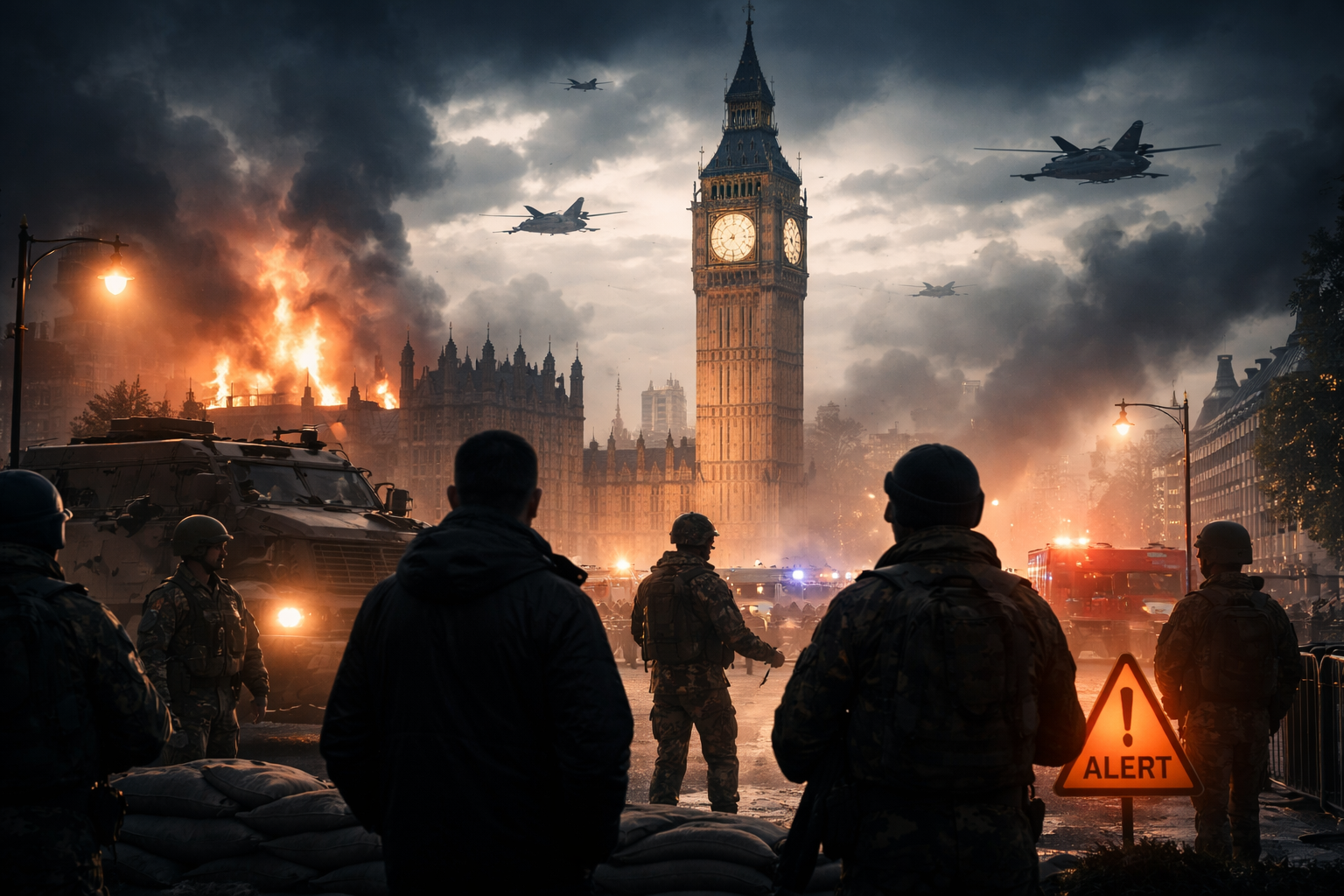
Britain’s New War Plan Signals A Shift From Defence To Survival
Britain Is Quietly Rewriting Its War Playbook—And This Time, The Public Is Part Of It
An entire nation is being drawn into defense planning—not through panic, but through a calculated shift in how modern war is expected to unfold.
The Shift That Changes Everything
For decades, war planning in the UK largely meant one thing: the military.
Now, it means everyone.
The British government is actively developing plans to prepare the entire country — its infrastructure, economy, institutions, and civilians — for the possibility of conflict.
This is not rhetorical. It is structural.
At the center of this shift is a simple but profound idea: modern war will not be confined to battlefields. It will be diffuse, prolonged, and deeply embedded within civilian life.
And Britain is adjusting accordingly.
The Return Of A Cold War Blueprint
One of the clearest signals of this change is the revival of a Cold War-era planning system: the “Government War Book.”
This was once the UK’s master manual for national survival—outlining how the state, industries, and citizens would function during wartime.
It is now being updated for a modern world of cyber attacks, infrastructure sabotage, and hybrid warfare.
That matters.
Because the original version assumed bombs.
The new version assumes something more complex — disruption.
Power grids. Supply chains. Communications. Financial systems. Public order.
In modern conflict, these are not secondary targets. They are the battlefield.
The Real Strategy: Whole-Of-Society War Readiness
This is where the shift becomes more serious.
The UK is now explicitly pursuing what policymakers call a “whole-of-society” approach to defense.
That phrase is doing a lot of work.
It means:
Businesses are part of national defense.
Universities contribute to security capability
Infrastructure is treated as strategic terrain
Civilians are no longer passive observers
This is not about militarizing daily life.
It is about acknowledging that modern threats don’t respect traditional boundaries.
Cyber attacks don’t hit soldiers.
They hit hospitals, banks, transport, and energy systems.
And that means the response cannot be purely military.
Why This Is Happening Now
This shift is not random. It is driven by three converging realities.
1. The Nature Of War Has Changed
Modern conflict is often undeclared.
It emerges through:
Cyber operations
Economic pressure
Disinformation campaigns
Infrastructure disruption
These "gray zone” tactics blur the line between peace and war—and they are already happening.
2. The Threat Environment Has Intensified
UK officials have pointed to rising geopolitical tensions — particularly involving Russia and other major powers — as a driving factor behind increased readiness efforts.
Hostile activity against the UK has already increased sharply, including intelligence operations and suspected infrastructure probing.
The concern is no longer hypothetical.
It is ongoing.
3. The UK Is Not Fully Ready
Even senior defense figures have acknowledged a gap between ambition and capability.
The armed forces are not currently prepared for a full-scale war scenario, with funding and modernization challenges cited as key constraints.
That gap forces a difficult conclusion:
If the military alone cannot guarantee resilience, the system around it must.
What Media Misses
What Media Misses
Most coverage frames this as military expansion.
That is not the core story.
The real story is this:
Britain is shifting from a defense model to a resilience model.
The difference is critical.
Defence tries to stop threats
Resilience assumes some threats will land—and focuses on absorbing and recovering from them
This is not about preparing for invasion in the traditional sense.
It is about preparing for disruption that could unfold slowly, unevenly, and without a clear starting point.
That is a far more complex problem.
What This Looks Like In Practice
The emerging approach touches almost every part of national life:
Strengthening critical infrastructure protection
Increasing domestic production capacity (especially defence and energy)
Expanding reserve and mobilisation frameworks
Enhancing coordination across government and industry
Encouraging public awareness of national security risks
Even areas like energy policy and supply chain resilience are now framed through a security lens.
That is a major conceptual shift.
What Happens Next
There are three likely trajectories from here.
The Most Likely Path
Gradual integration of resilience planning into everyday governance—largely invisible to the public but deeply embedded in systems.
The Most Dangerous Path
A major geopolitical escalation forces rapid implementation of these plans before they are fully ready.
The Most Underestimated Path
Public expectations shift.
People begin to see national security not as something distant but as something that directly affects their daily lives—from energy costs to digital security.
That psychological shift may be as significant as any policy.
The Deeper Meaning
This is not just about preparing for war.
It is about redefining what “security” means in the 21st century.
The UK is moving toward a model where:
War is not an event, but a condition
The frontline is not a place, but a system
The participants are not just soldiers, but society itself
That changes everything.
Because once a nation adopts that mindset, it doesn’t easily reverse.
The Final Reality
The most important takeaway is not that Britain expects war tomorrow.
It is that Britain no longer assumes peace is stable.
And when a country stops assuming stability, it starts preparing differently.
Quietly. Systematically. And at scale.
