

The UK “Major Toxic Incident” in Wolverhampton That’s Spreading Faster Than the Fire
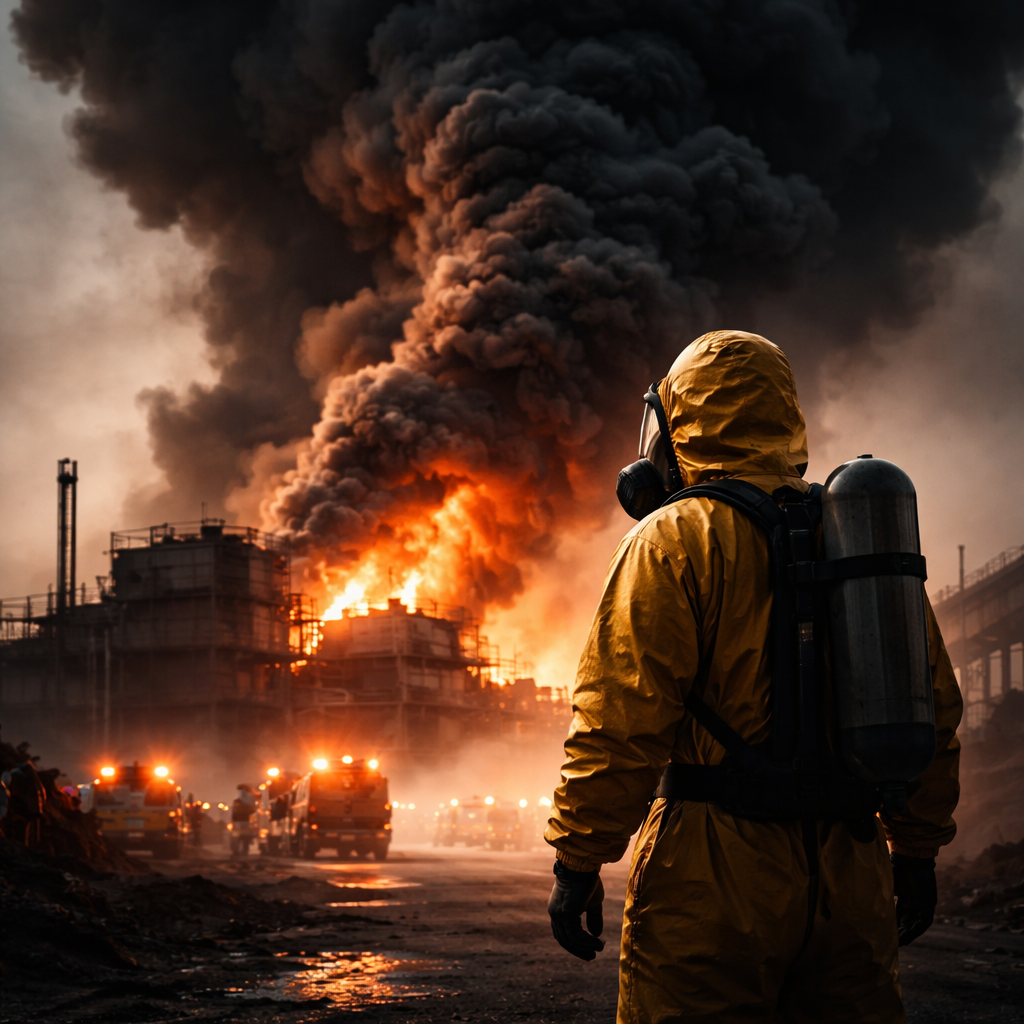
A Wolverhampton major toxic incident has triggered stay-indoors warnings. Here’s what’s confirmed, what “major incident” triggers, and what to do next.
A large factory fire in Wolverhampton has thrown out a heavy smoke plume and triggered urgent public warnings: avoid the area, stay indoors if you’re nearby, and shut doors and windows.
The immediate danger is not just the flames. It’s the exposure window: what gets into lungs and homes before the plume thins, the wind shifts, or the site is contained. And that makes this incident a public-health and governance test, not just a dramatic local blaze.
The story depends on whether responders can identify what’s in the smoke fast enough to give targeted, neighbourhood-level guidance before the exposure window closes.
Key Points
A major fire broke out at a unit on Sunbeam Street near Upper Villiers Street in Blakenhall, Wolverhampton on the morning of January 14, 2026, producing a large smoke plume and widespread disruption.
Residents in the affected area were advised to keep doors and windows closed and avoid the area while crews work through the day and overnight.
Fire crews scaled up resources through the morning, including multiple aerial platforms and support from Staffordshire, indicating a prolonged incident rather than a quick knockdown.
The most important unknown in the first 12–24 hours is what exactly is burning and what that means for smoke toxicity by time and location.
Operationally, “major incident” language in the UK typically signals special multi-agency arrangements, clearer command structures, and tighter public messaging—yet the public still needs plain-English, exposure-window advice.
The next hinge points are air monitoring updates, wind direction shifts, and decisions on reopening roads and any affected schools or services.
Background
The fire began in a factory unit area on Sunbeam Street, close to the junction with Upper Villiers Street, in the Blakenhall area of Wolverhampton. By late morning and early afternoon, responders had significantly increased resources on scene and were warning about the smoke’s potential to affect visibility and air quality.
In UK emergency response, “major incident” is a term of art. It is used when the consequences of an event require special arrangements by one or more responder agencies, beyond routine operations. In practice, that can mean a clearer command structure, better coordination across services, and a stronger push to standardise public guidance and data-sharing.
“Toxic incident” is not one single threshold with one single checklist. It is a description of risk: smoke and airborne byproducts that may irritate lungs, trigger asthma attacks, worsen heart conditions, and contaminate indoor spaces. The exact risk depends on what is burning, how hot it burns, and where the plume goes.
Analysis
This is local, but it exposes a national pattern: the public expects “one voice, one message,” while the system is built from multiple agencies with different legal duties and different risk tolerances.
In a fast-moving incident, two governance questions matter. First, who is the “single source of truth” for health guidance? Fire services lead on immediate safety, but health risk messaging can involve public health teams and wider resilience structures. Second, how quickly can those structures move from broad advice (“close windows”) to precise advice (“these streets, this timeframe, this risk group”) without overclaiming certainty.
Scenario A: the system stays in broad, precautionary mode for 24 hours. Signposts: repeated general “close doors/windows” guidance, limited neighbourhood-specific updates, and continued wide cordons.
Scenario B: messaging becomes location-specific as monitoring improves. Signposts: clear maps or street-level advisories, timed updates tied to wind direction, and explicit guidance for vulnerable groups.
Scenario C: trust becomes the story. Signposts: conflicting statements, delayed updates, or a visible gap between what residents report (smell, irritation) and what officials communicate.
Impact
The short-term economic cost curve is usually dominated by disruption: road closures, diverted traffic, lost hours for nearby businesses, and time spent by households managing the incident.
The medium-term cost curve is about cleanup and liability. Fires in mixed industrial settings can create waste streams that are expensive to handle, and even when no one is injured, businesses can face long downtime, insurance scrutiny, and reputational damage.
Scenario A: quick containment, limited wider impact. Signposts: roads reopen in staged steps, businesses resume, and official updates shift from response to cleanup within 24–48 hours.
Scenario B: prolonged operations with knock-on closures. Signposts: repeated warnings about overnight work, expanding cordons, and ongoing traffic disruption into the next day.
Scenario C: a compliance and enforcement arc. Signposts: early confirmation of what materials were involved, questions about storage practices, and rapid movement toward formal investigation milestones.
Fallout
Smoke is a uniquely destabilising hazard because it crosses boundaries. You can be “not at the site” and still feel it in your throat or see it in the sky. That creates a fast feedback loop: people seek reassurance, but reassurance must be earned with specifics.
The most important social dimension is unequal exposure. People with asthma, COPD, heart disease, and households with babies or elderly residents carry higher risk. People living in older housing with poor seals can also get higher indoor infiltration.
Scenario A: community reassurance holds. Signposts: consistent updates, visible progress on the fire ground, and simple guidance that matches what people experience.
Scenario B: anxiety escalates. Signposts: symptom clusters reported informally, widespread smell complaints beyond the immediate area, and rumors filling information gaps.
Security Implications
The key technical constraint in these incidents is not whether smoke is “bad.” It is whether responders can measure and communicate what kind of bad, where, and when.
Air monitoring matters, but so does how it is reported. In the first day, the public needs time-bounded advice: when to shut up the house, when to ventilate, and what symptoms should trigger medical advice.
There is also a resilience lesson: when information is scarce, social platforms become the default emergency broadcast system. That can help, but it can also amplify fear if official updates are slow or vague.
Scenario A: monitoring is minimal or not communicated. Signposts: few data-led updates, no clear explanation of what is being measured, and persistent uncertainty.
Scenario B: monitoring becomes actionable information. Signposts: regular updates tied to plume movement, clearer explanations in plain English, and explicit advice for vulnerable groups.
What Most Coverage Misses
The overlooked hinge is the “exposure window inside the home”. People assume shutting windows solves the risk. It reduces, but doesn't eliminate, the incident, especially if it lasts all day.
In prolonged smoke events, the risk becomes cumulative: how long the plume lingers, whether indoor air is recirculated, and whether people reopen windows too early because they feel hot, claustrophobic, or think the danger has passed. The next 12–24 hours hinge on timing: shut the house while the plume is active, then ventilate when guidance indicates the air has improved.
This is also where governance meets practicality. Broad warnings are easy to issue. The harder job is switching from “close windows” to “here is when it is safe to air out your home,” and doing that quickly enough to matter.
Why This Matters
In the short term (the next 24–72 hours), the most affected groups are people living or working near the plume path and anyone with respiratory or cardiovascular vulnerability. The key decisions are operational: containment progress, overnight firefighting strategy, and whether transport routes and any affected services can reopen safely.
In the longer term (months, not days), the questions shift to accountability and prevention: what was stored on site, whether fire safety controls were adequate, and whether inspection or enforcement action follows. If the incident becomes a formal investigation, it will also become a test of whether lessons translate into changes—rather than a brief storm of headlines.
Real-World Impact
A parent in the area keeps a child home, not because the child is ill, but because uncertainty is the risk. The day’s routine collapses around one question: when is it safe to open the front door?
A small business two streets away loses a full day of trade. Deliveries can’t get through. Staff can’t park. The “real cost” shows up as missed hours, not dramatic flames.
A household with asthma has a different emergency plan than everyone else. Inhalers are checked. Symptoms are watched. The threshold for calling NHS 111 drops.
A driver hits an unexpected diversion and sits in slow traffic near a smoke-affected corridor. The risk is not just delay—it’s exposure in a confined vehicle if vents pull smoky air inside.
The Next 12–24 Hours Will Decide the Story
Quick containment of the fire will transform the public narrative from "big blaze, big response." If it drags, the narrative becomes healthy: where the smoke went, who felt it, and whether guidance matched the lived reality on the ground.
Three signposts will matter most. First, clear statements about what materials were involved—without guesswork. Second, updates that link plume movement to practical household actions, including when it is safe to ventilate. Third, visible milestones: re-ignition control, hotspot reduction, cordon changes, and staged reopening decisions.
