

The UK’s Under-16 Social Media Crackdown Has Begun — And The Free Speech Fight Is Already Exploding
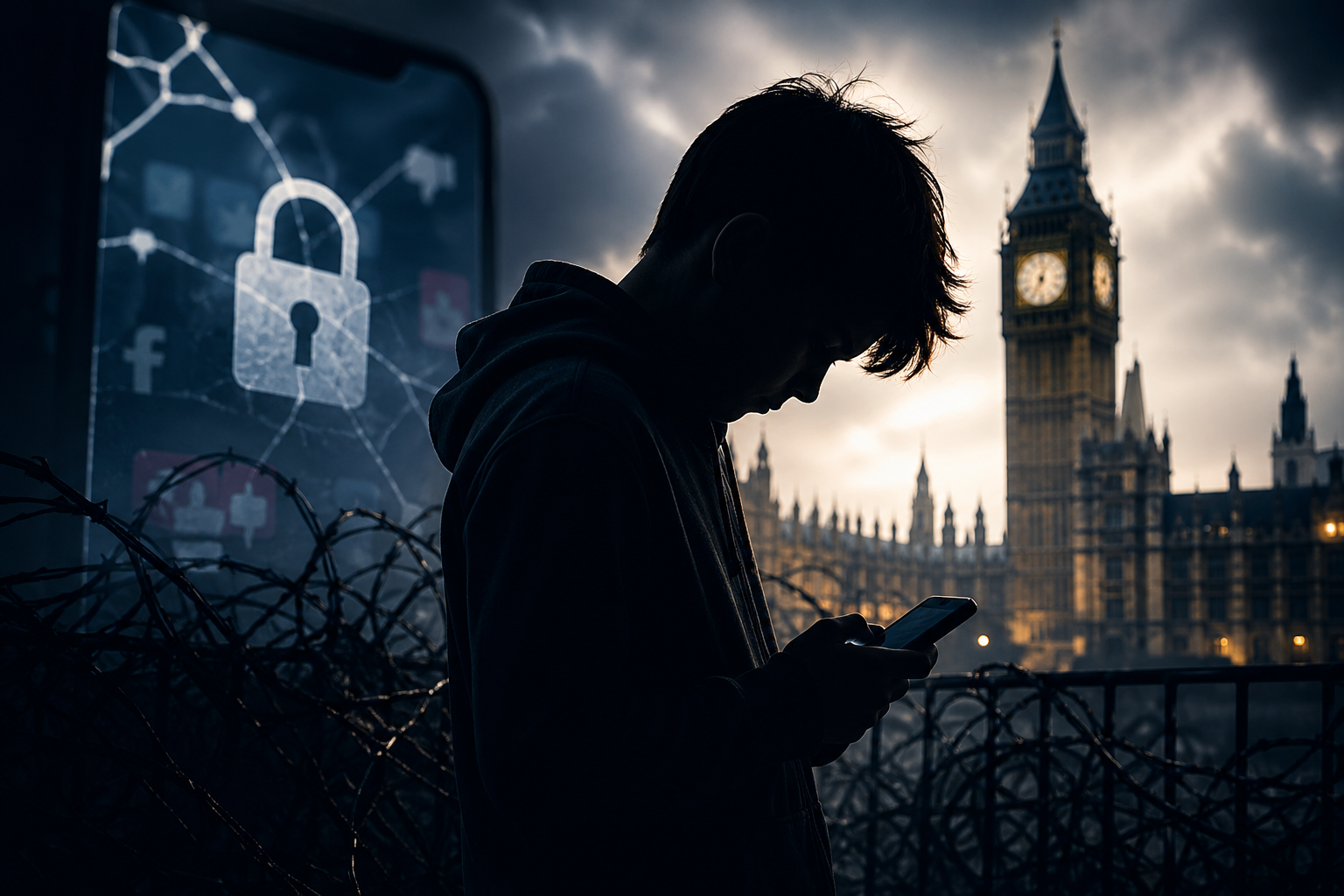
Why The UK’s Social Media Crackdown Is Bigger Than It Looks
Britain Moves To Restrict Social Media For Children — But The Real Battle Is Just Starting
The UK has crossed a line it cannot easily step back from.
For the first time, ministers have committed—not suggested, not explored—but committed to restricting social media use for under-16s. The question is no longer whether the government will act. It is how far it is willing to go and what it is prepared to sacrifice to get there.
That shift, confirmed in the latest round of policy statements and parliamentary maneuvering, marks a decisive moment in Britain’s relationship with technology, youth, and freedom.
And within minutes of the policy gaining traction, the backlash had already begun.
What Has Actually Changed — And Why It Matters Now
The core fact is simple: restrictions are coming.
Senior ministers have made clear that some form of age or functionality limits on social media for under-16s will be introduced, backed by a statutory requirement to act.
That may sound cautious. It is not.
Because behind that language sits a wide spectrum of potential measures:
Full bans on social media access
Mandatory age verification systems
Night-time digital curfews
Restrictions on features like infinite scroll and autoplay
Limits on messaging or interaction
Some proposals go even further, extending beyond social media into gaming platforms and AI tools.
In other words, this the issueot just about TikTok or Instagram. It is about redesigning the entire digital environment young people grow up in.
And the timeline is aggressive. Proposals are expected before summer, with legislation potentially arriving before the end of the year.
The Political Reality: This Was Forced Into Existence
This proposal is not a policy born from calm consensus.
It is the result of sustained pressure — from campaigners, bereaved families, the House of Lords, and a growing public sense that something has gone wrong with how children experience the internet.
Parliament has been locked in a back-and-forth battle over the issue for months.
The House of Lords repeatedly pushed for a full ban
MPs repeatedly rejected it
The government tried to hold the middle ground
That stalemate is now breaking.
Ministers have effectively conceded one crucial point: inaction is no longer politically viable.
Even Prime Minister Keir Starmer has signaled that the current model—where platforms largely police themselves ”cannot continue” under mounting scrutiny.
The Case For The Crackdown
Supporters of the policy are not struggling for arguments.
The concerns driving this push are consistent and increasingly difficult to ignore:
Exposure to harmful content, including self-harm and extreme material
Addictive design features engineered to maximise screen time
Disrupted sleep patterns and declining mental well-being
The near-total failure of existing age restrictions (nominally 13+)
Evidence cited by campaigners links heavy or passive social media use with increased risks of anxiety, depression, and loneliness.
Regulators have already warned major platforms to improve protections or face serious penalties.
Globally, the UK is not alone. Countries across Europe—and Australia most notably—are already moving toward similar restrictions.
The direction of travel is clear: governments no longer trust platforms to self-regulate when it comes to children.
What Most People Miss: This Is About Design, Not Just Access
The most important detail is easy to overlook.
This policy is not just about whether children can access social media. It is about how social media works.
Many of the proposed restrictions target specific features:
Infinite scrolling
Autoplay content
Algorithmic recommendation loops
Streaks and engagement triggers
These are not accidental. They are the core mechanics that drive platform growth.
Restricting them for under-16s is a major change. It is a direct challenge to the business model of modern social media.
That is why this debate is escalating so quickly.
The Free Speech Backlash Is Already Building
Within minutes of the policy gaining momentum, criticism began forming along familiar lines.
Opponents primarily argue against exposing children to harmful content.
They are arguing something more fundamental:
Those broad restrictions risk becoming a precedent for state control over digital speech and access.
Key concerns include the following:
Age verification systems requiring intrusive data collection
Government influence over what platforms can show
The potential expansion of restrictions beyond children
Slippery slope arguments around censorship
There is also a political dimension.
Critics of Keir Starmer and the Labour government are framing the move as part of a wider pattern of increasing control over online spaces—particularly sensitive given existing debates around online safety laws and platform moderation.
This is where the policy becomes volatile.
Because once a government defines what is “safe enough” for one group, it opens the question of who decides that threshold for everyone else.
The Practical Problem: Enforcement Is Harder Than It Sounds
Even supporters of the crackdown acknowledge a difficult truth.
This is not easy to implement.
Key challenges include the following:
Reliable age verification without mass data collection
Preventing circumvention (VPNs, fake accounts, borrowed devices)
Defining what counts as “social media”
Balancing safety with legitimate benefits (education, communication, community)
The legislation itself has already struggled with definitions, with even legal experts noting how broad and ambiguous “social media” can be.
That ambiguity matters. Because the broader the definition, the wider the impact—and the greater the risk of unintended consequences.
Where This Is Really Heading
The most honest reading of this moment is not that the UK is about to “ban social media for kids.”
It is that the country is entering a new phase of digital governance.
One where:
Platforms are no longer neutral infrastructure
Design choices are treated as policy decisions
Governments are willing to intervene directly
Childhood is being redefined in relation to technology
The consultation process is still ongoing, with thousands of responses shaping what comes next.
But the direction is already locked in.
Restrictions are coming.
The Bottom Line
This is not just a youth policy.
It is a signal.
A signal that the UK is willing to redraw the boundaries between technology, freedom, and protection — even if it means stepping into politically dangerous territory.
For parents, it looks like overdue action.
For tech companies, it looks like a direct threat.
For critics, it looks like the beginning of something much bigger.
And for everyone else, it raises a question that will not go away:
If governments can reshape the internet for children, how long before they try to reshape it for everyone?
