

Two Children Dead in Wolverhampton House Fire — The Night That Turned Ordinary Into Irreversible Loss
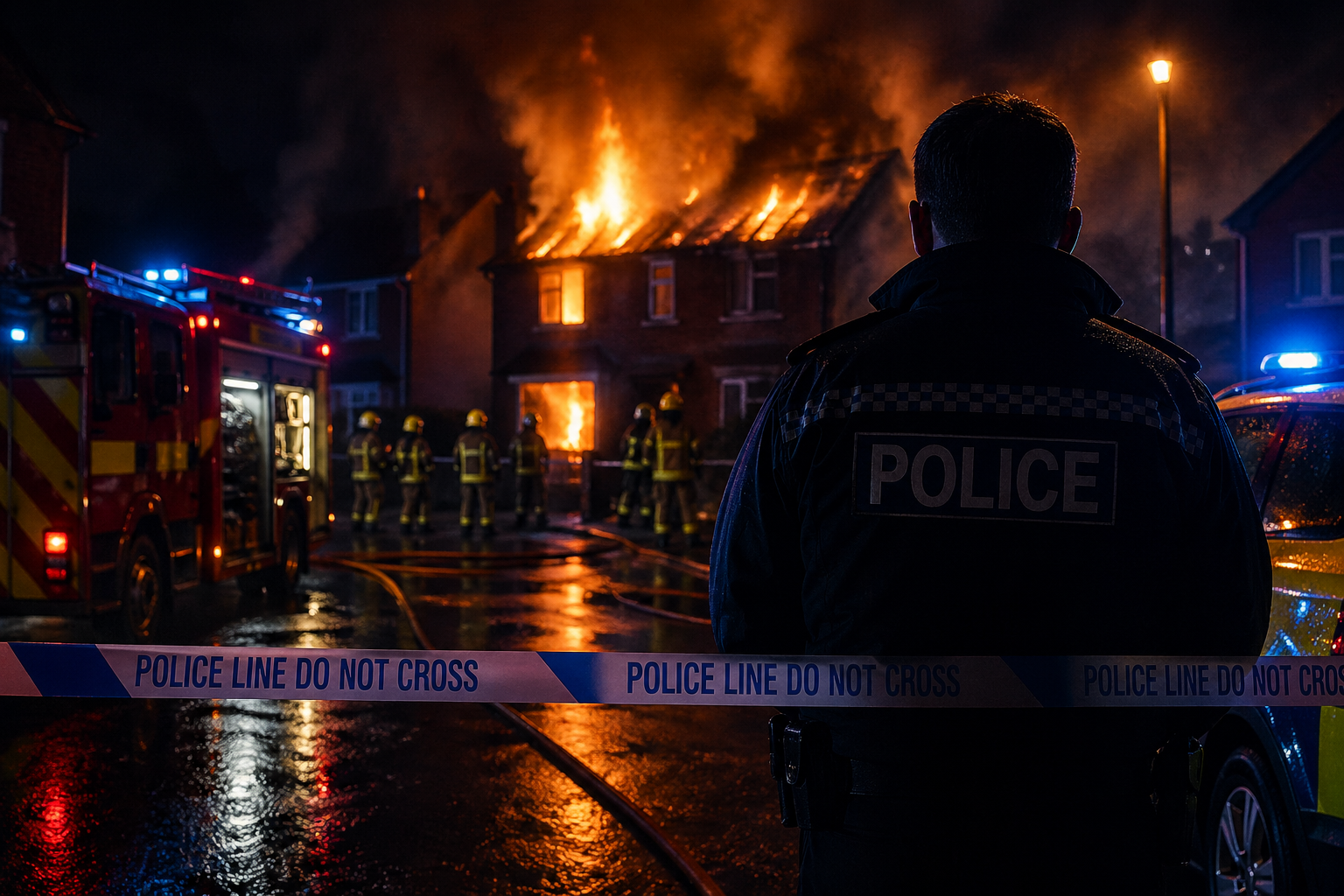
Two Lives Lost in Minutes: Inside the Wolverhampton House Fire Tragedy
When firefighters reached the burning home, seconds mattered—but not enough to change what had already taken hold
It began like countless emergency calls before it—a report of a fire in a residential street. Within minutes, crews were moving toward a house on Mason Street in Wolverhampton. Sirens, urgency, trained response.
But inside that house, time had already shifted.
By the time firefighters entered the property wearing breathing apparatus, two young children were still inside. They were pulled from the building and given immediate emergency care. It wasn’t enough. They were pronounced dead at the scene.
Everything after that moment—the cordons, the investigation, the statements—is a consequence.
What Happened — The Known Facts
Emergency services were called to the property at around 8:30pm on Friday. Police, fire crews, and paramedics all attended.
Firefighters entered the house and rescued two young children
Despite advanced life support, both children died at the scene
Two other children and a woman had already escaped before crews arrived
Those outside were assessed but did not require hospital treatment
The house itself was left extensively damaged, with a police cordon remaining in place as investigators work to determine the cause of the fire.
At this stage, the cause is not confirmed.
The Reality Behind the Timeline
House fires are often described in minutes.
But the truth is harsher: they unfold in seconds.
Heat, smoke, and toxic gases can overwhelm a space before anyone fully understands what is happening. Visibility drops. Breathing becomes difficult. Escape routes disappear.
Even if emergency services arrive quickly, the outcome may already be predetermined.
That is the brutal logic of fires like these. This is not a failure of response, but rather a stark reminder of the narrow margin between survival and loss.
What This Tragedy Reveals
On the surface, the event is a single devastating incident.
But beneath it is a pattern that repeats across similar tragedies:
Fires in residential properties escalate faster than expected
Survival often depends on seconds, not minutes
Outcomes hinge on awareness, escape routes, and immediate reaction
The known facts tell us what happened.
They do not fully explain why the outcome became irreversible so quickly.
That gap—between events and understanding— is where the real story sits.
What Media Misses
The focus often stays on the moment of rescue.
Firefighters entering a burning house. Children being carried out. Emergency care delivered at speed.
But the decisive moment usually happens earlier — before anyone arrives.
The critical window is the first stage of the fire:
When smoke spreads silently
When heat builds behind closed doors
When the danger is not yet visible but already lethal
By the time the situation becomes obvious, it is often already too late to reverse.
That is why these stories feel so sudden.
Because they are.
What Happens Next
The investigation now moves into its most important phase.
Authorities will work to establish:
The exact cause of the fire
How it spread within the property
Whether any factors accelerated its progression
Forensic teams will examine the structure, damage patterns, and any potential ignition sources.
At the same time, the wider impact begins to unfold—not in headlines, but in the community.
Residents nearby have already described shock and devastation. The kind that follows events that feel both rare and frighteningly possible at the same time.
The Aftermath That Stays
There is no version of this story that resolves cleanly.
Two children have died.
Others escaped.
A home is gone.
The investigation will eventually produce answers.
But answers are not the same as relief.
Because what defines tragedies like this is not just what happened—it is how quickly everything changed and how little time there was to stop it.
And that is the part that stays.
