UK Foreign Secretary Rushes Back to London as Crisis Deepens at Home and Abroad
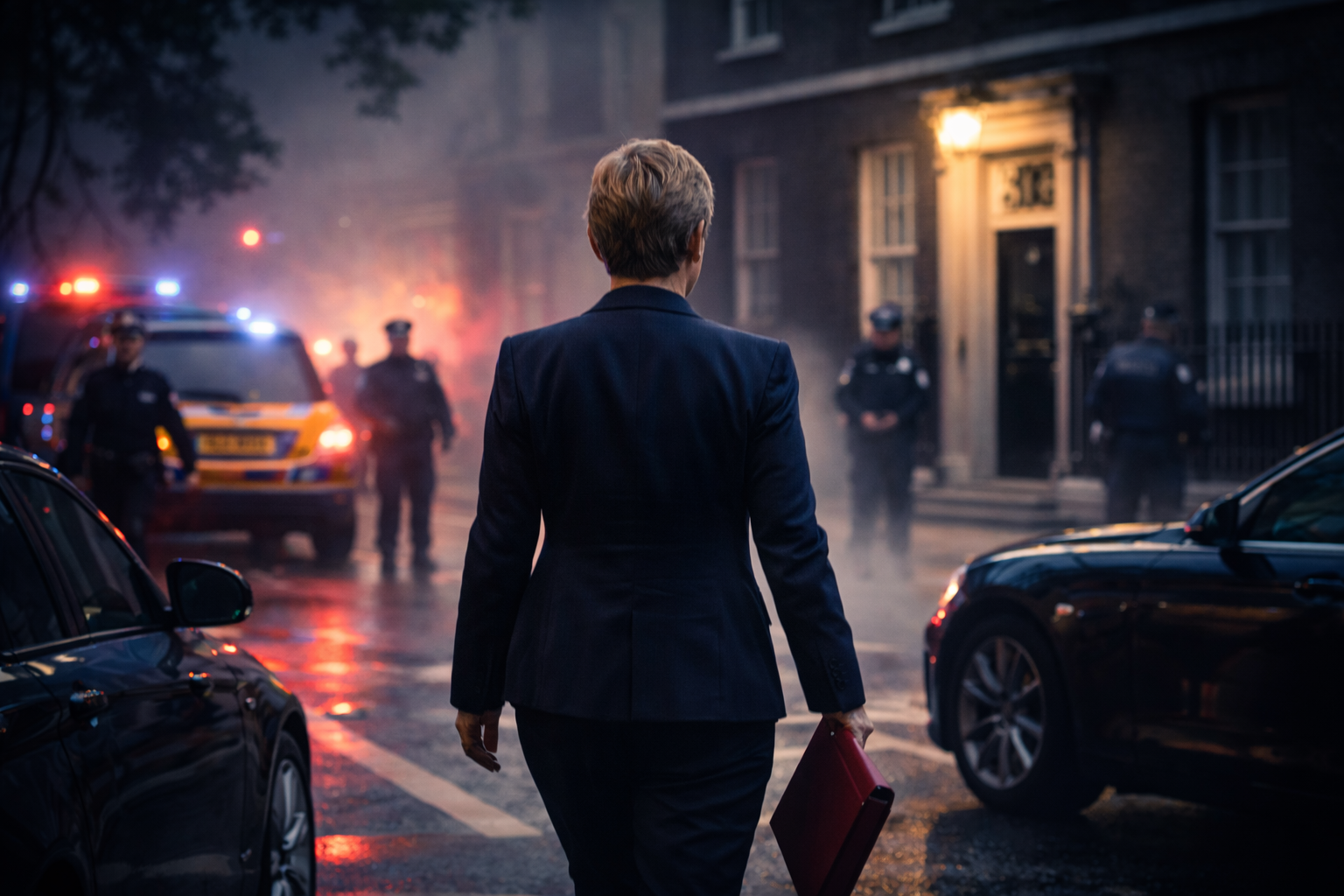
Westminster Turmoil Forces Emergency Shift in UK Foreign Policy Focus
Diplomatic Mission Abandoned: Why Britain’s Top Diplomat Is Suddenly Returning
A fast-moving political scandal at home is now disrupting Britain’s role on the global stage—just as tensions abroad demand focus and stability
The UK government is being forced into an abrupt pivot. The Foreign Secretary has cut short a major diplomatic trip and is returning to London—not because the international situation has eased, but because the political situation at home has deteriorated fast enough to demand immediate attention.
This is not routine. It is a signal.
At the exact moment Britain was trying to shape international coordination—particularly around ceasefire dynamics and the stability of critical global trade routes—the government had been pulled inward by a crisis of its own making.
What this exposes is not just a political problem. It is a structural one: when domestic credibility fractures, foreign policy influence weakens almost instantly.
What Happened—and Why It Matters
The foreign secretary had been engaged in high-level diplomacy across multiple countries, part of a broader effort to build consensus on stabilizing a volatile international situation. That effort has now been disrupted.
Planned engagements have been cancelled. The trip has been cut short. The focus has shifted back to Westminster.
The trigger is a rapidly escalating political scandal centered on a controversial appointment that bypassed or overruled security concerns—raising questions about decision-making, transparency, and control within government.
This is where the story shifts from procedural failure to something more serious.
Because the issue is no longer just “what went wrong.”
It is who is actually in control of decisions at the highest level of the British state.
The Political Shockwave
At the center of the crisis is a breakdown in the system that governs high-level appointments and national security vetting.
Key facts now driving the fallout:
A major diplomatic appointment proceeded despite failed or contested security vetting
Senior officials are accused of withholding critical information from ministers
A top civil servant has already been removed
The Prime Minister is under pressure to explain how this happened—and whether he was misled
This has triggered something more dangerous than opposition criticism. It has triggered internal doubt—about process, oversight, and accountability.
And once that doubt exists, it spreads quickly.
Why the Trip Had to Be Cut Short
Diplomatic travel is not cancelled lightly—especially during periods of geopolitical tension.
So the decision to pull the Foreign Secretary back tells you three things immediately:
The domestic situation is considered urgent and politically sensitive
The government expects further escalation—likely parliamentary, legal, or media-driven
Coordination at the top level is now required in person, not remotely
In other words, this is not damage control.
This is crisis management.
And it comes at a cost.
Because stepping away from international engagement—even briefly—creates a vacuum. Other powers move into that space quickly.
The Hidden Risk: Loss of Credibility Abroad
Foreign policy runs on perception as much as power.
Right now, Britain faces a credibility test.
On one side:
It is trying to position itself as a stabilising force in a volatile global environment
It is attempting to influence outcomes in regions where coordination matters
On the other hand:
It is dealing with a visible internal failure of governance
It is being forced to divert attention away from international leadership
That contradiction does not go unnoticed.
Allies begin to question consistency.
Adversaries begin to probe weakness.
And influence—once lost in moments like this—is hard to regain.
What This Reveals About the System
The deeper issue is not the individual appointment.
It is the apparent gap between:
Security advice
Civil service decision-making
Ministerial awareness
Political accountability
When those layers stop aligning, the system does not just malfunction—it becomes unpredictable.
And unpredictability at the level of national security is not a technical issue.
It is a strategic vulnerability.
What Happens Next
Three paths now define the next phase:
Most Likely:
Parliamentary scrutiny intensifies
Senior officials are called to testify
The government attempts to contain the fallout through transparency and procedural reform
Most Dangerous:
Evidence emerges suggesting deeper systemic failure or wider knowledge gaps
Political pressure escalates into leadership instability
International partners begin recalibrating their expectations of UK reliability
Most Underestimated:
The long-term impact on how decisions are made inside government
Quiet changes to vetting, oversight, and information flow that reshape power dynamics
Because crises like this rarely end where they begin.
They expose the wiring beneath the system—and once exposed, that wiring is rarely put back exactly as it was.
The Real Story
This is not just a story about a cancelled trip.
It is a story about timing, trust, and control.
At the exact moment Britain needed to project stability abroad, it was forced to confront instability at home.
And in geopolitics, that kind of overlap is never neutral.
It changes how a country is seen.
It changes how it is treated.
And sometimes, it changes what it can achieve next.
