UK High Court Blows Up the Palestine Action Terror Ban—But the Ban Still Stands
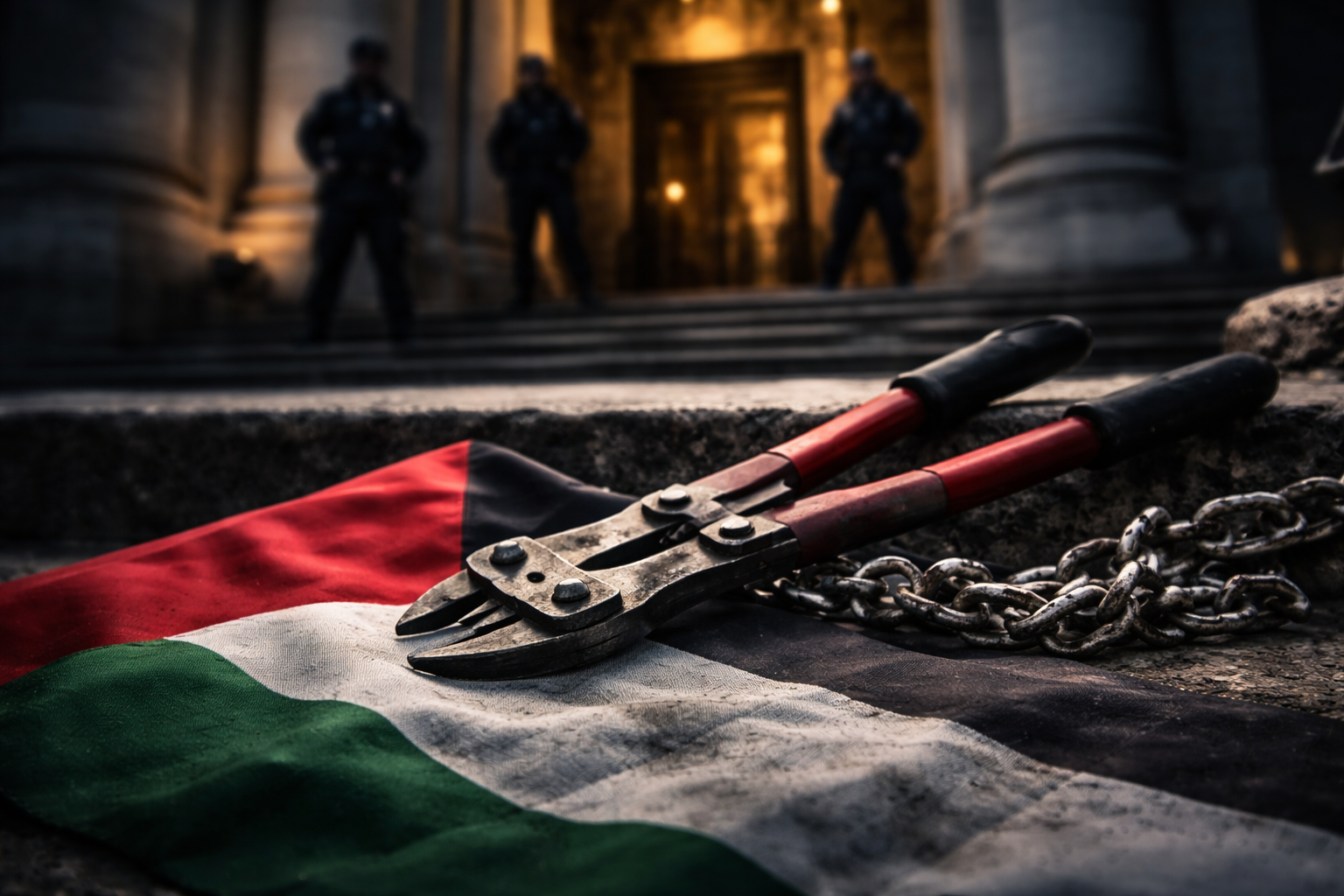
High Court says the Palestine Action terror proscription was unlawful—but the ban stays during appeal. What changes now, what’s next, and why it matters.
A court has just ripped apart the UK's attempt to treat a protest movement like a terrorist organization.
On Friday, February 13, 2026, the High Court ruled the government’s proscription of Palestine Action under the Terrorism Act was unlawful and disproportionate—even while allowing the ban to remain in force for now as ministers move to appeal.
That contradiction is the whole story: a landmark ruling that says the state overreached, paired with a legal “pause button” that keeps the group effectively outlawed while the next court fight begins. For supporters, it reads like vindication. For the government, it serves as a cautionary tale, a test of the extent of counterterrorism powers before judicial intervention.
One more thing matters more than the headline: this piece is not just about Palestine Action. It is about the legal boundary between “serious criminal protest” and “terrorism”—and what happens when the state tries to redraw that line.
The story turns on whether the government can justify proscription as a proportionate tool—rather than a politically tempting shortcut.
Key Points
The High Court ruled the government’s decision to proscribe Palestine Action as a terrorist organization was unlawful, finding it a disproportionate interference with freedom of expression and assembly.
Despite the ruling, the ban remains temporarily in place while the government pursues an appeal, meaning support-related offenses do not automatically disappear overnight.
Proscription places a group in the legal category used for terrorist organizations, making membership and support criminal offenses that can carry severe prison sentences.
The case centers on whether Palestine Action’s “direct action” campaign—including property damage and high-profile incidents—meets the legal threshold for terrorism or should be handled under ordinary criminal law.
The judgment signals real judicial discomfort with using counterterror powers to manage protest movements, even ones that use criminal tactics.
What happens next depends on appeal timelines, whether any interim orders change enforcement practice, and whether the government recalibrates how it uses proscription going forward.
Background
Palestine Action emerged as a direct action protest campaign targeting sites linked to the Israeli defense industry in the UK, particularly companies associated with Elbit Systems. Its tactics have included blockades, disruption, vandalism, and property damage—tactics supporters frame as anti-war intervention and critics frame as dangerous escalation.
In July 2025, the UK government moved beyond policing and prosecution and chose proscription: adding Palestine Action to the list of proscribed organizations under the Terrorism Act 2000. That step is rare, politically explosive, and legally heavy. It is designed for groups the state says are “concerned in terrorism,” not for conventional protest campaigns.
Once an organization is proscribed, the legal consequences widen fast: membership becomes a criminal offense, and “support” can become criminal too, including public expressions that might be treated as encouragement. The practical effect is to turn a protest identity into a legal hazard.
The proscription was challenged by Huda Ammori, a co-founder of Palestine Action, in proceedings that included sensitive elements. The court’s decision on February 13, 2026, marks a major swing in that legal battle.
Analysis
The Ruling That Changed the Game—and the Order That Didn’t
The court’s finding was blunt: the government’s proscription was unlawful, including because it was a disproportionate interference with fundamental rights tied to expression and assembly. That is the judiciary’s way of saying: even if conduct is criminal, the state does not get unlimited discretion to re-label it “terrorism” to make enforcement easier.
But the court also allowed the ban to remain in force temporarily pending appeal. That matters immediately, because it means the operational reality on the ground does not flip instantly to “legal again.” It remains, for now, in the category that triggers the terrorism-support framework.
That tension can look confusing from the outside, but it is a familiar judicial posture in high-stakes public law: strike down the decision, yet keep stability while the appellate courts decide whether the strike-down stands. The result is a political and policing limbo—and a communications war where each side claims “victory” while the underlying risk remains.
Why the Government Chose Proscription Instead of Prosecution
The state has plenty of ordinary tools for criminal damage, aggravated trespass, conspiracy, and public order offenses. So why proscription?
Because proscription is not just a charge. It is a framework. It shifts the problem from discrete acts to the existence of the organization itself, and it widens the net from perpetrators to supporters. It can deter participation, disrupt fundraising and organizing, and give law enforcement a sharper set of powers and narratives.
In other words, proscription is not only about what happened. It is about preventing what might happen—and shrinking the ecosystem around a group. That is why civil liberties groups and UN-linked voices criticized the move early: the concern is not whether criminal acts should be prosecuted, but whether terrorism law is being used as a shortcut to suppress political mobilization.
The court’s disproportionate finding signals that this “framework advantage” may have been the very reason it failed.
The Enforcement Reality: “Support” as a Criminal Risk
Proscription changes the day-to-day legal risk profile in a way most readers never have to think about.
When a group is proscribed, “support” becomes a legal minefield. It is not only about donating money or joining an action. Depending on circumstances, public displays, slogans, and symbols can draw police attention, and arrests can follow even when the underlying behavior looks like speech rather than violence.
That is why the number of arrests linked to expressions of support has become part of the story: it is evidence, for critics, that proscription is functioning as a speech-chilling tool, not only a public safety tool. For supporters of proscription, it is evidence that the law is finally biting into the network that sustains disruptive activity.
The court’s ruling does not automatically settle that clash. It reframes it: if proscription is disproportionate, then criminalizing broad “support” begins to look like overreach rather than necessity.
Three Scenarios Now—and What Would Signal Each One
Scenario 1: The appeal narrows the judgment, and proscription survives in modified form.
Signposts: the government wins interim points; the appellate court stresses deference to the Home Secretary on national security assessments; the language of “proportionality” tightens.
Scenario 2: The judgment holds, and the government loses the ability to use proscription this way.
Signposts: the appellate court endorses the High Court’s rights-based analysis; officials shift messaging toward “we will prosecute crimes under ordinary laws,” rather than “we must keep the ban.”
Scenario 3: The government pivots politically: new legislative tweaks or new guidance to reopen the door.
Signposts: talk of “closing loopholes,” “updating definitions,” or new statutory instruments; new policing guidance on protest groups; a broader review of proscription standards.
None of these require guessing motives. They flow from incentives. The government wants durable authority. The courts want principled limits. Activists want space to operate. Police want workable clarity.
What Most Coverage Misses
The hinge is that proscription is not mainly about punishing actions—it is about criminalizing an identity and the ecosystem around it.
The mechanism is simple: once a group is proscribed, the state gains leverage over speech and association, not just property damage. That creates a chilling effect that can outstrip the original conduct, because people begin self-censoring to avoid the risk of being interpreted as “supporting” a banned group. Courts are often willing to tolerate tough enforcement of crimes; they are far less willing to tolerate a rights-wide shockwave if the same public safety goal can be achieved by ordinary prosecution.
Two signposts to watch in the coming days and weeks:
whether policing practice shifts while the appeal is pending (even informally), especially around “support” enforcement; and
whether ministers double down on “national security” framing or pivot to “criminality” framing—because that tells you what they think will survive appeal.
What Changes Now
In the short term (next 24–72 hours), the biggest change is informational and strategic, not operational: the court has said the ban was unlawful, but the ban remains in place while appeal steps begin. That creates a high-risk period for anyone who assumes “court win equals legal safety,” because enforcement powers may still be used until the legal status changes formally.
In the medium term (weeks), the UK’s approach to proscription is now under a harsher judicial spotlight. Future decisions to proscribe groups that align more closely with protest politics than violent militancy will be subject to heightened litigation risk, as the proportionality test no longer remains theoretical but now carries real consequences.
In the long term (months/years), the case could reset the boundary of counterterror law in domestic politics. The main consequence is not “Palestine Action wins” or “government loses.” The main consequence is the standard the state must meet before it can treat disruptive protest as terrorism—because that standard will shape future confrontations across issues far beyond Gaza.
This matters because proscription is a force multiplier: it makes speech and association legally risky, not only violence and damage.
Real-World Impact
A university student attending a demonstration now has to weigh whether a slogan, sign, or social post could be interpreted as “support” while the ban remains in force—even if they never commit a crime.
A small business near a targeted facility faces heightened disruption risk, as activism tactics and policing tactics escalate in response to each other, creating knock-on costs in security, staff anxiety, and insurance.
A charity or community group organizing a lawful event becomes more cautious about speakers and messaging, because legal ambiguity around proscription can turn reputational risk into legal risk.
A local police commander has to balance public order, rights, and political pressure under a moving legal target—with the appeal process hanging over operational decisions.
The Fight That Decides the Line
The High Court ruling is a warning to the state: terrorism law cannot be treated as a convenience tool for politically charged protest, even when protests involve serious criminality. But the temporary continuation of the ban is a warning to the public too: legal declarations do not always change enforcement reality overnight.
What happens next is not a single moment. It is a chain: appeal filings, interim decisions, and the government’s choice of framing—national security threat versus criminal protest—as it tries to defend a decision the court has already called unlawful.
Watch for whether the appeal court tightens the definition of proportionality, whether enforcement around “support” softens or hardens, and whether ministers quietly recalibrate how they deploy proscription in the future.
In one way or another, this moment will serve as a test to determine whether the UK's counterterror framework maintains a rigid boundary, or if it shifts when political pressure increases.
