UK Regulator Targets Telegram in Explosive Child Safety Probe
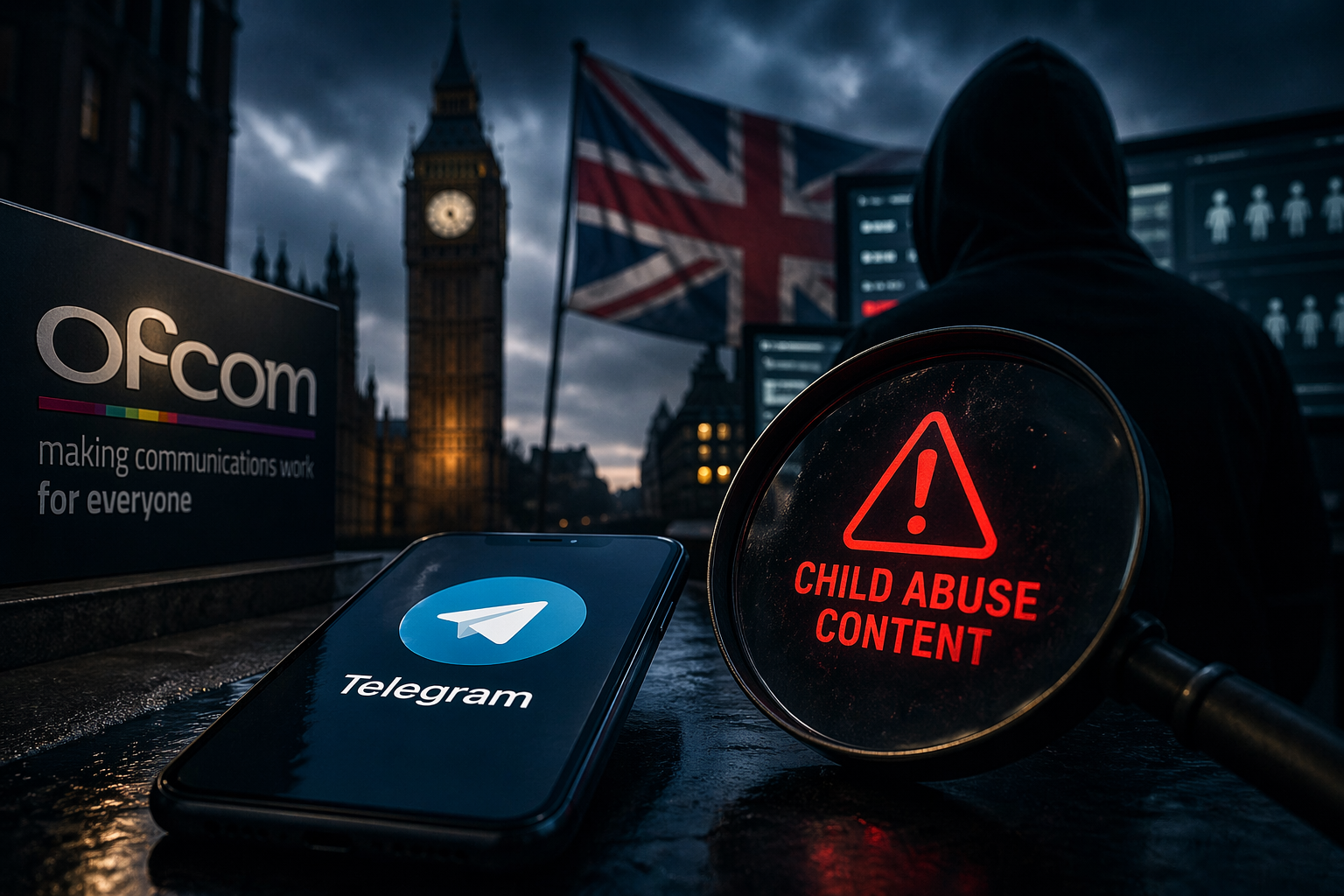
Ofcom Launches High-Stakes Investigation Into Telegram’s Safety Failures
Ofcom’s investigation marks one of the most consequential tests yet of the UK’s Online Safety Act—and could reshape how encrypted platforms operate
The UK has opened one of its most serious regulatory challenges yet against a global messaging platform—and the outcome could ripple far beyond Telegram itself.
The country’s communications regulator, Ofcom, has launched a formal investigation into Telegram over concerns that child sexual abuse material may be circulating on the platform. The probe is not just about one app. This investigation directly tests the effectiveness of the UK's new digital safety regime.
At stake is a fundamental question: can governments force private, often encrypted platforms to take responsibility for what happens inside them?
What triggered the investigation
The investigation follows evidence provided by the Canadian Centre for Child Protection, alongside Ofcom’s own assessment of Telegram’s systems. Regulators believe there are indications that illegal material may be present and being shared on the platform.
Under UK law, that is not just a failure of moderation—it is potentially a breach of legal duty.
The UK’s Online Safety Act 2023 requires platforms that host user-generated content to actively assess, mitigate, and remove illegal material, including child sexual abuse content.
If a company fails to do so, the consequences are severe: heavy fines, enforced changes to the service, or even being blocked in the UK entirely.
Telegram pushes back
Telegram has strongly rejected the allegations.
The company says it has spent years developing detection systems and partnerships to remove abusive material, claiming that such content has been largely eliminated from the platform since 2018.
It has also framed the investigation as part of a broader tension between regulation and privacy—warning that aggressive enforcement risks undermining free speech and secure communication.
The tension between regulation and privacy is a central issue in this case.
Why this is bigger than Telegram
This investigation is not just another compliance review. It is a stress test for the entire model of encrypted, user-driven platforms.
Telegram occupies a unique space: part messaging app, part broadcast network. Its channels and groups can scale rapidly, and its privacy features make oversight harder than on traditional social media platforms.
Regulators are now signalling that those structural advantages do not exempt companies from responsibility.
Ofcom has clarified that large platforms no longer qualify as neutral infrastructure. They are expected to actively prevent harm—not simply respond to it after the fact.
And Telegram is not alone. The regulator has simultaneously opened investigations into smaller chat platforms over grooming risks, indicating a broad enforcement sweep rather than a one-off action.
The hidden shift most people miss
The real shift is not about content moderation. It is about accountability.
For years, platforms could argue they were passive conduits—tools used by individuals, not publishers responsible for outcomes.
That argument is collapsing.
The Online Safety Act effectively flips the burden: if harm is happening at scale, the platform must prove it has taken meaningful steps to stop it. Not eventually. Not partially. Systematically.
That is a profound change in how the internet is governed.
What happens next
The investigation now moves into an evidence phase.
Ofcom will gather technical and operational details from Telegram, assess whether its systems meet legal standards, and determine whether a breach has occurred.
If regulators conclude that Telegram has failed in its duties, the next steps could include:
Financial penalties at scale
Mandatory changes to how the platform operates
Legal orders restricting access in the UK
Each outcome carries wider implications.
A forced redesign of Telegram’s systems could set a precedent for other messaging platforms. A financial penalty could signal that enforcement is real, not symbolic. A block would mark one of the most aggressive regulatory moves ever taken against a major communication platform in a democratic market.
The collision ahead
This case sits at the intersection of three forces that are becoming harder to reconcile:
Child protection
Privacy and encryption
Platform accountability
Governments are no longer willing to tolerate blind spots in the name of privacy. Platforms are unwilling to fully compromise the features that define them. And users increasingly expect both safety and freedom.
That triangle does not resolve cleanly.
The Telegram investigation is where those tensions are now being forced into the open—and whatever happens next will shape far more than one app.
It will define how far the UK, and potentially others, are willing to go to control the architecture of the modern internet.
