Why Wrexham play in England
Wrexham Had Been Playing Football Across The Border For A Century Before Wales Opened Its National League.
A player can run out in a Wrexham shirt on a Saturday in an English league and join Wales for an international the following week. There has been no transfer between countries in the intervening days. Wrexham is a Welsh club whose senior men's team belongs to the English league pyramid. The club's historic competition membership and a player's international eligibility answer different questions.
The simplest explanation is chronological. Wrexham formed in 1864, played cross-border football in the nineteenth century and joined the Football League in 1921. The League of Wales, the national competition now known as the Cymru Premier, began in 1992. By then Wrexham already had generations of supporters, opponents and sporting expectations invested in another system. A country's creation of a new league did not require its longest-established professional clubs to begin their histories again.
What A Border Meant To An Early Football Club
Put Wrexham on a railway map before putting it in a league table. The town lies in north-east Wales, close to English towns and the established football country of north-west England. A fixture required an opponent willing to play, a ground, an agreed date and a journey both clubs could afford. The nearest suitable opponent could easily be across a political boundary.
Modern supporters grow up with national league names, promotion places and televised matches announced months ahead. The people organising early football had to build those arrangements. A competition was a set of clubs agreeing to play one another under particular rules. Its reach depended partly on practical connections between places. A national frontier was one important fact about a town. It was hardly the only fact governing where its footballers could travel on a Saturday.
Wrexham's early history reflects both directions of association. The club won the inaugural Welsh Cup in 1878. It also played in the Combination, a competition including clubs across the border, from the 1890–91 season. These facts are compatible. A cup can bring together entrants for knockout ties while a league provides regular fixtures against a different set of opponents. Winning the first did not settle membership of the second.
Imagine trying to explain the same history backwards from a modern map. Wales is a country, so there ought to have been a Welsh national league, so a club playing elsewhere must at some point have chosen to leave it. Every step feels plausible and the conclusion is wrong. There were Welsh competitions well before 1992. The modern national league arrived long after cross-border participation had become ordinary for Wrexham.
The Significance Of 1921
Wrexham entered the Football League as part of the Third Division North in 1921. The regional label tells its own story. Organising lower divisions geographically could give clubs a coherent programme without forcing every comparatively modest side into repeated journeys across the length of England and Wales. Entry to this competition gave Wrexham a permanent place in a recognisable professional league structure, subject to its rules.
Once inside, an institution develops reasons to stay that go beyond its initial calculation about travel. League positions acquire meaning. Supporters remember promotion races, rivals, relegations and the grounds visited along the way. A club's income and ambitions come to depend on what lies above or below it. An administrative change can disrupt a century of season-to-season comparisons even if no one moves the ground an inch.
The pyramid also gives an answer to an obvious hypothetical. If Wrexham win promotion or suffer relegation, they generally change division within the English system. Dropping out of the Football League did not automatically send them into a Welsh national division. Their seasons in the National League and their subsequent return to the EFL followed the sporting ladder to which they belonged. The national adjective in a competition name can be a particularly unreliable guide to a club's identity.
Cardiff City, Swansea City and Newport County provide other prominent examples of Welsh clubs with long histories in the English system. Their histories differ in detail. The common thread is that the pattern predates today's expectation that every professional club ought naturally to sit in its own country's top national competition. Wrexham's modern profile has made an old arrangement newly surprising to people encountering it for the first time.
Why A Welsh National League Changed The Question
The League of Wales began in August 1992. Establishing a national top competition gave Welsh clubs a domestic championship and an identifiable route through that structure. It also raised a difficult question about established cross-border sides. From the perspective of strengthening a Welsh league, famous Welsh clubs with large followings might be attractive participants. From inside a club already embedded in the English system, moving could mean exchanging settled rivalries and opportunities for an uncertain new arrangement.
It is easy to reduce the issue to money. The size of the English football economy certainly matters to modern ambitions. It does little to explain why a Wrexham side in the nineteenth century began playing nearby opposition. Applying present-day broadcasting economics to a decision formed around transport, fixtures and the development of organised competition confuses the benefits of an inherited position with its historical origin.
There is a similar mistake in attributing the arrangement to the club's modern owners or its television exposure. An international audience may have learned about Wrexham through a documentary. That explains why viewers in another country are asking the question now. It cannot explain a Football League admission that happened in 1921. The documentary acquired a ready-made sporting world with promotion, jeopardy and rivalries already in place.
For a supporter the distinction is hardly academic. The pleasure of watching a club climb divisions is that each step has consequences within an established structure. A new audience can learn those stakes very quickly precisely because previous generations have already supplied the reference points. A promotion celebrated by newcomers can also be a return to ground older supporters have been waiting years to recover.
Can They Represent Wales In Europe?
League membership, cup eligibility and qualification for Europe are three different arrangements. Wrexham historically reached European competition through success in the Welsh Cup, including memorable Cup Winners' Cup football. An old European result establishes that the route existed then. It should never be used as the sole guide to which route is available in a current season.
The distinction became concrete in 2025. A proposal known as Prosiect Cymru sought a route for the four Welsh EFL clubs into a revamped Welsh League Cup, with European qualification available to its winner. The English Football Association rejected the proposal. It raised an issue much more specific than whether Wrexham were Welsh. Could clubs taking the competitive opportunities of one league system also obtain a European place through a cup in another?
There are interests on both sides. A Welsh competition containing the most recognisable Welsh professional teams could attract attention and revenue. Clubs that compete throughout the Welsh system have an interest in how access to scarce European places is allocated. English competition organisers also have an interest in the terms enjoyed by clubs on their ladder. None of those practical questions can be resolved simply by pointing at the location of the stadium.
Wales as a national team works differently again. Eligibility depends on the rules for international representation and the individual player's circumstances. A Welsh-qualified player does not lose eligibility by playing club football against English opposition. Nor does signing for Wrexham make an otherwise ineligible player Welsh-qualified. For the November 2026 international window the club reported call-ups for Danny Ward and Kieffer Moore. The announcement brought club and country together without blurring the rules of either.
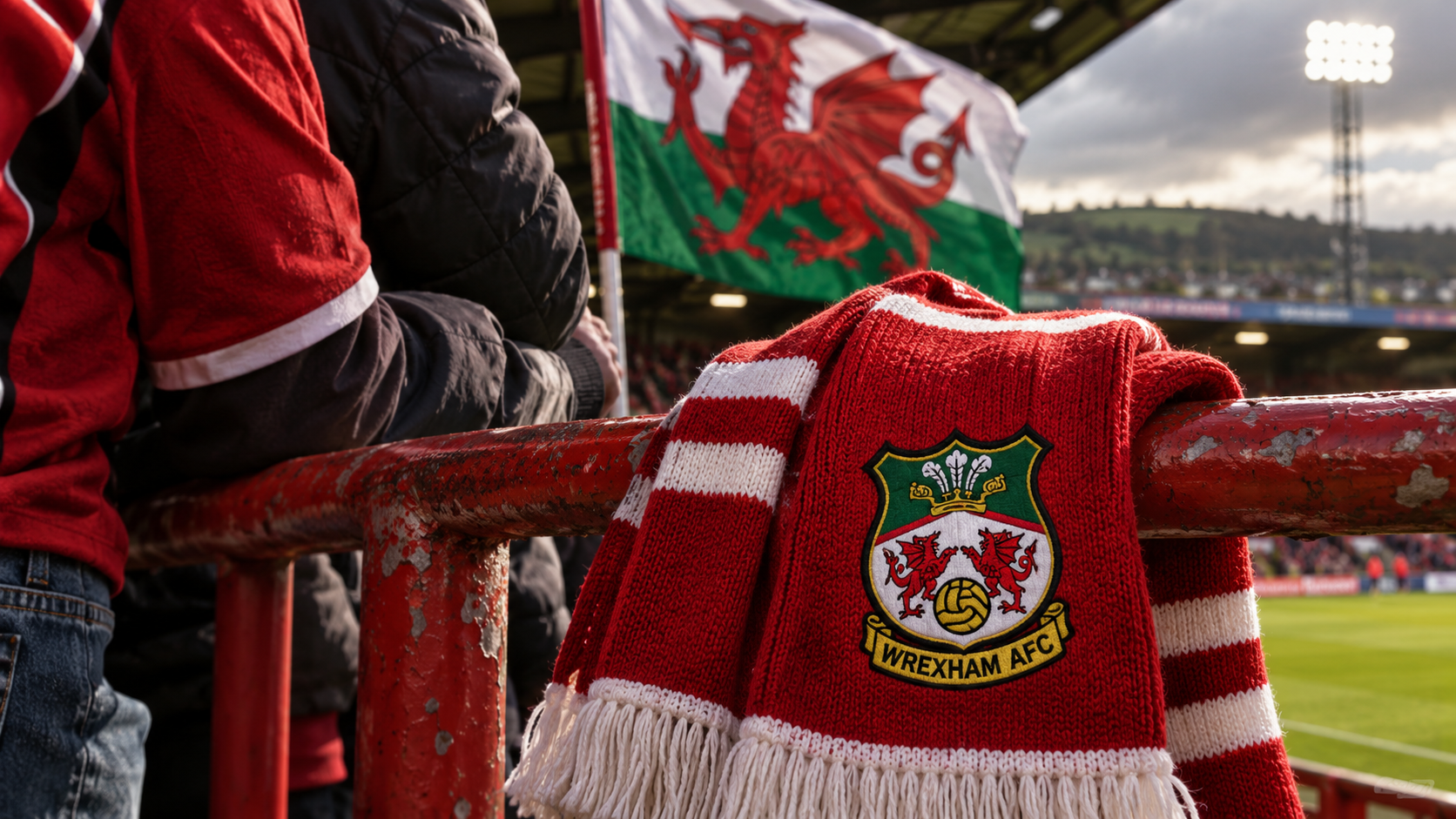
When the camera shows a Welsh flag at the Racecourse Ground, it therefore shows something entirely consistent with the fixture list. The flag tells you which community the club represents. The league table tells you the sporting consequences of the afternoon's result. Wrexham's history explains why supporters have never needed those two things to carry the same country's name.
