

Will Every Adult Soon Need To Prove Who They Are Online?
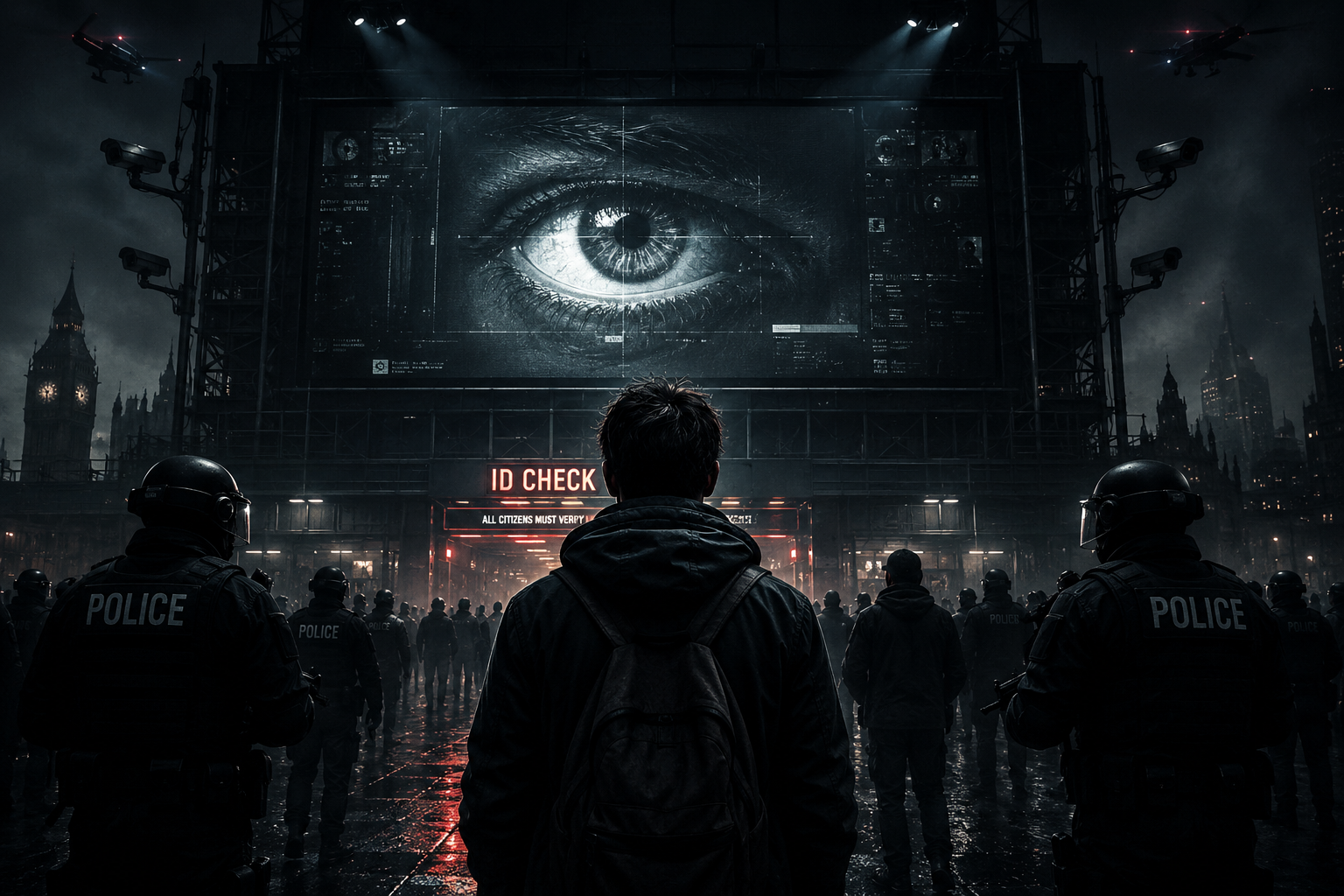
From Child Protection To Digital ID Britain’s Online Safety Expansion Has Begun
The Under-16 Ban Is Just The Beginning As Britain Moves Toward A Verified Internet
The UK Government’s decision to ban under-16s from major social media platforms marks one of the most significant interventions in the digital lives of young people ever attempted in Britain. The policy is expected to affect platforms including Instagram, TikTok, Snapchat, X, Facebook and YouTube, with implementation expected over the coming year.
Supporters argue the move is long overdue. They point to rising concerns around mental health, addictive algorithms, online grooming, harmful content and the amount of time children spend glued to screens. The Government’s position is straightforward: if technology companies cannot adequately protect children, the state will step in and do it for them.
Yet beneath the headlines lies a much larger question.
If children are going to be verified, how long before adults are too?
Will Adults Have To Verify Their Age?
The honest answer is that many adults already do.
Under the Online Safety Act, age verification requirements already exist for certain categories of content, particularly adult material. Platforms must use what regulators describe as “highly effective age assurance” methods to prevent children accessing restricted content. These systems can include facial age estimation, banking checks, digital identity tools and other verification methods.
For ordinary social media use, however, there is currently no universal requirement for every adult in Britain to prove their identity before using platforms such as X, Facebook or Instagram. The current focus remains on identifying underage users and preventing them from accessing restricted services.
That said, the direction of travel is difficult to ignore.
Every new restriction creates pressure for stronger verification. Every stronger verification system creates pressure for more data collection. Every additional layer of data collection raises fresh questions about privacy, anonymity and state oversight.
The concern for critics is not what exists today.
It is what becomes normal tomorrow.
Is This An Expansion Of The Online Safety Act?
In practical terms, yes.
The new under-16 restrictions are being built on foundations already established by the Online Safety Act and subsequent consultations around child protection and age assurance. The Government has repeatedly described these new measures as part of a broader strategy to create a safer digital environment for children.
The Act originally focused heavily on illegal content, harmful material and protecting children from online risks. Since then, discussions have expanded into age assurance, social media restrictions, AI chatbot regulation, livestreaming controls and even potential limits on features such as infinite scrolling.
Critics see a pattern emerging.
What begins as a targeted intervention aimed at a specific problem gradually expands into a wider regulatory framework governing more areas of online life.
Supporters call that sensible adaptation.
Opponents call it mission creep.
The Free Speech And Privacy Argument
This is where the political divide becomes increasingly visible.
Supporters of tougher online regulation argue that protecting children should override concerns about inconvenience. They view age checks as a reasonable trade-off if they reduce exposure to harmful content.
Critics view the issue differently.
Their argument is not necessarily that children should have unrestricted internet access. Their concern is that verification systems fundamentally change the relationship between citizens and the internet.
For decades, much of the web operated on a principle of relative anonymity. People could browse, discuss politics, explore controversial ideas and participate in public debate without routinely proving who they were.
Age assurance changes that equation.
The more identity-linked systems become embedded into online services, the more difficult anonymous participation becomes.
That does not automatically mean censorship. It does not automatically mean surveillance.
But it does represent a significant shift away from the internet many people grew up with.
The Nanny State Criticism
The phrase "nanny state" is already being used heavily by opponents of the policy.
Their argument is simple.
Every generation faces new technologies. Every generation encounters risks. Parents, they argue, should remain primarily responsible for deciding how their children engage with digital platforms rather than government regulators.
From this perspective, the state increasingly appears willing to intervene in areas once considered private family decisions.
Today it is social media access.
Tomorrow it could be screen-time limits, mandatory digital IDs, algorithm restrictions or wider forms of online behavioural regulation.
Whether those fears are justified remains open to debate.
But the political concern is real because once regulatory powers exist, future governments often inherit and expand them rather than remove them.
History tends to show that regulations rarely shrink.
They usually grow.
The Problem Governments Cannot Easily Solve
Even supporters of the ban acknowledge a difficult reality.
Technology users adapt.
VPNs exist.
Alternative platforms exist.
Workarounds exist.
History suggests that whenever governments attempt to restrict access to digital services, at least some users immediately begin searching for methods to bypass those restrictions. Recent research examining reactions to age-verification policies found significant increases in VPN-related discussion and interest following major Online Safety Act milestones.
This creates a practical challenge.
The stricter the restrictions become, the greater the incentive for circumvention.
That does not mean regulation cannot work.
It means enforcement is often far more complicated than legislation.
The Bigger Battle Has Only Started
The under-16 social media ban may ultimately succeed. It may reduce harmful exposure, help parents and force technology companies to take child safety more seriously.
But politically, this announcement feels bigger than child protection alone.
It represents another step toward an internet where access increasingly depends on proving who you are, how old you are and whether you meet specific regulatory conditions.
For supporters, that is responsible governance in a digital age.
For critics, it is the gradual construction of a more controlled and less anonymous internet.
The real battle is no longer whether children should be protected online. Few people seriously dispute that objective. The battle is where the line eventually gets drawn between protection and freedom, and whether Britain is comfortable moving toward a future where verification becomes the price of participation.
