
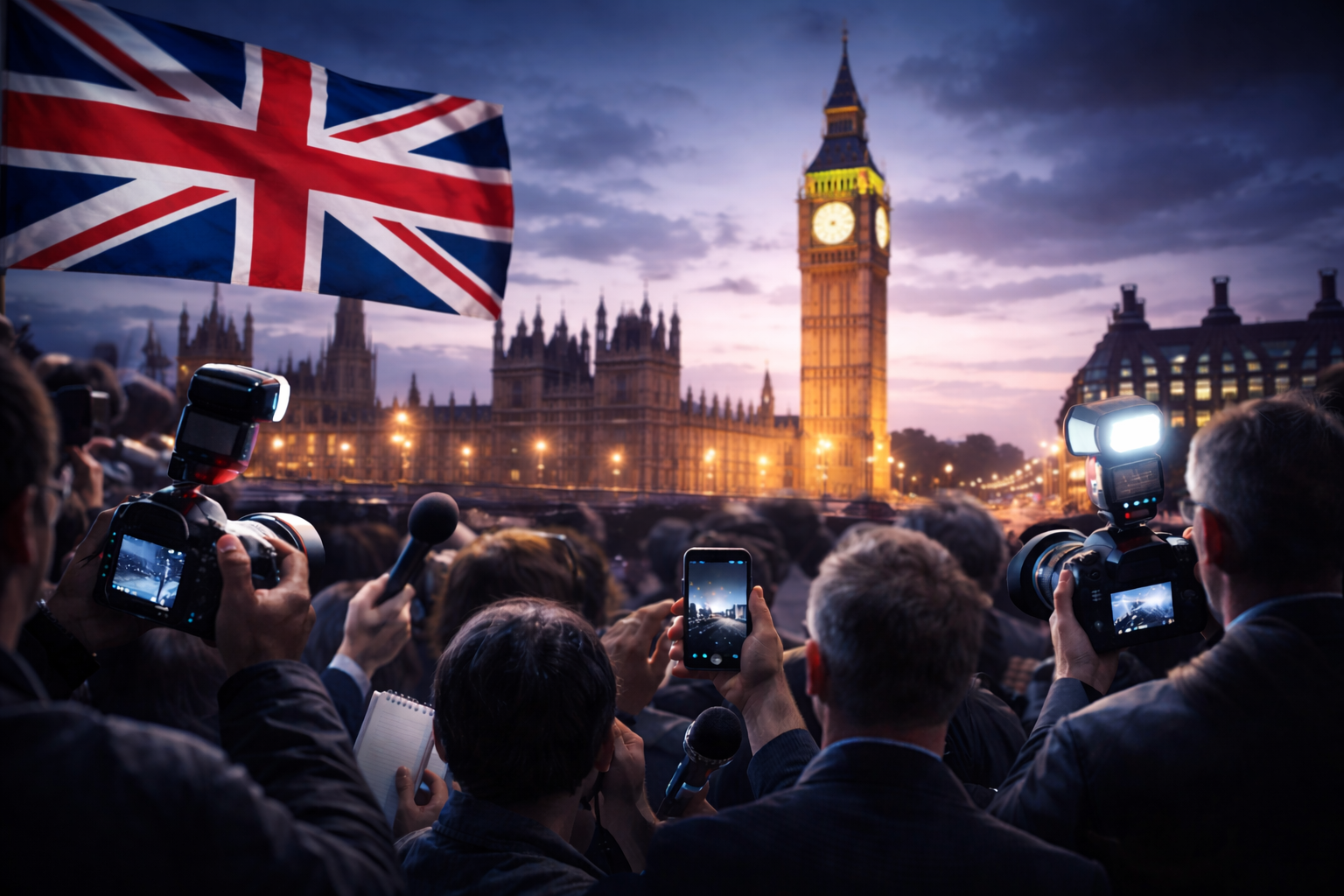
UK News And Analysis
Independent reporting on UK politics, national policy, economic trends and major public developments — delivered with clear context and fact-based analysis.

UK Budget 2025 Leak: How the Office for Budget Responsibility (OBR) Early Release Shook Westminster
UK Budget 2025 Leak: How the OBR’s Early Release Shook Westminster
On the morning of the 2025 UK Budget, the script was meant to be simple: Chancellor Rachel Reeves would rise in the Commons, the Office for Budget Responsibility (OBR) would publish its Economic and Fiscal Outlook the moment she finished, and markets would react to a carefully choreographed package.
Instead, the fiscal watchdog hit “publish” far too soon. The full set of forecasts, tax estimates and growth numbers went live on its website before the Chancellor had even begun her speech. Journalists spotted the document, details raced across newswires and social media, and the most important Budget in years was effectively leaked in advance.
What followed was a rare clash between Westminster politics, technocratic institutions and real-time market reaction. This article unpacks how the leak happened, what was exposed, and why it matters for trust in Britain’s fiscal framework.

UK Budget 2025: How Markets Are Reacting in Real Time
Markets reacted calmly to the 2025 UK Budget, with small gains in sterling, gilts and equities signalling “better than feared”, even as specific sectors like gambling were hit with double-digit losses.
Bullet Point Summary
Sterling edged up and gilt yields fell by around 3–4 bps, showing mild relief.
UK stock indices rose roughly 0.6%, but sector reactions diverged sharply.
Gambling and high-yield income stocks fell 4–15% on targeted tax measures.
Market volatility spiked during the OBR leak, then settled as details matched expectations.
Overall reaction suggests credibility gained, but long-term growth concerns remain.

UK Budget 2025: Statistical Forecasts for Tax, Growth and Your Wallet
The 2025 UK Budget Statistical Forecast.
The budget marks a decisive shift toward a permanently higher-tax economy, with £26 billion in annual tax rises by 2029–30, the extension of frozen income-tax thresholds dragging 1.7 million more people into tax, new levies on wealth, property, dividends and EV usage, and the scrapping of the two-child benefit cap costing £3–3.5 billion a year. Growth is upgraded in 2025 but downgraded thereafter, leaving GDP about 0.8% smaller by 2029 than previously forecast, while the tax burden climbs to a record 38% of GDP. The result is a fiscal strategy built on stealth taxation, redistribution toward lower-income families, and a modest improvement in debt sustainability that depends heavily on economic performance holding steady.
Key points:
£26 billion a year in new taxes by 2029–30.
Income-tax threshold freeze creates 1.7 million additional taxpayers.
Tax burden rises to ~38% of GDP, highest on record.
New taxes hit wealth, property income, dividends, savings, and EV drivers.
Scrapping the two-child cap costs £3–3.5 billion annually but cuts child poverty.
GDP growth upgraded for 2025 but weaker thereafter; economy ~0.8% smaller by 2029 vs prior forecast.
Fiscal headroom rises to ~£22 billion but is highly sensitive to growth and behaviour.

UK Budget 2025: Inside Rachel Reeves’ High-Tax, High-Headroom Gamble
UK Budget 2025: Inside Rachel Reeves’ High-Tax, High-Headroom Gamble
The UK’s 2025 Autumn Budget was supposed to be a tightly choreographed moment. Instead, it began with a leak. Hours before Rachel Reeves stood up in the House of Commons, the Office for Budget Responsibility (OBR) accidentally published its full Economic and Fiscal Outlook online, revealing tax hikes, growth downgrades, and a record tax burden before the Chancellor could sell her story. TechStock²+2The Guardian+2
When Reeves finally delivered her speech, the outline was already public: a long extension of frozen income tax thresholds, new levies on wealth and property, higher taxes on dividends and savings, a pay-per-mile charge for electric vehicles, and the politically charged decision to scrap the two-child benefit cap. Together, the measures form a £26 billion tax package by the end of the decade, pushing the UK’s tax take to about 38% of GDP – the highest level on record. TechStock²+2Office for Budget Responsibility+2
This article unpacks what Reeves is trying to do, how the numbers stack up, and what the UK Budget 2025 means for households, businesses, and the wider economy over the rest of the decade.
Key Points
The OBR accidentally released its November 2025 forecast hours early, forcing a public apology and overshadowing the Budget’s launch.
Income tax and National Insurance thresholds are frozen until April 2031, dragging about 1.7 million more people into paying tax or into higher bands by 2029–30. TechStock²
A “mansion tax in all but name” hits properties over £2 million, alongside a 2-percentage-point rise in tax on dividends, property income, and savings from April 2026. TechStock²+2The Guardian+2
The two-child benefit cap is scrapped, a move costing around £3 billion by 2029–30 but expected to reduce child poverty significantly. TechStock²+2The Independent+2
A new mileage-based tax for electric vehicles starts in 2028, while the 5p fuel duty cut on petrol and diesel is extended until 2026. TechStock²
Cash ISA limits fall to £12,000 for people 65 and under from 2027, while older savers keep the full £20,000 allowance; salary-sacrifice pensions above £2,000 a year face National Insurance from 2029. TechStock²+1
The OBR expects average GDP growth of about 1.5% over the next five years, slower than previously forecast, but says the Budget increases Reeves’ headroom against her debt rule to roughly £22 billion by 2029–30. Office for Budget Responsibility+1
Background

Best and Worst UK Budgets in History
Best and Worst UK Budgets in History: How Britain’s Big Fiscal Moments Changed the Economy
Every new UK Budget now lands in the shadow of two moments: Gordon Brown handing the Bank of England control of interest rates in 1997, and Kwasi Kwarteng’s mini-Budget crashing the gilt market in 2022. One move built decades of credibility. The other shook it in a matter of days.
With investors scrutinising every line of Rachel Reeves’s tax-heavy plans and the Bank of England building new tools to calm future gilt panics, the question of what makes a “good” or “bad” UK Budget is more than academic. It goes straight to mortgage costs, pension safety, and whether markets trust Britain to balance growth with stability.
This article looks at how economists and historians tend to rank the best and worst UK Budgets since the Second World War. It explains why Brown’s first Budget is often held up as a model, why the 2022 mini-Budget is already a by-word for failure, and how other famous Budgets from the 1950s, 1970s and 1980s fit into the story. By the end, the main criteria that define “good” and “bad” Budgets – credibility, fairness and long-term impact – become much clearer.

UK Budget 2025: Rachel Reeves Bets on Stealth Taxes and Fiscal Discipline
UK Budget 2025: Rachel Reeves Bets on Stealth Taxes and Fiscal Discipline
On Budget day in London, the red box is heading to Parliament under the weight of a problem worth tens of billions of pounds. Chancellor Rachel Reeves faces a slowing economy, high debt interest costs, and voters already worn down by the cost of living. She has promised “fair and necessary choices” – but many households expect a tax raid they will feel only gradually, through paychecks and bills rather than headline jumps in tax rates. The Guardian+1
This Budget is expected to rely heavily on “stealth” measures such as freezing income tax thresholds, tightening reliefs, and targeting wealth and high-value assets, while still trying to ease pressure on public services and low-income families. At the same time, Reeves is under intense pressure from markets not to repeat the turmoil of recent fiscal crises. Sky News+1
This article explains how UK Budget 2025 is likely to work, why frozen tax thresholds matter so much, what new levies on property, pensions, electric vehicles, and international students could look like, and who stands to gain or lose as the government tries to close a large gap in the public finances

Jury Trials in England and Wales: What David Lammy’s Proposal to Scrap Most Juries Really Means
A leaked David Lammy plan to curb jury trials in England and Wales could reshape criminal justice. Here’s what the proposal means, why it’s happening, and what’s at stake.

UK Minimum Wage Increase in April 2026: Who Gains, Who Pays the Price?
The UK minimum wage will rise by 4.1% in April 2026. Here’s how the new rates work, who benefits, and why the increase matters for workers and businesses.

Will Rachel Reeves’ Budget Trigger a Business Exodus from Britain?
Rachel Reeves’ Budget faces warnings of a business exodus. This in-depth analysis explains the tax changes, the risks for UK growth, and what to watch next.

UK ‘Milkshake Tax’: Why Packaged Lattes Are Joining Britain’s Sugar Crackdown
UK ‘Milkshake Tax’: Why Packaged Lattes Are Joining Britain’s Sugar Crackdown
In the middle of a cost-of-living squeeze, the quiet chill of a supermarket fridge has become a political battleground. Next to the colas and energy drinks sit neat rows of bottled lattes, thick milkshakes, and protein drinks in bright colors. For years they dodged the UK’s sugar tax. Now they are in the firing line.
On the eve of a major Budget, the government has moved first on health, not income tax. Packaged milk-based drinks with added sugar will be pulled into the same net as fizzy drinks. At the same time, the sugar threshold for the levy will fall. A few grams of sugar per 100 milliliters now separate a normal drink from a taxed one.
This is about more than milkshakes. It is about how far a government should go to shape everyday choices, how it pays for its promises, and who ends up footing the bill.

Tomorrow’s UK Budget 2025: The Numbers Behind Who Gains and Who Pays
Tomorrow’s UK Budget 2025: The Numbers Behind Who Gains and Who Pays
On November 26, 2025, the Chancellor will stand up with one headline task: plug a fiscal hole running into tens of billions without breaking election promises on headline tax rates. The trick will be simple and brutal. Tax more, quietly. Spend more, selectively. Hope people do not notice how much of the squeeze comes from the small print.
Behind the politics, the numbers tell a sharp story.

BBC Faces MPs over Leaked Memo and Alleged Bias
BBC Faces MPs over Leaked Memo and Alleged Bias
In a week of relentless headlines, even the BBC has found itself under fire. Inside a Commons hearing room, British lawmakers pressed the broadcaster’s leaders about a leaked internal memo accusing the BBC of bias in major news stories. The secret document — compiled by a former BBC standards adviser — had already toppled the corporation’s director-general and head of news. Now MPs wanted answers about what went wrong, from the editing of a Trump speech in a Panorama program to reports on the Israel-Hamas war and a BBC Verify car-insurance story.


BBC Bias Allegations Ignite Global Debate
BBC Bias Allegations Ignite Global Debate
A sudden storm has hit the BBC. In November 2025, a secret internal report set off a wave of controversy. An adviser’s memo accused the BBC of systemic bias in its news coverage. Within days, two top executives resigned and public fury erupted. Viewers around the world questioned a long-trusted news source. The drama unfolded against a backdrop of polarized politics and rising distrust in media.

Bank of England signals inflation has peaked — what it means for UK mortgages, pensions & cost-of-living
Bank of England signals inflation has peaked — what it means for UK mortgages, pensions & cost-of-living
Britain’s long run of rising prices may finally be easing. The Bank of England has signaled that inflation has likely crested, hinting that the era of ever-higher bills could be ending. This is welcome news for homeowners, pensioners and families on tight budgets. Mortgage rates may stop rising, pension incomes will stabilize, and the relentless climb in everyday costs could slow. Below, we break down how this shift came about and what it means for people’s pocketbooks.

Rachel Reeves’s Budget Gamble
London wakes to a sharp November morning. The air is cold and grey. In a small flat, a mother warms milk for her child. She checks the electricity bill. It is higher than last month. She sighs. Across town, a shop owner examines his accounts.
he numbers are tight. Outside 11 Downing Street, a red budget box sits on a desk. In a week, Chancellor Rachel Reeves will carry it to Parliament. She will speak about taxes and spending. The country is listening.

UK’s Strategic Shift: Why the New Nuclear SMR Supply Chain Marks a Geopolitical Breakpoint
UK’s Strategic Shift: Why the New Nuclear SMR Supply Chain Marks a Geopolitical Breakpoint
Britain’s latest energy move stunned its closest ally. When the UK chose a homegrown champion – Rolls-Royce – to build its next wave of nuclear reactors, it wasn’t just picking a contractor. It was sending a message. In a world of fractured supply lines and great-power jostling, this decision marked a seismic shift. A domestic company will lead the small modular reactor (SMR) program at Wylfa in Wales, producing reactors of about 470 MW each (enough to power over a million homes per unit). The announcement, meant to secure clean energy and British jobs, immediately reverberated from London to Washington. What should have been a routine energy project became a flashpoint in global politics.