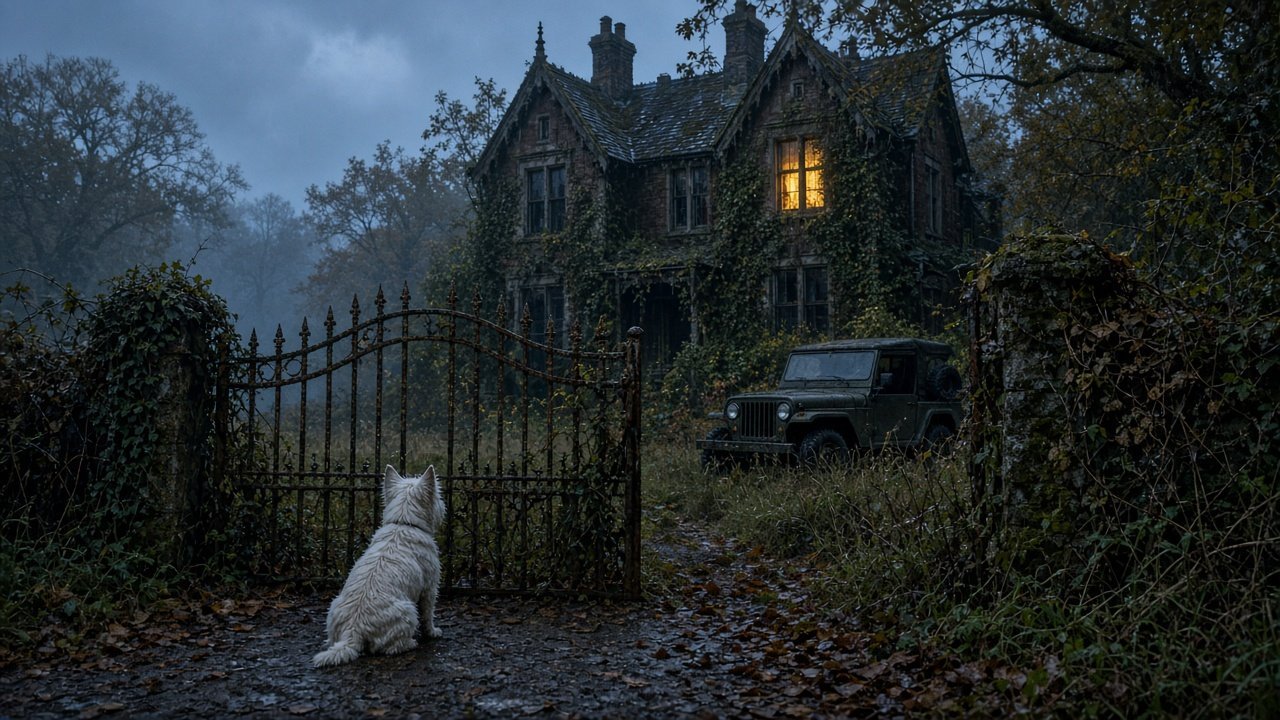
A lost dog, a missing girl and a house one woman barely escaped. We untangle It Could Have Been Her, its layered ending and the epilogue that changes everything.
She Ran From That House 25 Years Ago. Now a Lost Dog Has Led Her Back
It Could Have Been Her is Lisa Jewell's 2026 thriller about a woman who once escaped a stranger's house on the edge of Hampstead Heath, and who returns a quarter of a century later to discover what happened to the women who did not get away. It begins with something small, a little white dog wandering alone in the woods, and widens into the story of a missing girl, a family with terrible secrets and a series of crimes stretching back decades. This guide begins with what you need to know before reading, then gives a full spoiler warning and tells the story in the order the book reveals it, before answering the questions readers ask most: who killed Annie, who killed Allen and Claire, how many killers there really are and what the epilogue changes.
Where the Story Came From
Jewell has said the novel began on a dog walk. In an interview with The Hindu published in November 2026, she described another dog appearing without an owner, and her mind racing to the idea that its microchip might lead somewhere on the other side of the country. The house at the centre of the book also came from a walk: she told the paper that it is a real house on the edge of Hampstead Heath in north London, in an area with a strange atmosphere, and that she knew she had to set a book there as soon as she saw it.
She also said she realised as she wrote that the story echoed the crimes of Fred and Rosemary West, the British serial killers whose wife was complicit and whose children knew something was wrong. And she told Times Now that the most important element of the book came late: halfway through, she decided her detective needed a personal reason to care, gave her a terrifying night in the same house years earlier, and, in her words, flipped the whole book over.
What Kind of Book Is It?
It Could Have Been Her is a psychological thriller, a crime story more concerned with secrets, motives and damaged minds than with police procedure. It is told from several points of view and across several timelines, so chapters set in the present day alternate with chapters from the past inside the house. Kirkus compared its heroine to Miss Marple, Agatha Christie's amateur detective, and Jewell has said the comparison became obvious to her as she wrote.
A few places and terms help. Hampstead Heath is a large, wild park in north London, and the Vale of Health is a small, secluded hamlet of houses tucked inside it. Dorset is a rural county on England's south coast, about three hours from London. A cold case is an unsolved investigation reopened years later. A DI, or detective inspector, is a mid-ranking police detective in England. And EMDR is a form of psychotherapy used to treat trauma, in which patients are guided to revisit distressing memories.
Who Is Jane Trevally?
Jane first appeared as a minor character in Jewell's 2025 novel Don't Let Him In, but you do not need to have read it. Here she is 55, twice divorced, living alone with four dogs in Rosebery Hall, the crumbling Dorset country house she inherited from parents who neglected her. She married wealthy men for security and now has little money, no job and no direction, and she is thinking of selling the house. She is warm, nosy and very good at getting people to talk. And she has never forgotten one night in her late twenties when she went home with a charming older man and only just got out.
The Black Family: Who's Who
The cast is large, and many readers say keeping track of it is the hardest part of the book, so it helps to know the household before the story starts. Allen Black is the charming patriarch of Thornwood, long gone by 2026, with no explanation the neighbours have ever been given. Annie, his wife, is cold, proud and still living in the house in old age. Their daughter, Jessamine, once a striking young woman with acting ambitions, is now a heavy drinker who rules the house through moods and threats. Their son, Jasper, left as a teenager and has spent his adult life on the road. Daisy, Jessamine's daughter, has grown up in the house with all of them. And Stuart, Jessamine's partner of about ten years, is the outsider who stayed.
On Jane's side are Dexter Lombardi, her 23-year-old former stepson and favourite of all her stepchildren; his father, Tony, her wealthy second ex-husband, who encourages her detective work; Tony's former security consultant, Tobias Wilson, who knows how to find records; and Hester, the local vet who scans Hugo's microchip.
Spoiler warning: the following summary discusses the plot, major twists, the ending and the epilogue of It Could Have Been Her.
Content note: the novel includes murder, serial killing, abduction and imprisonment, rape and sexual violence, the abuse of children, coercive control in a relationship, alcoholism, suicide and the death of an animal. The summary describes these events without graphic detail.
The Dog in the Woods
In May 2026, Jane finds a lost West Highland terrier wandering alone in the woods near her home. Her local vet scans his microchip. His name is Hugo, and he is registered to a man called Stuart Tucker at an address in Hampstead.
Jane knows the address. About 25 years earlier, in a bad period of her life, a handsome stranger picked her up in a bar and invited her back to his house, a secluded place called Thornwood on the edge of the Heath, talking of a job looking after children. He made her a drink. Before she could finish it, she heard a scream and something falling upstairs, felt that she was in terrible danger and ran. She has always believed that if she had stayed, she would have died.
The House on the Heath
With her former stepson, Dexter, Jane drives to London to return Hugo. The man who opens the door is not the man from the bar. Stuart is scruffy, defensive and plainly unhappy to see her, but he takes the dog. Through a window, Jane glimpses a haunted-looking woman. She leaves certain that something is still wrong inside Thornwood.
The Girl Who Called Herself Rose
Back in Dorset, Jane learns that Hugo had been staying at an Airbnb near her home with a young woman calling herself Rose White, who has vanished and left all her belongings behind, as if she meant to come back. Searching the footpaths nearby, Jane finds a discarded school hoodie from a North London academy, marked with the initials DB. She suspects the name Rose White is false and that the girl's disappearance is tied to the house. Encouraged by Tony, and with nothing much else to fill her days, she decides to find out.
The Vale of Health
Jane and Dexter return to the Vale of Health and talk to the neighbours. A neighbour's son, George, recognises the initials on the hoodie: he went to primary school with a girl called Daisy Black. They learn that the house belongs to the Black family. Its current occupants are Jessamine Black, a volatile alcoholic; Stuart, her partner; her elderly mother, Annie; and Jessamine's teenage daughter, Daisy, who has not been seen for weeks. The neighbours describe a strange, closed household and remember a large police visit to the house during the Covid lockdown of 2020. They also mention Jessamine's brother, Jasper, who long ago ran away and became a clown in a travelling circus. Jane begins to suspect that "Rose" is Daisy.
The Cold Case
To find out what the police wanted, Jane turns to Tobias Wilson, the former security man of her second ex-husband. He discovers that the 2020 visit was part of a cold-case investigation into the disappearance of Claire Connolly, a young woman who went missing in 2005 and was last seen near Thornwood. The detective in charge, DI Yasmin Brooks, had noted that Daisy looked uncannily like Claire. Jane also finds a photograph of Jessamine's father, Allen Black, and recognises him as the man from the bar.
The Outhouse
Jane slips onto the Thornwood grounds and finds a small metal outhouse with restraints fixed to the walls, clearly built to hold a person captive. Whatever happened in this house, she now knows, was not her imagination.
Patch the Clown
A poster leads Jane to Martello's Circus, which had been near her village on the weekend Daisy vanished. Its performers tell her that Jasper, who performed as Patch the Clown, disappeared the same weekend. In his abandoned trailer she finds a disturbing clown mask and a letter that eventually leads her to Dr Anthony Twist, a therapist who once treated Jasper and confirms that he is a deeply troubled man still struggling with something that happened in his childhood. People who knew Jasper describe him as odd but harmless, yet Jane hears suspicions that a masked figure had been frightening young women at night, and she begins to wonder whether Daisy went looking for her uncle and found something dangerous.
Inside Thornwood
Between Jane's chapters, the book goes back in time. After Allen and Annie had two children, Annie lost interest in sex, and Allen began bringing young women home. Officially they were au pairs, live-in helpers with the children. In reality Allen preyed on them, and Annie knew. One of them was Claire Connolly, who came to the house in 2005 to return the family's cat and never left.
Other chapters follow Stuart's life since he moved in with Jessamine about a decade earlier. She controls him, threatens to hurt herself if he leaves and cuts him off from his own family. He stays because of Daisy, the only person in the house who needs him, and he becomes in effect her parent, covering for Jessamine's drinking and shielding the girl from the worst of the household. These chapters make Stuart's later behaviour, which looks so suspicious from Jane's side of the story, much easier to understand. He has seen enough, including a disturbing photograph found after the police visit, to know the house hides something. He also learns that DNA testing ruled out the man Jessamine had always said was Daisy's father.
Stuart Breaks
Jane and Dexter follow Stuart to a pub and confront him with everything they have found. He admits the house has a dark history but begs them not to go to the police, saying it would put Daisy in more danger. The next day he invites Jane to Thornwood to hear the whole story first.
Daisy Is Found
Jane goes to Thornwood, and Stuart reveals that Daisy is alive. She has been hiding inside the house for weeks. Daisy explains that when the police came in 2020, the detective showed her a picture of Claire Connolly, and she instantly felt that Claire was her real mother. She became obsessed with the idea. Eventually she tracked down her uncle Jasper at the circus in Dorset, staying nearby under a false name.
What Happened in the Woods
Jasper told Daisy that she was Claire's daughter, but said something had happened that made him run away from home, and that Annie knew the truth. When Daisy pressed him, he turned on her and tried to strangle her. She fought him off and fled, losing Hugo in the woods, and called Stuart to come and get her. That is how the dog ended up near Jane's house.
The Body in the Outhouse
Then Stuart and Daisy take Jane to the outhouse and show her Annie's body. When Daisy got home she had confronted her grandmother about Claire. Annie refused to tell her anything, they fought at the top of the stairs, and Daisy pushed her. Annie fell to her death. Stuart hid the body to protect Daisy. Jane insists that they call the police.
Jessamine's Confession
When they tell Jessamine that her mother is dead, she tells them to call the police and says she will take the blame. When officers arrive, she confesses to pushing Annie down the stairs herself, and tells them Thornwood is a house of horrors. In her version, her father was a predator who lured and imprisoned young women, her mother helped him, and in 2005 Annie killed Allen out of jealousy over Claire, then killed Claire and gave her baby to Jessamine to raise as her own.
The House of Horrors
Beneath Annie's study, police find a trapdoor leading to a hidden warren of rooms where Allen held his captives. They recover the remains of Allen himself and of seven young women, including Claire.
Six Months Later
Jasper's body is found in the woods where he attacked Daisy, and his death is ruled a suicide. Daisy changes her surname to Connolly, her mother's name, and goes to live with neighbours in the Vale of Health. Jessamine enters a rehabilitation clinic for her alcoholism and awaits trial over Annie's death. Stuart is freed from the house, takes Hugo and reconnects with the family he lost touch with. Jane sells Rosebery Hall, plans a new life in London and decides to set up a private investigation agency with Dexter, called Trevally and Son.
The Epilogue
The final pages jump back 18 years, to 2008, and a session between Jasper and Dr Twist. Under EMDR, Jasper returns to the night in 2005 that broke him. He walked into the rooms under the house and found his father dead and Jessamine standing over Claire's body, holding the newborn baby and the small knife Jasper had secretly given Claire. Jessamine told him Claire had killed their father and had to be stopped from escaping. Jasper asked why she had not simply let Claire go, and in that moment understood that his sister was as evil as their father, and that whatever was wrong with his family was in him too.
It Could Have Been Her Ending Explained
Who Killed Annie?
Daisy did, by accident. Every full account agrees that she pushed Annie during an argument at the top of the stairs and that Annie died in the fall. Stuart hid the body, and Jessamine later claimed responsibility to protect Daisy.
Who Killed Allen Black?
This is the question the book deliberately muddies. Jessamine tells the police that Annie killed him. The epilogue shows that this was a lie. In the scene Jasper remembers, Jessamine says Claire killed Allen with the knife Jasper had smuggled to her. Most detailed accounts of the book, including SuperSummary, The Review Geek and Spill the Plot, take that as the truth: Claire, after years of captivity, killed the man who had imprisoned her. One reviewer, at plottwisted.ca, reads the scene more darkly and argues that Jessamine killed both of them. The book only shows Jasper what Jessamine tells him and what he sees, so readers can judge for themselves.
Who Killed Claire Connolly?
Jessamine. On this point every account agrees. Claire was free of Allen and could have left with her baby, but Jessamine killed her, took the child and raised her as Daisy Black.
How Many Killers Are There?
Counting the deaths the book reveals, there are four people responsible. Allen murdered the women he held captive, seven of whom were found under the house, with Annie as his accomplice in hiding his crimes. Claire, on the most widely accepted reading, killed Allen. Jessamine killed Claire. And Daisy caused Annie's death in a struggle she never meant to end that way. Jasper attacked Daisy but did not kill her, and took his own life.
Why Did Jessamine Confess?
Her confession does two things at once. It protects Daisy, the girl she raised, from a manslaughter charge, a killing without intent to murder under the law of England and Wales. It also lets Jessamine control the story one last time, placing the blame for 2005 on her dead mother. Daisy's refusal afterwards to see Jessamine as a victim suggests she understands this.
There is a bitter symmetry here too. Eighteen years earlier, Jessamine refused to let a young mother walk out of Thornwood. At the end, she lets the girl she raised walk out of it, at a cost to herself. Readers can take that as a belated act of love, a last performance, or both. The book's final pages make it impossible to see her as simply a victim, but they do not erase the choice she makes for Daisy.
Is Daisy Allen's Daughter?
Yes. Daisy is the daughter of Claire Connolly and Allen Black, born in captivity under Thornwood. Jessamine is her half-sister, not her mother. Taking Claire's surname is Daisy's way of choosing which parent she belongs to.
What Was Jasper Hiding?
Jasper had spent his life running from that night. He helped Claire by giving her a knife, then saw what his sister did and fled. Jewell presents him as both a victim of Thornwood and a man who became frightening himself, scaring women while dressed as a clown and finally attacking his own niece.
What Does the Title Mean?
The title points to Jane. She went to Thornwood as a young woman, and only chance and instinct got her out. Seven women did not. Jewell told Times Now that survivor's guilt, the sense that "it could have been her", became the emotional heart of the book even though she had not planned it.
What Does the Ending Mean for Jane?
Jane goes into the story with an empty life and a house full of bad memories, and the case gives her a purpose. Solving it also forces her to face what nearly happened to her in 2000, and what did happen to the women after her. Selling Rosebery Hall is her version of Daisy's name change: a refusal to keep living inside the damage of the family she was born into. Trevally and Son, the agency she plans with Dexter, is the first future she has chosen for herself rather than married into.
Will There Be Another Jane Trevally Book?
Not as things stand. Jewell told The Hindu that she would love to spend more time with Jane but feels she has to leave her where the book ends: in therapy, with her childhood home sold and a new life in London ahead.
The Timeline in Order
Because the novel jumps between decades, it is easier to understand once the events are put back in order. What follows uses only the dates that the detailed accounts of the book agree on.
In 2000, a young Jane, newly divorced, goes home from a bar with Allen Black and flees Thornwood before finishing her drink. Around this time Allen begins insisting that the family take in young "au pairs", many of them vulnerable women he has picked up, and some of them vanish.
In June 2005, Claire Connolly, a young woman, returns the family's cat and is taken captive beneath the house. She gives birth to a daughter there. That year Allen dies and Claire is killed, the bodies are hidden in the rooms under Annie's study, and Jessamine begins raising the baby as her own child, Daisy. Jasper runs away.
In 2008, Jasper begins EMDR therapy with Dr Twist and relives the night his father died. This session is the epilogue.
In the mid-2010s, Stuart Tucker begins a relationship with Jessamine and moves into Thornwood, where Annie and the young Daisy also live.
In 2020, during the Covid lockdown, DI Yasmin Brooks reopens the Claire Connolly case, visits the house and shows Daisy a photograph of Claire. Nothing is found, and Daisy begins quietly to believe Claire was her mother.
In 2026, Daisy goes looking for Jasper in Dorset, is attacked and loses Hugo. Back at Thornwood she confronts Annie, who dies in the fall. In May, Jane finds Hugo in her woods, and the investigation that makes up most of the novel follows. Six months later, Jasper's body is found and Jane prepares to leave Rosebery Hall.
Clues Hidden in Plain Sight
Several details point towards the truth long before the final chapters. The rusting old jeep in Thornwood's driveway is the same one Jane saw in 2000, a sign that nothing in the house has moved on. Daisy's striking resemblance to Claire Connolly was obvious enough for a detective to notice when she saw the girl in the garden. The DNA test that ruled out the man Jessamine named as Daisy's father showed that her story about Daisy's birth was false. Annie's stony silence, in a house where her husband had simply disappeared, suggested that she knew exactly where he was. And Jasper's warning to Daisy, that Annie knew what happened, was true, but not in the way Daisy assumed.
Is It Based on a True Story?
No. The characters and crimes are invented. Jewell has said the house itself is real, a property on the edge of Hampstead Heath that caught her eye on a walk, but she has not identified it, and there is no suggestion that anything like the Black family's crimes happened there. The most important real-world echo is the case of Fred and Rosemary West in Gloucester, which Jewell told The Hindu informed her idea of a household where the wife was complicit and the children knew. The lost dog, too, came from real life: it is the kind of near-miss, she says, from which all her books grow.
Inherited Damage
The book's darkest idea is that cruelty passes down a family like an infection. Jessamine copies her parents' manipulation, Jasper is destroyed by the fear that he carries it too, and Daisy survives by cutting herself off from the Black name.
Chance and Instinct
Jane's story turns on one decision made in seconds. Jewell has said she sees intuition as a form of intelligence, and the novel asks how much of a life is shaped by the moments when we listen to our gut, or ignore it.
Respectable Houses
Thornwood looks like a quirky family home in one of London's most desirable corners. The horror is that neighbours, police and visitors walked past it for decades.
Starting Again in Midlife
Jane is a heroine in her mid-fifties with no job, no partner and no plan, and the book gives her a purpose rather than a romance.
How Readers Have Responded
Reaction has been split. Kirkus praised it, and Jewell's UK publisher quotes early readers calling it her best book yet and praising its denouement as one they did not see coming. Readers who love it tend to single out Jane herself, a funny, impulsive, middle-aged heroine who is rare in the genre, and the slow way the past chapters close in on the present. Jewell has said that one reader even asked whether Jane was based on a real person she could meet for a cup of tea. Some readers have found the large cast and shifting timelines hard to follow, and plottwisted.ca called it overcrowded. Those who already enjoy Jewell's twisting family thrillers, such as None of This Is True, are likely to find the same pleasures here; Taylor Tailored's guide to None of This Is True and its unreliable stories explains how that novel plays with what its narrator can be trusted to say.
It Could Have Been Her starts as a cosy-sounding mystery about a lost dog and a nosy woman with time on her hands, and ends as one of Jewell's bleakest books: a story about the women who never left Thornwood, the children raised inside its lies and the one woman whose instinct saved her. Its final page does not add a new victim. It takes away the last person readers might have pitied, and leaves Jane, and the reader, to live with how close she came.
Sources
It Could Have Been Her, Penguin UK (Century hardback, 2 July 2026)
It Could Have Been Her, Rizzoli Bookstore (Atria, 23 June 2026)
It Could Have Been Her, Kirkus Reviews
Readers' Favorite Mystery & Thriller, Goodreads Choice Awards 2026
Lisa Jewell: 'I will never sell out my characters', Mini Anthikad Chhibber, The Hindu, 11 November 2026
Lisa Jewell Says 'I'm Obsessed With Houses And The Secrets That They Contain', Times Now
Plot and ending corroboration: SuperSummary, The Review Geek, Spill the Plot, SpoilThePlot and Plot Twisted (all read 12 November 2026; conflicts are named in the body)
