Lonesome Dove Summary: Full plot, Themes, and Ending Explained
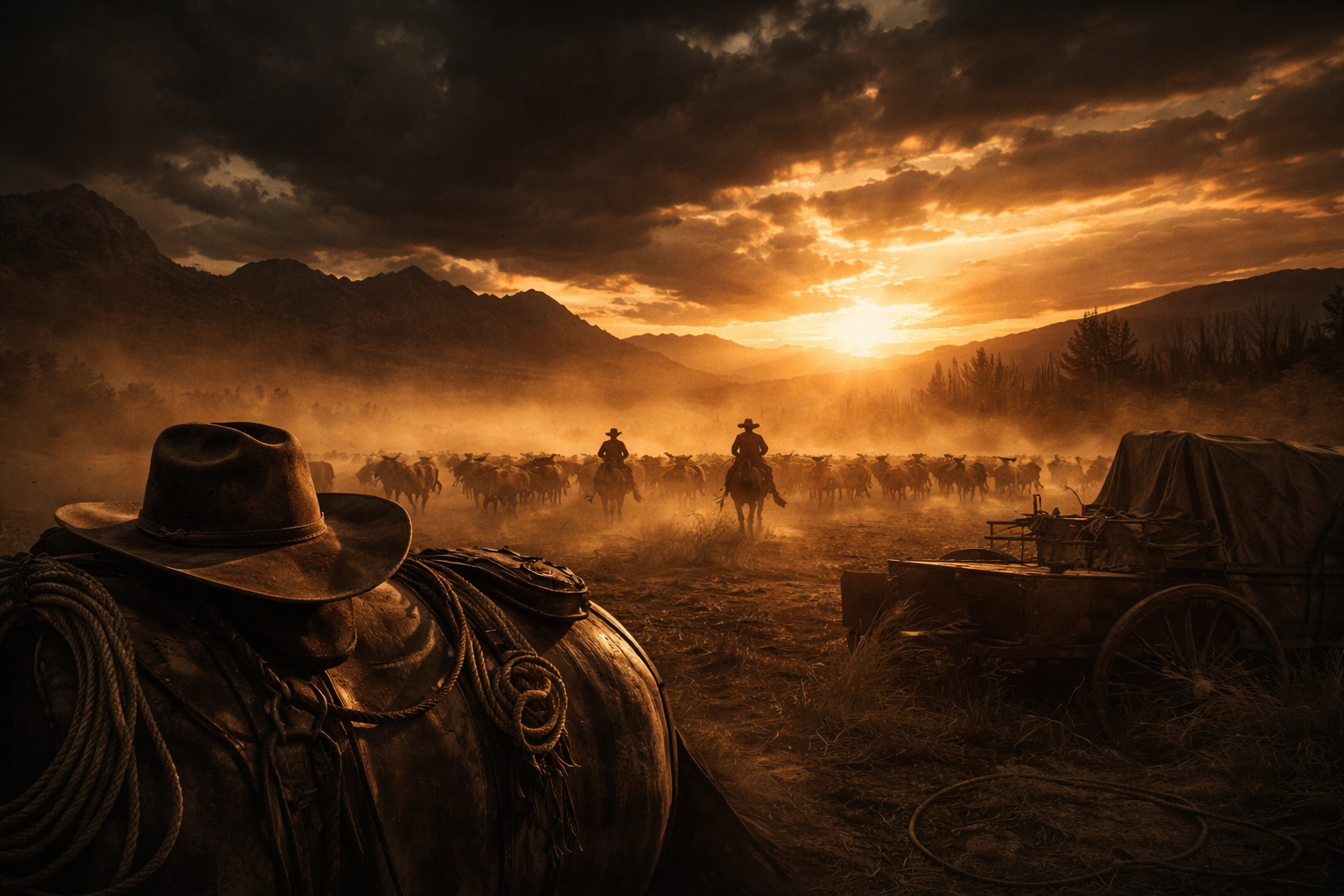
Lonesome Dove Plot Summary and Analysis of Larry McMurtry’s Classic Western
Larry McMurtry’s Lonesome Dove, published in 1985, is one of the defining American novels of the modern Western. It begins with a simple premise: a group of former Texas Rangers and cowboys decide to drive cattle from a sleepy settlement on the Texas border all the way to Montana. What makes it endure is not just the scale of that journey but the human weight McMurtry gives to every mile of it.
At the center of the novel are two old partners, Woodrow Call and Augustus McCrae, men bound by years of danger, habit, and loyalty, yet divided by temperament and by what each thinks a life is for. Around them gathers a larger world of restless drifters, young men looking for purpose, women trying to survive male promises, and people discovering that the West offers as much loss as freedom.
The tension that drives the story is larger than whether the cattle drive succeeds. It is whether these characters can outrun regret, loneliness, and the lives they have already made for themselves.
Full Plot Summary
Spoilers start here.
Opening Situation and Inciting Incident
The novel opens in the small, half-forgotten settlement of Lonesome Dove, near the Texas-Mexico border. The place is rough, hot, and barely civilized. It is home to the Hat Creek Cattle Company, run by two retired Texas Rangers, Woodrow Call and Augustus McCrae. Once they were feared and admired lawmen. Now they live in a dusty corner of the frontier, keeping a modest herd, arguing, reminiscing, and filling time in different ways.
Call is disciplined, hard, silent, and relentless. He works as though labor itself is a moral law. Gus is his opposite in manner, though not in courage. Gus is talkative, witty, and lazy by comparison, fond of drink, women, and conversation, yet still dangerous when danger comes. The contrast between them gives the novel much of its energy. Call believes in duty and motion. Gus believes in pleasure, irony, and the value of understanding how little control most people really have.
The rest of the Hat Creek outfit is also carefully established. Joshua Deets, one of their oldest companions, is steady, capable, observant, and deeply loyal. Pea Eye Parker is dependable, brave, and plain. Newt Dobbs is a young hand, eager to prove himself and hungry for recognition, especially from Call. Though Call never openly says so, nearly everyone assumes that Newt is Call’s son by Maggie, a dead prostitute. Newt knows the rumor and lives in the shadow of it. He wants from Call what he is least likely to receive: simple acknowledgment.
Life in Lonesome Dove is stagnant until Jake Spoon rides in. Jake is another former Ranger, charming, irresponsible, and unreliable in ways his friends understand immediately. He has been away for years. He returns with stories and with trouble. He is fleeing the law after accidentally killing a man in Fort Smith, Arkansas. The dead man’s brother is the local sheriff, July Johnson.
Jake also brings something else: a vision of Montana. He talks of open country, rich grass, untouched land, and the possibility of building something grand there. To most men, it sounds like a fantasy. To Call, it sounds like purpose. He is already restless in retirement, unable to accept a diminished life. Jake’s stories ignite him. Call decides they should gather cattle and drive them north, beyond the settled routes, to start a ranch in Montana.
At first the plan seems excessive even by frontier standards. It is long, dangerous, expensive, and uncertain. Gus resists because he sees the absurdity in all grand schemes, but he is also tempted. The journey north would put him closer to Clara, the great love of his life, a woman he never married and never forgot. That possibility matters more to him than cattle or ambition. Once Gus agrees, the drive becomes real.
The outfit begins preparing. They steal cattle from Mexico, assemble horses, and recruit cowboys. Among those drawn into this orbit is Lorena Wood, the local prostitute, who dreams of escaping her life. She attaches her hopes to Jake Spoon because he is charming and because he talks about cities, especially San Francisco, as if a different life could be reached by simply riding far enough. Jake encourages her without much seriousness. Lorena mistakes his easy talk for commitment.
Meanwhile, in Arkansas, July Johnson begins his pursuit of Jake. July is young, decent, and earnest, but not yet hardened. His marriage to Elmira is already strained. Elmira is cold, dissatisfied, and detached from him. While July goes after Jake, Elmira leaves to search for Dee Boot, an old lover and the father of her child. July’s personal life breaks open at the same time his public duty begins.
This early part of the novel sets multiple journeys into motion at once. Call and Gus head toward Montana. Jake tries to drift free of consequences. Lorena chases a promise. July chases Jake and, before long, chases his vanished wife. Every path begins with desire, but desire in Lonesome Dove is almost never enough to guide anyone safely.
What changes here is that a town defined by routine suddenly becomes the starting point for several life-altering quests.
Rising Conflict and Major Turns
Once the cattle drive begins, the novel opens outward in scale. The Hat Creek outfit moves north across Texas with a huge herd, dealing with heat, rivers, storms, accidents, and the ordinary labor of moving animals across enormous distances. McMurtry makes clear that a cattle drive is not romantic freedom. It is relentless work. Men are exhausted, frightened, and often bored. The grandeur of the landscape exists beside filth, monotony, and sudden death.
Newt grows during this phase. He watches the older men closely, trying to become a cowboy worthy of the name. He admires Call’s competence even though Call remains emotionally unreachable. Call notices Newt more than he admits, but he cannot bring himself to give the boy what he wants. That silence becomes one of the novel’s deepest emotional wounds.
Jake does not fully commit to the drive. He falls into an idle attachment with Lorena, then drifts away from responsibility as soon as effort or sacrifice is required. Lorena had imagined Jake as a way out of degradation. Instead, he treats her like an accessory to his own freedom. Her situation becomes more dangerous because she has trusted the wrong man.
At the same time, July Johnson’s pursuit grows stranger and sadder. He leaves Fort Smith with his young stepson, Joe, and eventually crosses paths with all kinds of frontier hardship. July is not built like Call or Gus. He is conscientious rather than heroic, but he keeps moving because duty and confusion both push him forward. Back in Arkansas, his deputy Roscoe Brown is left in charge. Roscoe is timid and overwhelmed. When he later goes in search of July, his own journey becomes a chain of accidents, fear, and absurdity that still leads into tragedy.
One of the most important turns comes when Jake abandons Lorena. He grows tired of the burden she places on him and slips away to gamble and wander. Lorena, now isolated and exposed, is abducted by Blue Duck, a terrifying outlaw and former enemy of the Rangers. Blue Duck is one of the novel’s most chilling figures because he represents predation without glamor. He is not an adventurous villain. He is cruel, patient, and empty of remorse.
Lorena’s capture changes the emotional tone of the novel. The West is no longer merely hard; it is intimate in its brutality. Gus goes after her. He is motivated by decency, by protectiveness, and by the fact that he understands Lorena’s vulnerability more clearly than Jake ever did. During the pursuit, Gus crosses paths with July Johnson. Their meeting joins two narrative lines that have been moving separately across the frontier.
The rescue itself is costly. Gus and July attack Blue Duck’s camp and recover Lorena, but not before more damage is done. Blue Duck escapes. Roscoe, Joe, and Janey are killed. July, who had already been a man adrift inside his own life, is left even more hollowed out by grief. His pursuit no longer feels like a simple lawman’s duty. It becomes part of a larger pattern in which almost every attempt to set life right arrives too late.
Lorena survives, but survival is not restoration. She returns traumatized, frightened, and unable to resume life as before. McMurtry does not reduce her suffering to a convenient plot device. Lorena becomes withdrawn and distrustful, and she clings to Gus because Gus has become the one man associated with safety rather than use. Their bond is tender but uneven. Gus feels affection and pity. Lorena wants security and perhaps something more stable than the life she has known. Yet Gus is still emotionally tied to Clara, and his deepest loyalties lie elsewhere.
The drive continues north into Nebraska. This phase brings one of the novel’s most emotionally revealing episodes: Gus’s reunion with Clara. Clara is no fantasy when Gus finally reaches her. She is strong, intelligent, wounded by life, and fully aware of Gus’s limitations. She knows he loved her, but she also knows love without commitment is not enough. Clara has built a life through endurance rather than romance. Her husband is gone, her burdens are real, and she sees Gus with both old feelings and sharp judgment.
Their scenes together expose what has been hidden beneath Gus’s charm. He is lovable, perceptive, and brave, but he is also a man who let life happen rather than choosing fully. Clara tells him hard truths. She also sees more clearly than anyone the damage Call does through emotional refusal, especially in relation to Newt. Clara understands that strength without tenderness can become its own form of cruelty.
Lorena, meanwhile, begins to shift away from Jake’s illusion and toward Clara’s example. Clara offers the kind of female authority and realism Lorena has never known. In Clara’s household, Lorena glimpses a different model of survival, one built not on male rescue or fantasy but on competence, self-possession, and hard-earned dignity.
After Nebraska, the journey grows harsher. The company pushes farther into dangerous country. Several men die over the course of the drive, some in accidents, some through violence. One of the most devastating losses is Deets. When horses are stolen by Native men, Deets goes in pursuit with the others. He has always been the quiet center of competence in the outfit, a man whose loyalty has been taken for granted because it is so constant. He is killed during the chase.
Deets’s death lands with immense force because it strips away any remaining illusion that skill and goodness can protect a person. For Call, Gus, Newt, and the rest, Deets has been part of the structure of their lives. His death is not just grief. It is the collapse of something stabilizing and just. McMurtry lets the event sit with its full weight.
Soon after, Gus tells Newt directly that Call is his father. It is not a public declaration from Call himself, which matters. Newt receives the truth at a moment when he is already overwhelmed by loss and exhaustion. The information does not transform his life in the way he once imagined because Call still will not say it plainly. Even truth can arrive in an incomplete form.
The cattle drive presses into Wyoming and then toward Montana. Hardship intensifies. The land is vast, beautiful, and indifferent. Hunger, weather, fatigue, and distance become nearly abstract in their scale. The dream of Montana remains alive, but by now that dream has consumed lives. It is no longer just ambition. It is a test of what these men are willing to lose in order to keep moving.
Near the end of the journey, Gus and Pea Eye ride ahead and are attacked by hostile warriors. Gus is badly wounded by arrows in the legs. They take shelter in a makeshift position by the river, trapped and exposed. The novel slows into an ordeal. Gus, who has talked so easily for hundreds of pages, now faces the raw physical reality of pain, infection, and mortality.
He sends Pea Eye for help. Pea Eye’s return journey is almost impossibly brutal. He loses clothing, supplies, and nearly his mind, wandering half-dead until he is found. That suffering matters because it shows the depth of loyalty within the outfit. These men are not bound by sentimentality but by acts of endurance for one another.
Call rides to rescue Gus, but by the time he reaches him, the old structure of partnership is already breaking apart. Gus has been taken to Miles City, where a doctor amputates one leg to save him. The other leg is also infected. The doctor wants to amputate again. Gus refuses. He will not live as an invalid. It is a terrible, stubborn, fully in-character decision.
In his final days, Gus settles unfinished matters as best he can. He writes letters. He asks Call to acknowledge Newt. Most importantly, he makes Call promise to carry his body back to Texas and bury him in an orchard he remembers. The request is enormous. It is practical madness and emotional truth at once. Gus wants to go home, but more than that, he wants Call to bear love as duty, openly and physically, all the way across the continent.
What changes here is that the cattle drive stops being mainly a test of ambition and becomes a reckoning with death, love, and the cost of emotional silence.
Climax, Resolution, and Final Note
The climax of Lonesome Dove is not a single gunfight or showdown in the conventional Western sense. It is the sequence surrounding Gus’s death and Call’s response to it. That is where the novel answers its deepest question. The question is not whether the men can reach Montana. They can. The question is whether a life built on action, restraint, and endurance can also make room for tenderness before time runs out.
Gus dies after refusing the second amputation. Call tries, in his own severe way, to save him, but there are limits even to Call’s will. With Gus’s death, the novel loses one of its great centers of warmth and irony. For Call, the loss is devastating because Gus was the person who gave shape and counterpoint to his entire life. Without Gus, Call’s stoicism is exposed as both admirable and impoverished.
The drive itself does technically succeed. The surviving men reach Montana and establish the ranching future that Call imagined. The land is rich. The original vision was not a lie. Yet achievement no longer feels triumphant. Too many people are gone. Too much human meaning has leaked out of the enterprise. Success exists, but it is hollowed by what it cost.
Call then undertakes the most unforgettable act in the novel: he carries Gus’s body all the way back to Texas for burial, honoring the promise exactly. It is an act of loyalty beyond reason, and because it is so grueling, it becomes Call’s truest expression of love. He cannot say what he feels in the ordinary ways of life. He can only prove it through suffering, distance, and obedience to a promise.
On the return journey, Call remains unable to do what Gus wanted most from him. He still cannot fully claim Newt as his son in the simple human terms that matter. He leaves the boy property and tokens of regard, but not the spoken acknowledgment that would heal the wound. That failure is crucial. Call is not transformed into a more emotionally generous man. He changes only within the narrow language he knows: endurance, labor, and completion.
By the time Gus is buried in Texas, the novel has turned elegiac. The West these men belonged to is fading. Friendship has outlasted adventure but not death. Ambition has reached its destination, but not in a way that redeems the losses along the road.
The ending lands on a note of grandeur mixed with desolation. It honors courage, loyalty, and competence while refusing to pretend those virtues are enough to save people from regret.
Analysis and Themes
Theme 1: Friendship and unfinished love
Claim: The deepest relationship in Lonesome Dove is the friendship between Gus and Call, and the novel treats that bond as more enduring than romance.
Evidence: From the beginning, Gus and Call function as opposites who complete each other’s way of moving through the world. Gus interprets life through wit and feeling, while Call answers life through work and discipline. Gus’s final request that Call carry his body back to Texas makes visible what their years together already mean. Call’s exhausting fulfillment of that promise becomes his purest act of devotion.
So what: The novel suggests that some of the most powerful human attachments are not the ones culture most readily names. It also shows how men may love each other profoundly while lacking the language to say so. That remains recognizable today in friendships shaped by work, hardship, and loyalty rather than confession.
Theme 2: The cost of emotional restraint
Claim: Strength in Lonesome Dove is often admirable, but when taken too far, it leaves irreversible damage.
Evidence: Call’s leadership keeps the drive alive, yet the same reserve that makes him effective also prevents him from acknowledging Newt openly. Clara sees this clearly and judges him for it. Even when Gus asks Call directly to claim Newt, Call cannot quite do it. He can cross a continent with a corpse, but not a few feet of emotional distance.
So what? The novel is devastating on the subject of masculine self-control. It respects toughness, but it also exposes how restraint can become avoidance. In modern terms, it speaks to fathers, managers, partners, and friends who think provision alone excuses emotional absence.
Theme 3: The myth and brutality of the frontier
Claim: McMurtry uses the Western form to strip romance away from frontier expansion without destroying the grandeur of the landscape.
Evidence: The cattle drive contains beauty, adventure, and scale, but it is also full of exhaustion, fear, injury, violence, and random death. Lorena’s abduction, Deets’s killing, and Gus’s lingering medical decline all push against any easy idea of the West as freedom. Even the successful arrival in Montana feels morally complicated because the route there is paved with suffering.
So what: This gives the book its unusual force. It neither mocks the West nor simply celebrates it. Instead, it shows how national myths are built from labor and violence at the same time. That dual vision still matters in any society that prefers heroic stories to inconvenient truths.
Theme 4: Women, survival, and disillusion
Claim: The novel gives many of its women lives shaped by male decisions, but it also lets them become some of the clearest thinkers in the story.
Evidence: Lorena begins as someone trapped by prostitution and fantasy, especially her fantasy of Jake. Her trauma forces a brutal education. Clara, by contrast, has already passed through illusion. She sees Gus lovingly but without sentimentality, and she understands Call’s failings with unsparing clarity. Elmira offers another version of disillusion, one that curdles into emotional detachment.
So what: The women in Lonesome Dove are not decorative figures orbiting male adventure. They reveal the moral consequences of male irresponsibility, self-deception, and silence. The book becomes richer because it measures the Western hero against the people forced to live with his limitations.
Character Arcs
Protagonist: If the novel has a central protagonist, it is Call, though McMurtry distributes attention widely. At the start, Call believes duty, effort, and forward motion are enough to make a life honorable. By the end, he still lives by that code, but the novel has shown its incompleteness. He does not become emotionally fluent. That is part of the tragedy. Yet his return journey with Gus’s body reveals that love has always existed inside him, trapped in the only form he knows how to express.
Gus’s arc is different. He begins as a man who sees clearly but does not always commit. He is charming, brave, and emotionally perceptive, yet he has allowed key parts of life to remain unresolved, especially with Clara. By the end, Gus is the novel’s great source of humanity. Death does not improve him into sainthood. It reveals that his openness, however flawed, gave meaning to the whole enterprise.
Newt’s arc is the coming-of-age line that runs beneath the larger epic. He starts as a boy wanting recognition and ends as a young man who has learned that adulthood often means receiving less love and certainty than one hoped for. That hardening is one of the novel’s quiet sorrows.
Craft and Structure
One reason Lonesome Dove works so powerfully is its scale. McMurtry gives the novel the breadth of an epic, but he keeps emotional access through short scenes, sharp dialogue, and constant movement between characters. The book is large without becoming shapeless because every subplot circles the same basic concerns: longing, loyalty, drift, and mortality.
The structure also matters. By following several journeys at once, McMurtry shows that the West is not one heroic line of progress but a field of intersecting hopes. Call and Gus ride toward Montana. July rides toward duty and loss. Lorena rides toward safety. Each path alters the others. This creates a sense that destiny in the novel is less a straight road than a series of collisions.
Dialogue is another major strength. Gus in particular gives the novel humor, rhythm, and warmth, but the speech never feels ornamental. Characters talk the way they survive: by deflecting pain, testing one another, or refusing to say the most important thing directly. That makes the emotional breakthroughs more powerful when they arrive.
Finally, McMurtry’s control of tone is extraordinary. The novel can be funny, brutal, tender, and anticlimactic in rapid succession. That tonal range is exactly why it feels true. Life on the frontier is not one mood. It is absurdity beside terror, beauty beside filth, and loyalty beside selfishness. The form holds all of it.
Relevance Today
Lonesome Dove still feels current because it understands how work can become identity. Call is the kind of man who confuses usefulness with wholeness. That pattern is easy to recognize in modern work culture, where achievement and endurance are often valued more openly than intimacy, reflection, or emotional presence.
The novel also speaks to how people build fantasy lives out of distance. Jake sells Lorena a dream of somewhere else. Today the scenery may be different, but the pattern remains familiar in social media, dating culture, and self-reinvention myths. The idea that another city, another person, or another job will solve the self is still powerful and still dangerous.
Its treatment of masculine identity also remains sharply relevant. Lonesome Dove does not mock toughness, competence, or stoicism. It shows their value. But it asks what happens when those virtues become a prison. In a period when many men still struggle to express grief, care, dependence, or tenderness, the novel feels less historical than diagnostic.
The book also resonates in its view of power and violence. The frontier is not merely adventurous territory. It is a zone where law is weak, force is personal, and vulnerable people pay the price first. That understanding connects easily to modern conversations about state power, social breakdown, gendered violence, and the human cost of systems that glorify conquest while hiding their victims.
There is also a class dimension that still matters. Most of the novel’s characters work brutally hard in conditions they do not control. Their lives are shaped by geography, employers, weather, random danger, and the decisions of stronger personalities. That instability resembles modern precarious labor more than the nostalgic frontier myth.
Finally, Lonesome Dove remains relevant because it understands aging and disillusion without surrendering to cynicism. Its characters keep moving even after discovering that many of their hopes came too late, cost too much, or were attached to the wrong people. That tension between persistence and regret is timeless.
Ending Explained
The ending means that achievement cannot cancel emotional failure, but loyalty can still carry dignity even when it comes too late.
On the surface, the novel ends with a successful cattle drive and with Call fulfilling Gus’s burial wish. In practical terms, the mission works. The cattle reach Montana. The dream of building something new is realized. But the emotional truth of the ending is harsher. The success is inseparable from the deaths, separations, and missed chances that made it possible.
What the novel resolves is the external journey and the bond between Call and Gus in its final form. Call proves his love through action by carrying Gus home. What it refuses to resolve is the wound between Call and Newt. Call never becomes the father Newt wanted in any direct way. That refusal is not a loose end. It is the point. Some people do not change enough, even when life gives them every reason to.
The final feeling the ending leaves behind is one of grandeur shadowed by loss. It honors endurance, but it does not confuse endurance with fulfillment. The road was real. The friendship was real. The love was real. Yet so were the silences that made all of them harder than they had to be.
Final Take
Lonesome Dove lasts because it is much bigger than a Western and much sadder than its frontier premise first suggests. It gives readers adventure, humor, landscape, danger, and unforgettable characters, but it also gives them a mature vision of regret, male friendship, labor, and the things people discover too late about themselves.
This is a novel for readers who want immersive storytelling, strong characters, emotional depth, and a long narrative that earns its size. It is especially powerful for readers who like epics with moral weight rather than simple heroics. Those looking for a fast, conventionally triumphant Western may admire it without fully loving it, because McMurtry is too honest to leave the myth untouched.
In the end, Lonesome Dove is about the distance between what a life looks like from the outside and what it costs the people who actually live it.
