

The Gulag Archipelago Summary: Solzhenitsyn’s Masterpiece of Power, Fear, and Moral Survival
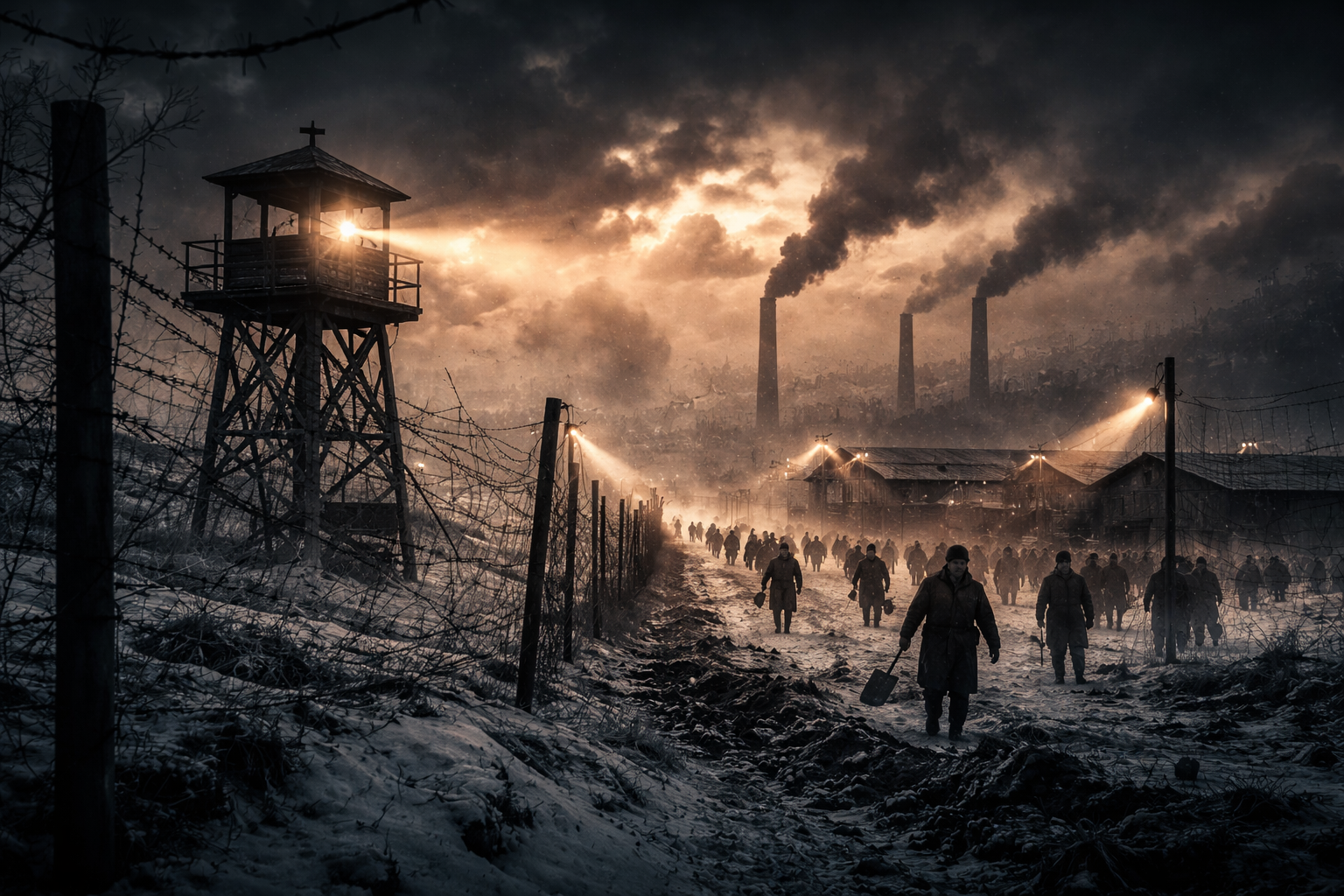
Gulag Archipelago Explained: Full Summary & Key Themes
The Gulag Archipelago is a 1973 nonfiction work by Aleksandr Solzhenitsyn, built from personal experience, historical reconstruction, and testimony from many other prisoners.
Anyone looking for a serious Gulag Archipelago summary is not just looking for a list of events. The real challenge is to understand how Solzhenitsyn turns millions of arrests, interrogations, prison transfers, camp routines, and broken lives into one clear picture of how a state can build terror into everyday life.
He shows that the Soviet camp world was not a distant accident but a central truth of the regime.
Full Plot
Spoilers start here.
Act I: Setup and Inciting Incident
The Gulag Archipelago begins not with a single hero setting out on a quest but with the blunt fact of arrest. Solzhenitsyn presents arrest as the true opening scene of life under totalitarian rule. A person may be living an ordinary existence, holding a job, serving in the military, teaching, writing letters, returning home, or simply going about the routines of private life, and then everything stops. The state appears. The person is seized. The old world vanishes almost at once.
This point matters because Solzhenitsyn wants the reader to understand that the Gulag does not begin in the camp. It begins the moment the state decides that a citizen can be removed from normal life and placed into a different moral universe. The suddenness is part of the terror. Families are left confused. The arrested person often cannot understand the charge. There may be a search, a sealed file, a rushed order, or a performance of legal procedure, but beneath all of it is the same truth: power has acted first, and explanation comes later, if it comes at all.
From there, Solzhenitsyn moves into the machinery of interrogation. This section is one of the most important parts of the book because it indicates that the Soviet system did not merely punish known wrongdoing. It generated guilt by force. The investigator does not behave like a neutral finder of fact. The investigator is a technician of submission. The goal is to secure a confession, identify accomplices, expand the case, and fit the prisoner into a political narrative already approved by the system.
Solzhenitsyn describes how this pressure works. A prisoner may be deprived of sleep, left standing for long periods, isolated, frightened, threatened, deceived, or manipulated with alternating cruelty and false hope. The body is worn down, but the mind is targeted just as carefully. The prisoner is made to feel that resistance is useless, that memory is unreliable, that refusal is selfish, or that confession may protect a spouse, child, colleague, or friend. In this world, the question is no longer “What happened?” The question becomes, “What statement can be extracted?”
This part of the book gives legal form a grim new meaning. Solzhenitsyn pays close attention to laws such as Article 58, the broad category used to prosecute anti-Soviet activity. The importance of these laws is not just technical. Solzhenitsyn shows that once the state can define opposition however it likes, almost anything can be criminalized. A remark, an association, a letter, a silence, a joke, a rumor, a misinterpreted conversation, a connection to the wrong person, or simply the need to fill a quota can all become enough. Law still exists on paper, but in practice it has become a flexible tool of state aggression.
In the early chapters, Solzhenitsyn also begins to expose the atmosphere that allows this system to work. Citizens live in a world where arrest is possible. They live in a world where everyone knows, somewhere inside, that arrest is possible, but many push that knowledge away because daily life must continue. That uneasy coexistence between fear and routine is one of the book’s defining conditions. The state thrives not just because it is violent but because normal life continues around its violence.
At this stage, the book is still close to the individual prisoner’s experience. The reader feels the shock of arrest, the claustrophobia of questioning, the collapse of certainty, and the terror of realizing that innocence does not function as protection. But Solzhenitsyn is already preparing a larger argument. He stresses that these are not isolated tragedies. These are repeated entries into a giant hidden system.
The first act ends with the prisoner being formally absorbed. A sentence or administrative punishment arrives. The person is now no longer merely under suspicion. The person has been translated into the categories and pathways of the Gulag world.
What changes here is that random personal catastrophe is revealed as the intake mechanism of a vast state structure.
Act II: Escalation and Midpoint Shift
Once the prisoner has been sentenced or administratively assigned, the book shifts from interrogation to movement. This is where Solzhenitsyn’s metaphor of the “archipelago” becomes fully clear. The Gulag comprises many different prisons. It is a chain of connected institutions spread across enormous distances: city jails, local holding cells, transit prisons, train convoys, barges, labor camps, punishment compounds, remote settlements, and administrative centers. The prisoner is not just jailed. The prisoner is routed.
Transport is one of the book’s most vivid and degrading processes. Prisoners are packed together, watched closely, given little reliable information, and moved through a sequence of stops they cannot control or understand. The trip itself becomes part of the punishment. Overcrowding, polluted air, hunger, filth, cold, waiting, and uncertainty break down both physical resilience and personal identity. The prisoner becomes one more body in a managed flow.
Solzhenitsyn is especially adept here at showing how bureaucracy and suffering join together. Every transfer has papers, categories, guards, schedules, and administrative logic. Yet at the level of lived experience, it is chaos, terror, and humiliation. The state looks organized from above and brutal from below. That contrast is central to the book’s moral force.
When the camps themselves come into full view, the narrative grows broader and more complex. Solzhenitsyn describes labor camp life not as one uniform experience, but as a whole ecosystem of hardship and hierarchy. Climate matters. Food matters. Work detail matters. Camp management matters. A prisoner’s chances can change based on assignment, season, health, personal connections, or sheer luck. The result is that survival becomes a constant practical struggle.
Scarcity shapes daily life in the camps. Prisoners need calories, warmer clothing, tolerable boots, less punishing work, a place in line, a useful favor, a safer bunk, an ally, a quiet word of warning, and a chance to preserve energy. Each of those needs becomes morally charged because scarcity changes behavior. People who might once have acted generously or proudly are forced into smaller and harsher calculations. Solzhenitsyn is relentless about these points. He wants the reader to see that the Gulag is not just a place of spectacular suffering. It is a machine that reorganizes the smallest habits of human life.
This is where the book becomes especially rich in social detail. The camps contain political prisoners, common criminals, informers, camp authorities, clerks, foremen, functionaries, and varying informal elites. Not all prisoners occupy the same position. Not all guards behave the same way. Not all compromises are equal. Solzhenitsyn studies this shifting human terrain closely because it shows how terror systems sustain themselves. They do not rely solely on direct violence from above. They create rivalries, incentives, corruptions, dependencies, and divisions within the imprisoned population as well.
Trust becomes one of the rarest resources in the book. Under camp conditions, friendship can be meaningful, but it can also be dangerous. To confide in the wrong person is risky. To draw attention is risky. To stand out is risky. To remain passive is risky. To help someone else may be noble, but it may also reduce your chance of survival. The Gulag poisons social bonds by turning necessity into competition and uncertainty into routine.
At the same time, Solzhenitsyn refuses to flatten the prisoners into pure victims without agency. Some prisoners become more selfish, more cunning, or more predatory. Some collaborate. Some inform. Some adapt so well to the system that they lose part of themselves in the process. But other prisoners discover reserves of moral clarity. Some become spiritually deeper. Some hold fast to truth. Some reject the internal corruption the camp tries to produce. Solzhenitsyn is fascinated by this pressure point: what exactly happens to a person when comfort, safety, and status are stripped away?
This chapter is also where he examines the camp staff and the broader class of Soviet functionaries in more detail. Investigators, judges, guards, administrators, and obedient professionals often appear ordinary in outward life. They have routines, ambitions, habits, and workplace roles. The horror lies in the fact that they learn to treat the destruction of other people as an ordinary procedure. The system does not require every servant to be sadistic. It requires them to keep the machine running.
The midpoint shift of the book comes when the reader sees that the camps are not a marginal defect of Soviet life. They are one of its organizing realities. Solzhenitsyn clearly ties the Gulag to the state's legal system, economy, ideology, and methods of rule. Forced labor serves state purposes. Fabricated political guilt serves state purposes. Fear serves state purposes. The prison world is visible because it is relevant. It is hidden because it is central.
Once that realization lands, the book’s scale changes. Solzhenitsyn is no longer simply narrating what happens to prisoners after arrest. He is explaining how an entire society is built around distorted relationships to truth, law, work, speech, and moral responsibility. The Gulag becomes the concentrated expression of habits that extend far beyond prison walls.
He also becomes more searching about complicity. How does a society become able to live beside such a system? How do citizens speak official lies until those lies become the air of public life? How do bureaucrats continue filing papers and drafting reports while families disappear? How do educated people rationalize terror as necessity, progress, or historical duty? Solzhenitsyn's mercilessness stems from his belief that both orders from above and accommodation below sustained the camps.
This moment is the act in which the book stops being merely an exposure of suffering and becomes an anatomy of a civilization sickened by fear and falsehoods.
What changes here is that the Gulag no longer appears as a hidden institution within the regime but as the clearest expression of what the regime really is.
Act III: Climax and Resolution
The final movement of The Gulag Archipelago does not work like the last act of a novel or film. There is no single duel, escape, revolution, or decisive courtroom reversal. The climax is cumulative, moral, and intellectual. By the time Solzhenitsyn reaches the end of his reconstruction, he has assembled enough detail, testimony, pattern, and reflection that the Soviet system stands exposed not as flawed or excessive, but as fundamentally structured around coercion and lies.
In this act, Solzhenitsyn sharpens the book’s deepest argument: the camps matter not only because they inflicted enormous suffering but also because they reveal what happens when a state no longer recognizes limits. When a state places ideology above truth and prioritizes collective abstraction over the individual, it creates no stable boundary against cruelty. The prison camp is not an accident waiting to be corrected. It is the logical endpoint of a certain relationship to power.
This final part of the book also becomes more openly philosophical and moral. Solzhenitsyn reflects on guilt, conscience, repentance, weakness, and self-knowledge. One of the book’s most famous and unsettling ideas emerges here: the dividing line between good and evil does not run neatly between political camps, classes, nations, or parties. It runs through every human heart. That idea matters because it prevents the book from collapsing into propaganda in reverse. Solzhenitsyn is condemning a political system, yes, but he is also warning that the human capacity for self-deception, obedience, and moral surrender is broader than any single ideology.
This does not mean he spreads blame equally. He does not. The architects of terror, the loyal enforcers, the active informers, and the willing bureaucrats remain central targets. But he refuses the comforting fantasy that evil belongs only to obvious villains. The system survives because many people perform smaller acts of surrender. They sign, approve, repeat, ignore, classify, or keep quiet. The book’s climax lies in making that web of responsibility impossible to avoid.
Against the camp system’s attempt to erase, Solzhenitsyn places memory. This is where witness becomes the book’s answer to power. The state wants fear to silence speech, routine to bury outrage, and time to dissolve evidence. Solzhenitsyn responds by naming processes, preserving stories, reconstructing methods, and insisting on moral clarity. To tell the truth accurately becomes an act of resistance.
That gives the resolution its shape. The camps are not undone inside the book in some neat, dramatic triumph. The dead do not return. Broken families remain broken. Lost years remain lost. The scars on individuals and society do not vanish. Solzhenitsyn refuses sentimental closure because the crimes he has described are too large for that.
Yet there is still a form of victory in the ending. The hidden world has been mapped. The euphemisms have been stripped away. The machinery of arrest, interrogation, transport, labor, degradation, and silence has been made visible. A system that depended on concealment has been forced into language. That is the book’s triumph: not comfort, but exposure.
The final emotional note is severe, wounded, and demanding. Solzhenitsyn does not instill in the reader a comforting belief that history inevitably leans towards decency. He leaves the reader with responsibility. Evil grows when people excuse early lies, hand moral judgment over to institutions, and adapt too easily to official language. The duty of the individual is therefore harder and more exacting than mere private innocence. It is necessary to resist falsehood before it hardens into a whole social order.
The ending lands on witness, conscience, and truth. Solzhenitsyn’s argument is that a society cannot stay human if it treats truth as expendable, suffering as administrative residue, and memory as something to be managed. The book closes by insisting that truthful speech is not decoration. It is one of the last defenses against organized dehumanization.
What changes here is that the story stops being only about what the Soviet state did and becomes about what human beings must refuse, remember, and tell the truth about afterward.
Relevance Today
The Gulag Archipelago still speaks to the age of surveillance, data capture, and institutional opacity. Most modern states do not replicate the Soviet camp system, but many institutions still collect vast information while hiding the logic of judgment. Arbitrary power expands when people cannot see how decisions are made.
The book also matters in a media culture flooded with managed language. Public life now runs on euphemism, branding, crisis messaging, and strategic ambiguity. Solzhenitsyn’s warning is that corruption begins long before open terror. It begins when words no longer describe reality honestly.
At work, the book resonates wherever human beings are reduced to metrics, compliance categories, or reputational risk. That is not the same as a labor camp, and it should not be flattened into one. But the underlying habit is recognizable: systems protecting themselves by treating individuals as variables first and humans second.
In politics, the book remains urgent because polarized societies still tempt citizens into moral outsourcing. People hand judgment over to party, tribe, leader, or ideology. Solzhenitsyn’s counterargument is severe: once you stop making moral distinctions for yourself, you become easier to govern through fear and slogans.
In technology, the book illuminates what happens when procedure acquires moral prestige simply because it is efficient. Automated decisions, black-box moderation, predictive policing, and algorithmic sorting can feel neutral. The lesson here is that process without conscience is not safe. It is merely distance from responsibility.
In inequality, the book exposes how easy it is for suffering to become invisible when it is geographically remote and linguistically buried. Modern supply chains, detention regimes, offshore processing, and hidden labor systems all depend on that same invisibility. Distance helps conscience sleep.
In identity and relationships, the book also reaches inward. It asks what pressure does to truths between people. Fear breeds performance. Opportunism breeds silence. Survival can make intimacy transactional. Those patterns belong not only to states but also to families, workplaces, and communities under strain.
The ending means that the ultimate victory in the book is not escape, comfort, or justice in any complete sense, but the recovery of truthful speech.
The book resolves the question of whether the hidden world of the camps can remain hidden. Solzhenitsyn’s answer is no. The archipelago comes into view through testimony, reconstruction, and moral insistence. That does not undo the suffering. It does mean the regime loses one of its most valuable possessions: enforced silence.
What the ending refuses to resolve is the fantasy that exposure automatically repairs history. It does not. The dead remain dead. The compromised remain compromised. The social habits that created the system do not vanish because one book names them. The argument left behind is harsher and more useful than consolation: human beings must resist lies early, because by the time terror becomes visible, it is already deeply built.
Why It Endures
The Gulag Archipelago endures because it does more than inform. It reorders the reader’s moral eyesight. It teaches that oppression is not only a matter of guns and prisons. It is also a matter of paperwork, vocabulary, cowardice, ambition, fatigue, and the small daily surrender of honest judgment.
This book is for readers who want serious nonfiction with moral force, historical scope, and literary power. It is especially strong for people interested in authoritarianism, memory, political violence, and the psychology of systems. Readers looking for a tidy narrative or a light reading experience may find it demanding, repetitive, or emotionally punishing. That is partly because the subject itself resists neatness.
