How Do You Put a Childhood on a Form?
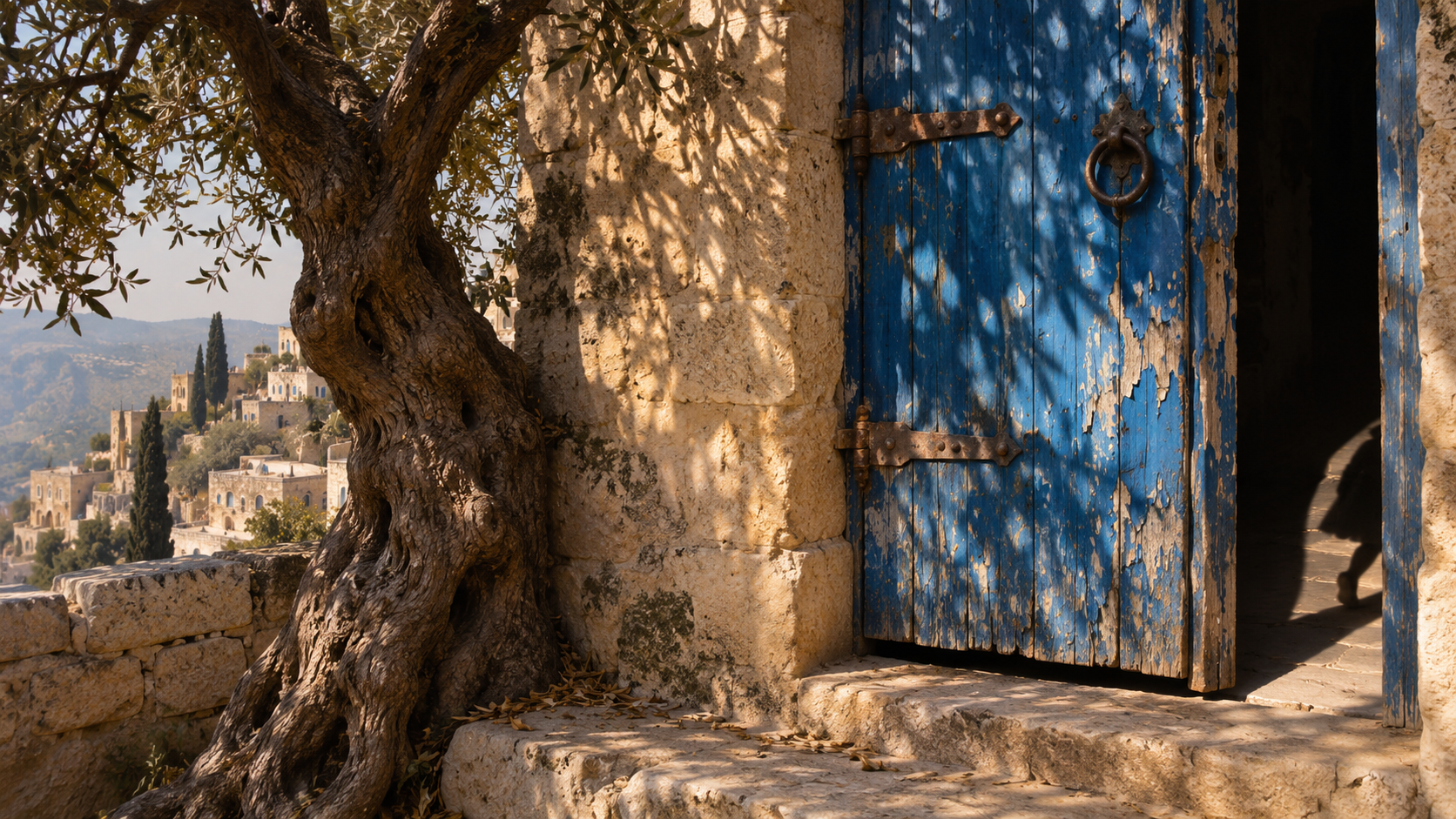
Sufien knows the month he was born. If anyone wants the date, his mother can offer a much better story. She remembers a difficult delivery, bells that seemed to ring across the hills and a midwife with strong opinions about the baby. Years later, an official filling out a refugee document needs a number. Those two ways of knowing a person meet again and again in Hannah Lillith Assadi’s Paradiso 17. A man can spend years in a country, speak its language, love someone there and still have difficulty explaining what he is doing in it. Ask Sufien where he comes from and the shortest honest answer involves a house with a blue door.
The Father Layla Meets in Her Sleep
The first person who gets to see Sufien whole is his daughter, Layla, and even she needs a dream to do it. Her father has died. He appears as the solid young man she remembers from childhood, then takes on the wasted body she knew at his bedside. She recognises both men. The surprise comes when his appearance changes again and she can no longer recognise him by the ordinary signs of flesh and age. By then she accepts that it is him.
What he has to tell her comes in the order things occur to someone with a whole night to talk. The child Layla was before she was born, visible on a screen, belongs beside the granddaughter he lived to tickle. The memory of his mother winning at cards has as much right to interrupt as the history of 1948. Only a little of the encounter survives waking. Assadi gives the reader access to more of the dream than the daughter can carry out of it. We already have a reason to stay with this family. Somebody ought to remember the rest.
There is a real exchange behind that opening. Assadi began writing the novel as her own Palestinian father, Sami, was dying. He had told her that he felt he had wasted his life. Consider what an awkward remark that is for a daughter to hear. She is herself part of the life he has just assessed. She also knows him principally as her father, which leaves out most of his youth and much of the adult he became. Fiction lets Assadi imagine the stretches for which a loving daughter would make a singularly unreliable eyewitness. One of the pleasures of the book is meeting Sufien before he has the slightest idea who Layla will be.
The Boy Who Thinks He Can Fly
In the Palestinian hill town of Safad, the young Sufien jumps from a roof. A jinn, a spirit, has encouraged his belief that he can fly. An olive tree breaks his fall. For a child there is room in the same incident for the voice, the ambition to fly and the branches that actually take his weight. Assadi keeps all three in play. An adult trying to decide exactly which part of that story to credit might miss the lovely, alarming thing about this boy. Give him a reason to believe in a different life and he is prepared to put his body behind it.
His mother Amal’s account of his birth helps explain where he gets this capacity. In her recollection the bells around Christmas make the labour something close to a cosmic event. The attending midwife can find nothing especially remarkable about Christians ringing bells at that time of year. She has a breech baby to deliver and some unflattering predictions about the character of a boy who insists on arriving this way round. The women share an event and hand down two quite different versions of it. There is already plenty of argument, comedy and individual temperament in this household before anyone has to speak for a lost Palestine.
Then comes the Nakba of 1948, the mass displacement of Palestinians that drives Sufien’s own family from Safad. Here the scale of a child’s memory becomes devastating. A grown person might describe the family’s standing, its neighbours and the years of work held in its house. Sufien gets a colour, a tree, a hill. These are exact memories as far as they go. There simply are not enough of them to furnish the life he might have had there. Growing older will give him an adult understanding of why the family left. It cannot give him a sixth or a tenth or a twentieth birthday in that house.
Why the Syrian Camp Stays with Him
In the refugee camp in Syria, Sufien can hear other people living. Families sleep close together. Music carries. A child can listen to adults grieving and, elsewhere within earshot, hear people celebrating a wedding. The adults depend on provisions and have little control over where they will go next. The boy experiences an abundance that sounds almost indecent to mention under those conditions. Wherever he turns, somebody is there.
Years afterwards he remembers how happy he was among them. It is an uncomfortable recollection only if we expect a child to supply the proper historical judgement on his own childhood. Imagine asking him which part of that happiness he would willingly give up. The music? The company of other children? His parents within reach? Each answer names something the family managed to preserve through displacement. His pleasure tells us how people looked after one another in conditions none of them chose. It also gives him a demanding idea of what a home ought to sound like. A private house, however comfortable, can be a very quiet place.
When his father’s work takes the family to Kuwait, Sufien acquires the beginnings of an ordinary future. He does well at school. He falls for a Palestinian girl named Nefisa. The grand story of his first love turns on a small embarrassment. She gives him the chance to walk her home and he loses his nerve. For all his later gifts with strangers, here is a boy defeated by the prospect of spending a few extra minutes with the person he most wants to see.
Nefisa matters partly because she can remember a version of him that the people he meets abroad will never know. An old acquaintance can make years of explanation unnecessary with a single look. Every time Sufien moves, the number of people around him capable of doing that dwindles. At seventeen he goes to study in Italy. The family’s flight from Safad gave him no say over the direction of travel. This time a destination holds out the promise of an education, romance and the chance to decide for himself what a stranger will see.
The Italian Life of Franco Leone
In Perugia, Sufien calls himself Franco Leone. There is some bravado in choosing so splendid an Italian name when he can scarcely speak the language. There is practical intelligence in it, too. Introductions can now start with a person he has invented for the occasion. Whether he can sustain the invention through a whole evening is another matter. The name gives him somewhere to begin, and a young man arriving alone can do quite a lot with that.
Italy brings an affair with Lila and an attempt to paint her. The portrait becomes the only painting he finishes. That fact lends a peculiar weight to an episode that might otherwise slip by as a young man’s experiment. Sufien has the eye and the appetite to be an artist. A single finished picture preserves both the woman who interested him and a possible occupation he never pursues. Later, when money and work loom large, it is worth remembering that there was once an Italian room in which his idea of a good use of his time was to paint somebody.
His education falters when the money runs short. Florence gives him another education in the leather trade, in the company of market traders and in friendship. Bernardo, a wealthy Jewish American, has money enough to make choices on the strength of an impulse. Sufien has a gift for making a place feel like the centre of the world while he is in it. They have plenty to offer one another. They also have quite different powers of departure. When Bernardo decides to go back to America, he can buy a ticket for his friend as well.
Before that invitation, the war of June 1967 reaches Sufien in Florence. Eden, the woman he is involved with, is Israeli. His Palestinian acquaintances judge the relationship and Sufien turns on Eden as the news from Jerusalem comes in. He abuses her and drives her away. Assadi leaves the reader with the ugliness of his behaviour towards the person actually in the room. Eden has no power to restore what he has lost. She is close enough for him to hurt, and the novel lets that fact count against a man whose earlier vulnerability we have every reason to remember.
His father wants him back. Sufien goes the other way, accepting Bernardo’s passage to New York. He puts off reading his father’s last letter for years. A sealed letter has one advantage for a son who dreads an appeal he cannot answer. For as long as he leaves it alone, the moment of disappointing his father seems to lie ahead of him. The years go by all the same.
What a New York Taxi Gives Sufien
America is Bernardo’s homeward journey. Sufien arrives on the same plane with no comparable certainty about what awaits him. There are stretches of real poverty in New York, down to sleeping in Central Park. A wealthy friend can arrange a crossing and help in a crisis. He cannot confer the everyday confidence of knowing where to put one’s belongings, how long a bed will be available or what to say when somebody asks for an address.
Then Sufien finds work he loves. Driving a taxi gives him a peculiar intimacy with New York. Passengers get into his car and, for the length of a fare, depend on him to know where they are going. Consider what a reversal that is for somebody who has so often arrived in a place relying on a friend or a relative to see him through. He can be of use to a stranger within minutes. He can enjoy their company in the knowledge that neither of them owes the other a future. And he can finish a shift having spent the whole day travelling within one city that he knows well enough to call his own.
His fondness for company extends to the cats that drift through his life. One New York stray, Marco Polo, comes to the fire escape in a desperate state. For once Sufien’s part in a traveller’s story is simply to be there at the end of the journey. Assadi gives the animal a name fit for a great explorer and the modest destination of another creature’s company. A man who might struggle to explain what he has achieved can nevertheless be exactly where he is needed on a particular evening.
He meets Sarah in a New York bar. She is Jewish, American and from Alabama. Their courtship leads to a wedding in her home town, with members of his family travelling from Kuwait. Sufien can barely get through his vows. The word he manages is home. Coming from somebody who has spent years applying that word to places he subsequently leaves, it sounds both generous and a little frightening. Sarah is marrying a man for whom an address, a friend, a country and now a wife have all been asked to answer the same tremendous longing.
The Blue Door in Arizona
Their daughter Layla is born in New York. The baby from the dream at the beginning now has parents who must earn enough to raise her. Money brings a disagreement about what counts as success. Sufien loves his cab. Sarah wants more for their family and feels embarrassed by his occupation. He tries running a leather goods business, work for which Florence has given him genuine experience. The shop fails. When a friend offers a connection to Phoenix, Sufien persuades a reluctant Sarah to move west.
Arizona suits him. The desert sky gives him a sense of recognition that would be difficult to put into a sales pitch for his doubtful wife. His mother, on visiting, sees little to recommend the place and has especially strong feelings about the heat. Her verdict is funny precisely because a more sentimental book would have made her the natural witness to his discovery. Surely the woman who remembers Safad best will see what he sees. Amal remembers it well enough to disagree with him.
There follows a period of prosperity made possible by Sarah’s publicity business. Their house in Scottsdale has an olive tree and a blue door. Someone looking through family photographs might see a satisfyingly complete story here. The boy who lost a house has grown up and acquired another. His daughter gets to take for granted the kind of place he had to spend decades seeking. For Layla, the Arizona house can be an original. She has no earlier blue door against which to measure it.
Yet a house has other occupants, and they are entitled to their own accounts of what happens inside a marriage. Sufien conducts a long affair with Donna. Sarah’s work helps provide the security he prizes while he keeps a significant part of his life from her. The fact that he can feel at home in Arizona does little to tell us whether Sarah can feel secure with him. Assadi gives the infidelity time enough to make it impossible to dismiss as a passing lapse. Readers who have grown fond of Sufien have to sit with the experience of caring for somebody they would have excellent reason to distrust.
Eventually Layla leaves for university in New York. From a daughter’s point of view this is the successful outcome of a childhood spent in one place. She is free to go elsewhere. From her father’s point of view another house has fallen quiet. There is a sharp difference between what a parent can give a child and what he can bear to see her do with it. Sufien has helped raise someone who can leave him every bit as thoroughly as he once left his own father.
Who Counts as Family at His Bedside?
Illness takes Sufien back to New York, where Layla can help her parents and where doctors treat the cancer that has spread to his bones. Treatment buys the family time. He lives to know a granddaughter. There are also stretches of pain and confusion when a familiar person can sit beside him and have very little idea where he believes himself to be. The man who once knew his way around this city for a living must now let other people take him through it.
At one point he wants to know whether his family know where he is. For the wife or daughter attending him, that question must have a strange sound. Here they are. In his mind, though, there is an earlier household whose members might be worried about a missing boy. His parents remain his parents even after he has become a grandfather. Assadi lets those meanings of family coexist long enough for us to feel what each generation is losing. Layla wants her father. So does he.
He attends Layla’s small wedding by the lake in Brooklyn’s Prospect Park in a wheelchair. At his own wedding, emotion reduced what he could say to a single word. Now illness leaves him able to contribute only a little of the familiar marriage service. The fragment he manages concerns sickness and health. A phrase easily hurried over at a wedding has acquired a literal illustration among the guests. It also gives him a part to play on a day when nearly everything practical has to be done for him.
What Does the Ending of Paradiso 17 Mean?
As Sufien dies, he travels back in his mind through the places where he has lived until he reaches the road to the house in Safad. Beside Layla, he speaks Italian. He tells her they are friends, and she answers him in the same language, promising that they always will be. This is a small surprise in a book that has prepared us to look towards Palestine at the end. Of all the ways he might address his daughter, he reaches into the life of Franco Leone. She understands him there as well.
His burial takes place in Alabama, the place Sarah brought into their marriage. Bernardo pays for it. Even now it is possible to trace Sufien’s relationships by asking who meets a bill, who makes the journey and whose patch of earth receives him. Layla later names her baby Leone. The Italian name once allowed a young Palestinian to keep strangers from asking too much about his origins. In his grandson’s generation it becomes a way to tell a family story. Anyone who asks where the name came from will have to hear something about Sufien.
The final encounter belongs to Layla. Months after his death she dreams of her father restored to health, presiding over a feast. They walk together until she must go back to her children. When she looks again, he has gone through the blue door. Sufien never physically returns to Palestine during his lifetime. Assadi has described the ending as a supernatural homecoming. Giving Layla the dream also makes the scene faithful to the ordinary claims on a grieving daughter. She can spend a little longer with her father. Sooner or later her children need her, just as she once needed him.
The number in the title brings two addresses together. Seventeen marks the door of the home in Safad. It also points to the seventeenth canto of Dante’s Paradiso, where an ancestor warns Dante of exile from Florence and the pain of having to depend on other households. Florence is the place Dante stands to lose and one of the places where Sufien finds shelter. Read the books beside one another and the idea of a foreign city becomes wonderfully unstable. One exile could walk the very streets another spent the rest of his life wanting to see again.
At the start, a father has more to tell than his daughter can remember when she wakes. By the last page she has given his Italian name to a child, answered him in a language he learnt far from her and accompanied him as far as the door of a house she never knew. She does not see what happens on the other side. For a man who spent so much of his life explaining where he came from, there is a particular tenderness in letting him go indoors.
Sources
Hannah Lillith Assadi’s published extract includes Amal’s account of the birth, the refugee document and Sufien’s childhood in Safad. From Paradiso 17, BOMB Magazine. From Paradiso 17
The novel’s opening pages establish Layla’s dream and the order in which her father’s memories reach her. Paradiso 17, authorised ebook preview. Read free for 30 days
Assadi discusses her father’s influence, when she began writing and how she understands Sufien’s homecoming. In Conversation with Hannah Lillith Assadi, Women’s Prize. Women's Prize : Women's Prize
Evan Carton examines the relationship between the family history and the fiction, including Sufien’s relationships in Florence. A Haunting Novel of Palestinian Dispossession, The Provincetown Independent. The Provincetown Independent
Christoph Irmscher traces the Dante reference, the animals in Sufien’s life and the blue door in Layla’s final dream. On Paradiso 17, On the Seawall. On the Seawall
A detailed plot account supplies the sequence of the family’s moves, the two weddings and the final exchange in Italian. Paradiso 17 Summary, SuperSummary. SuperSummary
Next Reads
For another novel that lets a memory reach the reader in pieces before its full meaning becomes clear, read Catch-22 Explained: Yossarian, Snowden and the Choice at the End.
For a family’s competing ideas about what its members owe one another after losing their home, read Sense and Sensibility Ending Explained: What Happens to Elinor and Marianne?.
For another account of how children remember a household differently once they begin building lives of their own, read Little Women Ending Explained: Why Jo Says No to Laurie, What Happens to Beth and Who Jo Marries.
