

The Trump Trilogy: How Donald Trump Built, Lost, And Rebuilt An Empire
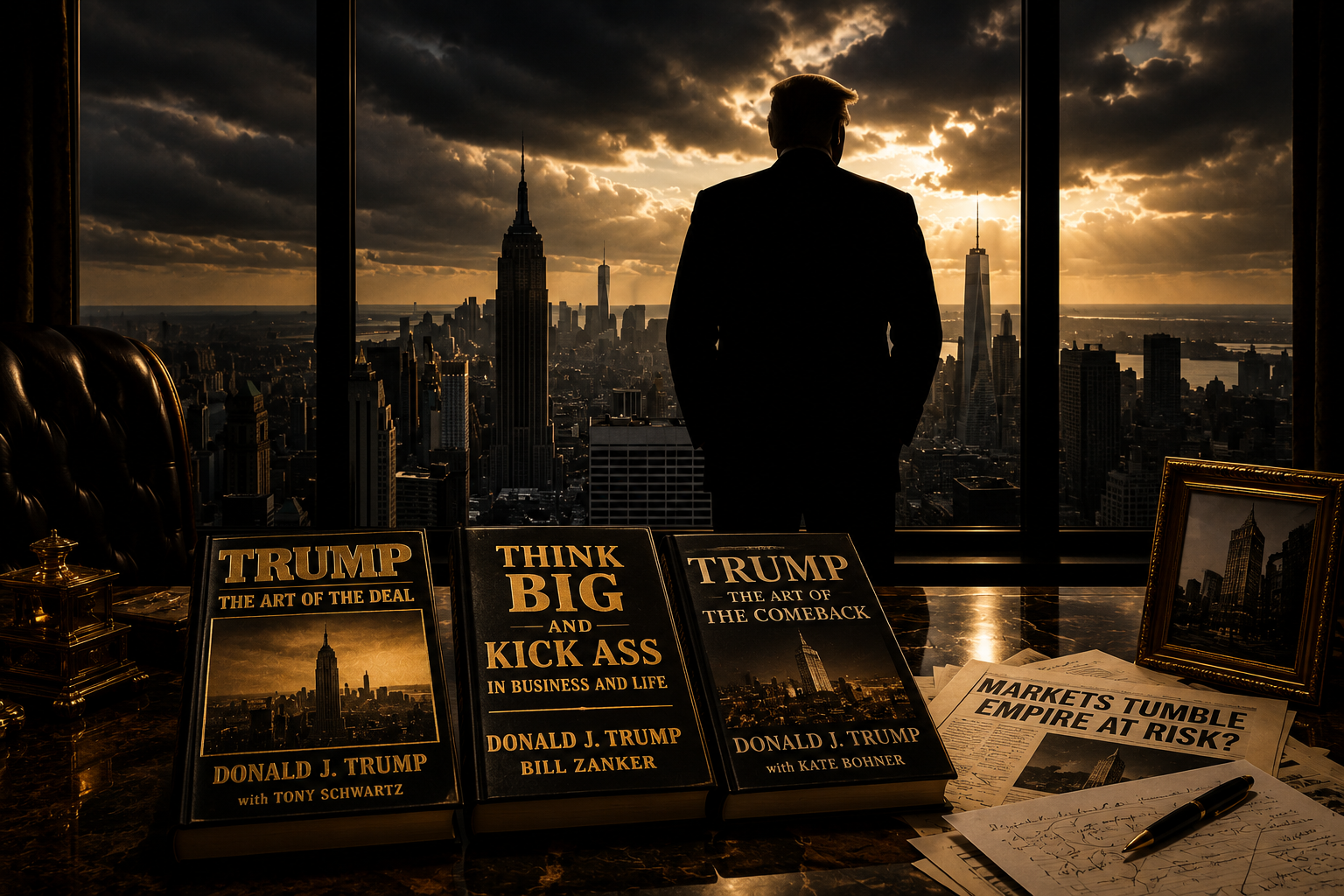
The Trump Business Trilogy That Explains His Entire Philosophy Of Power
Three Books, One Message: Life Is A Fight For Leverage
Donald Trump’s business books are not really about business.
They are about pressure.
They are about how a man turns attention into power, power into negotiation, negotiation into survival, and survival into mythology.
Read separately, The Art Of The Deal, Think Big And Kick Ass, and The Art Of The Comeback can look like three different products from three different moments. One is the polished 1980s dealmaker manifesto. One is the loud motivational attack manual. One is the resurrection story after debt, humiliation, and public collapse.
Read together, they reveal something sharper: Trump’s worldview is built around the belief that life is not neutral. It is a contest. People either respect strength or exploit weakness. Deals are not just transactions. They are tests of dominance.
The Big Idea Connecting These Books
The deeper pattern across these books is simple: Trump treats success as a public battle for psychological control.
In The Art Of The Deal, that battle happens through negotiation. In Think Big And Kick Ass, it happens through attitude, revenge, momentum, and refusal to think small. In The Art Of The Comeback, it happens through survival after public defeat.
The common message is not merely “work hard” or “be ambitious.” It is more aggressive than that. Trump’s message is that you must create leverage before you need it, project strength before others believe it, and turn every setback into evidence that you are harder to kill than people assumed.
This is why the books belong together. They form a three-part philosophy of power: build the image, fight for the deal, then survive the fall.
The Art Of The Deal Summary
The Art Of The Deal is the foundation text of Trump’s public mythology.
It is part memoir, part business playbook, part image-building exercise. The book presents Trump as a high-energy Manhattan operator moving between construction sites, bankers, politicians, lawyers, journalists, and luxury properties. Its power comes from rhythm: calls, meetings, inspections, negotiations, risk, publicity, pressure, repeat.
The central argument is that dealmaking is not only about numbers. It is about instinct, timing, presentation, and leverage. Trump’s method is to think big, maximise options, protect downside, use publicity, fight back, and push negotiations until the other side reveals what it truly wants.
The story begins with Trump as the son of Fred Trump, learning real estate through outer-borough housing before moving into Manhattan. That move matters because Manhattan is not just a market in the book. It is the stage. Trump does not want merely to own buildings. He wants to own symbols.
The early narrative is about escalation. Trump looks for undervalued or neglected assets, finds angles others miss, and tries to turn complicated situations into landmark wins. The Commodore Hotel becomes the Grand Hyatt. Trump Tower becomes the signature monument. Wollman Rink becomes the public proof-of-competence story: government delay versus private-sector execution.
The book’s emotional progression is confidence under pressure. Trump is rarely presented as uncertain. Problems appear, but they are framed as opportunities for force, creativity, or persistence. Opposition becomes useful because it allows him to demonstrate will.
The strongest human moment in the book is not a tender scene. It is the repeated image of Trump moving through a day in which every conversation is part of a larger game. A banker wants reassurance. A politician wants cover. A seller wants a price. A journalist wants a line. A contractor wants direction. Trump’s power, as the book presents it, lies in being comfortable inside chaos.
Its practical usefulness is real. The book teaches readers to value optionality, branding, negotiation range, location, persistence, and media attention. It understands that perception can become economic value. It also recognises that a deal is often won before formal negotiation begins, because the strongest player usually arrives with better alternatives.
Its limitation is equally important. The book can make business look more controllable than it is. It presents confidence as if it naturally bends reality. It underplays luck, inherited advantage, market timing, financing structures, legal risk, and the cost other people may carry when a deal becomes a personal conquest.
The Plot In One Flow
The book follows Trump’s rise from family real estate into Manhattan spectacle.
He learns the basics from his father, studies how property creates wealth, then decides that ordinary real estate is not enough. He wants visibility. He wants the biggest stage. He wants projects that turn his name into an asset.
From there, the story becomes a sequence of high-pressure moves. He pursues difficult properties, negotiates aggressively, uses public attention, fights bureaucratic delay, courts banks and city officials, and transforms buildings into branded statements.
The emotional arc is upward momentum. Trump is not merely trying to become rich. He is trying to prove that instinct, nerve, and publicity can beat conventional caution. By the end, the reader is left with the image of a man who sees the city as a chessboard and himself as the player willing to move first, louder, and bigger.
If You Only Remember Three Ideas
The first idea is that leverage starts before the negotiation.
Trump’s method depends on creating alternatives, momentum, and public pressure before sitting at the table. The better your outside options, the stronger your position. The person who needs the deal least usually controls the deal most.
The second idea is that perception can become a financial asset.
A building is not just steel, glass, and square footage. It is location, story, status, and desire. Trump’s great insight is that people pay for what a thing means, not only what it physically is.
The third idea is that scale changes psychology.
Thinking bigger attracts attention, fear, partners, critics, and opportunity. Small plans can be easier, but they rarely create magnetism. Trump’s world rewards the person who makes the room react.
The Sentence That Explains The Entire Book
A deal is won by the person who controls the story, the pressure, and the alternatives before the price is ever agreed.
Why This Book Still Matters
The Art Of The Deal still matters because it created the Trump archetype: the dealmaker as celebrity warrior.
It became more than a business book. It became a political and cultural identity. Even critics of Trump often acknowledge that the book helped build the public image later amplified through television and politics. It stayed on The New York Times bestseller list for 48 weeks, according to published summaries of the book’s history.
Its ideas aged well in one specific sense: branding, attention, and narrative control matter more now than ever. Social media, founder culture, influencer businesses, political campaigns, and personal brands all operate on the same principle. Visibility creates leverage.
But if written today, the book would face harsher scrutiny over debt, inherited advantage, ghostwriting, litigation, and the gap between image and underlying economics. Tony Schwartz, credited as co-author, later became publicly critical of his role in creating the book’s mythology.
Where The Book Is Weakest
The book’s weakness is that it makes the Trump method look cleaner than it is.
It celebrates instinct but does not fully separate good instinct from lucky timing. It praises toughness but does not always ask when toughness becomes needless escalation. It values publicity but underplays the risk of becoming addicted to attention.
The biggest blind spot is survivorship bias. The winning deals are vivid. The structural advantages are quieter. The reader may come away thinking confidence alone creates leverage, when in reality leverage often comes from capital, reputation, legal support, timing, and the ability to absorb losses.
Who Should Ignore This Book
Readers looking for calm management advice may dislike it.
So will readers who want humility, emotional intelligence, or cooperative leadership. The book assumes the world rewards force, speed, appetite, and visibility. If you believe business should be quiet, patient, and relationship-led, this book may feel abrasive.
It is most useful for people who can extract the lessons without copying the personality.
How This Compares To Think Big And Kick Ass
The Art Of The Deal is controlled compared with Think Big And Kick Ass.
The first book is Trump as polished operator. The second is Trump as motivational combatant. The Art Of The Deal teaches the mechanics of leverage. Think Big And Kick Ass teaches the emotional posture behind it.
One says: here is how deals are made.
The other says: here is the attitude you need if you refuse to be beaten.
Think Big And Kick Ass Summary
Think Big And Kick Ass In Business And Life is Trump’s loudest business book.
Co-authored with Bill Zanker, it presents success as a mental and emotional war. The title is not accidental. The book is built around intensity. It tells the reader to think bigger, move harder, fight back, love what they do, use momentum, and refuse to be intimidated.
The core argument is that ordinary thinking creates ordinary outcomes. Trump and Zanker argue that people lose because they shrink their own ambition, accept weakness, fear criticism, and fail to convert desire into aggressive action.
Unlike The Art Of The Deal, this book is less about specific property stories and more about mindset. It is written like a motivational seminar with sharp elbows. It admires energy, revenge, pride, competitiveness, and obsession.
The problem it tries to solve is hesitation. The reader is treated as someone who may be thinking too small, trusting too easily, negotiating too weakly, or allowing fear to set the size of their life. The book’s solution is not therapy. It is attack.
There is practical value here. Ambition does require scale. People often do self-limit. Many do negotiate against themselves before anyone else even enters the room. The book is right that confidence, passion, resilience, and bold goals can change behaviour.
Its psychological insight is that people often need emotional permission to want more. Trump gives that permission in the most forceful possible way. He says, in effect: stop apologising for wanting the win.
The story anchor is the relationship between Trump and Zanker. Zanker, founder of The Learning Annex, brings the seminar-world frame: audience, energy, self-improvement, business hunger. Trump brings the persona: billionaire combatant, brand, fighter, winner. Together, they turn business advice into a stage performance.
The emotional progression is escalation from ambition to combat. The reader is not merely encouraged to work harder. They are told to become harder to defeat. This is where the book becomes most revealing. Trump’s idea of success is not peaceful achievement. It is victory with witnesses.
The limitation is obvious. A philosophy built around fighting can produce stamina, but it can also produce paranoia. Not every disagreement is betrayal. Not every slight deserves retaliation. Not every business problem is solved by more aggression.
The Plot In One Flow
The book begins with the premise that most people are trapped by small thinking.
From there, it builds a model of ambition where the first enemy is internal weakness. The reader must want more, expect more, demand more, and stop accepting timid goals. Trump and Zanker present success as a test of hunger.
Then the book moves from mindset into conflict. Think big, but also protect yourself. Be passionate, but also be ruthless when necessary. Use revenge as fuel. Do not let critics define you. Do not trust passively. Do not lose quietly.
By the end, the book has transformed ambition into combat psychology. It tells the reader that the world will not hand over respect. You must seize it, defend it, and make others understand that underestimating you is expensive.
If You Only Remember Three Ideas
The first idea is that small thinking is often disguised fear.
People call their goals realistic when they may simply be trying to avoid embarrassment. The book attacks that instinct. It says that if you are going to work hard anyway, you may as well aim at something worth the effort.
The second idea is that energy creates opportunities.
Trump’s world rewards visible momentum. People are attracted to people who appear to be moving. Passion is not treated as a soft emotion. It is treated as a commercial weapon.
The third idea is that being underestimated can become fuel.
The book repeatedly frames criticism, rejection, and disrespect as material you can convert into action. That is powerful when disciplined. It is dangerous when it becomes obsession.
The Sentence That Explains The Entire Book
If you want a bigger life, stop negotiating with your fear and start making people react to your ambition.
Why This Book Still Matters
This book matters because it captures the motivational side of the Trump philosophy more directly than The Art Of The Deal.
It is less elegant, but more revealing. It shows the emotional engine: pride, scale, retaliation, performance, and refusal to accept humiliation. In an era of personal branding, online status games, founder mythology, and hustle culture, the book feels strangely modern.
It also explains why Trump’s message has appealed beyond business. It speaks to people who feel dismissed. It gives them a language of comeback, dominance, and revenge. That can be energising. It can also be combustible.
If written today, it would likely need more distinction between strategic toughness and emotional reactivity. The modern reader is more aware that relentless aggression can damage health, relationships, judgment, and long-term trust.
Where The Book Is Weakest
The book’s biggest weakness is that it sometimes confuses strength with escalation.
There is a difference between defending yourself and living in permanent retaliation mode. There is a difference between thinking big and becoming addicted to spectacle. The book is excellent at pushing people out of timidity, but weaker at teaching restraint.
It also risks oversimplifying success. Not everyone can win by being louder, bigger, and more aggressive. Some industries reward trust, technical depth, patience, and quiet competence. Some battles are not worth winning because the cost damages the life you were trying to build.
Who Should Ignore This Book
People who already struggle with impulsiveness should be careful with this book.
So should people who interpret every disagreement as disrespect. If you already have ambition but lack discipline, the book may pour petrol on the wrong fire. It is best for timid readers who need permission to aim higher, not reckless readers who need help slowing down.
How This Compares To The Art Of The Comeback
Think Big And Kick Ass tells you how to attack.
The Art Of The Comeback tells you what happens after the attack fails, the debt piles up, the critics circle, and the brand looks damaged.
The first is about momentum. The second is about resurrection. One is the roar before the fight. The other is the story you tell after surviving the worst round.
The Art Of The Comeback Summary
The Art Of The Comeback is the most revealing of the three books because it begins from damage.
Published in 1997 and credited to Donald Trump and Kate Bohner, the book looks back at Trump’s early 1990s financial crisis and his later recovery. It is not simply a business manual. It is a reputation-repair document.
The core argument is that a fall does not have to become an identity. Trump presents the comeback as a test of nerve, negotiation, stamina, and public self-belief. Debt, criticism, divorce, and humiliation become the raw material for a second act.
The problem being solved is not how to become successful from zero. It is how to survive after the world has decided you are finished.
That distinction matters. The Art Of The Deal is about ascent. Think Big And Kick Ass is about aggression. The Art Of The Comeback is about refusing the final judgment of other people.
The central conflict is Trump versus collapse. The book revisits the period when his empire was under severe financial pressure. Casinos, real estate debt, bank negotiations, tabloid coverage, and personal life all become part of the same storm. The drama is not only whether assets survive. It is whether the Trump name survives.
The emotional progression is humiliation into defiance. The book does not dwell in vulnerability for long. Instead, it reframes crisis as proof of toughness. The comeback is not presented as quiet recovery. It is presented as vindication.
The strongest story anchor is the image of Trump negotiating while wounded. He is not operating from the invincible position of The Art Of The Deal. He is dealing with creditors, public doubt, and reputational damage. That makes the psychology more interesting. Anyone can preach confidence while winning. This book asks what confidence looks like when the scoreboard turns against you.
Its strategic value is that it understands one brutal truth: in a crisis, narrative matters. If lenders, partners, employees, journalists, and the public believe you are finished, that belief can become reality. Trump’s instinct is to fight the narrative before it hardens.
The limitation is that the book can romanticise survival without fully accounting for the damage caused along the way. A comeback story always selects its evidence. It emphasises resilience, not collateral damage. It turns messy consequences into a clean arc.
The Plot In One Flow
The book begins after the golden image has cracked.
Trump has already become famous, but fame no longer protects him from pressure. Debt mounts. Projects strain. Public coverage turns more sceptical. His personal life becomes tabloid material. The empire that once looked unstoppable now looks vulnerable.
From there, the story becomes a fight to prevent collapse from becoming destiny. Trump negotiates with banks, restructures obligations, protects key assets, uses publicity, and refuses to disappear. He presents himself as battered but not broken.
The comeback occurs when survival becomes visible again. The brand remains alive. The deals continue. The public story shifts from “finished” to “returned.” By the end, the book’s emotional message is clear: the real defeat is not falling. It is accepting the identity of a loser.
If You Only Remember Three Ideas
The first idea is that crisis is partly financial and partly psychological.
Numbers matter, but so does belief. If everyone believes you are finished, your room for manoeuvre collapses. A comeback requires controlling perception while fixing reality.
The second idea is that survival can become a brand asset.
A person who nearly falls and returns can become more compelling than someone who never struggled. The comeback story creates drama, proof, and emotional authority.
The third idea is that pride can keep you standing, but it can also keep you blind.
Trump’s refusal to accept defeat is the book’s greatest strength. It is also the danger. The same ego that fuels recovery can prevent honest self-correction.
The Sentence That Explains The Entire Book
A comeback begins when you refuse to let your worst moment become the story everyone else gets to tell about you.
Why This Book Still Matters
The Art Of The Comeback matters because comeback stories dominate modern culture.
Politics, business, sport, entertainment, and online reputation all run on collapse-and-return narratives. Audiences love the person who was written off and came back stronger. Trump understood that before the phrase “personal brand” became everyday language.
The book also matters because it shows how closely Trump links business, identity, and public perception. A financial setback is not just a financial setback. It is a challenge to status. A comeback is not just balance-sheet repair. It is the restoration of dominance.
If written today, it would likely face more forensic questioning over who carried the downside, how creditors were affected, and whether comeback mythology can hide accountability.
Where The Book Is Weakest
The weakness of The Art Of The Comeback is that it turns a complicated crisis into a hero narrative.
That does not make it useless. It makes it selective. Comebacks are rarely clean. They involve negotiation, compromise, loss, reputational management, and people whose stories are less visible than the central figure’s.
The book also risks teaching readers to interpret any survival as vindication. But surviving a crisis does not automatically prove every earlier decision was wise. Sometimes survival proves resilience. Sometimes it proves access to rescue routes others would not have.
Who Should Ignore This Book
Readers who want full financial transparency may find it frustrating.
So will readers who dislike ego-driven narratives. The book is not a humble post-mortem. It is a self-resurrection story. It is best read as a study in reputation recovery, not as a neutral audit of business failure.
The Common Themes Running Through All These Books
The first common theme is leverage.
Trump’s world is built around leverage: financial leverage, media leverage, emotional leverage, location leverage, legal leverage, and status leverage. The question underneath every book is: who has pressure, who has options, and who needs the outcome more?
The second theme is image.
These books understand that appearance is not superficial when appearance changes behaviour. If people believe you are powerful, they treat you differently. If they treat you differently, your options change. The image becomes part of the machinery.
The third theme is retaliation.
Trump repeatedly presents fighting back as morally and strategically necessary. He dislikes passive suffering. He believes weakness invites attack. The danger is that this can turn every conflict into a loyalty test.
The fourth theme is scale.
Smallness is treated almost as a sin. Small goals, small thinking, small presentation, small ambition: all are rejected. The books insist that the size of the target changes the energy around the person aiming at it.
The fifth theme is survival.
The books are obsessed with not being beaten. Even the success stories contain an implied threat: people will come for you, doubt you, mock you, or try to exploit you. The answer is to become too visible, too stubborn, and too useful to ignore.
The Hidden Pattern Across All These Books
The hidden pattern is that Trump’s books are not really teaching business.
They are teaching status defence.
Every lesson can be traced back to one emotional problem: how do you stop other people from defining you downward?
A bad deal defines you as weak. Small thinking defines you as ordinary. Debt defines you as finished. Critics define you as fraudulent. Enemies define you as beaten. Trump’s entire philosophy is a refusal to accept outside definition.
That is why the books keep returning to publicity, winning, revenge, leverage, and comeback. These are not separate ideas. They are weapons against humiliation.
This is also why the books are compelling even when they are flawed. They speak to a primitive human fear: the fear of being dismissed, reduced, laughed at, or written off.
The deeper truth is that many people do not want success only for comfort. They want success because it proves the people who doubted them were wrong.
Where The Books Quietly Disagree
The books agree on strength, but they disagree on what strength looks like.
The Art Of The Deal suggests strength is strategic control. You gather information, create options, use timing, and negotiate from advantage.
Think Big And Kick Ass suggests strength is emotional force. You raise your ambition, attack fear, fight enemies, and refuse apology.
The Art Of The Comeback suggests strength is endurance. You absorb humiliation, restructure the battlefield, and outlast the verdict.
These are related, but not identical. Strategy requires patience. Aggression demands movement. Recovery requires humility, even if the book does not always admit it.
The tension is useful. The complete lesson is not “always attack.” It is: know when to build leverage, when to project force, and when to survive quietly until the next opening appears.
What Most People Misunderstand About These Books
Most people read these books either too worshipfully or too dismissively.
The shallow pro-Trump reading is: Trump is a genius, copy everything, never apologise, always hit back, think bigger, win more.
The shallow anti-Trump reading is: these books are pure ego, branding, exaggeration, and myth.
Both readings miss the useful middle.
The books are valuable because they show how power often behaves in the real world. People do respond to confidence. Branding does matter. Scale attracts resources. Negotiation is psychological. Comebacks require narrative control.
But they are dangerous if treated as complete life philosophy. A life built only around dominance becomes brittle. Not every relationship should be negotiated like a hostile property deal. Not every criticism is an enemy attack. Not every comeback proves innocence.
The sophisticated reading is to separate the tools from the temperament.
What The Internet Gets Wrong About These Books
The internet often turns Trump’s books into memes.
Supporters reduce them to winning slogans. Critics reduce them to ghostwriting and mythmaking. Productivity culture extracts the loudest lines and ignores the context. Short summaries flatten the books into “think big,” “make deals,” and “never give up.”
That misses the more interesting lesson.
These books are not just about business tactics. They are about the performance of certainty under pressure. They show how someone can turn buildings, debt, criticism, media attention, and personal conflict into one continuous public identity.
The internet also misunderstands the danger. The danger is not ambition. The danger is ambition without self-audit. The danger is not confidence. The danger is confidence that cannot distinguish attack from feedback.
Framework: The Leverage, Image, Pressure Model
The Taylor Tailored framework from these three books is the Leverage, Image, Pressure Model.
It has three parts.
First, build leverage before you need it.
This means skills, money, relationships, options, evidence, reputation, and alternatives. Leverage is what stops desperation. The person with options can negotiate. The person without options begs.
Second, shape the image before others shape it for you.
This does not mean lying. It means understanding that people make decisions through perception. Your work, presentation, consistency, confidence, and public proof all teach people how seriously to take you.
Third, manage pressure without becoming pressure-addicted.
Pressure reveals people. It can create focus, urgency, and courage. But if you need pressure to feel alive, you start manufacturing enemies. The mature version of Trump’s philosophy is not constant combat. It is controlled force.
The model works because it separates power from noise.
Leverage is substance.
Image is presentation.
Pressure is the test.
When all three work together, you become difficult to dismiss. When image exceeds leverage, you become exposed. When pressure exceeds discipline, you become reckless. When leverage exists without image, you remain under-rewarded.
The Real-Life Test
In careers, the lesson is to become visibly useful before demanding recognition.
Do not merely say you are valuable. Build the dashboard, fix the process, produce the evidence, make the senior person’s life easier, and then let the result speak with force.
In relationships, the lesson is more cautious.
Trump’s books are useful for boundaries, but dangerous for intimacy. You should not let people exploit weakness. But if every emotional conflict becomes a dominance contest, you destroy trust. The right application is self-respect, not permanent combat.
In money, the lesson is optionality.
Cash, skills, assets, and low desperation create better choices. The person who is financially cornered makes worse deals. The person with reserves can wait.
In leadership, the lesson is narrative.
Teams follow clarity. Stakeholders respond to confidence. But confidence must be backed by delivery. The strongest leaders do not merely sound certain. They reduce uncertainty for everyone else.
In health and habits, the lesson is consequence.
Thinking big means nothing if your daily behaviour is chaotic. The body does not care about slogans. It responds to sleep, food, training, stress, alcohol, medication, and repetition.
In decision-making, the lesson is to ask one hard question: am I building leverage, protecting image, or simply reacting to pressure?
That question cuts through ego.
How To Apply These Lessons Without Turning Them Into Another Self-Help Fantasy
Do not write “think big” on a notebook and call it transformation.
Make it behavioural.
Choose one area where you are negotiating from weakness and build leverage there. That may be money, skills, evidence, physical health, contacts, or emotional control.
Choose one area where your image is weaker than your reality and fix the presentation. That may mean clearer writing, better design, stronger communication, more visible output, or better proof of work.
Choose one area where pressure makes you reactive and install a rule. Wait before replying. Write before confronting. Measure before accusing. Sleep before deciding. The point is not to become passive. The point is to stop giving your opponents free mistakes.
The real lesson is not to become Trump.
The real lesson is to understand the machinery of power without becoming trapped by its worst instincts.
Which Book Should You Read First?
Best entry point: The Art Of The Deal.
It is the cleanest and most historically important. It explains the dealmaker image that later became central to Trump’s public identity.
Most motivational: Think Big And Kick Ass.
Read it when you need ambition, energy, and a harder edge. Do not read it when you already feel impulsive or vengeful.
Best comeback psychology: The Art Of The Comeback.
Read it when you are interested in reputation repair, crisis survival, and the emotional refusal to be written off.
Best combined reading order: The Art Of The Deal, then The Art Of The Comeback, then Think Big And Kick Ass.
That order gives you the rise, the fall-and-return, and then the raw philosophy.
Five Questions To Test Whether You Actually Understood These Books
Where in your life are you asking for respect without first building leverage?
What part of your image is underselling your actual ability?
When does your desire to fight back make you stronger, and when does it make you easier to manipulate?
Are you thinking big because the goal matters, or because small progress feels humiliating?
If your current setback became your comeback story, what behaviour would need to change first?
The Final Lesson
The three books are loud, imperfect, revealing, and impossible to separate from the man behind them.
Their lasting value is not that every claim should be accepted. Their value is that they expose a brutal operating system: power goes to the person who can create leverage, control perception, absorb pressure, and refuse the identity of defeat.
But the final lesson needs discipline.
Think big, but do not fantasise. Fight back, but do not become addicted to enemies. Build the image, but make sure the substance can survive inspection. Chase the comeback, but learn from the collapse.
The strongest version of this philosophy is not “win at all costs.”
It is this: build enough leverage that you do not have to beg, enough image that you are not ignored, and enough self-control that pressure sharpens you instead of owning you.
