

What Happens At Night Explained: Peter Cameron’s Strange, Freezing Novel About Marriage At The Edge Of Death
What Happens At Night: The Haunting Novel Where Adoption Becomes A Test Of The Soul
A Snowbound Adoption Journey Becomes A Gothic Test Of Love, Desire, And Survival
Some books make horror out of monsters. What Happens At Night makes horror out of a marriage, a hotel lobby, a winter journey, a dying body, and the question no couple can answer cleanly: what do we owe each other when one person is leaving and the other must continue?
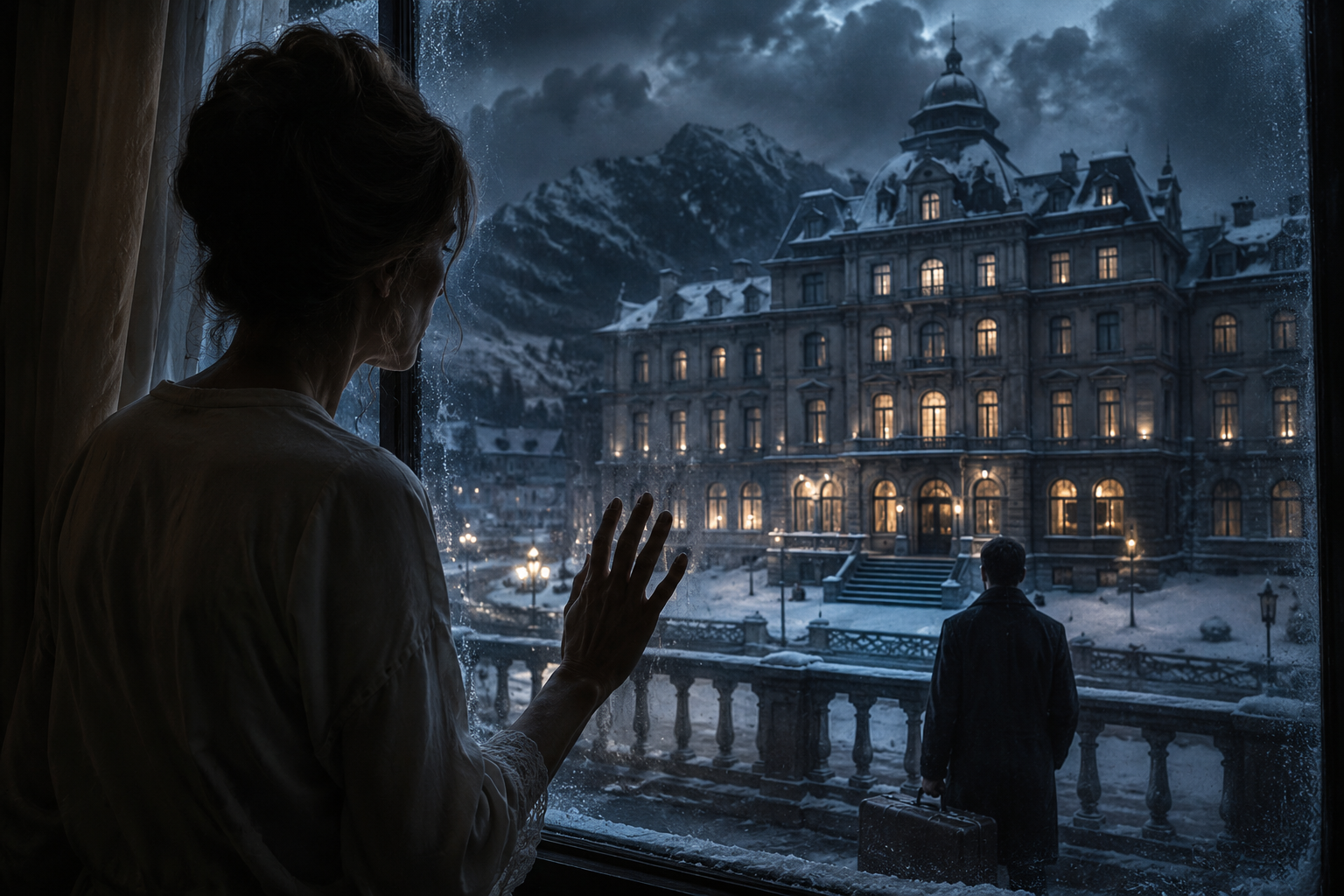
Peter Cameron’s novel follows an unnamed American couple who travel to a strange, snowy European city to adopt a baby. The wife is gravely ill with cancer, and the husband fears that her visible weakness may stop the orphanage from releasing the child to them. Publisher descriptions emphasise the couple’s journey to a remote European city, the wife’s illness, the adoption, and the eerie hotel where reality begins to feel unstable.
This article follows the uploaded Taylor Tailored single-book plot-summary structure, with the main priority placed on what happens in the book, why it matters, and how the ending should be understood.
Book Covered
What Happens At Night by Peter Cameron.
The novel was published in 2020 and is usually described as gothic, mysterious, dreamlike, and psychologically unsettling. Kirkus called it a “dreamy fable” about love, death, inadequacy, and persistence, while Catapult frames it as an allegorical story about shifting desire and uncertain reality.
The Big Idea Of The Book
The central idea of What Happens At Night is brutally simple: people do not become pure when death approaches. They become more exposed.
The wife is dying, but she is not merely a symbol of illness. She still wants, fears, controls, hopes, manipulates, and imagines a future she may not live to see. The husband is caring, but he is not merely noble. He is frightened, lonely, sexually confused, morally unstable, and already beginning to live in the shadow of her absence.
The adoption is the plot engine, but it is also the emotional trap. The baby is meant to save something: the marriage, the husband’s future, the wife’s legacy, perhaps even the idea that suffering can be converted into meaning. But the further the couple travels into the snow, the more the reader feels that the child may not be a rescue at all. The child may simply be the final object onto which two desperate adults project everything they cannot say.
The Plot In One Flow
The novel begins with an unnamed American husband and wife arriving by train in a remote, frozen northern European city. They have travelled an exhausting distance to adopt a child from a local orphanage. The journey has already weakened the wife, who is seriously ill with cancer, and the husband watches her with a mixture of concern, dread, impatience, and helpless love.
They check into the Borgarfjaroasysla Grand Imperial Hotel, a vast, fading, nearly empty establishment that feels less like accommodation than a waiting room outside ordinary life. The hotel is important because it changes the emotional temperature of the story. It removes the couple from familiar rules. It surrounds them with strangers. It makes time feel loose, memory feel unreliable, and desire feel dangerous.
The husband worries that the adoption could fail if the officials see how sick his wife is. That fear shapes everything. He wants the child, but he also wants the process to work smoothly, practically, discreetly. The wife’s body is the obvious threat to that plan, yet her illness is also the reason the adoption feels urgent. She wants to give him a son before she dies, someone to love after her.
Inside the hotel, the couple encounter strange figures who seem to belong to a dream, a fable, or a private psychological trial. The husband meets Livia Pinheiro-Rima, an elderly singer whose glamour and theatricality seem to come from another era. He also encounters Henk Bosma, a travelling businessman whose presence becomes increasingly unsettling and intimate. Reviews and summaries repeatedly note the hotel’s eccentric, sometimes disturbing characters, and the way they intensify the novel’s atmosphere rather than simply advancing a conventional plot.
The wife, meanwhile, becomes drawn toward Brother Emmanuel, a religious healer. Her illness makes her vulnerable to the possibility of miracle, but Cameron does not present this as simple gullibility. When someone is dying, hope becomes morally complicated. A cure may be irrational, but refusing hope can feel like another kind of death.
The adoption remains the official reason for the journey, but the novel gradually becomes less about paperwork and more about what night releases in people. The husband drifts into encounters that expose his loneliness, desire, and fear of abandonment. The wife moves toward spiritual possibility, or fantasy, or manipulation, depending on how the reader interprets Brother Emmanuel. The hotel becomes a pressure chamber where each person’s hidden life starts to surface.
The husband’s encounter with Bosma is one of the book’s most disorienting turns. It is not just sexual; it is existential. It suggests that grief and anticipated loss can open doors in the self that the person did not know existed. The husband is not simply betraying his wife. He is being pulled into a future in which his identity, marriage, and desire no longer have fixed boundaries.
As the story progresses, the couple become less united by the adoption and more separated by their private responses to mortality. The wife is trying to shape what remains after her. The husband is trying to endure the unbearable fact that he may soon remain. The child becomes the future, but also the proof that the present marriage is already breaking apart.
By the end, the novel does not resolve itself like a clean adoption drama. It leaves the reader inside uncertainty. The city, the hotel, the healer, the strangers, the illness, the child, and the marriage all remain charged with ambiguity. What matters is not simply whether the couple gets what they came for. What matters is what the journey reveals: when people are placed at the edge of death, they may pursue love, escape, sex, faith, control, and fantasy all at once.
The Main Characters
The husband is unnamed, which immediately makes him feel both specific and universal. He is a man under emotional pressure, watching his wife die while trying to complete a process that demands competence and normality. He wants the adoption to succeed, but he also wants to survive his wife’s decline without admitting how frightened, resentful, and lonely he is becoming.
His fear is not only that she will die. His deeper fear is that her death will expose him as empty. The child is meant to give him purpose, but his behaviour in the hotel suggests that purpose cannot simply be handed to a person. It has to be inhabited, and he is not yet sure who he will be when his wife is gone.
The wife is also unnamed, and she is the emotional centre of the book. She is dying, but she is not passive. Her wish to adopt is partly generous, partly controlling, partly loving, and partly desperate. She wants to leave her husband with someone, but she also wants to script the world after her death.
Her tragedy is that she is trying to arrange continuity while her own body is collapsing. She wants a future, but she may not be able to enter it. That makes her both moving and frightening. She is not just facing death; she is trying to bargain with it.
Livia Pinheiro-Rima brings glamour, decay, performance, and old-world strangeness into the hotel. She represents a form of survival through persona. She has turned life into performance, and her presence reminds the reader that identity can become costume when reality is too painful.
Henk Bosma is one of the novel’s destabilising forces. He does not simply tempt the husband; he disrupts the husband’s understanding of himself. Through Bosma, the book explores how desire can appear at exactly the wrong moment, not because desire is random, but because crisis weakens the walls people usually maintain around themselves.
Brother Emmanuel represents the most dangerous form of hope: hope that arrives when rational options have failed. For the wife, he offers the possibility that death may be interrupted. For the reader, he raises a harder question. When someone is dying, is false hope cruelty, comfort, fraud, or mercy?
The Central Conflict
The central conflict is not adoption versus bureaucracy. That is the visible conflict.
The deeper conflict is between love and possession. The wife wants to secure the husband’s future, but in doing so she may be trying to control a life she will no longer share. The husband wants to care for his wife, but part of him is already moving beyond her, not because he is heartless, but because human beings begin rehearsing survival before loss fully arrives.
Externally, the couple must navigate the strange city, the hotel, the orphanage, and the adoption process. Internally, they must confront a more disturbing problem: the baby may not save them. It may only reveal what has already failed.
That is why the novel feels cold in more than one sense. The snow is not just weather. It is emotional climate. It is distance, silence, exhaustion, and the blankness that appears when the future no longer behaves as promised.
The Turning Point That Changes Everything
The turning point is not one neat event. It is the moment the hotel stops feeling like a place the couple are staying and starts feeling like a place that is testing them.
The husband’s encounter with Bosma changes the emotional direction of the book because it breaks the illusion that the couple’s only crisis is the wife’s illness. Suddenly, the husband’s own identity becomes unstable. His desire, loyalty, fear, and future are no longer safely contained within the role of concerned spouse.
At the same time, the wife’s movement toward Brother Emmanuel changes her from patient into seeker. She is no longer simply enduring illness. She is reaching for intervention, miracle, or escape. Once both husband and wife begin seeking something outside the marriage, the adoption plot becomes darker. The child is no longer just a hoped-for son. The child becomes the final witness to a marriage already becoming ghostly.
The Emotional Journey
The book begins in exhaustion. The couple arrive tired, cold, and physically diminished by travel. The reader immediately feels that they are not entering an adventure but a last attempt.
The middle of the novel deepens into disorientation. The hotel’s emptiness, the eccentric guests, and the strange social encounters make the world feel slightly unreal. That unreality matters because grief often feels exactly like that. Ordinary objects remain in place, but the logic of life has changed.
The darkest emotional movement comes when the reader realises that love does not prevent escape fantasies. The husband can love his wife and still drift toward another form of desire. The wife can love her husband and still try to arrange his future in a way that may serve her own terror of disappearance. Neither person is clean. That is what makes the book interesting.
The ending feels less like closure than exposure. It leaves behind the sensation that something irreversible has happened, even if the surface facts remain ambiguous. The night has revealed what daylight allowed them to hide.
The Ending Explained
The ending of What Happens At Night should not be read as a puzzle that can be solved by assembling literal clues. It works more like a dream whose emotional truth matters more than its administrative outcome.
The obvious question is whether the couple successfully complete the adoption. But the novel’s deeper question is whether any child, miracle, affair, ritual, hotel, journey, or act of will can save people from the reality of death. The answer is bleak but not empty: no, nothing saves them from death, but their attempts to create meaning still reveal something profoundly human.
The wife’s desire to leave her husband with a child is both beautiful and morally complicated. It is beautiful because she wants him to have love after her. It is complicated because a child cannot simply be assigned the job of repairing grief. The husband’s drift into desire is also both ugly and understandable. It is ugly because it happens under the shadow of his wife’s suffering. It is understandable because impending loss fractures the self before the actual death arrives.
The ending changes the meaning of the whole journey. The couple did not travel only to adopt a baby. They travelled into a landscape where marriage, identity, faith, and desire could no longer pretend to be stable.
The Story Anchor
The strongest image is the couple arriving in the snow and entering the grand, deserted hotel.
That image contains the whole book. They have come for life, but everything around them feels like the edge of death. They have come for a child, but the hotel feels childless, hollow, and old. They have come to complete a practical mission, but the atmosphere turns practical life into gothic ritual.
The hotel is the book’s emotional machine. It strips away ordinary context. It turns the husband into a man who can be tempted, the wife into a woman who can be lured by miracle, and the adoption into something almost mythic.
If You Only Remember Three Ideas
First, love does not remove selfishness. The wife’s plan may be loving, but it is also shaped by her fear of being erased. The husband’s care may be real, but it does not stop him from wanting escape.
Second, hope becomes dangerous when it has no limits. The adoption, the healer, the child, and the hotel all offer versions of rescue. But rescue is not the same as truth, and comfort is not the same as salvation.
Third, people become most mysterious when they are closest to loss. The novel refuses to make grief simple. It shows that fear can produce tenderness, betrayal, fantasy, lust, faith, and control in the same person.
The Sentence That Explains The Entire Book
What Happens At Night is about two people trying to bring a child into the future because neither can bear to admit that death has already entered the room.
Why This Book Still Matters
The book matters because it captures a modern fear: the fear that love, family, travel, medicine, paperwork, and personal reinvention may still not protect us from the basic facts of the body.
It also matters because it resists sentimental illness fiction. The wife is not purified by cancer. The husband is not purified by caregiving. Their suffering does not automatically make them wise. That is more honest than most stories about death.
If written today, the novel might lean even harder into international adoption ethics, medical bureaucracy, and the emotional economics of care. But its deeper relevance would remain untouched. People still use projects, relationships, children, careers, and belief systems to avoid staring directly at endings.
Where The Book Is Weakest
The book’s greatest strength is also its weakness: ambiguity. Readers who want firm answers may find it evasive. The plot does not deliver the clean satisfaction of a conventional adoption story or a traditional gothic mystery.
Some characters feel deliberately symbolic, which can make them seem less psychologically full than the husband and wife. Brother Emmanuel, in particular, can be read as more function than person: he exists to test the wife’s hunger for miracle.
The novel can also feel emotionally cold. That coldness is intentional, but it may keep some readers at a distance. Cameron is not trying to make the reader cry on command. He is trying to make the reader feel stranded.
What Most People Misunderstand About This Book
The shallow reading is that the novel is strange because the hotel is strange, the city is strange, and the people are strange.
The deeper reading is that the world becomes strange because the couple’s lives have become strange. Serious illness does this. Grief before death does this. A marriage under terminal pressure does this. The outside world starts to look dreamlike because the inner world has stopped obeying normal rules.
Another misunderstanding is to treat the adoption as the whole point. It is not. The adoption is the form the crisis takes. The real subject is what adults ask children, faith, sex, and love to do when death has made them desperate.
What The Internet Gets Wrong About This Book
Book-summary culture often wants a clean message: this is a novel about grief, or adoption, or marriage, or mortality.
That is too neat. What Happens At Night is not a lesson wrapped in plot. It is a controlled disturbance. It places two people in an extreme emotional landscape and watches their identities loosen.
Online summaries can also flatten the husband into a betrayer and the wife into a victim. The book is sharper than that. He is weak, frightened, and morally compromised. She is ill, loving, controlling, and desperate. The power of the story comes from refusing to make either of them simple.
The Taylor Tailored Interpretation
The Taylor Tailored reading is this: What Happens At Night is a novel about what people outsource when they cannot face reality directly.
The wife outsources her fear of death to the child. If the child exists, some part of her plan survives. The husband outsources his fear of loneliness to desire. If someone wants him, he is not merely a future widower. Both are trying to place unbearable emotion into another body.
That is the dark behavioural truth of the book. Under pressure, people rarely say, “I am terrified, and I do not know how to live with this.” They create projects. They chase signs. They make arrangements. They seek bodies, miracles, children, rituals, and exits.
The novel is gothic because the scariest haunted house is not the hotel. It is the human mind when it knows something is ending but keeps looking for a door.
The Real-Life Test
In real life, people do this constantly.
A failing relationship becomes a house purchase. A collapsing career becomes a new productivity system. A grief wound becomes a business plan. A lonely person turns romance into rescue. A frightened leader turns control into strategy. A sick person turns one unlikely treatment into the final proof that hope still exists.
The lesson is not that hope is bad. The lesson is that hope becomes dangerous when it is used to avoid naming the truth.
The real-life test is simple: ask what job you are giving the thing you want. Are you asking a relationship to fix your identity? Are you asking money to erase fear? Are you asking a child to repair grief? Are you asking faith to remove uncertainty? Are you asking work to prove you deserve to exist?
How To Apply The Lessons Without Turning Them Into A Fantasy
The practical lesson is to separate desire from assignment.
Wanting a child is one thing. Requiring a child to give a grieving adult purpose is another. Wanting love is one thing. Using desire to escape the terror of loss is another. Wanting hope is one thing. Needing hope to cancel reality is another.
In practical terms, name the real fear before making the major decision. If the fear is loneliness, say loneliness. If the fear is death, say death. If the fear is being forgotten, say forgotten. Decisions made after naming the fear are usually cleaner than decisions made while pretending the fear is something else.
The book does not argue for emotional detachment. It argues for emotional honesty. That is harder.
Who Should Read This Book
This book is best for readers who like literary fiction with gothic atmosphere, psychological ambiguity, and emotional unease.
It suits readers interested in marriage, mortality, illness, adoption, grief, desire, and the strange behaviour people display under pressure. It will also work for readers who enjoy novels that feel like dreams without becoming meaningless.
Professionally, it is useful for writers, critics, therapists, literary creators, and anyone studying how atmosphere can carry plot. The story is not action-heavy, but it is emotionally loaded.
Who Should Ignore This Book
Readers who need fast pacing, clean answers, likeable characters, and obvious resolution may struggle with it.
Anyone looking for a straightforward adoption drama may also be frustrated. The book uses adoption as a plot structure, but its real interest lies in dread, ambiguity, illness, and the unstable inner lives of the couple.
It is also not ideal for readers who dislike symbolic characters or dreamlike logic. The novel is not trying to behave like ordinary realism.
Five Questions To Test Whether You Actually Understood This Book
What does the wife want the adopted child to do emotionally for her husband after she dies?
Where does the husband’s care for his wife end and his fear of his own future begin?
Is Brother Emmanuel offering faith, exploitation, comfort, or all three at once?
Why does the hotel feel less like a setting and more like a psychological machine?
What truth does the couple avoid by focusing so intensely on the adoption?
The Final Lesson
What Happens At Night is not really asking whether a dying woman and her husband can adopt a child in a frozen city. It is asking what people do when love is no longer strong enough to protect them from time.
The answer is uncomfortable. They make plans. They seek miracles. They betray themselves. They reach for strangers. They turn children into futures, hotels into underworlds, and night into confession. And somewhere in that cold, strange darkness, the book leaves its deepest warning: the things we ask to save us often reveal us first.
