Why Start With a Standalone Harrison Novel?
Which M. John Harrison Book Will Make You Want To Read a Second?
Start with The End of Everything if you want an English shoreline, a household and a mystery you can live beside before trying to understand it. Start with The Pastel City, the first Viriconium novel, if a threatened city and the remains of vanished civilisations sound irresistible. Choose Light if you enjoy being dropped into three dangerous lives and waiting for the connections between them to emerge.
M. John Harrison’s 2026 Booker Prize brings an unusually varied backlist into view. A recommendation to start at the beginning sounds straightforward until you ask the beginning of what. The earliest Viriconium adventure, the first book of the Kefahuchi Tract sequence and the prize-winning standalone offer different contracts with the reader. Choosing the one whose uncertainties you already enjoy is a better guide than the order of the stickers on the covers.
What Kind of Reader Should Start With The End of Everything?
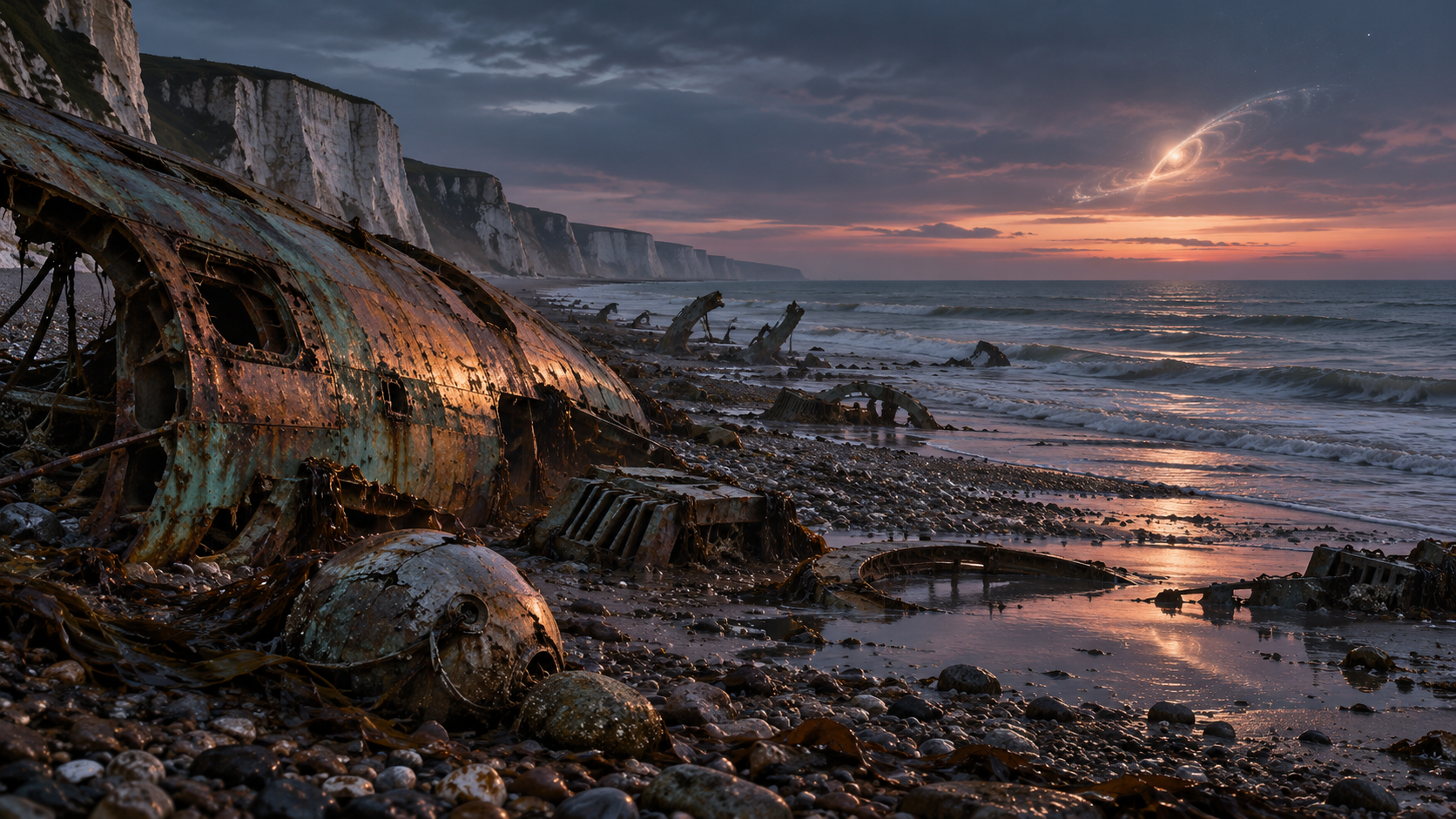
Phillip Tennent makes a living from objects washed up on the English coast. He shares his diminished world with his elderly aunt Marnie. The social order has suffered a catastrophe, and the mysterious iGhetti are part of the landscape in which people must now manage. Phillip has immediate reasons to pay attention to what turns up at the tideline. Something can be worth the trouble of carrying home well before anyone can give a satisfactory account of what it means.
That makes the Booker winner a good choice for readers who enjoy the domestic scale of a novel even when its implications are enormous. A conventional catastrophe narrative might begin with an emergency broadcast and work forwards from the moment of impact. Harrison gives weight to the continuing business of living after the sort of event another novelist might have used as a climax. A household still has to find a way through an afternoon.
The English coast does particular work here. A beach is a place where evidence arrives stripped of much of its context. Something manufactured elsewhere washes up beside things whose journey has made them difficult to identify. Phillip’s occupation supplies a way to read the novel. Examine what has arrived. Be interested in who finds a use for it. Notice the difference between an object changing hands and an explanation becoming true.
The book is short enough for readers to return to details they passed on the first encounter. Shortness does not make the uncertainties disappear. If you tend to enjoy a novel most when the final pages explain the rules governing every strange event, temper that expectation before beginning. If you like the moment when an everyday detail changes character because of the company in which the author puts it, begin here.
Why Begin Viriconium With The Pastel City?
Viriconium is a city and the name attached to a sequence of books and stories. The Pastel City, published in 1971, offers the most straightforward doorway. Its far-future civilisation lives among artefacts left by predecessors with capabilities it cannot fully reproduce. The swordsman and poet tegeus-Cromis returns to the defence of a threatened city. There is a recognisable adventure to follow while you get used to Harrison’s interest in the leftovers of history.
The premise changes the way a reader approaches the scenery. A landscape littered with remnants can look like a fantasy illustration. Ask who produced the things in the picture and it becomes an industrial inheritance. Ask whether the present inhabitants know how to repair them and it becomes a problem of political power. Faded technological achievement can look very much like magic to the people living underneath it.
This is a particularly rewarding route for readers who enjoy dying-Earth fiction or the sensation of travelling through ruins whose builders had different names for everything. The pleasure of the opening novel lies partly in how much story Harrison can draw out of an apparently familiar heroic arrangement. A poet who can use a sword is an attractive figure. What kind of knowledge does either talent give him about the past on which the city depends?
If you buy a volume titled simply Viriconium, check the contents. Collected editions bring together material that originally appeared separately. For the novels, the familiar route runs from The Pastel City through A Storm of Wings to In Viriconium. Viriconium Nights collects stories. An omnibus can save the reader from accidentally treating the title of the setting as a separate first novel.
Will the Later Viriconium Books Fill In the Map?
Someone who falls for a fantasy city may expect the next book to show the district beyond the old gates. Harrison is interested in what happens when the reassuring features of a fictional world stop lining up. Names return in altered circumstances. What once looked like a piece of genre furniture can acquire a more disturbing presence. The use of the city changes as the sequence develops.
Read for variations as well as continuity. A simple contradiction discovered in an ordinary detective story can mean somebody has lied. An apparent discontinuity in Viriconium might instead be doing work at the level of form. How much does the reader require a place to stay the same before recognising it? How much of its stability had the reader supplied from habit?
That question gives the sequence staying power beyond the pleasures of the first adventure. It also explains why prescribing the entire volume to every new reader can backfire. Finish The Pastel City and decide whether your favourite part was the security of the journey or the unease behind it. Readers attracted by the latter have a particularly good reason to continue.
What Is Different About Light?
Light gives you an abandoned spacecraft, bone dice and a human skeleton against the background of the Kefahuchi Tract. It also gives you three lives separated by extraordinary distances. Michael Kearney is a physicist in 1999 whose intellect coexists with murderous violence. Seria Mau Genlicher is entangled with the technology of a K-ship. Ed Chianese is an adventurer drawn into virtual experience. Harrison changes the scale and register of the story as he moves between them.
This is the route for readers who enjoy cutting between narrative lines before they know precisely why the lines belong together. You need enough confidence to leave one strand unresolved while you learn how another feels. A reader who tries to memorise every invented term on its first appearance may find the exercise exhausting. A reader who remembers what each character wants and fears already has a way through.
The three lives offer very different relationships to control. Technical understanding does not make Kearney a safe person to be around. Seria Mau’s extraordinary capabilities come with profound questions about embodiment and autonomy. Ed’s immersion in artificial experience raises the awkward possibility that escape has become another place to get stuck. The technology matters because of the arrangements people make with it.
Light opens the sequence followed by Nova Swing and Empty Space. You can therefore make a simple bookshop decision if the first volume works for you. The subsequent books develop Harrison’s engagement with the Tract. Reading Light first gives you a basis for recognising what changes when another voice or another form of story enters its orbit.
Which One Works Best for a Book Club?
Choose The End of Everything if the group has different levels of experience with speculative fiction. The setting and household give everyone something concrete to discuss early. An especially good question is which object or transaction each reader found easiest to understand, and whether everyone agreed on its significance. A disagreement about a small detail can open a larger discussion about how the novel handles catastrophe.
Choose The Pastel City if your group likes comparing genre conventions. One reader may experience an artefact as a piece of magic, another as recovered technology and another as a sign of economic decline. Ask what in the prose licensed each interpretation. The discussion can stay close to the book while drawing on several traditions of reading.
Choose Light if the group actively wants to disagree about structure. Ask each person which of the three lives supplied their anchor and at what point they felt the strands belonged in the same book. Someone gripped by Seria Mau’s predicament may have read an emotionally different novel from someone following the threat around Kearney. Putting those experiences beside each other makes a better evening than testing who remembered the most terminology.
Does Reading the Booker Winner First Spoil the Older Books?
These three entry points belong to separate fictional projects. Meeting Phillip and Marnie will not give away the resolution of Light, and reading The Pastel City first is no requirement for understanding the English shoreline. What changes with reading order is your sense of Harrison’s habits. Encounter the beach first and the debris of an imagined future may start to look surprisingly domestic. Encounter Viriconium first and the English coast can feel like another city built on an inheritance its inhabitants only partly understand.
For a reader choosing a present, that freedom is an advantage. Match the first book to the recipient’s most persistent reading pleasure. A fondness for one particular landscape, a morally complicated space traveller or a recognisable adventure is a stronger guide than knowing whether the person ordinarily shops from the literary or science-fiction shelf.
What Should You Read After the Booker Winner?
If you loved the tideline, take the route through Viriconium. Both settings bring the material remains of other histories into the present. If what gripped you was the sense that explanation itself might be unstable, try Light and give its changes of scale some time. If you mainly loved Phillip and Marnie coping with a world bigger than their understanding, allow the winner to stand on its own before treating the prize as an assignment to finish a backlist.
The simplest choice remains the most revealing. A beachcomber finds something the sea has given up. A swordsman rides through the remains of older civilisations. A spacecraft, a skeleton and a pair of dice wait beneath an impossible light. Which image would you walk towards first? Harrison has written a book on the other side of each.
Sources
The End of Everything: Winner of the Booker Prize 2026 | The Booker Prizes
Reading guide: The End of Everything by M. John Harrison | The Booker Prizes
