Book Summaries
Explore concise, high-impact summaries of classic and contemporary books, including novels, non-fiction, and modern bestsellers. Each article distills the plot or core argument, key themes, big ideas, and modern relevance – giving you clear insight you can apply to today’s politics, culture, technology, and everyday life in just a few minutes.
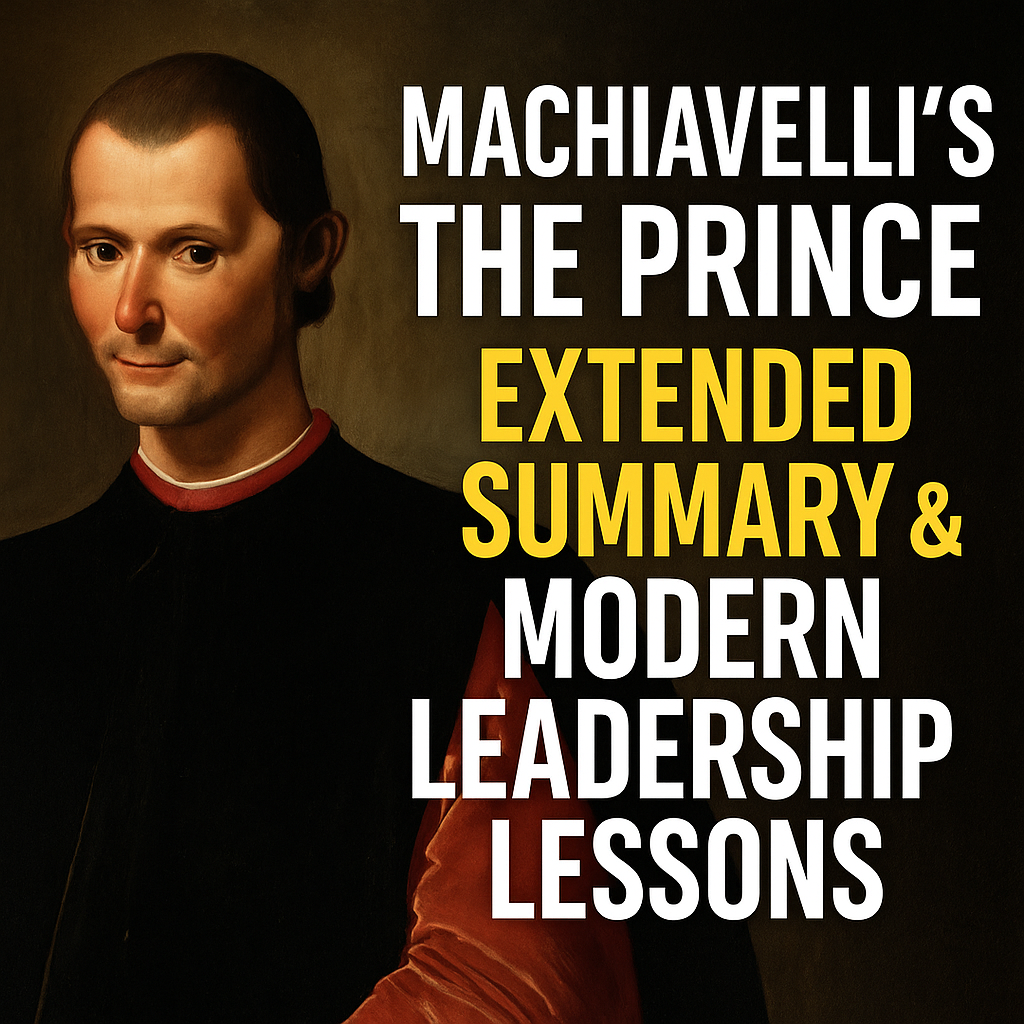
Machiavelli's The Prince: Summary & Modern Leadership Lessons
Machiavelli’s "The Prince" was written over five centuries ago. Yet, it remains one of the most famous guides to Power and leadership. Niccolò Machiavelli, a diplomat in Renaissance Italy, set out to explain how Power really works – not how we wish it would. He offers blunt advice to rulers on how to gain and keep control of their states. Some consider The Prince cynical or ruthless, but others see it as a clear-eyed analysis of human nature and political reality. It strips away idealism and focuses on strategy, control, and survival.
This extended summary presents the key lessons from "The Prince" in plain language. Each insight is paired with modern examples or applications for leaders in business, politics, and beyond. Machiavelli’s ideas – from why it can be "safer to be feared than loved" to how a leader should manage their reputation – still resonate in today’s boardrooms and halls of Power. Understanding these concepts doesn’t mean we must agree with their morality; instead, it helps us recognize real-world dynamics and make more informed decisions.

The Ministry of Time: Summary, Analysis, and Why It Matters
The Ministry of Time: Summary, Analysis, and Why It Matters
Introduction
As debates swirl over colonial statues and the climate crisis, Kaliane Bradley’s The Ministry of Time leaps across centuries to ask: what if we could rewrite history? This novel hurls a Victorian explorer into modern London. A civil servant known as the “bridge” teaches him about laundry machines and streaming music. Soon their friendship deepens into love – and a web of conspiracies and moral choices.

What We Can Know: Summary, Analysis, and Why It Still Matters
Ian McEwan’s "What We Can Know" (2025) – a comprehensive summary and analysis of this dystopian literary thriller. Explore how a future scholar unravels a lost poem amid climate catastrophe, and why the novel’s themes of knowledge, memory, and responsibility resonate powerfully in today’s world.

The Emperor of Gladness: Summary, Analysis, and Impact
The Emperor of Gladness: Summary, Analysis, and Why It Matters
A troubled teen on the edge of a bridge. An elderly widow lost in the haze of dementia. Ocean Vuong’s The Emperor of Gladness finds its spark in that moment of crisis. In 2025, when nearly a quarter of Americans care for a sick or aging family member, Vuong’s new novel cuts right to today’s pain and hope. It opens in a run-down Connecticut town and quickly shows how a small act of kindness can change everything. Vivid, spare prose paints a scene at dusk: Hai, a 19-year-old immigrant kid, prepares to jump into dark waters. Then he hears Grazina, an 82-year-old Lithuanian widow, yelling from across the river. By the next chapter, Hai has become her reluctant caretaker. This unlikely pair – a young man and an old woman – will weave themselves into each other’s lives as the year unfolds. Their story is about loneliness and compassion, secret pasts and small joys. The first lines grab you: the hiss of rain on a bridge, two people saved by a moment of connection. Then the novel pulls back to reveal a community of misfits, all hungry for hope.

The Odyssey – Epic Journey Home and Its Modern Relevance
The Odyssey – Epic Journey Home and Its Modern Relevance
A lone warrior braves stormy seas and mythical beasts, driven by one goal: to return home. Next year, this ancient hero’s tale is hitting the silver screen in a star-studded Hollywood blockbuster. Yet long before IMAX cameras and Oscar-winning directors took notice, Homer’sThe Odyssey has been capturing imaginations for nearly 3,000 years. Why is this Bronze Age story of adventure and homecoming echoing so loudly today? The answer lies in its timeless themes of perseverance, cleverness, and the longing for home – themes that feel as urgent and real now as they did in Homer’s time.

To Kill a Mockingbird – Summary and Analysis
To Kill a Mockingbird – Summary and Analysis
A young girl watches her father stand alone against a town’s anger. A Black man sits in a courtroom, fighting for his life against false charges. These scenes could be headlines today as much as they are pages from a classic novel. Harper Lee’s To Kill a Mockingbird, though set in the 1930s, feels fiercely relevant in our modern era. At a time when society is still grappling with racial injustice and even debating the teaching of this very book in schools, To Kill a Mockingbird stands as a powerful reflection of conscience and compassion.

War of the Worlds Radio Broadcast Summary: Key Ideas and Modern-Day Parallels
War of the Worlds Radio Broadcast Summary: Key Ideas and Modern-Day Parallels
On the night of October 30, 1938, American radio listeners tuned in for a bit of weekend entertainment. Many landed on a program called The Mercury Theatre on the Air, directed by a young Orson Welles. What they heard sounded less like a play and more like live breaking news. A calm announcer described strange explosions on Mars. Then came “bulletins” about a meteor landing in New Jersey. Soon the reports turned into a full‑scale Martian invasion of the United States.

The 48 Laws of Power – Summary and Real-Life Power Tactics
The 48 Laws of Power – Summary and Real-Life Power Tactics

The Catcher in the Rye Summary – Holden Caulfield’s Journey and Themes Explained
The Catcher in the Rye Summary – Holden Caulfield’s Journey and Themes Explained