The Heist and Betrayal
Someone Is Stealing Assane’s Name While He Serves His Sentence
Assane Diop has spent years making other people look in the wrong direction. In Lupin Part 4, somebody turns that talent against him. Crimes are being committed under the identity he made famous, and his approaching release from prison begins to look less like a fresh start than another obstacle in somebody else’s plan.
The fourth part of the French series, created by George Kay and François Uzan, returns to Omar Sy’s gentleman thief after four years have passed within the story. Assane wants time with his son, Raoul, and a life beyond elaborate escapes. The difficulty is that neither his reputation nor the people he loves have remained where he left them.
Retirement Depends on Other People Believing It
Assane begins near the end of his prison sentence, planning a trip to Senegal with Raoul. The promise gives his proposed retirement a concrete shape. It is not merely an announcement that he has become tired of crime. There is a journey he intends to make with a son who has spent years waiting.
His relationship with Hubert Pellegrini remains part of that unfinished past. An apparent accommodation between the enemies conceals another manoeuvre by Assane, who arranges for Pellegrini to end up imprisoned far away. Assane treats distance as a way to contain the threat and make a quieter future possible.
The plan fits his familiar strength: identifying an opponent’s expectation and redirecting it. Yet the skill that wins a confrontation is not necessarily the skill that maintains a relationship afterwards. Raoul needs his father to arrive when promised, rather than perform another impressive demonstration of control.
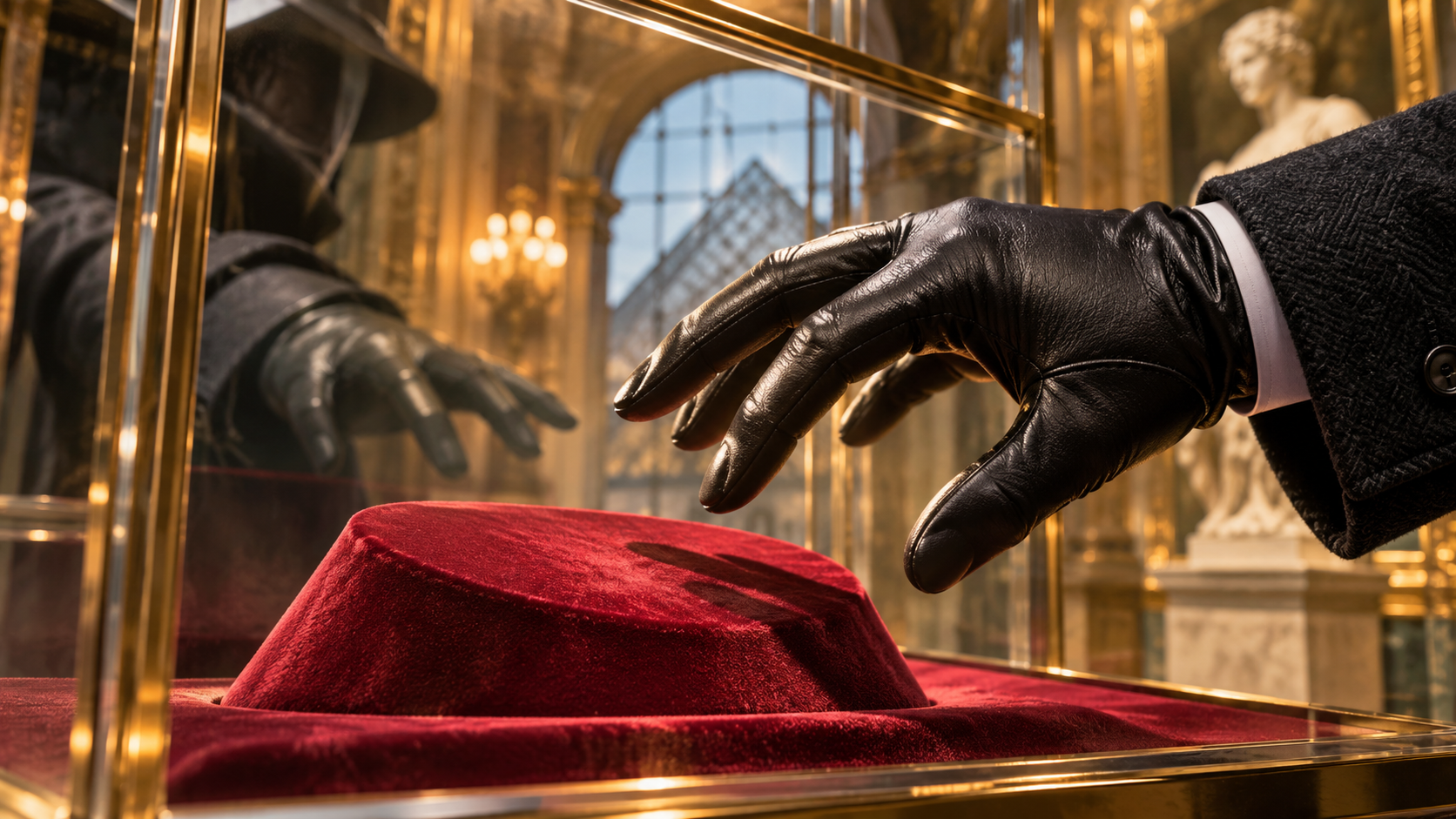
The new museum burglaries expose that difference. Someone announces crimes in Lupin’s name and carries them out while Assane is behind bars. The alibi should matter, but incriminating images make the situation harder to dismiss. His public identity has become something another person can reproduce.
The trap works because Assane’s reputation already includes the ability to achieve apparently impossible things. An ordinary suspect might benefit from an apparently impossible accusation. A famous escape artist has spent years teaching people that ordinary limitations do not reliably apply to him.
He therefore faces an awkward consequence of success. The more convincing his legend becomes, the less protection he receives from saying that a particular feat was beyond his reach. His earlier performances have created the conditions in which a copycat can make a false accusation seem plausible.
Leaving prison to investigate also changes his position. He can establish that he did not commit the original burglaries while still creating new difficulties through the way he responds. Clearing one allegation and returning to a lawful life are separate tasks, even if the pressure makes them feel like a single emergency.
The Copycat Attacks His Control of the Story
The impersonation is more than an attempt to take jewellery. It forces Assane to spend time defending the meaning of his own name. Every movement towards the copycat takes him away from the promised reunion with Raoul, allowing the investigation to produce personal damage before its underlying motive is understood.
The use of manipulated images updates one of the series’ central devices. Assane has often relied on costumes, concealment and the assumptions of people watching him. Here the apparent record of an event can also be manufactured. The problem moves from disguising a person to altering the evidence of that person’s presence.
Those are related techniques, but they create different vulnerabilities. A witness can sometimes revise an impression after meeting someone again. An incriminating image can circulate independently of the event it purports to record. Assane is forced to investigate an identity that appears to exist outside his physical location.
This is a fictional application of those methods, not proof of what any real system can accomplish. Within the story, however, the important consequence is clear: being absent does not stop his likeness from being used. The copycat turns his celebrity into an instrument that can operate without him.
The museum incident also leaves Captain Sofia Belkacem seriously injured. That injury prevents the plot from remaining a charming competition between sophisticated thieves. The effort to unmask the impersonator is entangled with violence against someone pursuing the investigation.
Her colleague Youssef Guédira consequently occupies a difficult position. His understanding of Assane’s methods can make him a useful interpreter, but interpretation does not remove his obligations as a police officer. The familiar thief cannot expect every investigator to treat the pursuit as a shared literary puzzle.
The season’s first major question is therefore not simply who has the technical ability to imitate Lupin. It is who needs Assane involved badly enough to accept the consequences of pulling him back into action.
Adèle and Juliette Change the Meaning of the Heists
The impostor is Adèle Kapoor, a young hacker whose methods combine the Lupin persona with digital manipulation. The discovery explains how Assane can appear connected to events he did not physically attend. It also reveals that the imitation was designed to draw him into a larger operation.
Juliette Pellegrini is behind that operation. She and Adèle want Assane’s help against the Guardians of the Jewels, a wealthy group controlling the treasure they intend to steal. What begins as a threat to Assane’s freedom becomes a request that has been delivered through coercion.
The personal revelation is more disruptive: Adèle is the daughter of Assane and Juliette. Hubert separated her from her mother when she was a baby, and she grew up in England. Her search for her biological family brings her into contact with a father whose public identity is far easier to locate than his private availability.
This discovery gives the impersonation a double function. It summons a talented thief, but also summons an absent parent. Adèle can make the world believe that Assane is somewhere he is not before she can persuade him to occupy the role he did not know he had.
Her talent does not remove the ethical problem in her method. Drawing somebody into danger through false evidence is coercive even when the eventual relationship is genuine. The season gains tension by allowing an emotionally meaningful reunion to emerge from actions that have already harmed others.
Juliette’s involvement also brings Pellegrini’s influence into another generation. His earlier power over his daughter’s life has consequences that cannot be contained by his present physical location. Assane may move the man away, but he cannot remove the decisions that man has already made.
The family revelation changes how the new team can trust one another. Assane has reason to care about Adèle that exceeds the immediate heist. He still has to learn what she knows, what she wants and how far her methods differ from his own.
Raoul, meanwhile, receives this development from another position. To Assane, discovering Adèle is an obligation he cannot ignore. To Raoul, it can look like another reason that the promised time together has been postponed. Neither perspective requires the other person’s feelings to be invented or trivial.
Claire and Benjamin Have Lived Through the Missing Years
Assane discovers that Claire and Benjamin are together. The relationship joins the two people he might have expected to occupy their old positions when he returned: his former partner and his closest friend. Their lives have developed during a period he has treated as an interruption.
His first response includes concealment. He sees more than he admits, maintaining an appearance of ignorance while absorbing the change. That habit is entirely consistent with his strengths elsewhere. Holding information back gives him time and preserves control over when a confrontation occurs.
In a family, however, concealment has a different cost. It can turn an uncomfortable fact into a prolonged performance in which everyone must manage what another person appears to know. The man who can enter a room under a false identity also struggles to enter an honest conversation without arranging it first.
Benjamin’s eventual admission gives the relationship a history beyond Assane’s absence. His feelings are not presented merely as a temporary convenience that can be reversed when the protagonist returns. That makes the situation harder, but also grants Claire and Benjamin lives beyond their usefulness to Assane.
The story resists the simple arithmetic of betrayal. Benjamin remains an ally in the criminal plot, even as his relationship with Claire hurts Assane. Loyalty in one part of a life does not guarantee that every other attachment will remain unchanged.
For Claire, the relationship also makes the passage of time tangible. Waiting is not an empty interval that belongs entirely to the person being waited for. Daily responsibilities continue. Affection, companionship and practical dependence can take new forms while a reunion remains uncertain.
Assane and Benjamin reach an understanding that allows them to work together. That outcome does not require Assane to become unhurt. It requires him to recognise that his feelings do not supply a complete claim over the lives of other people.
The heist team therefore carries unresolved personal tensions into its next operation. Their continued cooperation is meaningful precisely because it is not evidence that every private injury has disappeared.
Raoul’s Involvement Raises the Stakes
Belkacem’s recovery and the reconstruction of the museum incident lead towards Raoul. He was involved in the encounter that caused her fall. His attempt to understand or protect his father’s position has already moved him from the edge of the story into an act with serious consequences.
The revelation makes Assane’s protective instincts more urgent. Raoul is no longer simply disappointed by an absent father. He is exposed to investigation, and Assane fears what could happen if the Guardians gain access to him.
Yet protection can become another form of exclusion. Assane has information about danger that makes keeping Raoul away seem necessary. Raoul experiences the result as decisions being made about him without meaningful involvement. The father sees risk management; the son sees another closed door.
This does not establish that every demand Raoul makes is reasonable. He has acted impulsively and harmed someone. His wish to be trusted must coexist with responsibility for what he has done. The season would become much simpler, and less convincing, if his resentment automatically made him innocent.
The more difficult problem is that Assane’s response contains a real contradiction. He wants to protect his children from the world of his exploits, while those exploits are central to how they understand him. Asking them to admire the legend but remain untouched by it becomes increasingly difficult.
Raoul also sees Adèle enter the operational world from which he is being held back. Her abilities give her an obvious role in the heist. His comparison is emotional rather than technical: she appears to receive access and attention at the moment he is being told to wait.
The difference between equal love and identical treatment is painful here. Children with different skills and risks may be treated differently for defensible reasons. Those reasons still have to be communicated in a relationship already damaged by absence. Assane’s expertise at planning cannot substitute for that conversation.
By this point, the family story and the crime story are inseparable. Every attempt to neutralise an external threat changes the distribution of attention within the family, and every family fracture creates an opening for an external opponent.
Reading Lupin Is Useful, but It Is Not Enough
Guédira’s familiarity with the Arsène Lupin stories continues to make him unusually equipped to interpret Assane’s references. A literary clue can point towards a location or explain the shape of a manoeuvre. It gives the police a method that ordinary assumptions about an escape may miss.
The usefulness of that knowledge also establishes its boundary. Recognising a reference does not reveal everything a person intends to do with it. Assane can borrow a pattern, alter it or rely on another reader expecting the familiar version. A story becomes a shared language without becoming a complete set of instructions.
That is part of the difference between Assane and Maurice Leblanc’s original gentleman thief. The Netflix protagonist lives with a literary model that he can consult and perform. His identity is partly made through acts of reading, imitation and adaptation, rather than simply being the original character transported unchanged into another period.
Part 4 makes that distinction especially productive because somebody else imitates the imitation. Adèle can use Lupin’s recognisable style to summon Assane, while Assane’s family experiences the practical consequences of the persona. The name now means different things to a police officer, a new daughter and a disappointed son.
The audience is also placed in the position of a reader looking for patterns. Familiarity with earlier parts creates expectations about disguises, apparent defeats and reversals. The season can use those expectations to encourage confidence at the very moment a personal problem is escaping the heist’s usual structure.
The final family conflict cannot be resolved merely by recognising another literary allusion. A reference may help the allies find the confrontation, but it cannot supply the conversation that should have occurred between father and son. That separation prevents literary knowledge from becoming a universal answer.
The books remain a source of imagination, practical ingenuity and a language that several characters understand in different ways. Their value becomes more interesting when the series also shows what they cannot give Assane: knowledge of another person’s changing feelings, permission to postpone a promise or a way to reverse years of absence.
The Guardians’ Security Creates the Opportunity
The Guardians protect the jewels through wealth, influence and controlled access. Commissioner Korvin’s connection to them means that the threat cannot be understood simply as criminals on one side and reliable official protection on the other. Assane is facing people whose power reaches into the response to his actions.
His plan targets an emergency procedure rather than the treasure’s normal security. The Varenne Procedure moves valuable assets when their existing location becomes unsafe. That movement creates a temporary vulnerability which the group’s usual arrangements are designed to avoid.
Assane and Benjamin engineer a rise in the Seine that threatens the underground storage, prompting the jewels’ transfer. The essential mechanism is displacement. The treasure becomes easier to intercept when the people protecting it decide that leaving it in place is more dangerous than moving it.
This is a familiar kind of heist logic with a larger physical scale. The thief does not need to defeat every defence simultaneously. He needs to create a situation in which the defenders change those defences according to a procedure he has anticipated.
There is also a cost to the plan that the excitement should not erase. A disturbance affecting Paris extends beyond the people who own the treasure. Assane’s personal and family objectives do not automatically make every consequence of his method harmless.
That tension is part of the series’ appeal and its vulnerability. The audience is encouraged to enjoy his ingenuity, while the scale of the intervention asks how much disruption can be absorbed into the charm of a gentleman thief. An explanation of the mechanism need not endorse its proportionality.
The convoy becomes the next stage. Assane’s conspicuous movements draw attention, while another part of the team works on the vehicle itself. Juliette impersonates Korvin, and Adèle’s technical support helps break the convoy’s connection to the people expecting to control it.
The operation depends on different forms of expertise working together. Assane provides the visible diversion, Juliette exploits an assumed identity, and Adèle interferes with the systems surrounding the transfer. The apparent centre of the action is not the place where every decisive action occurs.
The treasure is successfully taken. As a heist, the plan has achieved its objective. As a method of making Assane’s family safe, it has not yet been tested against the people who understand his priorities most intimately.
Why a Successful Theft Does Not Finish the Conflict
The apparent capture of Adèle and Raoul changes the terms of victory. Assane is told that returning the jewels is the price of recovering his children. Possession of the treasure gives him something to exchange, but does not give him control over the exchange itself.
This is the point where the season reverses the usual advantage of his planning. In a conventional theft, he can decide which object matters and build a sequence around acquiring it. In a hostage situation involving his children, someone else can force an immediate hierarchy of values upon him.
The jewels’ monetary value becomes almost irrelevant to his next decision. Their importance lies in what the captors say they will release in return. The object that required such elaborate work becomes a means to an end he cannot negotiate down.
The emotional logic is clear even before the final deception is revealed. Assane’s adversaries do not need to become better thieves than he is. They need to know which circumstances will make him abandon the distance and patience on which his methods normally depend.
His willingness to go alone can be read as devotion, but it also repeats a familiar weakness. He takes responsibility by making himself the indispensable actor. That position concentrates both the risk and the available judgement in one person at a moment when his emotional involvement is greatest.
The allies trying to locate him matter for that reason. Friendship and cooperation continue outside the frame of his solitary rescue attempt. The story has repeatedly shown that he depends on people whose lives cannot be reduced to supporting roles; the ending makes that dependence immediate.
What Happens at the End of Lupin Part 4?
Raoul has not been kidnapped in the way Assane believes. He has allied himself with Hubert Pellegrini, who has returned and helped arrange the confrontation. The supposed rescue is a trap built around Assane’s certainty that his children need him.
The betrayal weaponises Raoul’s resentment. Pellegrini does not have to create the missing years or the postponed promises. Those already exist. He turns them into a story in which hurting Assane appears to offer Raoul recognition and control.
Raoul then forces a choice between accompanying him and saving Adèle, who appears to be wearing an explosive vest. Assane goes to Adèle. The device is revealed as a deception, and Raoul treats his father’s response as confirmation that his sister matters more.
That conclusion does not follow from the test. Assane believes one child faces an immediate lethal threat. Choosing to intervene establishes his response to the danger he can see, not a complete ranking of his children’s worth. Raoul has arranged the conditions and then mistaken the result for an uncontaminated measurement of love.
The test is especially cruel because Assane cannot demonstrate the alternative without appearing to abandon Adèle. There is no response that allows him to satisfy Raoul’s demand while also acting on the danger presented to him. The trap turns care into evidence against the person exercising it.
Raoul leaves with Pellegrini in a helicopter. When police aim towards it, Assane moves to protect his son and is shot. Claire, Benjamin, Adèle and Juliette attempt to help him, but the season ends before his ultimate condition is established.
Assane’s death is therefore unconfirmed. Equally, the ending does not provide a hidden guarantee that the injury is harmless. The factual position is a wounded protagonist whose fate remains unresolved, alongside a son who has departed with his enemy.
His final protective act also undermines Raoul’s interpretation of the earlier choice. Assane has just moved to save Adèle from a threat he believed immediate; he now exposes himself to protect Raoul. The actions show care directed towards both children under different circumstances.
Whether Raoul can recognise that is a separate question. Seeing an act does not ensure that a person revises the story through which he interprets it. Pellegrini’s influence, Raoul’s resentment and the shock of the moment remain unresolved rather than neatly dissolved by sacrifice.
The Season’s Hardest Problem Cannot Be Solved by Disguise
Part 4 ends with Assane losing control of the family story while remaining capable of extraordinary practical ingenuity. He can redirect a convoy and manipulate expectations, but he cannot recover four years of ordinary presence through a single operation.
Adèle and Raoul also represent different relationships with the same legend. One uses it to find a father she has never known. The other experiences it as the identity that repeatedly takes his father away. Their reactions arise from different absences, even though both are drawn towards the same man.
The most persuasive reading of the ending is therefore narrower than saying that Assane has failed as a father or proved his love completely. He demonstrates a willingness to protect his children. He has not yet repaired the accumulated conditions in which one child can mistake a staged choice for a final judgement.
That unresolved work gives the cliffhanger its weight. Survival would allow Assane another chance, but would not itself restore trust. The next meaningful victory would require him to remain present without controlling every condition of the encounter, a challenge for which his disguises offer little assistance.
Sources
Lupin Part 4 ending explained — Netflix Tudum: identities, relationships and the unresolved final injury.
Lupin Season 4 ending explained — Radio Times: independent account of Raoul’s actions and the confrontation.
The Varenne Procedure and Raoul’s fate — What’s on Netflix: the jewel transfer, team roles and literary clue.
Lupin — Netflix Media Center: Part 4’s release and time jump.
Next Reads
Yellowface by R. F. Kuang: Summary, Ending Explained and Analysis: another examination of identity, appropriation and controlling a public story.
Looper Explained: The Timelines, Rainmaker and Meaning of the Ending: a useful comparison for conflicting attempts to protect a child.
Richard Jewell: The True Story, FBI Investigation and What the Film Changes: a factual counterpoint about suspicion and public reputation.
