

Schindler’s List Film Summary: The Profit-Driven Deal That Becomes a Lifeline
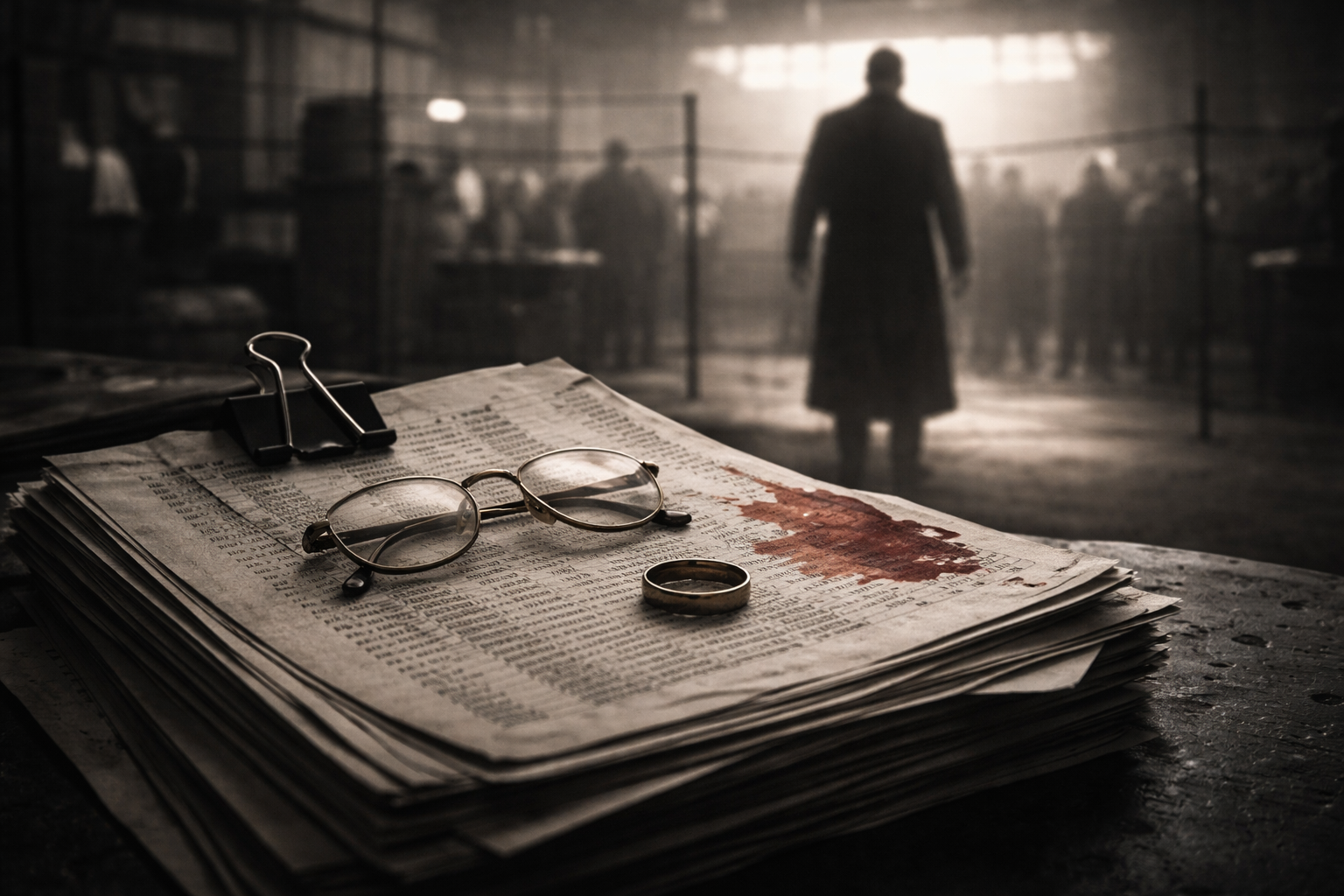
Schindler’s List Summary: Power, Profit, and Rescue
Steven Spielberg’s 1993 film Schindler’s List is a historical drama about Oskar Schindler, a German businessman who arrives in Nazi-occupied Poland looking to win contracts, charm officials, and make money fast. This Schindler’s List summary explains the story clearly, tracks the moral cause-and-effect that drives it, and shows why the film still hits strongly decades later.
At its core, the film stages an uncomfortable question: can someone motivated by status, pleasure, and profit still choose decency when the cost becomes real? Schindler does not begin as a virtuous individual. The world around him forces a choice anyway, because the Nazi system turns ordinary paperwork into life-and-death machinery.
Spielberg's Holocaust story is about leverage: who has it, who loses it, and what it means to spend it on others. The story turns on whether Schindler can turn a factory built for profit into a shield against extermination.
Key Points
Schindler’s List follows Oskar Schindler as he uses relationships, bribes, and bureaucracy to protect Jewish workers during the Holocaust.
The film’s tension comes from a simple reality: survival often depends on arbitrary decisions made by powerful men.
Schindler’s moral shift is gradual, pressured by what he witnesses and by what his choices set in motion.
Itzhak Stern is the most important link between Schindler's desire to help and the workers' urgent need for safety.
Amon Goeth embodies how total authority corrodes the soul when cruelty becomes a form of entertainment.
The “list” is not just a document; it becomes an argument that a life can be defended inside the system that wants it erased.
The film insists that rescue is not abstract heroism but sustained, risky logistics under terror.
Full Plot
Spoilers start here.
Act I: Setup and Inciting Incident
Oskar Schindler (a German industrialist looking for status and profit) arrives in Kraków after the Nazi occupation has reshaped the city’s economy into a war machine. Schindler reads the new order quickly: the right uniforms open doors, black market goods make friends, and “patriotic” business can turn into personal fortune. Schindler cultivates German officers, drinks with them, flatters them, and positions himself as a useful supplier.
Schindler aims to acquire a factory capable of securing military contracts. To make it work, Schindler needs labor and management. Schindler is introduced to Itzhak Stern (a Jewish accountant trying to keep people alive through work permits), who understands the same system from the other side: the Nazis treat Jewish identity as a crime and employment as a temporary waiver.
Stern helps Schindler staff the factory with Jewish workers, because Jewish labor is cheaper and controlled by the occupying authorities. While Schindler reaps financial benefits, the workers only receive a semblance of protection, as their status as "essential" buys them time. Schindler initially treats this arrangement as a smart business model, not a rescue mission, and that distinction matters because it shapes how Schindler behaves and what risks Schindler is willing to take.
As the war tightens its grip, Kraków’s Jewish population is forced into a ghetto, and violence becomes routine. Stern and other Jewish administrators strive to assign as many people as possible to factory protection, understanding that a job assignment can make the difference between a barracks and a transport.
The inciting incident is not a single gunshot but a shift in what Schindler can no longer pretend not to see. Schindler observes the systematic brutality of the Kraków ghetto liquidation, which includes chaos, shootings, and the tearing apart of families. Schindler’s perspective changes because the violence is not hidden in distant camps; it is happening in the streets Schindler uses for business and pleasure.
Schindler continues to profit, but the film makes the moral pressure unmistakable: Schindler is watching the state turn ordinary life into a sorting process. The more Schindler witnesses, the less Schindler’s comfortable self-image can hold.
What changes here is that Schindler stops seeing the war as a marketplace and starts seeing it as a machine that eats people.
Act II: Escalation and Midpoint Shift
After the ghetto is destroyed, many Jews are moved into forced labor under harsher control, and the center of power shifts to a new camp system. Amon Goeth (SS commandant, intoxicated by authority and cruelty) takes command at Płaszów, a labor camp built on terror and arbitrary punishment. Goeth runs the camp like a personal kingdom, and the film’s horror comes from how casual the violence becomes under his rule.
Schindler adapts by deepening the very relationships that disgust him. Schindler befriends Goeth, attends parties, and plays the role of the useful businessman who understands how to keep things running. Schindler’s strategy is transactional: if Schindler can become Goeth’s trusted companion, Schindler can negotiate for workers, delay removals, and protect individuals who would otherwise disappear.
This is where Stern’s role becomes decisive. Stern (trying to expand the circle of protection) helps shape the workforce lists, argues for specific names, and turns the factory into a haven built from paperwork. Stern also becomes the moral mirror Schindler cannot escape: Stern pushes the conversation away from profit and toward responsibility, even when Stern’s own survival is fragile.
The midpoint shift arrives as Schindler’s factory stops being just a business advantage and becomes a deliberate instrument of rescue. Schindler begins using money not to climb socially, but to buy time, exemptions, and human lives. Schindler’s goal changes: Schindler starts trying to keep people off transports and out of Goeth’s direct reach.
The pressure escalates in two major ways after this shift. First, Goeth’s unpredictability and appetite for punishment intensify the sense that no arrangement is stable. Schindler’s protections can be revoked with a mood swing or a new order. Second, the broader Nazi system begins to accelerate the “final” logic of extermination, pushing forced labor camps toward liquidation and deportation as the war turns against Germany.
Schindler responds by proposing a new plan that increases the stakes: Schindler seeks permission to move operations and workers to a different location, reframing the factory as essential war production. Schindler has to bargain with the same bureaucracy that is killing people, which means Schindler must keep performing loyalty while quietly undermining the intended outcome.
Supporting characters sharpen Schindler’s moral trade-offs. Stern keeps pressing for more names, more protection, and more certainty in a system designed to deny all three. Goeth tempts Schindler with belonging and power, modeling what happens when a man decides that dominance is the point of life.
What changes here is that Schindler commits to rescue as an ongoing operation, not a single brave gesture, and the cost becomes total.
Act III: Climax and Resolution
The endgame begins when the Nazi system starts shutting down camps and relocating prisoners as defeat approaches. The most dangerous constraint is time: every administrative change can mean a transport, and every transport can mean death. Failure would cost the workers their last thin cover of usefulness and throw them back into a system built to erase them.
Schindler's final plan involves compiling a formal list of workers who will accompany him to a new factory location. The list becomes the film’s central artifact because it is both mundane and miraculous: typed names that function as a fragile barrier between a person and extermination. Schindler and Stern push to include as many people as possible, knowing the list is also a target for corruption, error, and sabotage.
Even after the list is prepared, the system does what it always does: it breaks promises and scatters people. The men and women are routed separately, and the women are sent to Auschwitz instead of the intended destination. The sequence is staged as pure terror because the women are processed as if they are headed to death, and the film forces the viewer to feel how little control the victims have over any part of the process.
Schindler responds by using his remaining leverage. Schindler bribes and negotiates to retrieve the women from Auschwitz and bring them to the factory, turning money into a rescue tool one final time. The point lies not in Schindler's ability to outsmart evil, but in his continued willingness to bear the costs of resistance within a system that penalizes such resistance.
At the new factory, the workers exist in a strange pocket of delayed death. Schindler creates conditions where survival is possible, including food and protection, while refusing to become a productive cog in the Nazi war economy. The film presents the factory as a sanctuary that is still surrounded by the structure of annihilation.
As the war ends, Schindler must confront what Schindler has done and what Schindler has not done. Schindler understands that the workers are alive because of choices Schindler made but also sees the unbearable arithmetic of the lives Schindler could not reach. The climax answers the story’s core question by making it emotionally concrete: Schindler has become the kind of person who measures wealth in human outcomes, and that realization breaks Schindler open.
Schindler prepares to flee because Schindler’s identity as a party member and war profiteer makes Schindler vulnerable after Germany’s defeat. The workers provide a statement attesting to Schindler’s actions and offer a token of gratitude that carries an ethical weight far beyond material value. The film closes its main historical arc with liberation arriving not as joy, but as exhausted survival and uncertainty about what comes next.
What changes here is that rescue succeeds in the narrow space it can, but the cost of seeing clearly becomes a lifelong burden.
Analysis and Themes
Theme 1: Profit and Conscience
Claim: The film argues that moral change often begins in selfishness and becomes real only when a person keeps choosing the harder option.
Evidence: Schindler starts by exploiting wartime opportunities, using Jewish labor as an economic advantage. After witnessing the liquidation of the ghetto and the camp’s cruelty, Schindler redirects money into bribes and protections. The list becomes the concrete expression of Schindler’s pivot from enrichment to rescue.
What's the point? Many individuals tend to wait for purity before taking action, and this delay can be interpreted as complicity. The film suggests that imperfect motives create meaningful outcomes, but they also do not excuse comfort. What matters is whether a person keeps moving toward responsibility when the costs rise.
Theme 2: Bureaucracy as Violence
Claim: The film shows how genocide is enabled by procedures that disguise murder as administration.
Evidence: The workers’ fate repeatedly hinges on documents, assignments, transfers, and approvals. The list is powerful because the same bureaucratic logic that destroys can also be exploited to protect, temporarily, if someone is willing to fight for each name. The terror of misrouting to Auschwitz reveals how deadly a “clerical” mistake can be.
So what: Modern institutions still hide harm behind process, distance, and specialized language. The film sharpens the question of accountability: when harm is distributed across many small roles, who feels responsible, and who benefits from nobody claiming the whole?
Theme 3: Power as Permission
Claim: The film argues that unchecked authority encourages cruelty by turning impulse into policy.
Evidence: Goeth kills and punishes at will, not because it serves a clear purpose, but because power gives Goeth permission. The camp becomes a stage where domination is entertainment. Schindler’s access to Goeth shows how proximity to power can be used either to join in or to intervene.
So Evidence: So what? The film is not just about monsters; it is about what systems allow ordinary vices to become lethal. It warns that when institutions reward dominance and remove consequences, cruelty becomes a habit, and habit becomes culture.
Theme 4: Witness and Memory
Claim: The film insists that looking away is a moral choice, and witnessing is the beginning of resistance.
Evidence: Evidence: Schindler’s turning point is tied to what Schindler sees during the ghetto’s destruction. Spielberg’s visual strategy makes the viewer a witness too, refusing to let the violence be abstract or “off-screen.” The ending’s shift to real survivors underscores that the story is not a fable; it is an insistence on remembrance.
What does this mean? In today's world, images are constantly bombarding us, treating our attention like a valuable resource. The film argues that attention is also responsibility. Witness without action can become consumption, but witness that changes behavior becomes a form of refusal.
Theme 5: Moral Luck and Contingency
Claim: The film shows how survival can depend on chance, timing, and the personal whims of people in power.
Evidence: Workers live or die based on whether they appear “useful,” whether their name appears on a list, or whether a commandant is in a particular mood. The misdirection to Auschwitz highlights how easily fate can turn on logistics. Schindler's effort to save people is brave, but it is also weak and dependent.
So what? People prefer narratives where outcomes match virtue, but history does not obey that rule. The film pushes against comforting myths and forces a harder humility: survival is not always earned, and death is not always deserved.
Theme 6: Community Under Terror
Claim: The film argues that solidarity becomes both more difficult and more essential when the system is designed to isolate and degrade.
Evidence: Stern’s work depends on networks of trust, shared risk, and mutual aid inside the constraints of the ghetto and camps. The workers’ collective effort to protect one another stands in contrast to the Nazi structure that turns people into categories. Even the list itself functions as a community artifact: a shared promise that names matter.
So what? When people are scared, they can break up groups to protect themselves. The film suggests that the opposite is also possible: people can build protective bonds in the smallest available spaces. That lesson matters whenever communities face coercion, scapegoating, or institutional abandonment.
Character Arcs
Protagonist: Schindler begins believing that charm and opportunism can turn chaos into personal advancement, and Schindler ends believing that money and influence only matter if they are spent to protect lives. The ghetto liquidation forces Schindler to see what the system is doing, and the repeated negotiations with Goeth force Schindler to choose between comfort and intervention. The creation of the list marks the point where Schindler’s identity shifts from profiteer to protector, even as guilt remains.
Secondary arc: Itzhak Stern begins as a strategist of survival, trying to use work assignments to keep people alive within the Nazi structure. Stern’s steady pressure helps turn Schindler’s capacity for organization into rescue, and Stern’s endurance represents a different kind of courage: moral clarity maintained under constant threat.
Secondary arc: Amon Goeth begins with absolute power and ends trapped by the emptiness of that power. Goeth’s “discipline” experiments and casual murders reveal a man trying to prove control over his impulses by harming others. Goeth does not change; Goeth reveals what happens when a system rewards cruelty as identity.
Structure
Spielberg’s choice to shoot largely in black-and-white creates a documentary-like severity while also stripping the images of aesthetic comfort. When color appears, it functions like an alarm rather than a decoration, forcing attention onto specific symbols of life and loss.
The film’s pacing is built around escalating constraints. Each new phase tightens the circle: ghetto to camp, camp to liquidation, liquidation to transport, and transport to the fragile shelter of the factory. That structure creates a relentless logic where every “solution” is temporary and every delay is bought at a moral price.
The score and recurring visual motifs do not offer relief so much as mourning. The film uses repetition carefully: uniforms, lists, trains, gates, and paperwork return like refrains, emphasizing how industrial violence becomes normal through routine.
What Most Summaries Miss
Many summaries treat the story as a simple conversion: a bad man becomes a good man. The film is sharper than that. It shows that Schindler’s gifts are the same in both phases: social intelligence, appetite for risk, and a talent for reading what powerful people want. The moral question is not whether Schindler becomes a different person, but what Schindler decides to do with the person Schindler already is.
Another overlooked element is that rescue here is not triumph; it is sustained compromise. Schindler has to flatter murderers, drink with them, and perform loyalty to maintain access. The film makes that contamination part of the cost, not a footnote. Saving lives in a system like this is dirty, and the story acknowledges it.
The "list" is a heroic object, but it also condemns the world that needs it. The fact that a typed document can determine life or death is not inspiring; it is horrifying. The film asks the viewer to hold both truths at once.
Relevance Today
The film’s world is not our world, but the mechanisms it exposes remain recognizable.
First, it shows how propaganda and social incentives can make cruelty feel like belonging. Modern media ecosystems still reward outrage, dehumanization, and tribal status in ways that can normalize harm.
Second, it reveals how institutions can turn discrimination into workflow. Current discussions regarding surveillance, automated decision-making, and risk scoring reflect the peril of concealing moral choices within ostensibly "neutral" systems.
Third, it highlights the fragility of rights when power becomes unconstrained. When courts, civil service norms, and press freedom are attacked or hollowed out, violence does not begin with camps; it begins with permission.
Fourth, it offers a harsh lesson about workplace complicity. People often tell themselves they are “just doing a job.” The film shows how that story becomes a shield against responsibility, especially when career incentives reward obedience.
Fifth, it speaks to identity and scapegoating in times of economic stress. The film’s background logic is that a targeted group can be blamed for everything, and the state can claim “necessity” while stripping people of personhood.
Sixth, it challenges performative morality. Public statements and symbolic gestures matter, but the film centers on logistics: who gets protected, who gets resources, and who is willing to spend capital on others when it costs something real.
Ending Explained
By the final stretch, the film positions Schindler’s rescue as both extraordinary and tragically bounded. The workers survive, but the scale of what they have lived through makes celebration feel impossible. Liberation arrives with exhaustion and disorientation, not a clean emotional release.
The ending means that individual agency can matter inside a murderous system, but it never defeats the system’s total harm, and that imbalance leaves a permanent wound. Schindler’s breakdown is not a request for applause; it is a recognition that when you finally see people as irreplaceable, you also see the unbearable weight of every missed chance.
The closing movement in the present insists on continuity between history and memory. The story does not end when the war ends, because survival carries obligations: to remember, to tell the truth, and to resist the comfort of distance.
Why It Endures
Schindler’s List endures because it refuses easy categories. It does not let Schindler be a spotless hero, and it does not let the audience pretend that evil is always theatrical. The film is about choices made under pressure and about how quickly a society can make those choices ordinary.
The film is for viewers who want historical storytelling that is emotionally direct and morally demanding. It is also for people interested in how systems shape behavior, because it shows how bureaucracy, incentives, and authority can build a reality where atrocity becomes routine.
Some viewers might not find the film enjoyable in the traditional sense, as its purpose is to endure rather than to consume. Its power comes from refusal: refusal to sanitize, refusal to look away, and refusal to let rescue become a comforting myth.
