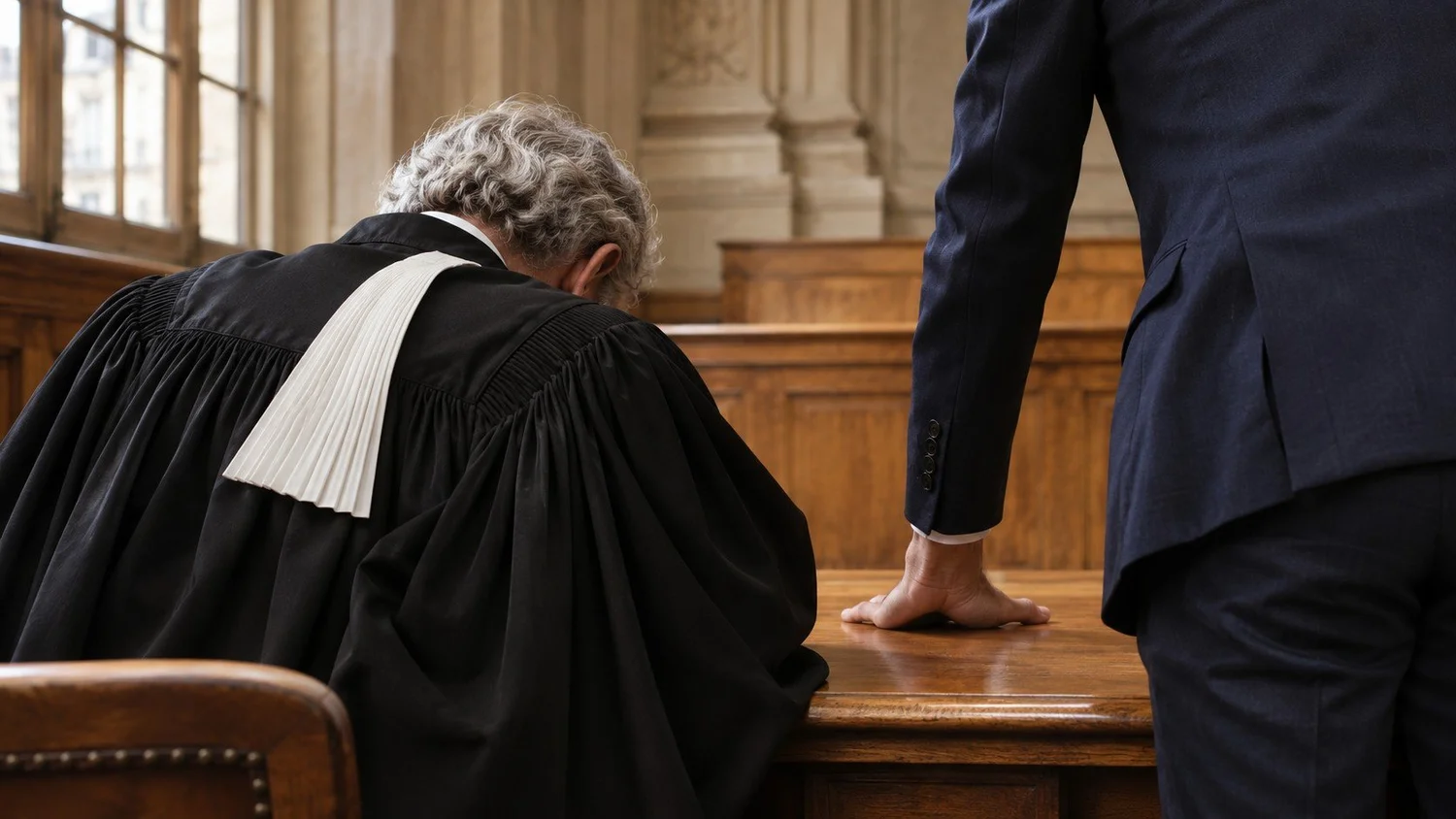
What Does One Frantic Week Cost a Celebrated Barrister?
Netflix's The Good Lawyer opens like a legal thriller and closes like an addiction drama. Its hero, the flamboyant Parisian defence barrister Léonard Landry, spends the film trying to save his career in a single frantic week. By the end he has lost his case, been convicted himself and is back in a rehab circle admitting he has been sober for one day. Yet the film treats this as a rescue rather than a defeat, and its title turns out to be the clue to why.
The French film, originally titled Un bon avocat, premiered out of competition at the Venice Film Festival in September and arrived on Netflix on 9 November 2026. It debuted in Netflix's global non-English film chart with 6.5 million views in its first week. Here is what happens, how it ends and what the final scene means.
Spoiler warning: this article discusses the full plot and ending of The Good Lawyer.
Who Is in The Good Lawyer?
The film is directed by Tristan Séguéla, who previously worked with its star on the Netflix series Tapie. It runs for 114 minutes.
- Laurent Lafitte as Léonard Landry, a celebrated criminal defence lawyer with a cocaine and alcohol problem.
- Anthony Bajon as Noé, a young intern who has not yet passed his bar exam.
- Mélanie Laurent as Iris Saint-Didier, Landry's former partner, now a senior lawyer for the industrial group Varenne.
- Carole Bouquet also appears in the cast.
The Plot: One Week to Save a Career
The film opens with Landry at his most chaotic. Having arrived late to court after a night of drug use, he is cornered by drug traffickers' henchmen who force him to represent their boss and hand him cocaine. He takes it, and his collapse in the middle of a hearing exposes his addiction to the entire legal profession.
Caught with drugs, Landry is ordered into rehabilitation and faces a disciplinary hearing that could end his career. He has about a week to prepare his own defence. Reluctantly, he recruits Noé, the earnest intern he initially tried to turn away, to help him.
The Varenne case
Landry's plan is to persuade Iris to defend him. To win her favour, he joins a case she is fighting on behalf of Varenne, an industrial group accused of links to the armed groups behind a massacre in the Congolese village of Ekoto. Its chief executive is Anne Lamarck.
The case turns on a witness, Firmin, whose evidence threatens Varenne. Landry persuades him to change his testimony in exchange for money, and Firmin's revised account helps Varenne argue that its fuel did not reach the attackers.
Then the trap closes. Varenne routes Firmin's payment through a suspicious account, and Iris uses it to portray Firmin as a paid collaborator of the insurgents, even attacking his brother's criminal record. Landry realises he has helped build a scapegoat.
The confession
Landry interrupts the hearing and confesses that he offered Firmin a financial inducement on Varenne's behalf. According to recaps, he reveals that the company offered €200,000 to change the testimony and reads out the names of the massacre's victims. Iris and Lamarck distance themselves from him, the judge removes him from the courtroom and Iris ends their relationship. Investigators later search Varenne's offices, and Firmin is admitted to the proceedings as a civil party.
The Relapse
Landry's act of conscience costs him his last hope of a powerful defender. Iris will not represent him. Alone, he goes back to alcohol and drugs and shuts himself away at home. Noé, unable to reach him, calls the fire brigade, who break in and find Landry unresponsive but alive.
It is the film's turning point. Noé, the intern Landry dismissed and then used, is the one who keeps showing up.
How Does The Good Lawyer End?
Noé persuades Landry to attend his own trial. Landry arrives late, as he has all film. The prosecution asks for prison and permanent disbarment. Noé, still not qualified, makes an impassioned plea: Landry has made mistakes, he argues, but he has always fought for his clients without judging them.
The verdict
Landry is found guilty, but the court is lenient. He receives a six-month suspended sentence and a two-year ban from practising law. He avoids prison and keeps a path back to the bar.
The final scene
Landry returns to rehab voluntarily, and this time he takes it seriously. In front of the group, he admits he has been sober for a single day.
Before he checks in, he and Noé talk about Noé's bar exam, which is three months away. Landry offers to help him prepare and asks whether Noé will represent him when his suspension ends. Noé agrees.
The Ending Explained: Who Is the Good Lawyer?
For most of the film, viewers assume the title refers to Landry. He is a "good lawyer" in the professional sense: brilliant, theatrical and successful. The ending quietly reassigns the title.
Séguéla spelled this out before the film was released. In his director's statement for Venice, he compared Landry to Alain, the doomed alcoholic of Louis Malle's 1963 film The Fire Within (Le Feu follet). The difference, he wrote, is that Landry "is lucky enough to cross paths with a promising good lawyer". That lawyer is Noé.
Read that way, the ending is not about Landry winning. It is about Landry being defended, by the one person who believes he is worth defending, at the moment he can no longer do it himself. Noé's plea in court is the best piece of advocacy in the film, and it comes from someone who is not yet allowed to practise.
The film also suggests what kind of "good" it means. Landry's professional goodness is technical and amoral: he will say what wins. His confession in the Varenne case is the first time he chooses what is right over what works, and it destroys him in the short term. The film rewards that choice not with victory but with a second chance, and with a successor.
Does Landry Stay Sober?
The film does not say, and that is deliberate. "One day sober" is the honest language of recovery, and the closing scene resists a neat redemption. What has changed is that Landry is no longer alone. He has a reason to stay clean, a future case to fight and a lawyer who will stand next to him.
What Happens With the Varenne Case?
The film leaves it unresolved on screen. Landry's confession triggers a search of Varenne's offices and gives Firmin a formal role in the proceedings, but we never see a verdict. Some viewers and recaps have read Landry's request to Noé as being partly about returning to the Varenne fight once both are able to practise. Either way, the film makes clear the case is not over.
Is The Good Lawyer Based on a True Story?
No. Landry, Noé, Varenne and the Ekoto massacre are fictional. The film's interest in corporate responsibility for violence in conflict zones echoes real legal debates, but it does not adapt a specific case.
Final Thoughts
Critics have been mixed. Several reviewers have praised Lafitte's lead performance while finding the legal plot familiar and the film slow to reveal Noé's importance. But the ending is its strongest argument. The Good Lawyer takes a story that usually ends with a triumphant closing speech and gives it to the intern instead, suggesting that the most valuable thing a broken man can find is not a win but an advocate.
Sources
- Martin Cid Magazine: The Good Lawyer ending explained
- High On Films: The Good Lawyer (2026) movie ending explained
- What's on Netflix: The Good Lawyer sets November 2026 premiere
- La Biennale di Venezia: Un bon avocat
- Reelgood: How to watch The Good Lawyer (cast)
- But Why Tho?: The Good Lawyer review
- Ready Steady Cut: The Good Lawyer review
- What's on Netflix: Netflix Top 10s, 9–15 November 2026
