

25 Years After 9/11, Americans Now Fear the Enemy Within More Than Foreign Terrorists
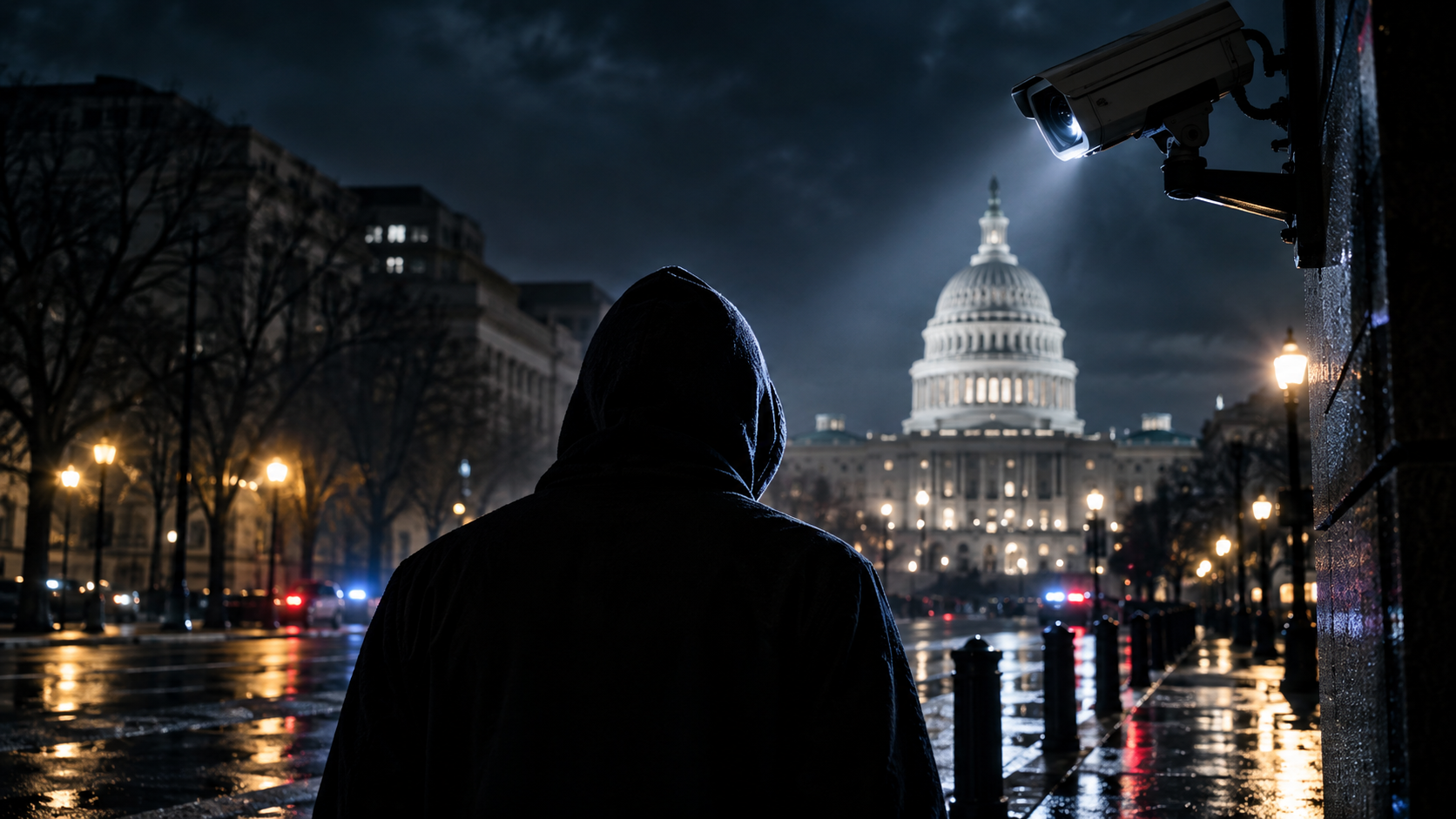
A Quarter-Century After 9/11, America’s Terrorism Nightmare Looks Completely Different
The Threat Has Moved
Twenty-five years ago, America watched an enemy from overseas turn passenger aircraft into weapons and kill almost 3,000 people on its own soil. The attacks of September 11, 2001 transformed American foreign policy, airport security, intelligence gathering and the way an entire generation understood terrorism.
Now the fear has changed direction. As the United States approaches the 25th anniversary of 9/11, a new national survey shows Americans are substantially more likely to see extremists operating inside their own country as the greater terrorist danger than attackers coming from abroad.
The Numbers Show a Striking Reversal
Asked to identify the greatest threat to the safety of ordinary Americans, 33% of respondents selected domestic terrorism, compared with 20% who chose foreign terrorism. Yet the largest group, 42%, selected random acts of violence such as mass shootings, revealing something even broader about the country's anxiety: many Americans appear more frightened by violence emerging unpredictably around them than by the kind of organised foreign attack that dominated national security thinking after 9/11.
When the choice was narrowed specifically to extremist threats, the divide became much clearer. Some 61% regarded domestic extremists as the greater danger, while 34% selected foreign actors. The nationally representative survey of 1,167 American adults was conducted between August 28 and August 31, 2026.
That represents a remarkable psychological reversal from the country created by September 11. For years after the attacks, terrorism was associated overwhelmingly with al-Qaeda, overseas training camps, hijacked aircraft, wars in Afghanistan and Iraq, intelligence failures and the possibility that another externally organised mass-casualty attack could reach American cities.
The enemy Americans increasingly fear today may already be living among them.
9/11 Built America’s Security System Around an External Enemy
The September 11 attacks produced one of the greatest reorganisations of American national security since the Second World War. The Department of Homeland Security was created, intelligence sharing was expanded, airport screening became dramatically more intrusive and counterterrorism moved to the centre of American foreign and domestic policy.
Those changes worked alongside an enormous military and intelligence campaign against jihadist organisations abroad. Al-Qaeda's ability to organise another operation on the scale of 9/11 was severely degraded, while the Islamic State later lost the territorial caliphate that once controlled large areas of Iraq and Syria.
The absence of another 9/11-scale foreign terrorist attack on the American homeland is one of the defining security facts of the past quarter-century. It does not prove that the threat disappeared. It does show how profoundly American counterterrorism changed the operating environment in which foreign organisations attempt to strike the country.
Public opinion reflects some recognition of that record. Around six in ten Americans in the latest survey said the security measures introduced after September 11 had been at least moderately effective at preventing terrorism.
But success against one form of threat did not produce a country free from political violence.
It helped expose a different one.
The Modern Threat Is Harder to Put on a Map
Domestic violent extremism presents authorities with a fundamentally different problem from dismantling an overseas terrorist hierarchy. There may be no foreign headquarters to bomb, no international leadership structure to penetrate and no clear chain of command connecting an attacker to a larger organisation.
The FBI told Congress this year that domestic terrorists motivated by different ideologies increasingly exploit mainstream social networks, smaller online communities and encrypted communications to spread material, recruit supporters and encourage violence. It also identified anarchist violent extremists and what it calls nihilistic violent extremists as particularly significant current domestic threats.
Nihilistic extremists present an especially uncomfortable challenge because the motivation can extend beyond a conventional political doctrine. Hatred of society itself, fascination with collapse, indiscriminate violence and the desire to create chaos can overlap with personal grievances and online subcultures.
This is one reason the modern threat landscape can feel so difficult to understand. The familiar categories of left, right, religious and anti-government extremism do not always explain every violent actor neatly.
A person can absorb several incompatible ideologies, personal resentments and violent communities at once. Radicalisation may happen largely on a phone. Planning may involve only one person or a tiny group.
That dramatically reduces the number of opportunities authorities have to detect a plot before somebody acts.
America Has Been Moving Towards This Moment for Years
The shift did not suddenly appear in 2026. Federal data had already shown domestic terrorism becoming an increasingly serious investigative burden long before the latest survey.
Government figures covering 2010 through 2021 identified 231 attacks or plots meeting the relevant definition of domestic terrorism. Racially or ethnically motivated violent extremists accounted for the largest share, around 35%, and were also responsible for the greatest lethality during that period.
The number of open FBI domestic terrorism-related cases increased from 1,981 in the 2013 fiscal year to 9,049 in 2021 — a rise of 357%.
The ideological balance can change again. Recent analysis has found increased activity associated with violent actors on the left after years in which violent far-right and jihadist offenders produced substantially greater levels of terrorist violence. The important point is not that one political camp can permanently be labelled America's terrorist threat.
It is almost the opposite.
The threat is fragmented, capable of migrating between ideologies and increasingly shaped by individual actors rather than stable organisations.
That makes turning terrorism into a simple partisan weapon particularly dangerous. Extremist violence does not become less serious when the perpetrator appears politically inconvenient to one side.
Mass Shootings Complicate the Picture
Perhaps the most revealing number in the new survey is not the 33% worried most about domestic terrorism.
It is the 42% who chose random violence such as mass shootings.
That distinction matters because not every mass shooting is terrorism. Terrorism normally requires a political, ideological or social purpose behind violence intended to intimidate or coerce a population or influence government behaviour. Mass murder committed for personal revenge, notoriety or another non-ideological motive may be horrific without meeting that definition.
For the person wondering whether a supermarket, school, church, political event or public gathering is safe, however, those legal and intelligence classifications may feel remote.
The public experiences the consequence first.
An attacker who radicalises online, a person obsessed with mass violence and an ideologically motivated extremist can also share tactics, imagery and digital communities without sharing precisely the same motivation. That creates a grey area in which terrorism, targeted violence and mass-casualty crime can appear psychologically similar even when authorities classify them differently.
The result is a security problem much broader than the traditional post-9/11 image of terrorism.
Foreign Terrorism Has Not Disappeared
None of this means the threat from international terrorism has ended.
The 2026 U.S. intelligence assessment describes a geographically dispersed jihadist threat even though al-Qaeda and ISIS are weaker than at their respective peaks. American intelligence estimates al-Qaeda still has roughly 15,000 to 28,000 members worldwide and ISIS between approximately 12,000 and 18,000, with some of their strongest branches now operating across parts of Africa, the Middle East and South Asia.
American officials also recorded at least three Islamist terrorist attacks inside the United States during 2025 and said law enforcement disrupted at least 15 U.S.-based Islamist terrorist plotters. Several foreign organisations continue encouraging individuals in Western countries to act without requiring elaborate overseas direction.
That creates a crucial distinction between public perception and intelligence assessment.
Americans may fear domestic extremists more. That does not mean foreign terrorism has become harmless.
In fact, the modern terrorist threat increasingly blurs the boundary between foreign and domestic. An individual physically inside America can consume propaganda produced thousands of miles away, communicate online with extremists overseas and carry out an attack largely alone.
The attacker may be domestic.
The inspiration may not be.
America Still Lives With the Security System 9/11 Created
Another contradiction runs through the 25th anniversary.
Americans appear willing to keep significant parts of the security architecture created after September 11 while rejecting some of its most intrusive powers. The latest polling found broad backing for stronger airport security, while 65% opposed electronic surveillance of Americans conducted without a warrant.
That tension has existed throughout the post-9/11 era.
People want the government to detect threats before an attack occurs, but many also want limits on how deeply the state can monitor innocent citizens while searching for dangerous ones. That becomes even harder when the suspected threat is no longer primarily a foreign operative entering the country but an American citizen whose behaviour may involve constitutionally protected speech until it crosses towards criminal planning or violence.
The problem is built into the system.
A democratic government cannot treat extreme beliefs alone as crimes. Yet waiting until an extremist clearly begins preparing an attack can leave investigators with a dangerously short window in which to intervene.
Twenty-Five Years Later, the Geography of Fear Has Changed
September 11 taught America to look outward.
Its intelligence agencies hunted networks across Afghanistan, Pakistan, Iraq, Syria, Yemen, Somalia and beyond. Airports became hardened checkpoints. Foreign terrorist organisations became household names. Two decades of war were justified largely through the promise that threats should be confronted overseas before they could reach American streets.
A quarter-century later, the strategic picture is far messier.
Foreign organisations still want to kill Americans. Jihadist networks still exist. Overseas instability can still produce threats capable of reaching the United States.
But increasingly, Americans are looking at political hatred, radicalisation, mass shootings, conspiracy-driven violence and isolated extremists within their own society and wondering whether the next serious attack will require anybody to cross a border at all.
That may be the most unsettling legacy of the 25 years since 9/11.
America built an extraordinary security machine to prevent another enemy from arriving from abroad. Its next counterterrorism challenge may be learning how to confront violence growing inside the country without allowing fear, political tribalism or surveillance to damage the democratic society that machine was created to protect.
