

Trump Goes All-In With $40m Dallas Spectacle as Republicans Fight to Save Congress
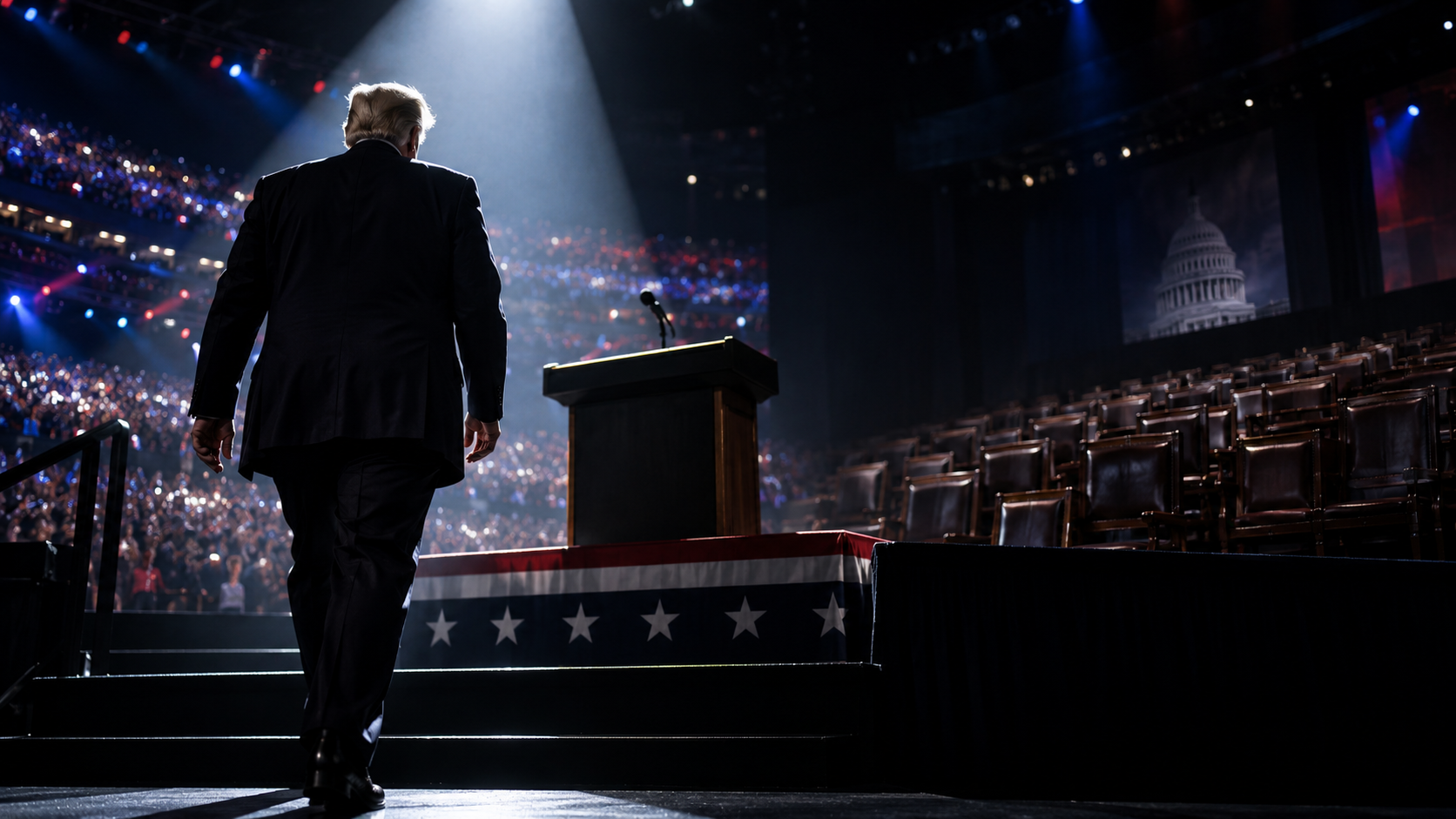
Trump Turns Midterms Into a National Spectacle as Republicans Battle to Keep Congress
The Battle for Congress
Donald Trump is preparing to put himself at the centre of one of the strangest midterm campaigns in modern American politics, with Republicans staging an extraordinary national convention in Dallas costing around $40 million just weeks before voters decide control of Congress.
The September 9–10 gathering at the American Airlines Center is not simply another Trump rally. It is an attempt to reproduce the energy, television spectacle and political mobilisation normally reserved for a presidential election at precisely the moment Republicans are confronting the possibility that their control of Washington could unravel.
Trump Is Turning the Midterms Into His Election
Trump will not appear on a ballot on November 3, but his strategy increasingly resembles that of a candidate who will. He is expected to address the Dallas convention on both nights, while Vice President JD Vance and a collection of cabinet members, Republican politicians and candidates will also appear.
The political calculation is unmistakable. Trump has built an unusually loyal coalition that does not always turn out at the same rate when his name is absent from the ballot. Republicans therefore need millions of voters who turned out for Trump in presidential elections to behave as though his own political future is being decided again.
In an important sense, it is. Losing one or both chambers of Congress would transform the final two years of Trump's second term, restricting his legislative freedom and handing Democrats substantially greater power to investigate his administration, control committees and block parts of his domestic programme.
Trump appears determined to make that consequence personal. Rather than encouraging vulnerable Republicans to distance themselves from an unpopular White House, his strategy is effectively asking voters to judge the midterms as another verdict on the Trump presidency.
Why Republicans Are Nervous
There is a reason for the urgency. Republicans control the Senate with 53 seats, against 45 Democrats and two independents who caucus with them, meaning Democrats require a net gain of four seats to take outright control.
The House is even less forgiving. Republicans are operating with a tiny advantage capable of disappearing with only a relatively small swing across competitive districts. That means national political conditions matter enormously: a modest shift among independents, suburban voters or people dissatisfied with the economy could be sufficient to change control.
The Senate once appeared significantly safer. That calculation has become more complicated as Democrats compete not only in traditional battlegrounds but in states including Texas, Alaska, North Carolina and Ohio.
Republicans still have structural advantages in several of those contests, and a Democratic takeover of the Senate is far from guaranteed. But a contest that once looked heavily tilted towards continued Republican control has become serious enough that neither party can comfortably dismiss the possibility of a change in power.
The $40m Dallas Gamble
That is the backdrop to an event unlike the normal rhythm of American midterm politics. National party conventions traditionally belong to presidential election years, when delegates nominate candidates and parties receive several nights of concentrated national attention.
The Dallas gathering has no presidential nominee to select. Its purpose is political theatre, fundraising, voter mobilisation and message discipline.
Around $40 million is reportedly being assembled for the operation, with tens of thousands of people expected around the convention and related events. The American Airlines Center gives Republicans the kind of arena-scale backdrop normally associated with presidential campaigns rather than congressional races.
For Trump, that may be precisely the point. His political success has repeatedly depended on turning elections into large, emotional national contests rather than collections of local races. Dallas offers the opportunity to do it again.
The danger is that Republicans may discover that nationalising the election cuts both ways.
Trump Is Both the Weapon and the Risk
The central Republican dilemma is brutally simple. The party may need Trump to bring out its voters while simultaneously needing some swing voters to think about him less.
That explains why several vulnerable Republicans have chosen to continue campaigning in their own states or districts rather than making Dallas the centrepiece of their election strategy. For a candidate in a safe Republican seat, appearing alongside Trump carries little downside. For someone trying to win independents in a marginal district, the calculation is different.
Trump nevertheless remains overwhelmingly dominant inside the Republican Party. Candidates cannot easily abandon the president without risking the enthusiasm of the very voters they need most.
That leaves Republicans attempting a difficult balancing act: make Trump supporters believe the president's agenda is personally at stake while convincing less committed voters that their local Republican candidate is more than simply an extension of the White House.
Dallas will put that contradiction under stadium lights.
The Economy Could Decide Everything
The convention cannot solve the largest problem facing Republicans simply through spectacle: voters ultimately experience politics through their own finances.
Cost-of-living pressure and dissatisfaction with economic conditions have become major vulnerabilities for the administration. The continuing consequences of Trump's trade policies and the Iran conflict have given Democrats an opportunity to argue that Republican control has made everyday life more expensive and less stable.
Trump's counterargument will focus heavily on his administration's record. Republicans are expected to emphasise border enforcement, tax policy, manufacturing, public safety, prescription-drug costs and what they portray as the ideological extremism of the Democratic opposition.
That second part matters. Republicans do not merely need voters to approve of Trump. They need voters unhappy with the president to conclude that Democratic control of Congress would be worse.
The convention is therefore likely to become as much an argument against the Democratic Party as a celebration of Republican achievements.
A $403m Political War Chest Sits Behind Trump
The scale of Trump's political operation makes the Republican anxiety particularly striking.
Federal Election Commission records show MAGA Inc., the super PAC aligned with Trump, had approximately $403.45 million in cash at the end of July after raising more than $400 million during the current reporting period.
That is an extraordinary reserve of political firepower. It also means Republican strategists have spent much of the year waiting to see how aggressively Trump's organisation would deploy it in congressional races.
The money is now beginning to move into the campaign. But its existence reinforces how completely the party's electoral fortunes have become intertwined with one man.
Trump possesses not merely the Republican Party's largest political audience but one of its most formidable independent financial machines. Candidates worried about his popularity can still desperately want access to his voters, his endorsements and his money.
Trump Is Trying to Defy Midterm History
Presidents normally have good reason to fear their first midterm election. The party controlling the White House frequently loses congressional seats as dissatisfied voters get an opportunity to impose a check on the administration.
Trump knows that pattern.
But almost every important stage of his political career has been built around an argument that normal political rules do not necessarily apply to him. The Dallas convention is another version of that bet.
Instead of insulating Republican candidates from the White House, Trump is increasing his visibility. Instead of allowing dozens of congressional contests to remain primarily local, he is helping turn them into a national referendum. Instead of treating November as an awkward election to survive, Republicans are attempting something closer to another presidential campaign.
It is high risk because Democrats need relatively little movement in the House to produce an enormous change in Washington.
Losing the House Would Change Trump’s Presidency
The most immediate consequence of a Democratic House takeover would not merely be that Republicans could no longer pass legislation on their own.
Committee control would change. Investigative power would change. The House agenda would change. Republican legislation could die before reaching Trump's desk, while Democratic committee chairs would gain the ability to examine the administration through hearings, document requests and subpoenas.
Trump would still possess significant executive authority and Republicans could retain the Senate, but the political environment surrounding his administration would become considerably more hostile.
Losing both chambers would go further. Senate control determines the confirmation process for judges and senior administration nominees, making the battle for its majority particularly important to a presidency with more than two years remaining.
That is what ultimately makes a $40 million political convention less extravagant than it initially sounds. The prize is control of the institutions through which Trump's second-term programme must operate.
Dallas Could Reveal the Future of the Republican Party
The convention will also offer an early glimpse of the competition to inherit Trump's movement.
JD Vance enters the event not simply as vice president but as one of the most obvious potential successors to Trump's political coalition. Other ambitious Republicans will inevitably understand that a national gathering of activists, donors and voters provides an unusual stage less than two years before the next presidential primary cycle begins in earnest.
Yet the paradox is obvious. Trump is so dominant that a convention theoretically capable of showcasing the next generation may instead demonstrate how difficult it will be for any Republican to escape his shadow.
That becomes even more important if Republicans perform badly in November. A strong Republican result would strengthen the argument that Trump's coalition can survive when he is absent from the ballot. Heavy losses would immediately reopen the debate over whether Trump remains uniquely capable of mobilising his supporters but increasingly difficult for other Republicans to carry with them.
November Will Decide Far More Than Congress
Trump has built the Dallas convention around a powerful idea: convince Republican voters that even though he is not on their ballot, his presidency effectively is.
It could work. His ability to dominate political attention remains exceptional, Republicans possess enormous campaign resources and Democrats must still win difficult individual races rather than merely benefit from unfavourable national polling.
But that strategy also removes one potential escape route for vulnerable Republicans. If Trump deliberately makes himself the face of November, voters angry about inflation, foreign policy or the direction of the country will be given an equally clear target for their frustration.
That is the enormous wager behind Dallas. Republicans are spending tens of millions of dollars trying to transform an awkward midterm into another Trump election because they believe his political movement may be the strongest weapon they possess. If the gamble fails, the same convention intended to save Republican control could come to symbolise the moment Trump's second presidency lost its grip on Congress.
