£540m Abroad, Pressure at Home: The Political Risk of Britain’s Ukraine Bet
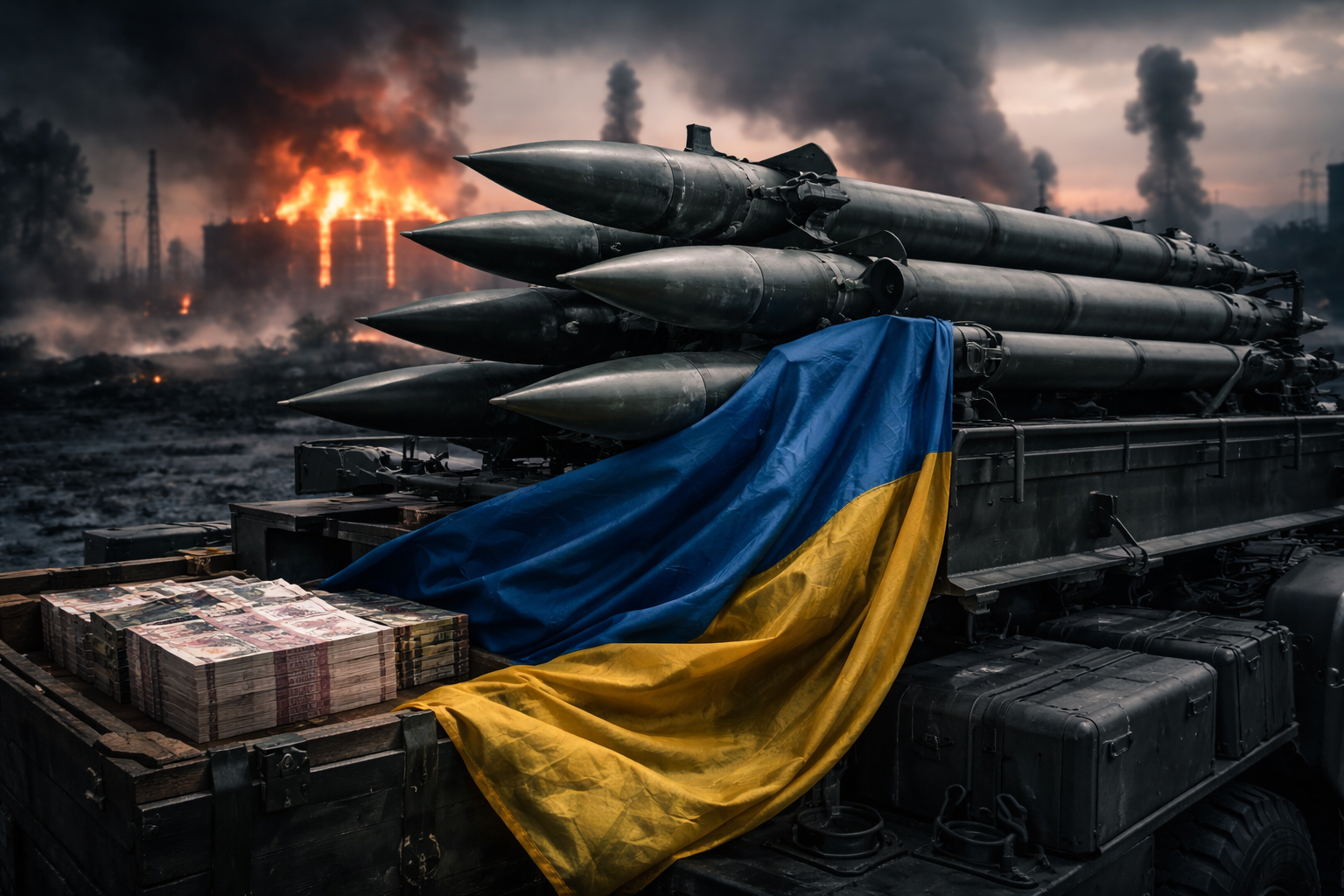
Air Defense vs A&E: The Question Hanging Over Britain’s £540m Ukraine Pledge
UK’s £540m Ukraine Air-Defense Pledge Has One Job: Turn Money Into Interceptors Before the Next Blackout
Britain has firmly established that Ukraine's winter war is now an air-defense competition against the grid.
A new UK military support package valued at £540 million is being framed alongside renewed strikes on Ukrainian energy infrastructure—because when power fails in freezing temperatures, the front line isn’t just trenches. It’s substations, transformers, and the airspace above them.
Early messaging makes it sound simple: missiles in, lights stay on. The real question is uglier and more intriguing.
The story turns on whether this package converts into “shots on target” fast enough to blunt the next wave of drone-and-missile strikes.
Key Points
The UK has announced a £540m package focused on air-defense-related munitions, split between urgent procurement of interceptors and UK/Europe production of air-defense missiles.
The “time-to-effect” is not the pledge date—it’s the moment missiles are in-theater, integrated, and firing under Ukrainian command-and-control.
The fastest wins come from drawing down existing stocks and sending compatible munitions that can plug into systems Ukraine already runs.
The slowest step is often not manufacturing—it’s integration: matching missiles, launchers, radars, targeting data, spares, training, and sustainment.
The operational objective is defensive, but the strategic objective is political: deny Russia the ability to trade missiles for domestic pressure (cold homes, stalled industry, migration, and fatigue).
Public backlash in the UK is predictable and rising: “Why abroad, when home is hurting?” The government’s strongest rebuttal is that air defense is cheaper than escalation because it reduces humanitarian and economic shockwaves that spill into Europe.
Background
Air defense is the unglamorous backbone of Ukraine’s survival strategy. When Russia targets energy infrastructure, the intent is not only physical damage. It’s leverage: force outages, strain emergency services, disrupt logistics, and grind down public resilience.
Ukraine’s air-defense problem is also a supply-chain problem. Interceptors get fired, stocks fall, factories can’t instantly surge, and every new system brings a training and maintenance tail. In winter, the margin for error shrinks. A missed intercept can mean a city goes dark.
This is why UK and European pledges increasingly focus on munitions, not just platforms. A launcher without missiles is theater. Missiles without a working radar picture are a waste.
Analysis
The Capability Pathway: How £540m Becomes “Shots in the Air”
A pledge is a press moment. Capability is a chain. The chain looks like this:
1) Contracting and allocation
Money is directed either to buy from existing inventory (fast) or fund new production (slower but scalable).
If procurement routes through multinational mechanisms, it can reduce duplication and speed matching—but adds coordination steps.
2) Build, pull, or reassign stock
Fastest: pull interceptors already built and sitting in allied stocks.
Middle: accelerate factory throughput for missiles already in production.
Slowest: stand up new lines or variants that require qualification.
3) Compatibility check
The missile must be compatible with a launcher, fire control, and battlefield communications that Ukraine can operate.
In winter, "compatible" beats "best."
4) Training and sustainment
Even if crews are trained, each new munition needs refreshers: storage, handling, firing doctrine, and troubleshooting.
Sustainment is the hidden sink: spare parts, battery swaps, transport containers, and ongoing inspection cycles.
5) Delivery and distribution
Moving sensitive air-defense munitions is a logistics exercise with security constraints.
Distribution inside Ukraine depends on the threat map: where drones and missiles are trending, where the grid is most exposed, and which cities can’t go dark.
6) Operational integration
The payoff only arrives when the missiles are stitched into Ukraine’s layered defense: short-range for drones, medium-range for cruise missiles, and higher-end systems where available.
This is why “time-to-effect” is measured in weeks-to-months, not in headlines.
Realistic Time-to-Effect: What Happens Fast vs What Takes Time
Fast (days to weeks):
Interceptors are sourced from existing stockpiles and dispatched to systems Ukraine already utilizes.
Munitions that require minimal retraining and can be distributed to units already firing daily.
The urgent spares and support equipment are necessary to maintain the operational status of the existing air-defense batteries.
Medium (weeks to a few months):
New production runs that can be accelerated on existing lines and then shipped as batches.
Additional missiles are needed for systems that have already been deployed, but their production is hindered by the scarcity of ammunition.
Slow (months to longer):
Any new variant requires qualification, fresh training pipelines, or significant changes to integration.
“New capability”—that sounds impressive but arrives after winter’s decisive window.
From a practical perspective, the UK package strives to prioritize the first two categories by increasing the number of intercept attempts per night and initiating them earlier.
The Constraint Nobody Likes: The Missile Economy
Air defense is a numbers game under stress:
Attackers use cheap drones to force defenders to fire expensive interceptors or accept damage.
Defenders need a layered mix: cheaper options for drones and higher-end options for missiles.
So the constraint is not just, “how many missiles can the UK buy?” It’s:
How many suitable missiles can be produced or released?
how fast they can be delivered,
and whether Ukraine has enough sensors and command-and-control to avoid wasting them.
If Russia sustains pressure on the grid, Ukraine’s rate of burning through air-defense stock becomes the strategic variable.
Scenarios: What This Package Could Actually Change
Scenario 1: The “Winter Stabilizer”
Outcome: Ukraine’s grid still takes hits, but outages become shorter and more localized.
Signposts: fewer multi-day blackouts, more consistent reporting of intercept success, and fewer emergency shutdowns of industry.
Scenario 2: The “Salvo Competition”
Outcome: Russia increases volume to test defenses; Ukraine increases intercept attempts; both sides escalate in tempo.
Signposts: rising strike frequency; more mixed attack packages (drones + missiles); a visible pattern of “probing” different regions.
Scenario 3: The “Integration Bottleneck”
Outcome: missiles arrive, but operational impact lags due to integration, maintenance, or distribution constraints.
Signposts: pledges announced, but frontline reporting still describes interceptor scarcity and repeated outages despite new deliveries.
Scenario 4: The “European Industrial Flywheel”
Outcome: funding accelerates production enough that Ukraine’s air-defense stocks become more predictable over time.
Signposts: follow-on contracts, expanded production shifts, and recurring batch deliveries rather than one-off announcements.
What Most Coverage Misses
The key point is that air defense is not a weapon, but rather a system of systems, with the slowest subsystem setting the pace.
The mechanism is that every added interceptor is only as useful as the chain behind it: radar picture, fire-control integration, trained crews, maintenance cycles, and distribution discipline. If any link is weak, money becomes inventory rather than protection.
What would confirm these assertions in the next days and weeks:
There should be evidence of repeated deliveries and rapid turnarounds, rather than just a single announcement.
There are indications that Ukraine is enhancing its command-and-control efficiency, as evidenced by fewer wasted shots and improved layering.
There is confirmation that Ukraine is receiving additional munitions for short-range counter-drone defense, not just high-end interceptors.
What Changes Now
In the short term, this pledge is meant to buy breathing room—not victory.
Next 24–72 hours/coming weeks:
Air-defense munitions should begin translating into higher coverage for critical infrastructure, especially energy nodes.
Expect the operational focus to be defensive concentration: protecting key substations and generation points, not trying to cover everything.
Months ahead:
If UK/European production ramps up and delivery rhythms stabilize, Ukraine can plan defense rotations and conserve high-end interceptors for the most dangerous threats.
The main consequence is political as much as military, because keeping the lights on reduces panic, displacement, and economic loss—which keeps Ukraine governable and Europe steadier.
Real-World Impact
A regional hospital runs on backup generators overnight. Fuel deliveries become the limiting factor, not doctors.
A small manufacturer pauses production for two days after repeated outages. Orders slip. Wages tighten. People leave.
A family in a tower block rations space-heater use because power is intermittent. The cost is not just discomfort; it’s health.
A logistics operator reroutes convoys because traffic lights fail and communications degrade. Delays ripple into military and civilian supply chains.
The UK Backlash Question: “Why £540m There, Not Here?”
This is the political tax attached to every overseas pledge. The domestic arguments typically stack like this (most common to the most corrosive):
Cost of living pressure
“Bills are high, wages feel stuck, and this looks like money leaving when households are stretched.
NHS strain
“Waiting lists, GP access, and social care are visibly broken—people compare that pain to foreign spending instantly.”
Housing and local services
“Councils are cutting services; housing feels unaffordable; potholes and policing are daily symbols of decline.”
Skepticism about effectiveness
“Will this actually change anything, or is it another pledge that vanishes into a war?”
War fatigue and escalation fear
“People worry support pulls the UK deeper into a conflict they don’t control.”
Distrust in government priorities
“Even if the cause is justified, voters don’t trust the state to balance domestic needs and foreign commitments.”
The government’s most durable answer is not moral—it’s practical: the claim that supporting Ukraine now reduces larger costs later (security risk, energy shock, refugee flows, and the price of deterring further aggression).
The Fork in the Road Britain Just Chose
This package is a bet that the fastest way to change the war isn’t to chase dramatic breakthroughs—it’s to deny Russia its cheapest strategic win: freezing cities into submission.
Watch for three signposts:
A steady delivery cadence is more effective than a single surge.
There is evidence of layered defense improvements, with more drone kills using cheaper systems and fewer expensive interceptors being wasted.
Even if strikes continue, the duration of outages is likely to shorten.
If the UK’s £540m becomes reliable intercept capacity quickly, it won’t just defend infrastructure—it will defend the idea that democracies can sustain pressure without cracking.
