Buy Together or Pay More: Starmer’s High-Stakes Defense Pitch
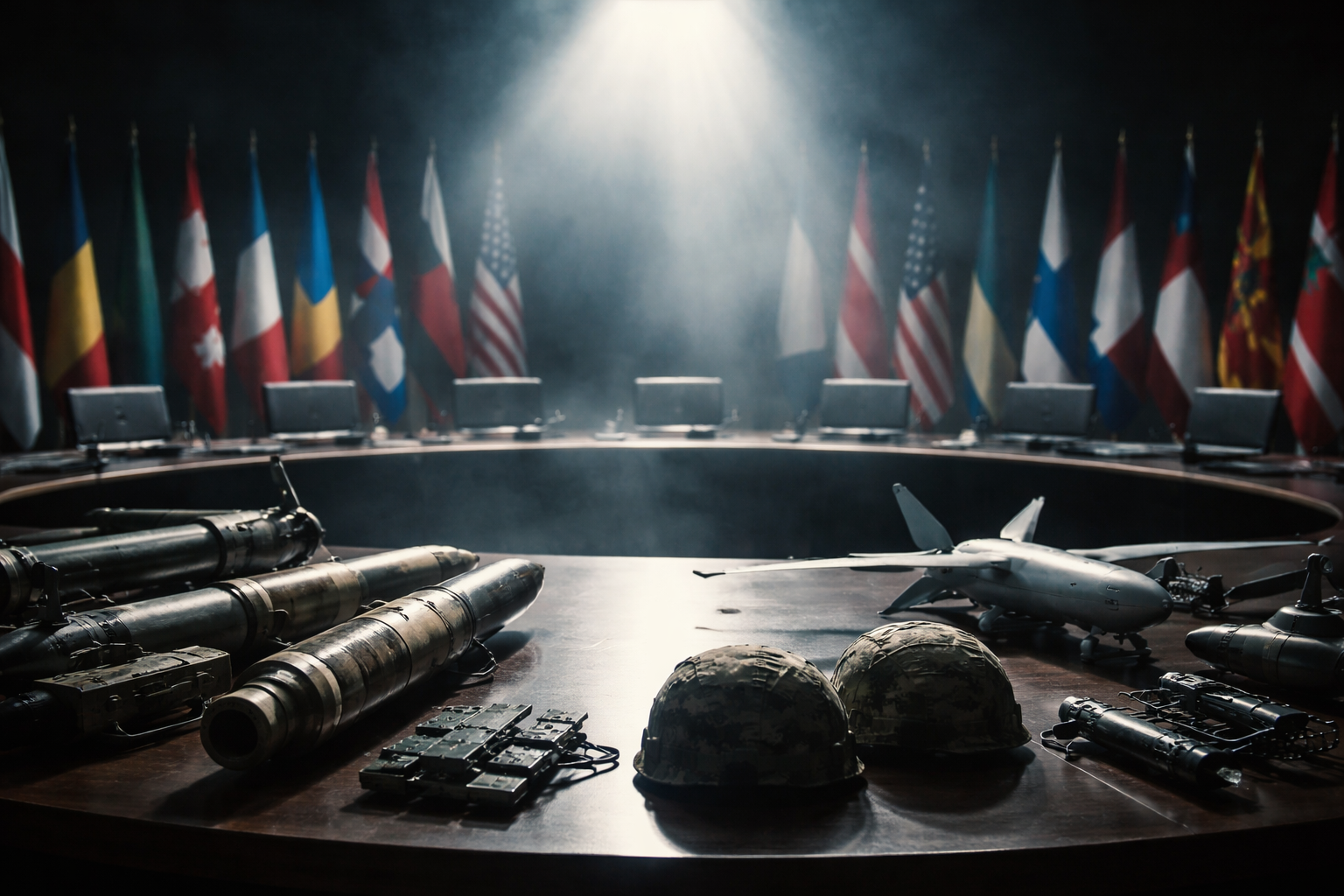
Starmer pushes a multinational defense buy-together plan to cut rearmament costs—whether it works depends on standards, contracts, and production speed.
Starmer’s Defense Gamble: Can Europe Really Slash Rearmament Costs by Buying as One?
UK Prime Minister Keir Starmer is expected to argue for a multinational defense initiative that would oversee joint weapons procurement and drive down the cost of rearmament, with the idea set to feature around the Munich Security Conference. A version of this logic has been gaining traction across European capitals: if everyone is buying more weapons anyway, then pooling demand should reduce unit costs, speed delivery, and strengthen deterrence.
But procurement “cooperation” is the easy line. The hard part is changing incentives inside governments, parliaments, and defense industries that have spent decades optimizing for national control, national jobs, and bespoke requirements.
The story turns on whether Europe can standardize fast enough to make “buy together” cheaper than “buy national” before the security window narrows again.
Key Points
Starmer is expected to push a multinational defense initiative focused on joint procurement as a way to reduce rearmament costs and improve delivery speed.
The pitch lands amid a wider European debate over how to finance and coordinate rearmament, including EU instruments designed to support common procurement.
Joint buying only produces real savings if countries align requirements, standards, and industrial workshare—not just budgets.
A major constraint is production capacity (munitions, lines, components, skilled labor) and multi-year contracting, not simply headline defense spending.
Political economy is the hidden battlefield: governments want lower costs but also want domestic jobs, sovereign control, and national champions.
The next weeks will test whether Starmer’s plan becomes a concrete coalition with named capabilities—or remains a diplomatic signal with limited operational bite.
Background
Europe’s defense spending has been rising in response to the security shock of Russia’s full-scale war in Ukraine and the growing sense that deterrence needs rebuilding at scale. The problem is that rearmament is expensive and slow, especially when many countries buy different systems that do similar things in small batches with national variations.
“Joint procurement” is the proposed fix: multiple countries commit to common requirements, pool orders, and negotiate together. In theory, that delivers:
Lower unit costs through economies of scale
Faster delivery by providing predictable demand to manufacturers
Interoperability—allies can share parts, ammunition, training, and maintenance
Europe has also been experimenting with financing structures designed to accelerate collective buying. For instance, the EU's Security Action for Europe (SAFE) framework aims to facilitate extensive procurement associated with collaboration and the development of industrial capacity.
Starmer’s intervention matters because the UK sits in a unique position: a major European defense player outside the EU, with significant industrial capacity, and with political reasons to show it can be both a transatlantic anchor and a pragmatic European partner.
Analysis
A “Buy Together” Bloc Sounds Simple—Until You Pick the Shopping List
The initial discussion consistently revolves around determining exactly what we are purchasing together. “Defense” is not one market. It is dozens of markets—munitions, air defense interceptors, drones, armored vehicles, radar, electronic warfare, shipbuilding—each with its own suppliers, bottlenecks, export rules, and training pipelines.
The initiative’s credibility will hinge on whether it names specific capability families where joint buying can move quickly (think munitions and air defense) rather than aiming for a grand umbrella that tries to cover everything and ends up paralyzed.
Plausible scenarios:
A narrow coalition forms around 2–3 urgent capability lines (most likely munitions and air defense), with real contracting timelines.
Signposts: named capabilities, named partner states, a procurement lead, and a procurement calendar.
A broad initiative is announced but stays high-level as countries argue over national preferences.
Signposts: vague language, no capability list, no contracting authority, no delivery milestones.
The Cost Problem Isn’t Just Price—It’s Time, Volume, and Risk
Defense costs are not like consumer markets. The sticker price is often less important than:
Lead times, particularly for complex systems and key components, are a significant factor.
Production ramp risk (manufacturers won’t expand lines without credible multi-year demand)
The provision of through-life support, which includes maintenance, upgrades, spares, and training, is crucial.
Joint procurement can reduce unit cost, but only if governments make the hard commitments: multi-year orders, stable requirements, and predictable funding. If countries keep “optional exit ramps” for domestic political convenience, industry will price in risk—often wiping out the very savings leaders promised.
Plausible scenarios:
Partners lock in multi-year procurement with shared sustainment plans.
Signposts: multi-year frameworks, common sustainment hubs, and shared training agreements.
Countries sign symbolic memorandums but keep orders short-term and national.
Signposts: one-year buys, frequent requirement changes, and parallel national contracting.
Industrial Politics: Everyone Wants Savings—Nobody Wants to Lose the Factory
Defense initiatives thrive or fail in this environment. Rearmament is not just security policy; it is industrial policy. When countries buy together, they still want:
domestic assembly
Local supply chain participation is desirable.
Parliament has the power to defend jobs.
“sovereign” control over key technologies
That creates a tension: pooling demand centralizes bargaining power, but national politics pushes procurement back into fragmented workshare deals that can add complexity and cost.
If Starmer’s pitch is serious, it needs an answer to the workshare problem that doesn’t become a slow-motion carve-up. The most workable model is usually to standardize the core system and then distribute subcomponents, maintenance, and sustainment across partners. That still creates winners and losers—but fewer of them.
Plausible scenarios:
A pragmatic workshare formula emerges that preserves standards and speed.
Signposts: a clear industrial participation framework tied to output and delivery schedules.
National lobbying overwhelms the plan, producing bespoke variants and delay.
Signposts: “country-specific requirements,” national exceptions, and multiple parallel variants.
The UK’s Strategic Bet: Influence Without EU Membership
For the UK, a multinational procurement mechanism is also a political instrument: a way to shape European security architecture while staying outside EU institutions. But it raises a key design question: is this initiative EU-adjacent, EU-compatible, or deliberately separate?
If it is too EU-centric, some non-EU allies may hesitate. If it is too separate, it risks duplicating structures and creating coordination friction precisely when speed matters.
The UK’s advantage is credibility: it can bring industrial capacity, operational experience, and political heft. The risk is governance: if no one has contracting authority, initiatives become talk shops.
Plausible scenarios:
The initiative plugs into existing European financing and capability frameworks while keeping a UK-friendly governance layer.
Signposts: explicit interoperability with European instruments, a clear contracting lead, and third-country participation terms.
The UK proposes a parallel structure that competes for attention and stalls.
Signposts: duplicated committees, unclear legal authority, and mixed messaging from capitals.
What Most Coverage Misses
Hinge: The biggest savings won’t come from buying the same weapons—it will come from agreeing to stop changing the requirements.
Mechanism: Every late requirement change forces redesigns, new testing, new certification, and new supplier arrangements. That adds cost and, more importantly, time. A multinational procurement push that doesn’t impose discipline on requirements becomes a cost-increase machine wearing a “cooperation” label. But if the initiative can enforce stable standards and multi-year demand, industry can invest, expand lines, and deliver at scale—making the unit economics and delivery schedules move in a way national buying rarely achieves.
Signposts to watch:
Whether partners commit to common specifications with limited national exceptions is a crucial aspect to monitor.
Should contracts incorporate multi-year volumes that warrant production expansion instead of short-term purchases?
What Changes Now
If Starmer’s pitch gains traction, the near-term change will be diplomatic first: capitals will test who is in, what is on the list, and who leads contracting. But the meaningful change will be industrial: whether manufacturers see enough certainty to expand output.
In the next 24–72 hours, watch for signals around:
Which capabilities are prioritised, with munitions, air defense, and drones being the most plausible fast movers?
Which countries publicly support the idea
Is there a proposed governance model that specifies who negotiates, who signs, who pays, and who enforces standards?
Over weeks and months, the real measure will be contract reality: signed frameworks, delivery milestones, and production investment.
The main consequence is simple: delivery speed changes because stable, pooled demand lets industry scale production with less risk.
Real-World Impact
A defense procurement shift sounds abstract until it hits daily life:
A manufacturing supplier that makes subcomponents for munitions sees a demand spike—but only invests in new machines if it can trust the order book won’t evaporate after an election cycle.
A logistics firm near a defense industrial cluster gets squeezed by sudden capacity needs: warehousing, secure transport, skilled drivers, and compliance overhead.
A mid-sized European military finds it can’t train effectively because spare parts and compatible ammunition are rationed across multiple systems—standardization would fix it, but only if procurement stops fragmenting.
A finance ministry tries to square higher defense spending with public services; procurement savings matter because they reduce the political pain of sustaining rearmament over a decade.
The Procurement Test That Will Define Starmer’s Defense Push
Starmer’s multinational initiative is the right instinct for a continent relearning hard power: scale matters. But the winning version of this idea is not a speech. It is a set of disciplined decisions that force alignment based on requirements, contracting, and sustainability.
If Europe treats joint procurement as a branding exercise, costs will stay high and delivery will stay slow. If it treats it as a challenging governance problem—with real constraints and real enforcement—it can compress timelines and stretch budgets further than national buying allows.
The next signposts are concrete: named capabilities, named partners, contracting authority, and multi-year volumes. Those will determine whether this moment becomes a turning point in European deterrence—or another missed window dressed up as unity.
