Are China and Russia Helping Iran?
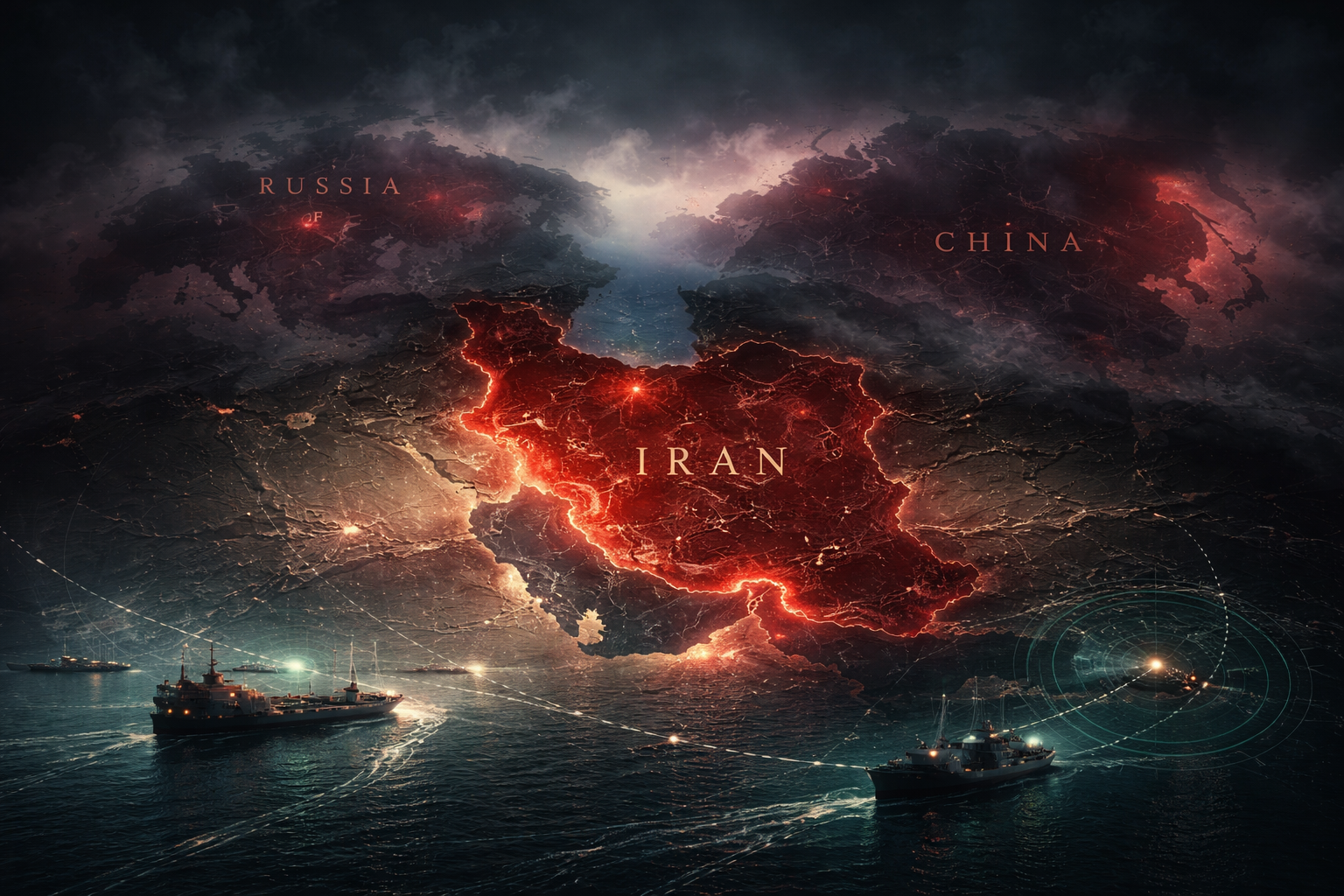
China and Russia Back Iran in Very Different Ways and the Gap Is Crucial
Iran’s Two Great-Power Partners Are Not Rescuing It, but They May Keep It Alive
The clearest answer is yes, but in a different way and at a different level. Russia appears to be giving Iran at least some indirect help, with reports that Moscow has shared intelligence that could assist Iranian targeting of U.S. assets in the region. China, by contrast, is backing Iran politically and economically while staying out of direct military involvement and pushing mediation.
That distinction matters because the biggest question is not whether Beijing and Moscow sympathise with Tehran. They do. The real question is whether either power is willing to pay the price of turning sympathy into open wartime commitment. Right now, the answer still looks like no.
There is a deeper hinge here. Iran does not need China or Russia to enter the war directly to gain real benefit. It needs survival support: intelligence, diplomatic cover, oil demand, sanctions workarounds, and enough outside backing to avoid isolation. That is a much lower bar than military intervention, and it is where this story becomes more serious than the headlines first suggest.
The story turns on whether Russia and China decide Iran is more useful as a live partner under pressure than as a cause to be mourned from the sidelines.
Key Points
Russia does not appear to have joined the war directly, but multiple reports say it has provided intelligence that could help Iran target U.S. military assets in the Middle East.
China has condemned the strikes on Iran, called for talks, and sent a special envoy for mediation, but there is no solid indication that Beijing has entered the conflict militarily.
Reuters reported that Russia and China were largely staying on the sidelines even as Iran came under intense pressure, choosing caution over confrontation with the United States.
China remains Iran’s biggest oil customer and still has a strategic interest in preserving access, trade links, and regional influence, even if it does not want a shooting war with Washington.
The longer the war disrupts energy flows through the Strait of Hormuz, the more valuable quiet support becomes for Iran and the more complex the calculations become for both Moscow and Beijing, as they must weigh their economic interests against the potential geopolitical fallout of openly supporting Iran in the conflict.
Iran has long treated Russia and China as its two most important great-power partners.
Russia has deepened security ties with Tehran, including a strategic partnership agreement signed in 2025, but that agreement does not contain a mutual defence clause requiring Moscow to fight for Iran. China, meanwhile, has tied itself to Iran more through energy, trade, and long-term geopolitical positioning than through formal military guarantees.
That is why the current war has exposed the real shape of those relationships. When the pressure became immediate, neither country rushed into direct combat support. Reuters described Iran as standing largely alone, with Russia and China offering diplomatic condemnation and concern rather than open military rescue.
China’s first instinct has been caution. Beijing condemned the strikes, called for dialogue, and announced that it would send a special envoy to the Middle East. At the same time, reporting has highlighted how exposed Chinese commercial interests in Iran could become if the conflict drags on, particularly in sectors such as energy and infrastructure, which are vital to China's economic strategy in the region.
Russia’s posture has been more ambiguous. Publicly, Vladimir Putin has called for an immediate halt to hostilities and stressed diplomacy. Behind that public line, reports from Reuters and AP say Moscow has provided intelligence that could help Iran strike U.S. forces in the region, indicating a complex and potentially contradictory stance in Russia's foreign policy that balances public calls for peace with covert support for aggressive actions.
Political and Geopolitical Dimensions
Russia and China want many of the same broad outcomes, but not all of the same immediate ones. Both would like to see U.S. power constrained, both oppose the toppling of partner governments by Western force, and both want to preserve their influence in the Middle East. However, neither appears keen to engage in a direct military confrontation with Washington regarding Tehran.
That creates a split-level strategy. Publicly, both can condemn the war and present themselves as defenders of sovereignty. Privately, they can decide how much practical help Iran gets without crossing a line that invites retaliation, balancing their support with the need to maintain stability in their own regions and avoid escalating tensions with the U.S. and its allies. For Russia, the immediate temptation is to tie down U.S. attention while protecting its interests elsewhere, especially in Ukraine. For China, the priority is to prevent regional chaos from damaging oil flows, trade, and a much larger relationship with the United States.
One scenario is managed distance: both powers keep speaking loudly but acting carefully. A second is deniable support, where Russia expands intelligence or technical cooperation and China quietly sustains economic lifelines. A third, still less likely, is escalation after a new strike changes the political cost of standing back. Signposts would include confirmed arms transfers, military logistics flights, naval repositioning tied to Iran, or sharper official commitments than mere calls for talks.
Economic and Market Impact
China's relationship with Iran is significant, despite its constraints. Reuters described China as Iran’s biggest oil buyer and noted that state-backed Chinese firms have been linked to projects spanning energy, heavy industry, and trade promotion. That gives Beijing reasons to keep Iran economically viable even while avoiding war.
Russia has a different economic incentive. Higher oil prices help Moscow. Reuters reported that the war has already delivered a major shock to energy markets, with about one-fifth of global crude oil and gas supply suspended and prices jumping sharply. In that environment, Russia can benefit financially even without fully committing to Iran’s defence.
That changes the strategic balance. China wants disruption contained because it is a major energy importer. Russia can tolerate, and in some respects profit from, a period of sustained market stress, as it can leverage its energy exports to benefit from higher prices during such times. This difference helps explain why Beijing sounds worried while Moscow can afford to be more opportunistic, as China's reliance on stable energy imports makes it vulnerable to market fluctuations, whereas Russia's energy exports can benefit from higher prices during periods of market stress.
Technological and Security Implications
The most consequential reported help so far is Russian intelligence. If Iran is receiving location data on U.S. warships and aircraft, that is not symbolic support. It is operationally relevant, even if Moscow is not pulling the trigger itself, as this intelligence can significantly influence military strategies and decisions made by Iranian forces against U.S. assets. That kind of assistance lets Russia raise the cost for Washington without openly entering the war.
China’s security role is far less direct at this stage. Beijing has military links with Iran and has taken part in drills in the past, but current reporting points to restraint, not intervention. China’s strength here is leverage through diplomacy, logistics, and finance, not immediate battlefield assistance.
If that changes, the signs would be practical before rhetorical: unusual shipments, insurance and payment workarounds, emergency energy routing, or evidence that Chinese systems or networks are being used to cushion Iran’s wartime losses. So far, the public evidence points to caution.
What Most Coverage Misses
Most coverage treats the issue as a simple yes-or-no question: are Russia and China helping Iran or not? That frame is too crude.
The true distinction lies not in intervention versus neutrality. It is unclear whether either country is helping Iran stay in the fight without formally joining it. On that test, Russia appears to be closer to meaningful wartime assistance than China, even though China’s economic weight matters more over the long run.
Troops and missiles alone do not sustain wars. They are sustained by information, money, market access, and political cover. If Iran continues to receive a combination of those resources from major powers, it can still materially strengthen itself despite not receiving open rescue.
That is why the current balance is so dangerous. It gives Moscow and Beijing room to shape the conflict without fully owning it, and it gives Tehran a path to endure longer than a purely isolated state could, potentially leading to increased regional instability and complicating international diplomatic efforts.
Why This Matters
In the short term, the biggest impact is on escalation risk. Russian intelligence support, if it continues, raises the danger to U.S. forces and increases the chance that Washington treats Moscow as more than a background player. Chinese caution, meanwhile, limits the chance of a true great-power military pile-in, but it does not remove the economic and diplomatic support Tehran can still draw on, such as investments and trade agreements with countries that share its interests.
Over the longer term, this war is testing whether the so-called anti-Western alignment, which refers to countries that oppose Western influence, is a real security bloc or a looser network of transactional partnerships. So far, the answer looks mixed: useful to Iran, but not reliable enough to save it outright. Watch for any shift in Russian military-technical support, Chinese energy and payments policy, and further official moves as the war enters its next phase.
Real-World Impact
A shipping insurer in London prices Middle East routes higher because the risk map no longer depends only on Iran and the United States but on whether outside powers are quietly widening the threat picture.
A refinery buyer in Asia worries less about speeches from Beijing than about whether Chinese demand, stockpiles, and rerouted cargoes squeeze available supply elsewhere.
A U.S. naval planner in the Gulf has to assume that Iranian targeting may now be sharper than before, even if no Russian uniform appears anywhere near the battlefield.
An Iranian decision-maker perceives the situation from a different perspective: while there is no imminent threat, sufficient external support may still be forthcoming to sustain the state.
The Next Test Is Not Rhetoric but Risk
The central question now is no longer whether China and Russia are on Iran’s side in the abstract. They clearly lean that way. The question is how much danger they are willing to absorb to prove it.
Russia looks more willing to flirt with indirect wartime support, potentially providing military resources or intelligence to allies involved in conflicts without direct engagement. China looks more committed to shielding its interests, avoiding entrapment, and preserving room to deal with everyone, particularly by maintaining diplomatic relations and economic ties with both Russia and the West. That leaves Iran in a precarious middle ground: supported but not fully backed, and still fighting inside a conflict that could grow wider with one bad decision.
If that balance is disrupted, this war will transition from a regional crisis with global implications to a true test of the emerging anti-Western axis's willingness to escalate.
