Australia’s Teen Social Media Ban Is Already Breaking
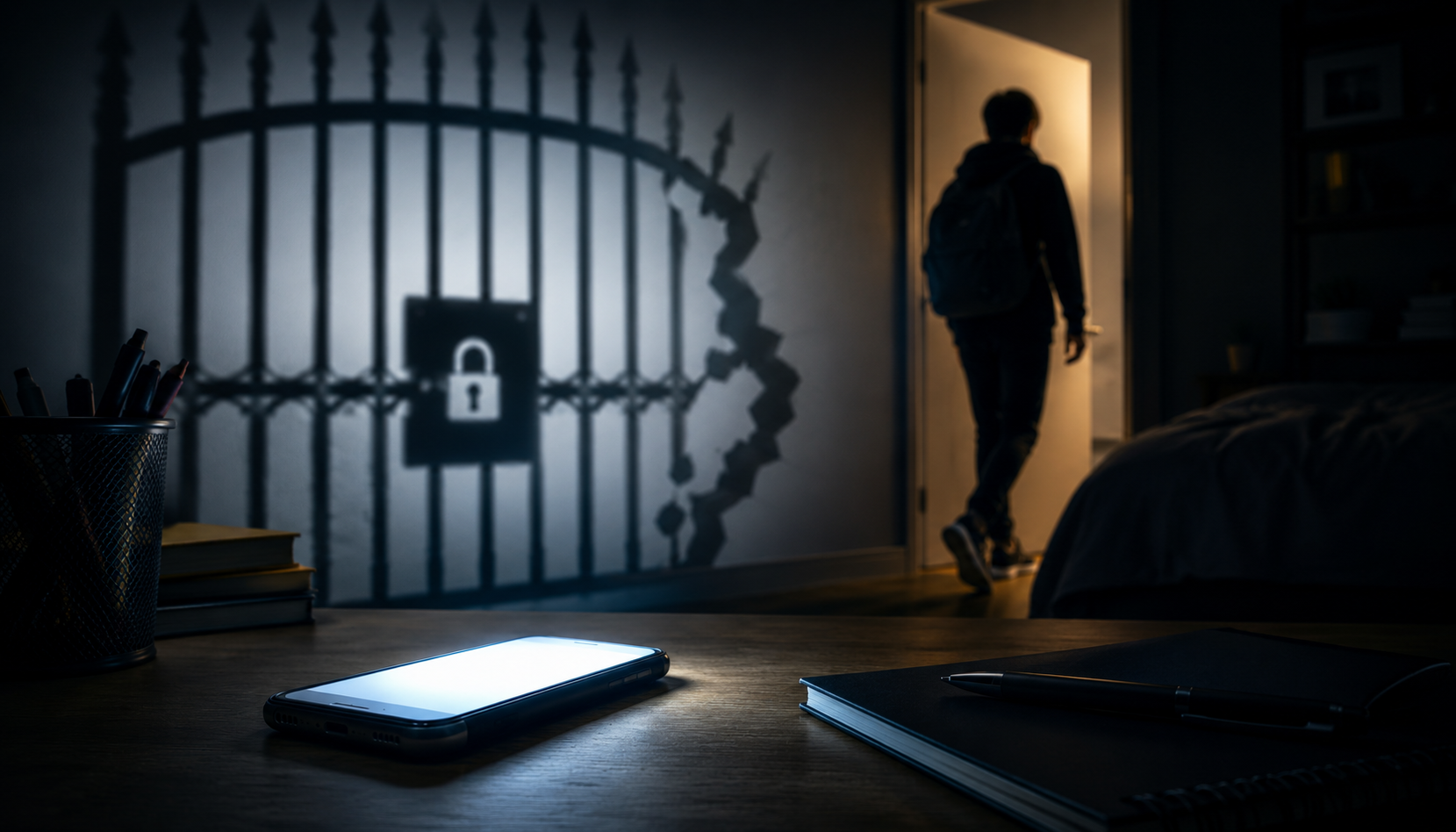
The Teen Social Media Ban Was Sold as Protection. Teens Found the Door
Australia Built a Digital Wall. Teenagers Found the Gap
Australia’s under-16 social media ban has hit the problem critics warned about from the start: a law can order platforms to keep teenagers out, but it cannot make teenagers stop trying to get in. The latest age-check findings suggest the system is failing at the first gate, before the more sophisticated verification tools even begin.
The warning for Britain is immediate. The UK government has said it wants to follow Australia’s model, with under-16s blocked from certain social media services from Spring 2027 and Ofcom asked to assess effective age assurance methods. Australia’s experience now shows the central weakness: if the first layer depends on self-declared age, behavioural inference and platform escalation, the whole ban becomes a game of detection rather than protection.
Why the First Age Check Failed
The core failure is brutally simple. Researchers involved in testing Australia’s age-assurance rollout created 50 test accounts after the law came into force, declared those users to be 16, and found that none were asked to provide proof of age. Only one platform, Kick, refused account creation without proof.
That matters because Australia’s law does not punish children for being online. It puts the obligation on platforms to take “reasonable steps” to stop under-16s having accounts, with major services such as Instagram, TikTok, Snapchat, YouTube, Facebook, X, Reddit, Twitch, Threads and Kick covered by the restrictions.
The flaw is not just whether face scans, ID checks or age-estimation tools work. The more basic problem is whether platforms ever trigger those checks. If a teenager can simply enter an older birthdate and avoid escalation, the system is not a wall. It is a polite question at the door.
How Teens Are Getting Around It
Teenagers are getting around the ban through the oldest digital trick in the book: false age declarations. The latest test suggests that declaring an age just above the legal threshold can be enough to avoid proof-of-age checks on many platforms, unless the account is later flagged by behaviour, reporting or other signals.
Other work on children’s circumvention of age-verification systems found that young people do not behave like passive subjects of regulation. They test systems, compare workarounds, learn where access controls are weak and treat digital barriers as something to negotiate.
The most obvious routes are fake birthdates, new accounts, adult-managed accounts, borrowed family accounts and VPN use. Australia’s own regulator acknowledges that under-16s may still have accounts and says children do not face criminal charges or fines for bypassing restrictions; the enforcement target is the platform, not the child.
That creates a perverse incentive. A teenager who lies about being older may lose the teen-specific safety protections that platforms previously attached to youth accounts. In other words, the ban can push some children into looking like adults online, making them harder to identify and potentially less protected.
Why This Is a Warning to the UK
The UK is already walking toward the same trap. Ministers have announced plans to block social media platforms from offering services to under-16s, using an Australia-style model while adding restrictions on livestreaming, stranger contact and some AI companion functions.
The government says it will learn from Australia by using more “highly effective age assurance” measures and by asking Ofcom to study what works for verifying whether someone is over 16. That sounds stronger than Australia’s first phase, but it does not remove the basic enforcement dilemma: the stricter the checks become, the more adults and teenagers are pushed into identity verification, biometric estimation, data-sharing systems or VPN workarounds.
The UK’s own fact sheet admits the VPN problem is real. It says ministers are aware children may try to circumvent checks through VPNs and have commissioned research into how children use them, while recognising that VPNs also have legitimate privacy and freedom-of-speech uses.
That is the uncomfortable policy trade-off. A weak system is easy to bypass. A strong system risks building an identity-gated internet. Neither outcome is clean.
The Case Against the Ban
The strongest argument against the ban is not that children should be left unprotected online. The strongest argument is that a blunt age ban attacks the entrance while leaving the machinery of harm largely intact: addictive design, algorithmic amplification, stranger contact, sexualised recommendation loops, bullying dynamics, fraud, grooming and commercial surveillance.
If the ban fails, teenagers remain online but become harder to see. If it succeeds through aggressive checks, every user may be pushed toward more intrusive verification. Recent research into the UK’s Online Safety Act found sharp increases in VPN-related discussion and search interest around enforcement milestones, suggesting that age-gating can change public behaviour in ways regulators do not fully control.
A better model would target platform design rather than pretend teenagers can be cleanly removed from the social internet. That means default privacy, limits on algorithmic amplification, stronger anti-grooming systems, safer messaging controls, transparent recommendation audits, fast takedown systems, and real penalties when platforms knowingly expose children to harm.
Australia has not proved that child online safety is impossible. It has proved that age bans are much easier to announce than to enforce. Britain should treat that as a warning, not a blueprint.
