USA, Japan And South Korea Turn Nuclear Reactors Into Strategic Power
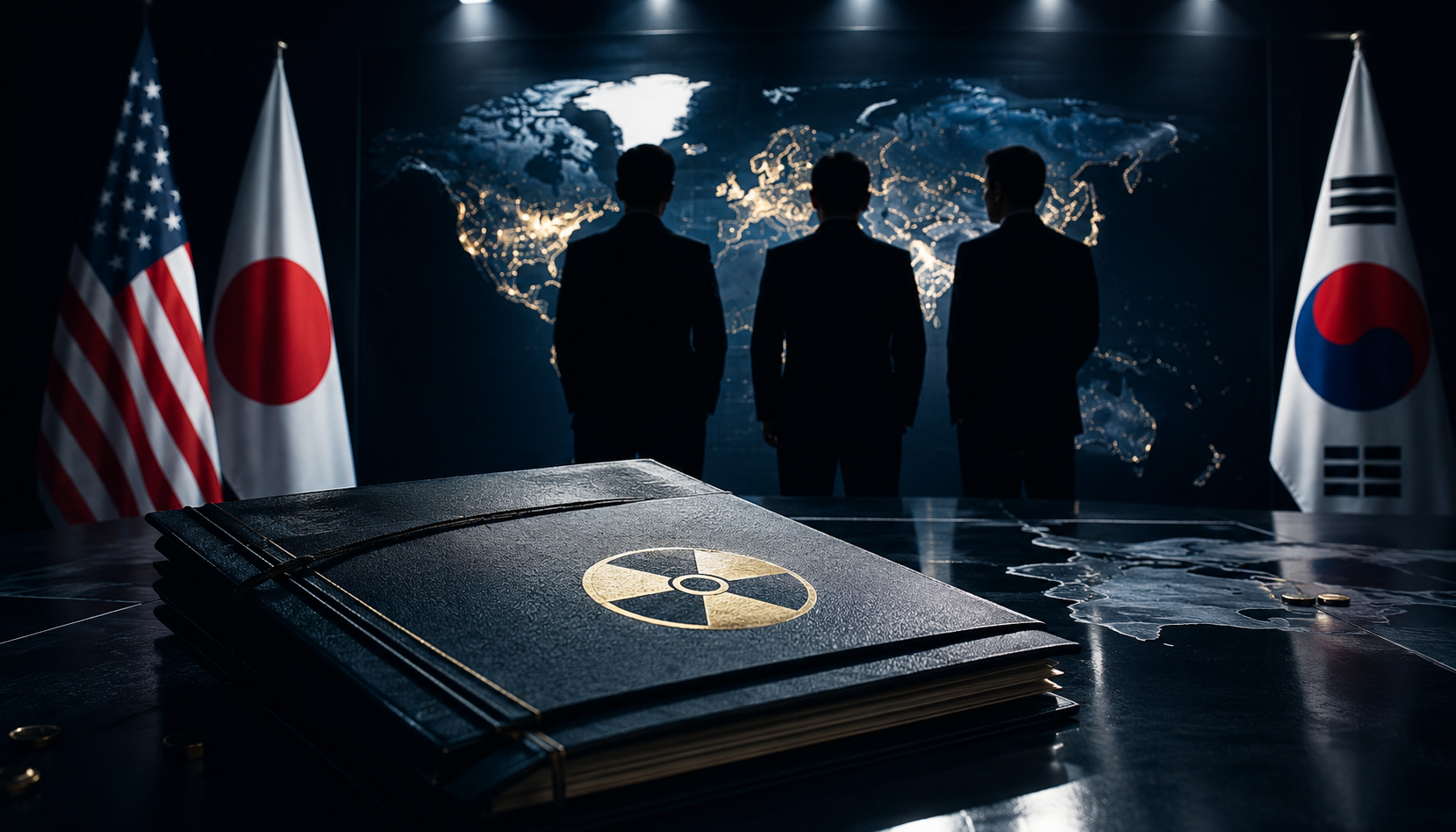
The Reactor Alliance That Could Redraw The Global Energy Map
The Nuclear Pact China And Russia Did Not Want To See
The United States, Japan and South Korea have signed a trilateral memorandum of cooperation on small modular reactor deployments in third countries, turning civil nuclear energy into a sharper tool of alliance politics. The agreement matters now because it links three advanced economies at a moment when energy security, artificial intelligence demand, industrial supply chains and strategic competition with China and Russia are colliding.
This is not just a climate or infrastructure story. It is a signal that Washington, Seoul and Tokyo want to compete together in the global nuclear export market, rather than leaving emerging nuclear states to rely on Russian or Chinese technology, finance and long-term fuel relationships.
What The Agreement Means
The agreement focuses on small modular reactors, or SMRs, which are smaller nuclear reactors designed for more flexible deployment than traditional large-scale plants. The State Department framed the pact as cooperation on SMR deployments in other countries, meaning the three governments are looking beyond domestic power grids and towards export markets, partner countries and strategic energy influence.
That detail is crucial. A nuclear reactor export is not like selling ordinary infrastructure. It can bind a customer country to decades of technical support, regulation, fuel services, safety cooperation, financing, training and diplomatic alignment. A country that chooses a reactor partner often chooses a long-term strategic relationship.
The US brings diplomatic reach, non-proliferation architecture, finance tools, national laboratory expertise and advanced reactor companies. South Korea brings a serious construction record, a deep nuclear industrial base and export credibility after its role in building the UAE’s Barakah nuclear plant. Japan brings high-end nuclear engineering, heavy industry, reactor components and a renewed domestic nuclear policy after years of post-Fukushima hesitation.
Together, the three are trying to create something none of them can fully deliver alone: a credible democratic nuclear supply chain with the scale, technology and political backing to challenge state-backed competitors.
The History Behind The Pact
The political foundation was laid at Camp David in August 2023, when the leaders of the US, Japan and South Korea declared a “new era” of trilateral partnership. That summit was not limited to military cooperation. It joined security, economic resilience, technology, supply chains and regional deterrence into one wider framework.
That mattered because Japan and South Korea have a difficult historical relationship rooted in Japan’s colonial rule over Korea from 1910 to 1945. For decades, that history limited how far Seoul and Tokyo could cooperate, even though both were close US allies. The Camp David process did not erase those tensions, but it created a structure where shared threats from North Korea, China and supply-chain vulnerability became strong enough to pull the three closer.
NATO is also part of the backdrop. The alliance’s 2022 Strategic Concept said NATO would strengthen dialogue and cooperation with Indo-Pacific partners on shared security challenges, and NATO has increasingly treated Japan and South Korea as important partners in a connected Euro-Atlantic and Indo-Pacific security environment.
That is why a reactor deal at a NATO summit is symbolically important. It shows that the alliance agenda is no longer only tanks, missiles and troop numbers. Energy infrastructure, reactor exports, technology standards and supply chains are now part of the same strategic battlefield.
Why Nuclear Energy Is Back
Nuclear power has returned to the centre of energy strategy because governments face three pressures at once: decarbonisation, energy security and surging electricity demand from data centres and AI. The International Energy Agency has argued that SMRs, alongside large reactors delivered on time and on budget, could help advanced economies reclaim nuclear technology leadership while supporting energy security and emissions goals.
South Korea is already one of the world’s most prominent nuclear energy countries. It has 26 reactors providing about a third of its electricity and has exported technology abroad, including through the UAE’s Barakah programme.
Japan’s position is more complicated. Fukushima in 2011 transformed domestic politics and public trust around nuclear energy, but Tokyo is now reassessing nuclear power because it remains heavily dependent on imported energy. Japan’s current energy direction includes a target of around 20% nuclear electricity by 2030–2040, while recent developments have reopened space for reactor restarts and replacement planning.
The US, meanwhile, has the strategic interest but has struggled to maintain dominance in global reactor exports. A trilateral model gives Washington a way to combine American strategic authority with Korean build capability and Japanese industrial depth.
The Geopolitical Implications
The biggest implication is that nuclear energy is becoming a contest over global alignment. Russia’s Rosatom and China’s nuclear firms have been aggressive in international markets, often offering state-backed packages that include finance, construction, fuel and long-term service relationships. Kazakhstan’s recent nuclear decisions, involving Russia and China, show how quickly major infrastructure choices can shift influence in strategically important countries.
For Washington, Tokyo and Seoul, the message is clear: if democratic allies do not offer credible reactor options, other powers will. That matters in Southeast Asia, Central Asia, Eastern Europe, the Middle East and Africa, where governments want reliable power, industrial growth and lower-carbon electricity but may lack mature nuclear regulatory systems.
SMRs are especially attractive because they promise modular construction, smaller footprints and possible deployment in places where conventional reactors are too large or financially difficult. But the promise remains partly unproven. Western SMRs still face major questions over cost, licensing, fuel supply, waste, financing and whether factory-built reactor fleets can actually deliver the savings advocates claim.
That creates both opportunity and risk. If the US-Japan-South Korea pact helps standardise safe designs, build trusted supply chains and support responsible regulation, it could reshape the nuclear market. If it becomes another announcement without deployable projects, Russia and China will continue to benefit from being able to offer more integrated state-backed deals.
Why NATO Was The Stage
The NATO setting gives the agreement added strategic weight. It places energy technology inside a wider security conversation about deterrence, resilience and allied burden-sharing. It also reinforces the idea that Indo-Pacific security and Euro-Atlantic security are increasingly linked.
North Korea’s nuclear and missile programmes are one part of that link. China’s industrial and military rise is another. Russia’s war in Ukraine and use of energy leverage have also taught Western governments that infrastructure dependency can become political vulnerability.
A reactor partnership among the US, Japan and South Korea therefore speaks to a bigger alliance doctrine: allies need not only weapons, but industrial capacity, energy independence, secure supply chains and exportable technology. Civil nuclear power is becoming part of national power.
What Happens Next
The practical test will be whether the memorandum turns into real projects. Watch for target countries, financing structures, export-credit support, regulatory cooperation, fuel arrangements and named reactor vendors. Without those, the agreement remains a strategic signal rather than a market-changing force.
The political test will be whether Japan and South Korea can sustain cooperation through leadership changes, domestic pressure and historic mistrust. The commercial test will be whether SMRs can be licensed, built and priced competitively before rival suppliers lock in the next generation of nuclear customers.
The significance is therefore bigger than one reactor pact. The US, Japan and South Korea are trying to build a democratic nuclear export bloc at the exact moment when the world’s electricity needs are rising and the politics of energy are hardening. If it works, it gives allied countries a new instrument of influence. If it fails, the global nuclear map may be drawn by powers Washington, Seoul and Tokyo are trying to contain.
