Ceasefire Collapse Signals Something Bigger: Are We Entering a Multi-Front War?
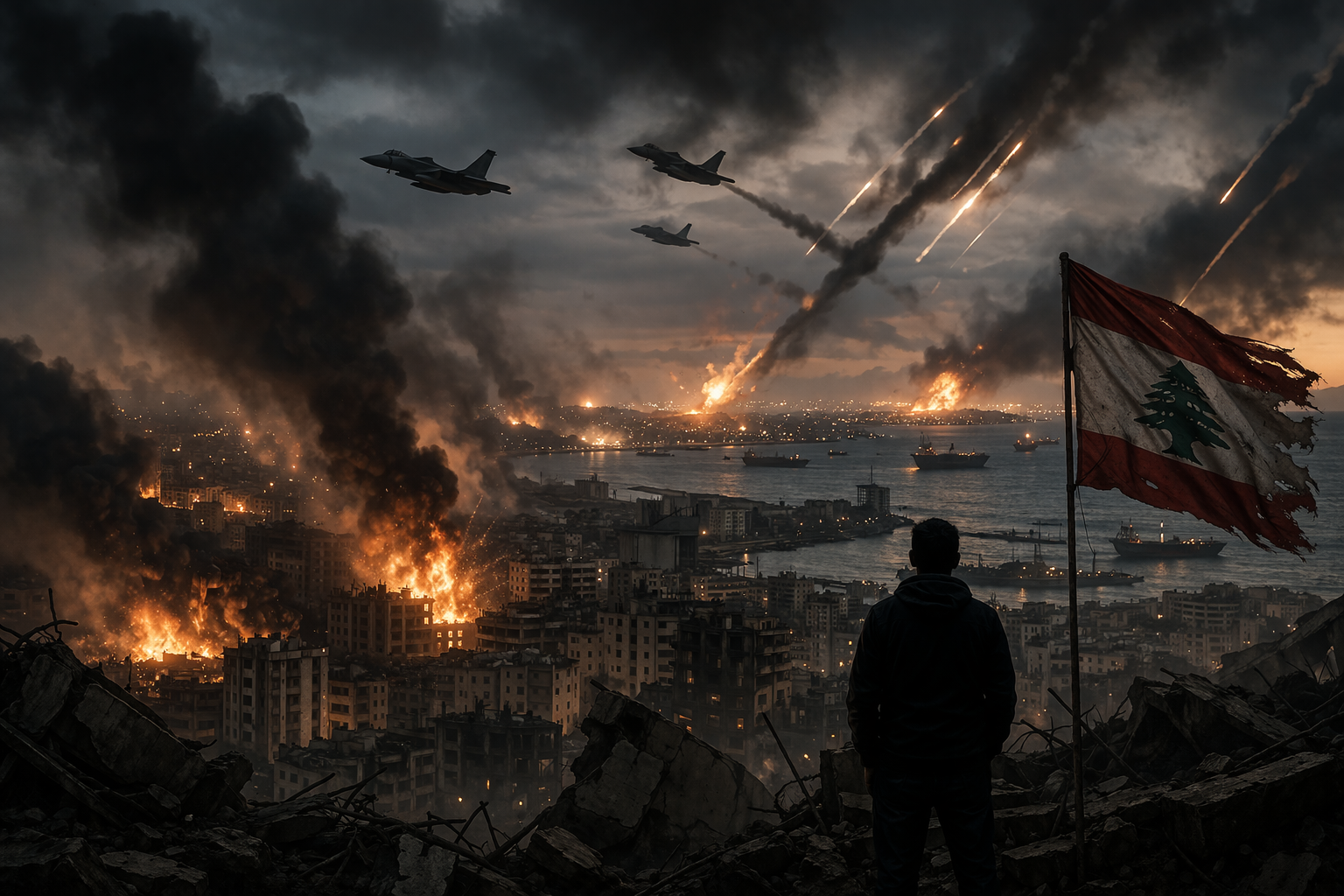
The War Didn’t End — It Mutated: What the Ceasefire Is Hiding
An uneasy pause masks a deeper, more dangerous escalation across the Middle East — and the real conflict may only be beginning.
This Was Never A Clean Ceasefire—It Was A Collision Of Different Wars
Within hours of being announced, the ceasefire was already being tested.
Airstrikes continued. Missiles were launched. Threats escalated.
What was presented as a diplomatic breakthrough between the United States and Iran has instead revealed something far more unstable: multiple overlapping conflicts, each operating under different rules, timelines, and objectives.
Israel continued strikes in Lebanon. Iran signaled retaliation if those strikes did not stop. Gulf states reported attacks despite the truce. The Strait of Hormuz — one of the most critical energy chokepoints in the world — remains unstable.
This is not a ceasefire in the traditional sense.
It is a partial pause layered over a system that is still actively fighting itself.
The Core Problem: There Is No Single War To Stop
The biggest misunderstanding is assuming the situation is one conflict.
It isn’t.
This is at least five wars happening at once:
A direct confrontation between the US and Iran
Israel’s war with Hezbollah in Lebanon
Iran’s proxy network operating across the Gulf and Iraq
Houthi involvement expanding the conflict into the Red Sea
A broader regional power struggle involving Saudi Arabia and others
Even the ceasefire terms are disputed.
The US and Israel argue Lebanon is excluded. Iran insists it is included. That single disagreement is enough to keep the war alive.
And that’s precisely what’s happening.
Why The Ceasefire Is Already Fracturing
Ceasefires work when incentives align.
Here, they don’t.
Israel is pursuing long-term security through aggressive buffer zones and continued operations
Iran is trying to preserve regional influence and deterrence
The US wants de-escalation without appearing weak
Gulf states want stability but are still being hit
Proxy groups have their own agendas and timelines
So even as diplomats talk, fighters keep fighting.
Israel has already intensified operations in Lebanon despite the truce, while Hezbollah and Iran-backed groups signal they will respond.
This creates a dangerous feedback loop:
Violation → retaliation → justification → escalation
And once that loop starts, it is extremely difficult to stop.
What Media Misses
The ceasefire isn’t failing because it’s weak.
It’s failing because it’s structurally impossible.
There is no central authority controlling all actors.
There is no shared definition of what “ceasefire” means.
There is no aligned end-state.
Each side is using the ceasefire as a tool — not a commitment.
A way to regroup
A way to reposition
A way to avoid immediate escalation while preparing for the next phase
That changes everything.
This is not peace breaking down.
This is strategy continuing under the cover of diplomacy.
The Energy Factor: Why The World Should Pay Attention
If this conflict expands, it won’t stay regional.
The Strait of Hormuz handles a massive share of global oil flows. Disruption here immediately hits global markets, supply chains, and inflation.
And it’s already under pressure.
Shipping has been disrupted
Iran has hinted at controlling access
Global energy prices have reacted sharply
This scenario is where a regional war becomes a global economic shock.
Weeks, Not Days: Why This Situation Will Stretch Out
The two-week ceasefire window matters.
Not because it guarantees peace, but because it buys time.
Time for:
Diplomatic talks in Pakistan
Military repositioning
Strategic recalibration
But it is also time for something more dangerous:
Miscalculation.
The longer multiple actors operate in this blurred state — neither fully at war nor fully at peace — the higher the chance of a single event triggering full escalation.
And that escalation would not be contained.
What Happens Next
There are three realistic paths from here:
1. Managed De-Escalation (Low Probability)
Talks succeed, terms expand, and a broader regional agreement emerges.
2. Frozen Conflict (Most Likely)
Fighting continues in pockets. A ceasefire technically holds but is constantly violated.
This becomes a long, unstable standoff.
3. Multi-Front Escalation (High Impact Risk)
A major strike—in Lebanon, the Gulf, or Hormuz— triggers coordinated retaliation.
Multiple fronts ignite simultaneously.
This is the scenario analysts fear most.
Because the pieces are already in place.
The Deeper Reality: This Isn’t The End Of A War — ’s The Start Of A Phase
The most important shift is psychological.
Both sides now believe they can survive escalation.
The US has tested its limits.
Iran has demonstrated resilience.
Israel is preparing for a prolonged conflict.
No one feels decisively defeated.
That removes one of the strongest forces for peace.
Instead, we are entering something more dangerous:
We are entering a prolonged, multi-actor confrontation where escalation is always possible and resolution is always just out of reach.
The Line That Matters
This ceasefire doesn’t answer the question of whether a wider war is coming.
It exposes how close that question already is to being answered.
