The Loophole Inside Every Ceasefire That Lets Fighting Continue
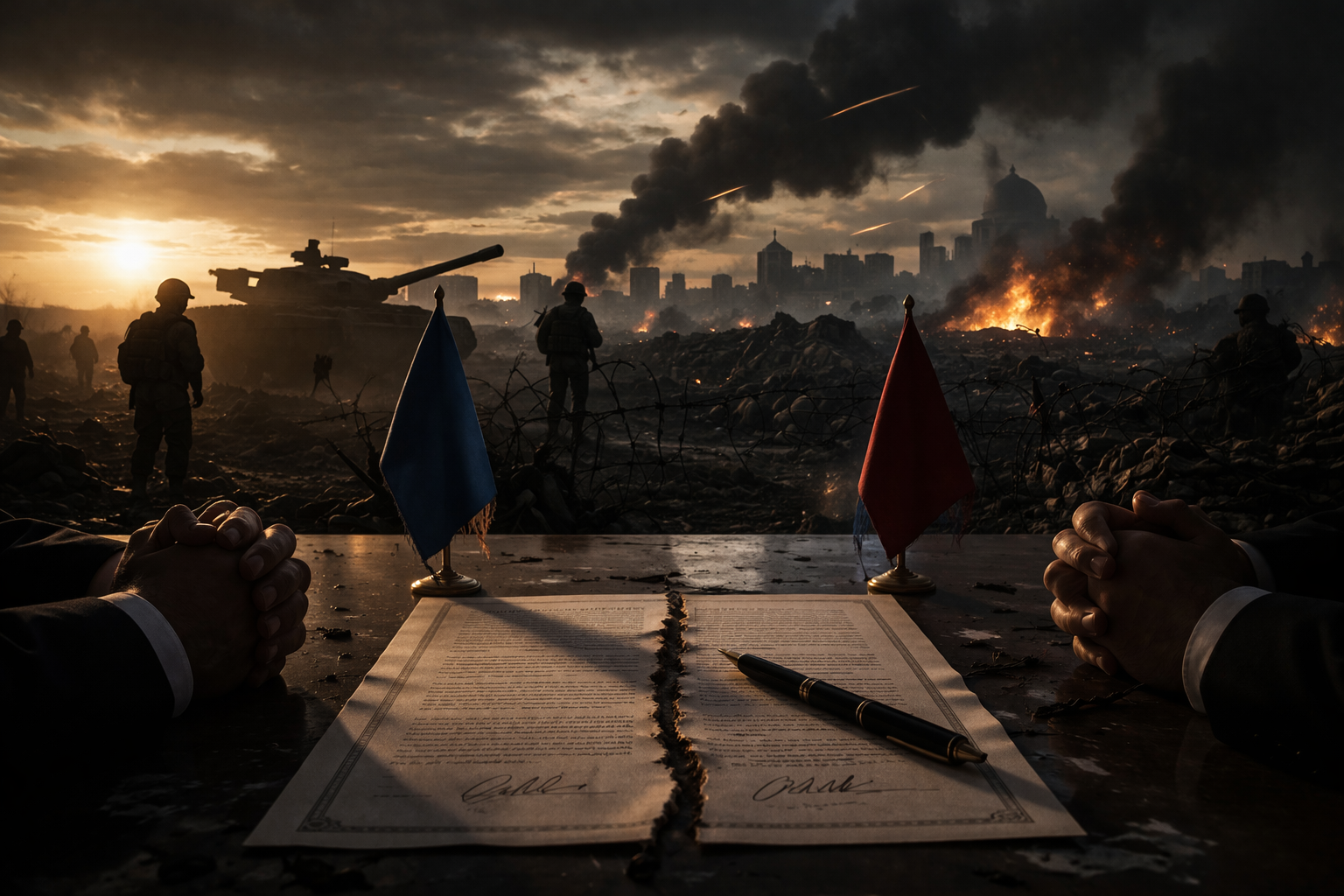
How Wars Keep Burning After “Peace” Is Declared
Ceasefires Aren’t What You Think: The Dangerous Power of Ambiguous Wording
The Illusion Of Peace Begins With A Definition
A ceasefire sounds absolute. The word itself suggests something clean, immediate, and final: stop firing.
But in modern conflict, that assumption is dangerously outdated.
Because a ceasefire is not just a pause in violence—it is a legal and political document. And like any document, its meaning depends entirely on how it is written.
That is where the loophole lives.
Not in what is said, but in what is not clearly defined.
The Critical Loophole: What Counts As “Fire”?
At the core of most ceasefire disputes is a deceptively simple question:
What exactly counts as a violation?
Does defensive fire break the ceasefire?
What about pre-emptive strikes?
What about “targeted operations” against specific threats?
What about drones, cyberattacks, or intelligence-led raids?
The problem is that many ceasefire agreements never fully resolve these questions.
Instead, they rely on vague phrases like
“Hostilities shall cease””
“Both sides will refrain from escalation””
“Defensive measures are permitted””
Those phrases sound reasonable. They also create massive room for interpretation.
And that interpretation is where war quietly continues.
How Both Sides Use The Same Loophole
Here is the uncomfortable reality:
Both sides in a conflict can claim they are respecting a ceasefire—while still actively engaging in violence.
One side says it is acting defensively.
The other says it is responding to provocation.
Neither technically admits to breaking the agreement.
This creates a strange dual reality:
The ceasefire exists politically
The conflict continues operationally
And both sides remain “within the rules” of a document that was never precise enough to enforce real peace.
Why This Isn’t A Bug—It’s A Feature
It is tempting to assume this ambiguity is a failure.
In many cases, it is intentional.
Ceasefires are often negotiated under extreme pressure, with neither side willing to fully concede.
So the agreement becomes a compromise of language, not just of action.
Ambiguity allows:
Leaders to sell the deal domestically without appearing weak
Militaries to retain operational flexibility
Both sides pause without fully surrendering advantage
In other words, the loophole is not accidental.
It is the only way the deal gets signed.
The Strategic Use Of “Violations”
Once the ceasefire is in place, the loophole becomes a weapon.
Each side can:
Accuse the other of violating the agreement
Justify its own actions as legitimate responses
Escalate while claiming compliance
This creates a cycle where:
A minor incident occurs
One side frames it as aggression
The other responds under “self-defense””
The ceasefire technically still holds
On paper, peace survives.
On the ground, tension escalates.
What Media Misses
Most coverage treats ceasefires as binary:
Either they hold, or they collapse.
But the truth is more uncomfortable.
Many ceasefires exist in a permanent grey zone—neither fully intact nor fully broken.
The real story is not whether a ceasefire exists.
It is how much violence the wording quietly allows.
The Modern Battlefield Has Outgrown Old Language
Another layer of the problem is technological.
Traditional ceasefire language was built around visible, conventional warfare: guns, artillery, troop movements.
Modern conflict includes the following:
Drones operating across borders
Cyber operations with real-world consequences
Intelligence-driven strikes that blur offense and defense
These actions often fall outside the original wording of ceasefires.
Which means they continue—even when “peace” has been declared.
Why This Matters Now
This is not just a technicality.
It fundamentally changes how conflicts behave.
A ceasefire used to mean the following:
A pause, followed by either negotiation or renewed war.
Now it often means:
A controlled continuation of conflict under legal ambiguity.
That makes conflicts harder to end—and easier to sustain indefinitely.
What Happens Next
As conflicts become more complex, ceasefire wording will only become more contested.
Three likely paths emerge:
More detailed agreements attempting to close loopholes—but harder to negotiate
Shorter, more tactical ceasefires designed as pauses, not peace
Persistent grey-zone conflict, where violence never fully stops
The most dangerous outcome is the third.
A world where war is perpetual, even if not formally declared.
The Real Meaning Of A Ceasefire
A ceasefire is not peace.
It is a negotiation over what kind of violence is still acceptable.
And the more ambiguous the wording, the more that violence can continue—quietly justified, legally defended, and politically managed.
The guns may slow.
But unless the language is airtight, they rarely fall silent.
