Congress Moves to Stop the Iran War—But the White House May Ignore It
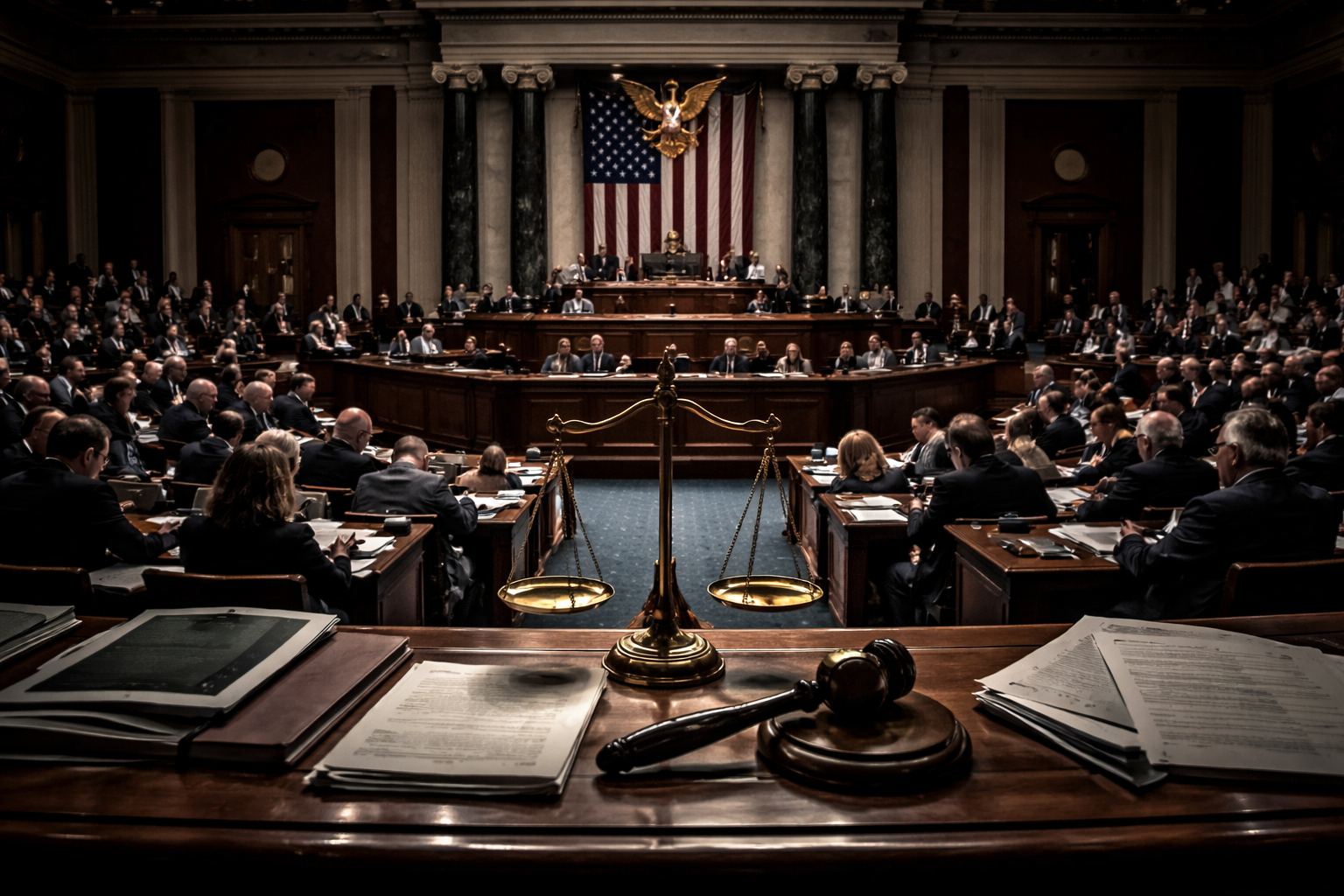
Washington’s Iran War Fight: Can Congress Still Control War Powers?
Washington’s Iran War Fight: Can Congress Still Control War Powers?
The United States Congress is preparing to vote on a war powers resolution that could force a political showdown with the White House over the widening conflict with Iran. The vote comes days after a rapid escalation in U.S. and Israeli military operations against Iranian targets, pushing Washington into one of its most serious constitutional confrontations over war authority in decades.
At its core, the fight is about who decides when the United States goes to war. Supporters of the resolution say the Constitution gives that power to Congress. The administration argues the president already has the authority needed to conduct the campaign.
Yet the real significance of this vote goes beyond the battlefield. If Congress fails to assert itself now, the precedent for presidential war-making could expand dramatically.
The story turns on whether Congress can still meaningfully control U.S. war powers once a conflict has already begun.
Key Points
The U.S. Senate is preparing to vote on a war powers resolution aimed at limiting further military action against Iran without congressional authorization.
The effort is being led by Senator Tim Kaine and supported by some bipartisan lawmakers who argue Congress must reclaim its constitutional role in declaring war.
Republican leaders and many administration allies oppose the resolution, arguing it would weaken U.S. national security during an active conflict.
Even if the measure passes both chambers, the president could veto it, requiring a two-thirds vote to override.
With Republicans holding a Senate majority and at least one Democrat opposing the resolution, passage remains uncertain.
The vote represents the first major domestic political test of the expanding Iran conflict.
The current debate stems from a sudden escalation in military operations involving the United States, Israel, and Iran.
Recent U.S. strikes on Iranian targets triggered a wider regional confrontation and renewed questions about whether the president had authority to launch the campaign without explicit congressional approval.
Under the U.S. Constitution, Congress holds the power to declare war. However, presidents have repeatedly launched military operations without formal declarations, relying instead on executive authority or older congressional authorizations.
To address that imbalance, Congress passed the War Powers Resolution in 1973 after the Vietnam War. The law requires presidents to notify Congress within 48 hours of deploying U.S. forces and generally limits combat operations to about 60 days without legislative approval.
In practice, however, enforcement has been weak. Presidents from both parties have often argued the law restricts their ability to respond quickly to threats.
The current resolution attempts to force a clearer boundary. If enacted, it would direct the removal of U.S. forces from hostilities against Iran unless Congress explicitly authorizes the war.
Political and Geopolitical Dimensions
The vote exposes a deep divide in Washington over how the United States should conduct military operations abroad.
Supporters of the resolution argue that bypassing Congress risks repeating mistakes seen in previous conflicts such as Iraq and Afghanistan. Their goal is not necessarily to end the war immediately but to force a formal debate over its objectives and limits.
Opponents frame the resolution differently. Many Republicans argue restricting presidential authority during an active conflict could signal weakness and embolden Iran.
Three plausible political scenarios are emerging:
First, the resolution fails in the Senate. Such a scenario would strengthen the administration’s authority and signal broad congressional acceptance of the war.
Second, the resolution passes narrowly but faces a presidential veto. That would shift the political fight to whether Congress has the votes to override.
Third, the debate fractures party lines further, forcing lawmakers to define their positions ahead of upcoming elections.
A key signpost will be whether multiple Republicans join Democrats in supporting the measure.
Economic and Market Impact
Although the resolution is primarily constitutional, it also carries economic consequences.
Markets tend to react strongly when political institutions appear divided during military crises. A prolonged fight between Congress and the White House could add uncertainty about the duration and scale of the war.
Defense spending expectations, oil prices, and shipping risks across the Middle East could all shift depending on whether Washington signals escalation or restraint.
Investors will watch whether Congress attempts additional measures to limit funding or operational authority.
Social and Cultural Fallout
Inside the United States, the vote is quickly becoming a referendum on how Americans view foreign intervention.
Some lawmakers argue that requiring congressional approval protects soldiers by ensuring public debate before sending them into prolonged combat.
Others warn that political divisions could undermine confidence among allies and create confusion about U.S. strategy.
Public opinion could become a decisive factor if casualties increase or the conflict expands.
Technological and Security Implications
Modern warfare moves far faster than the constitutional framework designed in the eighteenth century.
Cyber operations, drone strikes, and long-range weapons allow military actions to begin within hours of a decision. That reality complicates efforts by Congress to maintain oversight.
If lawmakers attempt to enforce stricter war powers rules now, the result could shape how the United States governs future conflicts involving artificial intelligence, autonomous weapons, and cyber warfare.
What Most Coverage Misses
The most important dynamic in this story is timing.
War powers votes rarely end a conflict once it has already begun. By the time Congress debates the issue, troops are deployed, alliances are engaged, and military plans are underway.
That reality shifts the balance of power toward the presidency.
Even if lawmakers technically pass a resolution requiring the withdrawal of forces, enforcement becomes politically and operationally difficult. Presidents can veto the measure, reinterpret the law, or argue that national security conditions justify continued action.
This creates a structural pattern in U.S. foreign policy: Congress debates war powers after escalation has already occurred.
The Iran vote therefore matters less as a direct brake on the war and more as a signal about whether Congress still intends to exercise its constitutional authority at all.
Why This Matters
In the short term, the vote will shape the political environment surrounding the Iran conflict.
Within the next few days, Washington will learn whether lawmakers are willing to challenge the White House while military operations continue.
If the resolution fails, the administration may interpret it as a green light for a broader campaign.
If it passes, the conflict could trigger a prolonged constitutional battle over the limits of presidential power.
In the longer term, the outcome may influence how the United States handles future wars.
Upcoming events to watch include additional congressional votes, potential presidential veto decisions, and any new military escalation across the Middle East.
Real-World Impact
A military family in Virginia follows the congressional debate closely as a relative deploys to the region. The outcome could determine how long that deployment lasts.
An energy trader in Houston watches the vote because political instability in Washington could drive oil prices higher if the war expands.
A defense contractor evaluating new projects studies whether Congress will approve long-term military funding tied to the conflict.
A foreign diplomat in Europe monitors the debate as a measure of whether the United States remains politically unified during crises.
The Constitutional Battle That Could Define the Iran War
The Iran conflict is now more than a military confrontation. It is also a test of the balance of power inside the United States government.
Congress must decide whether it will attempt to reclaim authority over war decisions or continue allowing presidents to initiate major conflicts first and seek political approval later.
The outcome will shape not only this war but also the constitutional rules governing American power for decades.
History often remembers the battles fought overseas. However, quiet votes on Capitol Hill sometimes shape the decisions that define those wars.
