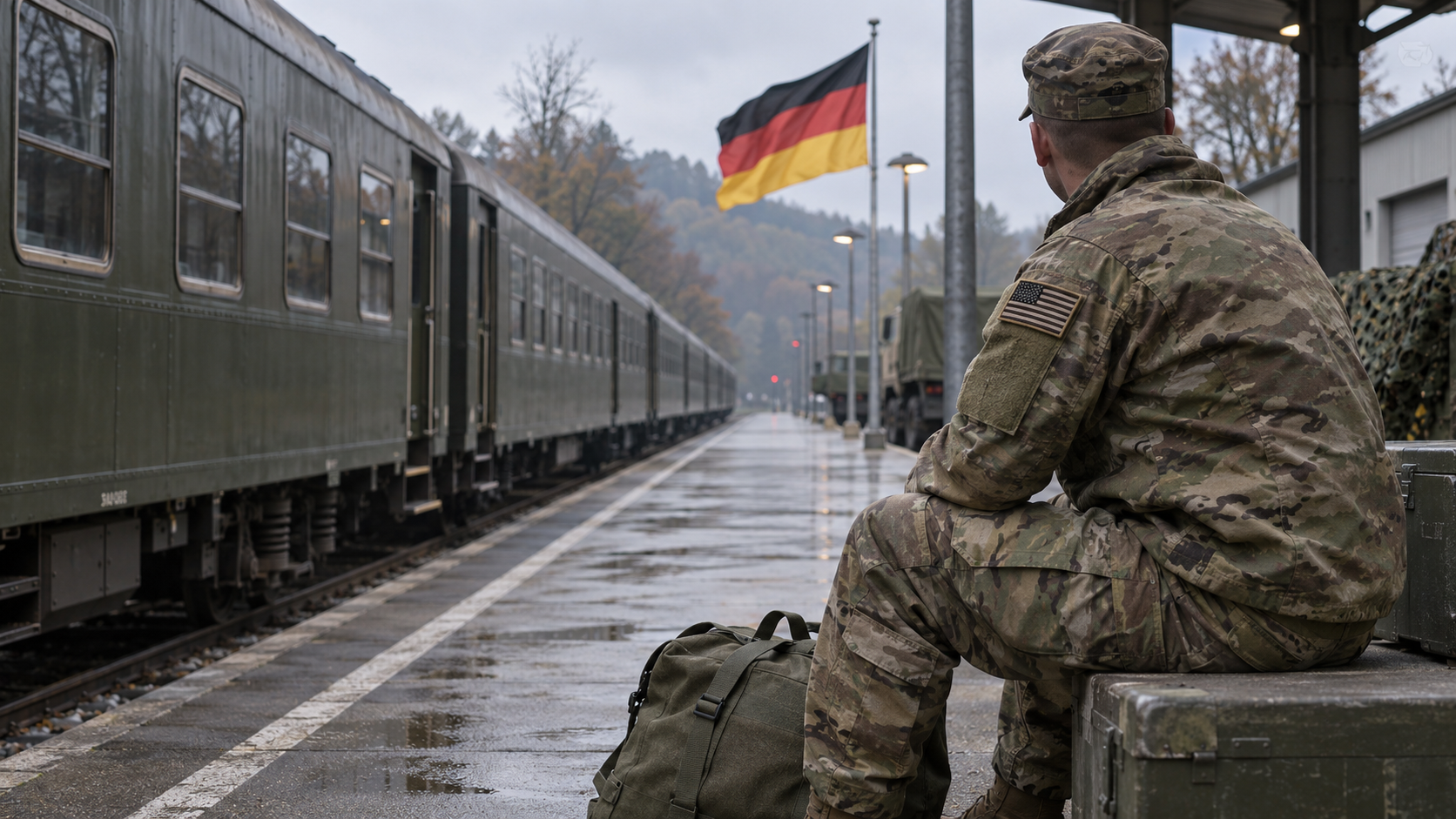
Germany Expects US Troop Changes. How Much Warning Will Europe Get?
Five Thousand US Troops Could Leave Germany And Still Remain In Europe.
Where would they go? That is one of the most consequential questions facing German Defence Minister Boris Pistorius as European ministers meet Pentagon policy chief Elbridge Colby in Brussels on 17 November. A US brigade moving from Germany to Poland would bring American troops closer to NATO’s eastern flank. Moving the same brigade to Asia would take those troops out of Europe altogether.
The US could reduce its military presence in Europe. Pistorius expects troop levels to change, and Washington has already announced plans to withdraw about 5,000 personnel from Germany. What Berlin still wants to learn is how that decision fits into a wider Pentagon review, which responsibilities European allies might have to take over and how much notice they will get. Pistorius expects greater clarity within weeks. The review’s findings are expected before Christmas.
What Has Washington Already Decided?
The figure of 5,000 dates back to 1 May, when the Pentagon announced a planned withdrawal from Germany over six to twelve months. That timetable matters now. November falls within the original window, but the passage of six months tells us nothing about how many people have actually moved. An announcement gives military planners an instruction. It takes further evidence to establish that a unit has left, where it went and who took over its duties.
On 18 June, US Defence Secretary Pete Hegseth announced a broader review of American deployments across Europe. He set out two aims. European allies should take greater responsibility for conventional defence on their continent, and the US should retain enough forces to meet its commitments elsewhere. He allowed up to six months for the review and said it would involve consultation with Congress.
That sequence explains why the same figure has surfaced again. European military sources have discussed a possible brigade move involving roughly 5,000 people. Their speculation about destinations gives no basis for adding another 5,000 to the May announcement and calling it a 10,000-troop cut. Nor had Pistorius identified a destination in his remarks before the Brussels meeting.
Why Poland And Asia Would Mean Different Things
Germany hosts about 35,000 American troops, the largest US military presence in any European country. Across Europe, the figure is roughly 80,000. Germany therefore accounts for more than two fifths of the total. A substantial change there can produce a striking German headline even when the number of Americans on the continent stays the same.
Consider Poland, one of the destinations raised by European military sources. If a US brigade transferred there from Germany at its existing strength, Germany’s total would fall and Poland’s would rise. The troops would remain available in Europe, now based further east. Berlin would still need to establish what happened to the duties they had performed in Germany. Warsaw would have a different question about what Washington intended the brigade to do in Poland.
A transfer to Asia would change both the German and European totals, assuming Washington sent no replacement. Pistorius linked the prospect of change to America’s growing commitments in the Indo-Pacific. In his assessment, that pressure would have influenced another US president too. It gives European governments a reason to plan for a smaller American contribution even if relations between Berlin and Washington improve. It does not settle which destination the Pentagon will choose.
What Can Germany Actually Learn In Brussels?
Colby was invited to a working lunch of the EU’s Foreign Affairs Council, where defence ministers were due to discuss transatlantic security. The distinction between the EU and NATO matters here. The officials around the table include ministers whose countries belong to both organisations. They can tell the Pentagon which changes concern them and ask how much time they have to prepare. An EU Council meeting has no power to assign an American brigade to a new country.
For Pistorius, the most valuable answer may be a date. Suppose Washington identifies a responsibility it wants a European ally to take over. If the ally can assume it before the Americans leave, both sides can agree a handover. If a successor needs two years to prepare and the US intends to move in six months, ministers have a specific problem to resolve. They can seek a later departure, arrange temporary cover or accept a period in which the alliance can do less. A troop total alone gives them little basis for choosing among those options.
There is already a practical example. In June, allies were considering how to replace some American military assets previously made available to NATO in a crisis. Those commitments cover what a country promises to provide in an emergency. They can change while the number of personnel stationed in Europe stays constant. A government trying to judge the effect of the Pentagon review therefore needs to ask what it could call on in a crisis as well as how many Americans will still be based nearby.
Why Ukraine Was On The Same Day’s Agenda
The Brussels discussions also offered a concrete example of what greater European responsibility can look like while American equipment remains essential. Pistorius said Germany and Norway would sponsor another package of US weapons for Ukraine, focused on interceptor missiles for its Patriot air defences. He put Germany’s contribution at $300 million.
The arrangement divides the work between allies. European governments provide the money. Ukraine receives American equipment it already uses. That can address an immediate need while leaving a longer-term question about what Europe could provide from its own resources. Ministers can agree to pay for a missile far more quickly than their countries can create the capacity to manufacture one.
The immediate test of the troop review will come when Washington identifies which forces it wants to move, where they will go and when. For Germany, a smaller American garrison is already a stated prospect. For Europe, the decisive detail will be whether those troops reappear elsewhere on the continent and, if they leave, whether another ally is ready to do their job on the day they go.
Sources
Reuters — NATO allies to discuss US troop levels with Pentagon strategy chief — Pistorius’s remarks, current troop estimates, possible destinations and Germany’s contribution to Ukrainian air defence. Reuters
Council of the European Union — Foreign Affairs Council (Defence), 17 November 2026 — The official Brussels agenda and Colby’s role in the working lunch. Consilium
Reuters — US withdrawing 5,000 troops from Germany, US officials say — The original Pentagon announcement and its six-to-twelve-month timetable. reuters.com
Defense News / Reuters — Hegseth announces review of US troops in Europe, scorns some allies — The June review’s scope, congressional consultation and changes to forces available to NATO in a crisis. Defense News
Next Reads
NATO Explained: What Article 5 Really Means And How The Alliance Would Respond To War — How individual governments give practical effect to NATO’s collective defence promise.
NATO Vows More Ukraine Support After Russian Strikes Near Poland — Why Poland’s position on the eastern flank shapes the alliance’s response to strikes across the border.
The Ukraine War Just Crossed Into NATO Airspace Again — And Russian Jamming May Be Why — What happened when a Ukrainian drone entered Latvian airspace and a NATO fighter responded.
