

Half of America Sues Trump Over His New Global Tariffs
Half the States Join Democrat-Led Challenge to Trump’s Trade Offensive
Democrats Launch Nationwide Legal War Against Trump’s Tariffs
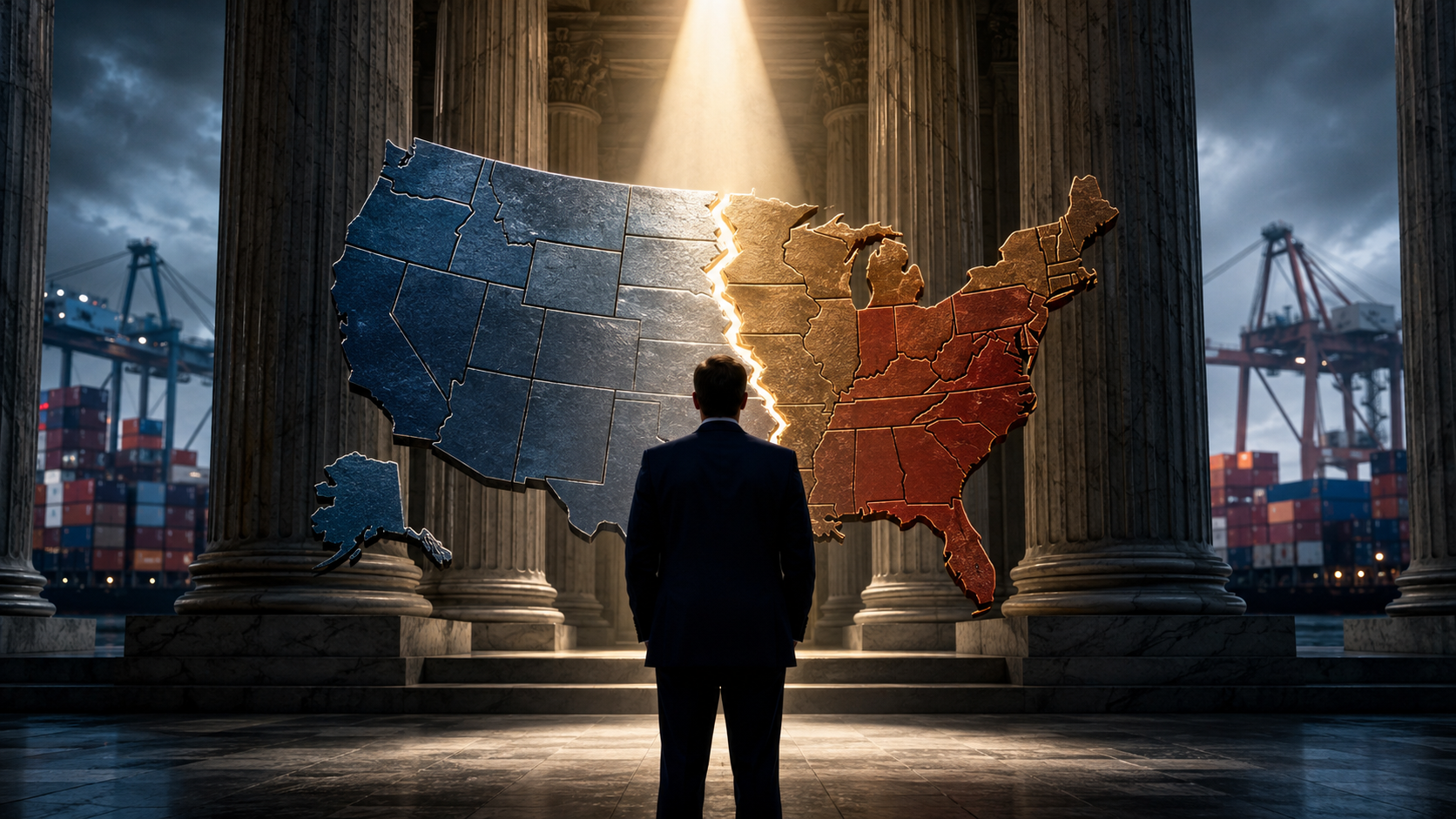
Exactly half of America’s states have joined a sweeping legal challenge against Donald Trump’s latest global tariffs, opening another front in the battle over who controls US trade policy. The coalition of 25 states wants the Court of International Trade to strike down duties of 10% or 12.5% covering imports from 60 economies.
The lawsuit presents the tariffs as another unlawful attempt to rebuild the trade wall that earlier courts disrupted. Yet it also exposes a deeper political divide: Trump is using American market access to demand changes from foreign governments, while Democratic officials are again asking federal judges to remove that leverage.
The Twenty-Five-State Legal Offensive
The complaint was filed on 3 August by states including New York, California, Illinois, Michigan, Virginia and Washington, alongside Kentucky Governor Andy Beshear and Pennsylvania Governor Josh Shapiro. The coalition is politically Democratic-led, even though its members represent a vast and economically diverse section of the country.
The filing argues that the new tariffs are not genuinely designed to confront forced labour. Instead, the plaintiffs describe that justification as a pretext for restoring the broad import duties Trump has pursued throughout his second term.
Their legal case is more serious than a routine political protest. The states claim the US Trade Representative failed to establish a rational connection between individual countries’ conduct and the near-universal tariffs imposed upon them. They also argue that the administration failed to satisfy the procedural and substantive limits of Section 301 of the Trade Act of 1974.
But the lawsuit remains an allegation, not a judgment. Trump’s latest tariffs have not yet been ruled unlawful, and the administration is relying on a different statutory route from the emergency powers rejected in an earlier Supreme Court case.
Trump Has Changed the Legal Weapon
Trump originally used the International Emergency Economic Powers Act to support his widest tariffs. The Supreme Court ruled in February that the law did not authorise the president to impose tariffs in that way.
The administration then used Section 122 of the Trade Act to introduce a temporary 10% import surcharge. The Court of International Trade later ruled against that measure, although the judgment was stayed while the administration appealed.
Trump’s new system relies on Section 301, a far more established instrument for confronting foreign practices judged unreasonable, discriminatory or damaging to US commerce. The same provision supported major tariffs against China during Trump’s first term and gives the administration a potentially stronger foundation than the emergency-powers argument rejected by the Supreme Court.
That distinction matters. Previous judicial defeats may strengthen the states’ political narrative, but they do not automatically decide whether this separate Section 301 action is lawful.
The legal contest will instead turn on whether the administration properly investigated each economy, followed the required procedure and designed a remedy capable of changing the conduct it identified. The states argue that tariffs covering almost every major supplier are too indiscriminate to meet that test.
The Forced Labour Case Democrats Are Downplaying
The administration says the tariffs respond to the failure of 59 countries and the European Union to impose and effectively enforce restrictions on goods produced with forced labour. Its central argument is that foreign governments should not enjoy unrestricted access to American consumers while allowing exploitation to remain embedded in international supply chains.
US Trade Representative Jamieson Greer launched 60 investigations in March. His office says it consulted more than 45 affected governments, conducted two rounds of hearings, received more than 2,100 comments across the process and heard testimony from more than 100 witnesses during the final July hearings.
That record complicates the Democratic claim that the policy emerged without a meaningful investigation. The courts will examine whether the process met every statutory requirement, but this was not simply a tariff announced overnight without hearings, documentation or foreign engagement.
The investigation found that only Canada, Ecuador, the European Union, Indonesia, Mexico and Pakistan had enacted comprehensive forced-labour import prohibitions among the economies examined. Even those jurisdictions were judged not to be enforcing their restrictions effectively enough.
Several other countries secured the lower 10% rate because they had made commitments, adopted partial systems or taken steps towards prohibition. Most of the remaining economies received a 12.5% rate, while exemptions protect certain raw materials, essential products and goods that could create wider disruption if taxed.
That structure gives Trump a direct negotiating mechanism. Governments that strengthen their laws and enforcement can seek better treatment, while countries that leave forced-labour goods circulating through their markets face a measurable economic penalty.
The Democrats’ Economic Argument Is Incomplete
New York Attorney General Letitia James and Governor Kathy Hochul describe the tariffs as taxes that will increase the price of groceries, construction materials and household goods. They are right that tariffs can raise costs for American importers and that part of that burden can reach consumers.
But that is not the entire calculation. Tariffs can also reduce foreign suppliers’ margins, redirect purchasing towards American producers, encourage investment inside the United States and give Washington leverage that diplomatic appeals alone have failed to produce.
Democratic officials are treating every immediate import cost as decisive while discounting the strategic cost of dependence on foreign production. That approach protects the low-cost global trading model without adequately confronting who works inside it, which industries America loses through it or how hostile governments exploit it.
There is also an uncomfortable contradiction in suing over a policy tied to forced labour. The states insist that they oppose exploitation, but their preferred remedy would remove the pressure before proving that voluntary cooperation can achieve the same result.
The legal question is whether Trump’s chosen instrument fits the statute. The political question is why Democratic leaders appear more determined to stop the tariff than to demand faster action from governments accused of allowing forced-labour goods to move through their markets.
A Court Battle With Global Consequences
The lawsuit requests a three-judge panel and asks the Court of International Trade to declare the tariff action unlawful. Businesses have filed a separate challenge, increasing the possibility of an accelerated confrontation over the limits of presidential trade power.
Trump enters that battle with both a vulnerability and an advantage. The vulnerability is that judges have already rejected two earlier legal routes, making the administration’s attempt to preserve a broad tariff system easier to portray as institutional defiance.
The advantage is that Section 301 expressly exists to answer foreign practices that burden American commerce. USTR has assembled an extensive administrative record, differentiated tariff rates, created product exemptions and documented movement by foreign governments after the investigations began.
That does not guarantee victory. The government must still explain why duties affecting such a large share of US imports are proportionate to the conduct identified and how countries can escape them by improving enforcement.
The latest dispute is therefore bigger than another Trump lawsuit. If the Democratic coalition succeeds, presidential control over trade could be narrowed again and foreign governments would gain relief without Congress agreeing on a replacement strategy.
If Trump wins, the White House will retain a durable tool for forcing trading partners to choose between reforming their supply chains and paying for access to the American market. Half the states may have gone to court, but the argument now belongs to the judges—and the future of America First trade policy may depend on their answer.
