

Russia Has Choked Off Half of Ukraine’s Grain Lifeline
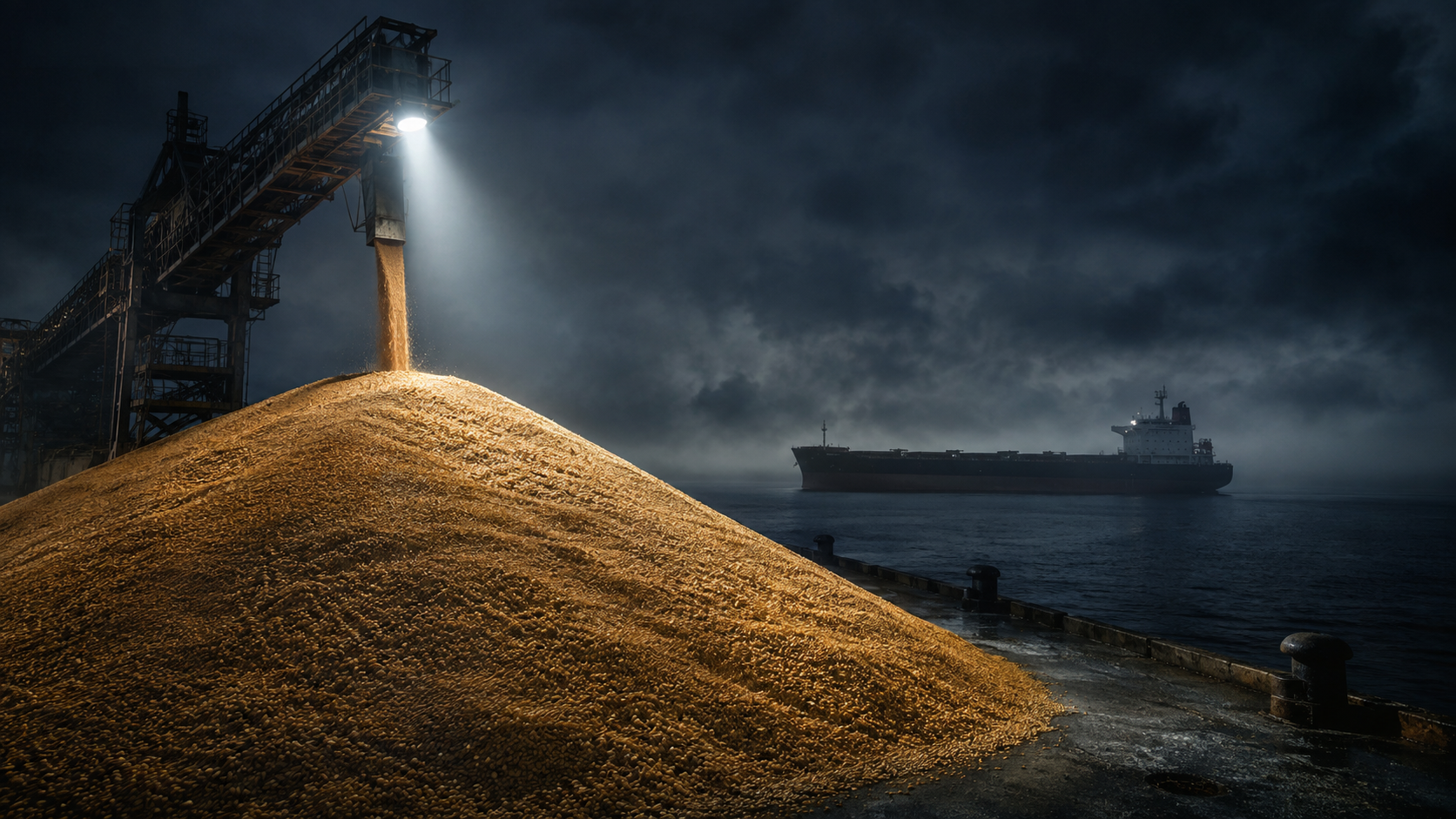
Putin’s Black Sea Pressure Is Turning Ukraine’s Harvest Into a Liability
Russia Is Strangling the Grain Corridor Ukraine Fought to Reopen
Ukraine can redirect its grain through the Danube, railways and roads, but those routes are expected to replace only 50% to 55% of the capacity normally available through its Black Sea ports. Russia does not need to sink every cargo ship or announce a formal naval blockade to achieve that result. It only needs to make entering Odesa dangerous, expensive and commercially unacceptable.
No vessels entered the ports around Odesa for almost two weeks after shipowners suspended new calls amid intensified Russian attacks. Ukraine recorded 35 attacks on vessels inside ports, 22 against vessels at sea and 67 strikes on port facilities during July, according to its infrastructure ministry. By comparison, Ukraine says only 14 attacks on vessels were recorded during the whole of 2025.
A Blockade Built From Fear
Ukraine’s maritime corridor was one of Kyiv’s most important strategic victories of the war. After the earlier internationally brokered grain agreement collapsed in 2023, Ukrainian attacks pushed much of Russia’s Black Sea Fleet away from Crimea and helped establish a route running towards Romanian and Bulgarian waters.
That corridor allowed Ukraine to export tens of millions of tonnes of agricultural goods despite the continuing war. It restored part of the commercial confidence that Russia’s invasion had destroyed and showed that Moscow could not exercise uncontested control over the western Black Sea.
Russia’s current campaign appears designed to reverse that achievement without relying on a conventional surface blockade. Repeated missile and drone attacks against ports, cargo infrastructure and civilian shipping transfer the decision to insurers, shipowners and crews. If commercial operators conclude that the risks are intolerable, the corridor can close in practice even if it remains open on a map.
Moscow maintains that it attacks military-related targets. Russia has also accused Ukraine of striking its commercial vessels and agricultural export infrastructure elsewhere in the Black Sea region. Whatever the competing military claims, the immediate commercial result around Odesa is clear: fewer ships, higher costs and a growing volume of Ukrainian produce with no efficient route to international buyers.
Half the Capacity at a Higher Price
Ukraine’s Black Sea ports can normally handle around six million tonnes of cargo each month. Agriculture minister Taras Vysotskyi estimates that alternative routes could eventually process only 50% to 55% of that volume, even after they reach a more stable operating level.
Those alternatives are not immediately ready. Rail is expected to carry much of the redirected trade, while exceptionally low water levels are limiting the Danube’s usefulness. Vysotskyi said the alternative network might not reach its required operating level until the end of August at the earliest, with the Danube unlikely to play a major role before October.
Moving grain through those routes could cost Ukrainian producers an additional $45 to $50 per tonne. That is not a marginal inconvenience in an industry dependent on high volumes and narrow margins. It can turn an exportable harvest into grain that is worth less at the farm gate than it costs to produce.
Ukrainian producers are already experiencing the pressure. Vysotskyi said domestic prices for grains and oilseeds had fallen by about 30% on average, while direct agricultural losses could reach between $1.5 billion and $3 billion this year. Ukraine’s central bank has separately estimated that disruption to maritime infrastructure could remove approximately $2.5 billion in export revenue during the second half of 2026, although some of that trade may be delayed rather than permanently lost.
Russia Is Attacking Ukraine’s Ability to Finance Itself
Agriculture is not merely another Ukrainian industry. It provides export income, supports rural employment, generates foreign currency and keeps transport, storage, processing and banking networks functioning during wartime.
If ports remain inaccessible, silos will fill as the harvest continues. Traders will reduce purchases because they cannot be certain when or how the grain can be sold abroad. Farmers then lose the working capital needed to repay loans, buy fuel and fertiliser, or plant the following crop.
The damage therefore compounds across agricultural seasons. A blocked harvest in 2026 can reduce planting and production in 2027, weakening future export earnings even if the ports later reopen. Russia gains a way to impose long-term economic damage without capturing another hectare of Ukrainian farmland.
This also places more pressure on Kyiv’s public finances and foreign supporters. If agricultural businesses require subsidised loans, guarantees or emergency assistance, money must be diverted from other wartime priorities. Lost export revenue can increase Ukraine’s dependence on international financial support just as some Western governments are confronting domestic resistance to further spending.
Food Prices Become Geopolitical Leverage
Ukraine accounted in recent seasons for approximately 6% of global wheat exports and 11% of corn exports. It is also a major supplier of barley, oilseeds and vegetable oils. A prolonged disruption would not automatically produce a worldwide shortage, because prices also depend on harvests, stocks and exports from other major producers, but it would remove an important source of competitively priced supply.
The countries most exposed are not necessarily the wealthiest importers. Lower-income states across North Africa, the Middle East and parts of Asia are more sensitive to changes in wheat prices, freight costs and currency values. Even when grain remains available, a higher landed price can place it beyond the reach of poorer households or already strained governments.
That gives Moscow an uncomfortable form of indirect leverage. Rising food costs can increase pressure on governments that have limited connection to the battlefield, encourage them to demand concessions or renewed negotiations, and strengthen Russia’s attempt to present itself as an indispensable agricultural supplier.
Russia is itself the world’s largest wheat exporter, although its own Black Sea shipping has faced growing disruption from Ukrainian attacks. A broader interruption affecting both countries would create risks for Moscow as well as Kyiv. Yet tighter global supply can also raise the value of grain that Russia successfully exports, producing a complicated balance between commercial damage and strategic advantage.
Europe Faces Another Solidarity Test
Redirecting Ukrainian grain westward creates political as well as logistical problems for the European Union. Railways use different gauges, border terminals have limited capacity and grain must often travel farther before reaching a suitable seaport. Every transfer adds time and cost.
Large overland flows have previously generated anger among farmers in Poland and other neighbouring states, who feared that Ukrainian produce intended for transit was depressing their domestic prices. A renewed surge could reopen those disputes at a moment when European governments are already managing defence spending, migration pressures and political fatigue surrounding the war.
The EU may attempt to expand protected transit routes, subsidise transport or guarantee that Ukrainian grain passes through neighbouring markets without remaining there. However, each solution carries a cost. The more Russia restricts the Black Sea corridor, the more European taxpayers and infrastructure must absorb the burden.
The Danube presents another vulnerability. Ports close to Romania can help move Ukrainian goods, but they are still exposed to Russian strikes and depend on water levels and limited river capacity. Any attack that causes damage or casualties close to NATO territory would also increase the risk of a wider security confrontation.
The Black Sea Security Dilemma
Ukraine is asking its allies to help secure the Black Sea, but the available options involve sharply different levels of escalation. More air-defence systems around Odesa could protect port infrastructure without placing NATO forces directly in combat. Financial guarantees and expanded war-risk insurance could also encourage commercial vessels to return.
Naval escorts would be far more dangerous. NATO warships accompanying civilian cargo vessels could deter attacks, but they would also create the possibility of a direct encounter with Russian missiles, drones, aircraft or naval forces. Turkey’s control of access through the Turkish Straits under the Montreux Convention further limits what outside powers can deploy and for how long.
The most realistic Western response is therefore likely to combine Ukrainian air defence, coastal surveillance, insurance support, port repairs and investment in alternative routes. That could reduce the effectiveness of Russia’s pressure, but it would not replicate the speed or economics of open access to Odesa.
The crisis also tests the principle that civilian shipping should not become a routine target of state coercion. If attacks can effectively close a major commercial corridor without provoking a coordinated response, other powers may draw lessons about how missiles, drones and insurance pressure can be used to control trade routes below the threshold of conventional naval warfare.
What Happens Next
Even an immediate return of ships would not restore normal exports overnight. Vysotskyi estimates that Ukraine would need at least a month to rebuild traffic to its previous level. Shipowners would need evidence that the danger had genuinely fallen, not simply a temporary pause in attacks.
The next few weeks will show whether Russia has created a temporary disruption or successfully reconstructed an economic blockade from the shore. If vessels remain absent as the harvest accumulates, the consequences will spread from Ukrainian farms to European borders, global commodity markets and the negotiating table.
This is why the lost half of Ukraine’s export capacity matters far beyond grain. Russia is testing whether it can turn the Black Sea into an economic pressure chamber: draining Ukraine’s income, raising costs for its allies and making food insecurity part of the price the wider world pays for resistance.
