

Hormuz on the Brink: UK and US Race to Reopen the World’s Most Dangerous Oil Artery
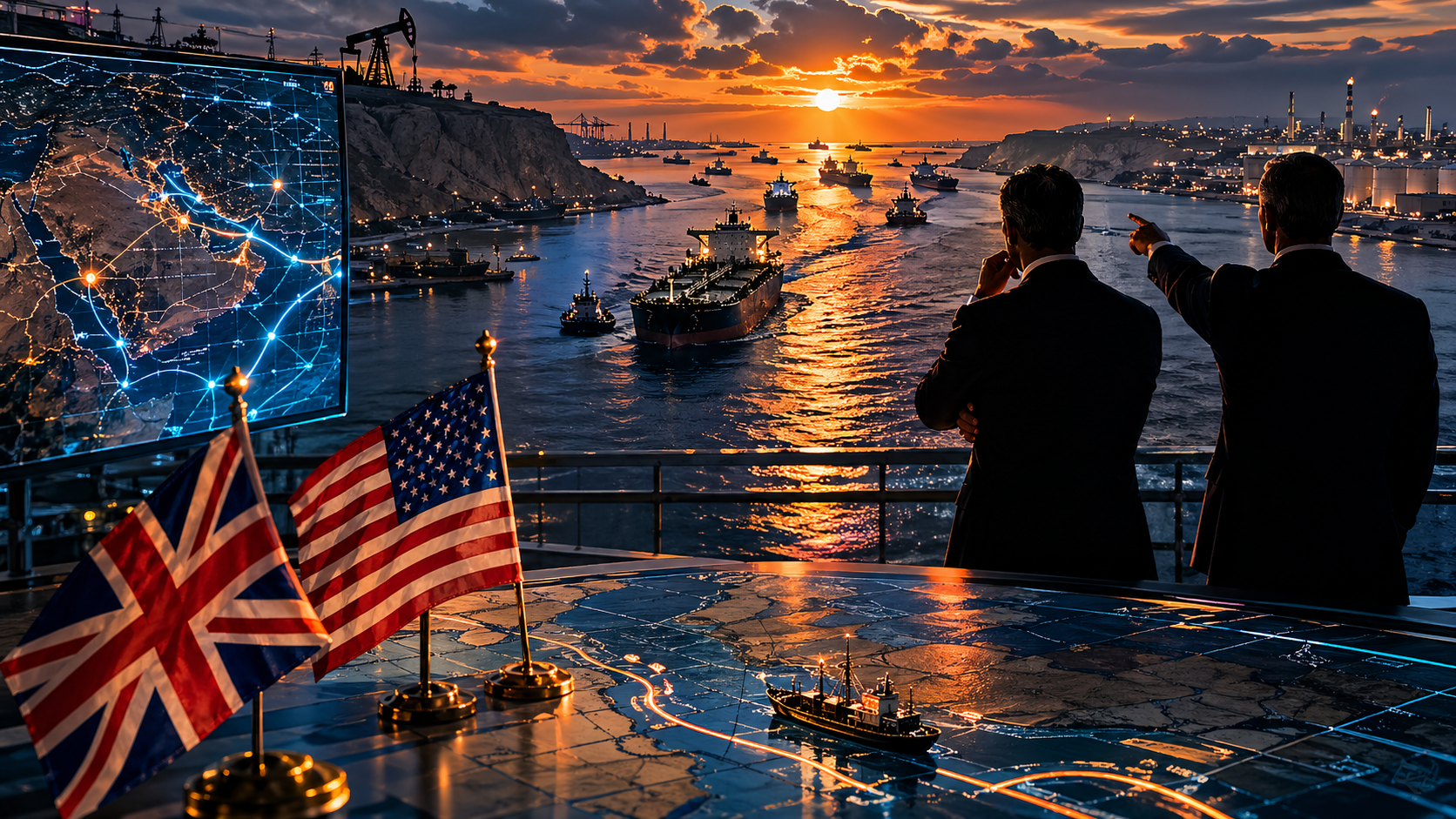
Oil, War, and Power: The High-Stakes Fight Over Hormuz Shipping
A Choke Point With Global Consequences: Why Hormuz Cannot Stay Closed
The push to restart shipping through Hormuz is not just about trade—it is about preventing a cascading global shock
The conversation between the United Kingdom and the United States is not routine diplomacy. It is damage control at a global scale.
Leaders are grappling with a harsh truth: when the Strait of Hormuz experiences a slowdown, the world doesn't just experience it—it absorbs the shock simultaneously. Fuel prices surge. Supply chains tighten. Inflation returns with force. And geopolitical risk stops being theoretical.
That is why restoring shipping through this narrow strip of water has become urgent policy, not long-term ambition. Reported accounts indicate both sides emphasised the need to get vessels moving again because the consequences are already spreading into everyday life—from energy bills to food costs.
What looks like a regional disruption is, in reality, a global pressure point.
What Actually Happened
The crisis did not begin with shipping. It began with war.
Following escalating conflict involving the United States, Iran, and regional actors, the Strait of Hormuz—one of the most critical maritime chokepoints in the world—became effectively unusable. Iran moved to restrict passage, while the United States imposed a naval blockade.
The result was complete disruption. It was near paralysis.
Ship traffic collapsed from normal levels to a handful of vessels per day
Hundreds of ships became stranded or rerouted
Around one-fifth of global oil and gas flows was effectively trapped or delayed
That is not a shipping problem. That is a systemic risk event.
Why This Matters Now
The urgency is not theoretical—it is already visible.
Energy prices have surged, and the effects are cascading into the wider economy. Governments are warning that even if conflict stabilises, the aftershocks could last months.
The reason is simple: Hormuz is not just another route.
It is a bottleneck for global energy supply. Roughly a fifth of the world’s seaborne oil passes through it under normal conditions.
When that flow slows or stops:
Oil markets tighten instantly
Insurance costs for shipping spike
Freight routes become longer and more expensive
Supply chains absorb delays and cost inflation
And crucially, those effects hit consumers last—meaning they linger even after the crisis appears to ease.
The Strategic Logic Behind the UK–US Push
This is not just about reopening a waterway. It is about reasserting control over a critical global system.
The UK has been working alongside allies, including France, to build a coordinated response—combining diplomacy, security guarantees, and potential naval support to restore “freedom of navigation.”
Meanwhile, the United States is concentrating on operational reality by eliminating threats, preventing further disruption, and reinstating safe passage.
That includes:
Countering naval blockades
Detecting and removing sea mines
Protecting commercial vessels
Managing escalation risks with Iran
None of this is quick. Mine clearance alone could take weeks or longer depending on conditions.
Which means the “reopening” of Hormuz is not a switch. It is a process—fragile, contested, and potentially reversible.
What Media Misses
The story is often framed as a shipping disruption.
It is not.
It is a control struggle over one of the world’s most critical economic arteries.
Whoever influences Hormuz influences:
Energy prices
Trade stability
Inflation trajectories
Political pressure inside major economies
This dynamic is why the situation escalates so quickly. It is not just military—it is economic leverage at a global scale.
And that changes the logic entirely.
Because the longer Hormuz remains constrained, the more leverage shifts toward those willing to weaponize disruption.
The Hidden Risk: A Prolonged “Almost Open” Strait
One of the most dangerous outcomes is not full closure.
It is a partial reopening.
A scenario where:
Some ships pass, but many avoid the route
Insurance costs remain elevated
Military risks persist
Markets remain volatile
Such behaviour creates a false sense of recovery while maintaining structural instability.
We have already seen how quickly confidence collapses—traffic briefly resumed, then dropped again as conditions deteriorated.
That kind of instability is harder to manage than a clean break.
Because it keeps the system in a constant state of tension.
What Happens Next
Three paths now sit in front of policymakers.
1. Controlled Reopening (Most Likely)
Shipping resumes gradually under heavy military and diplomatic coordination. Risk remains, but flows stabilize.
2. Escalation and Reclosure (Most Dangerous)
Any miscalculation—a mine strike, vessel seizure, or military clash—shuts the route again and triggers a sharper global shock.
3. Prolonged Fragmentation (Most Underestimated)
Shipping continues at reduced capacity, with persistent risk pricing baked into global trade for months.
The third scenario is the quiet one—but it may be the most economically damaging over time.
The Bottom Line
The Strait of Hormuz is not just a narrow stretch of water.
It is a pressure valve for the global economy.
When it closes, the consequences are immediate. When it struggles to reopen, the consequences linger.
That is why the UK and US are moving with urgency.
Because the issue is not just about getting ships moving again.
It is about preventing a local crisis from becoming a permanent global cost.
