

Trump, Starmer, and the Falklands: A Dispute That Cuts Deeper Than Territory
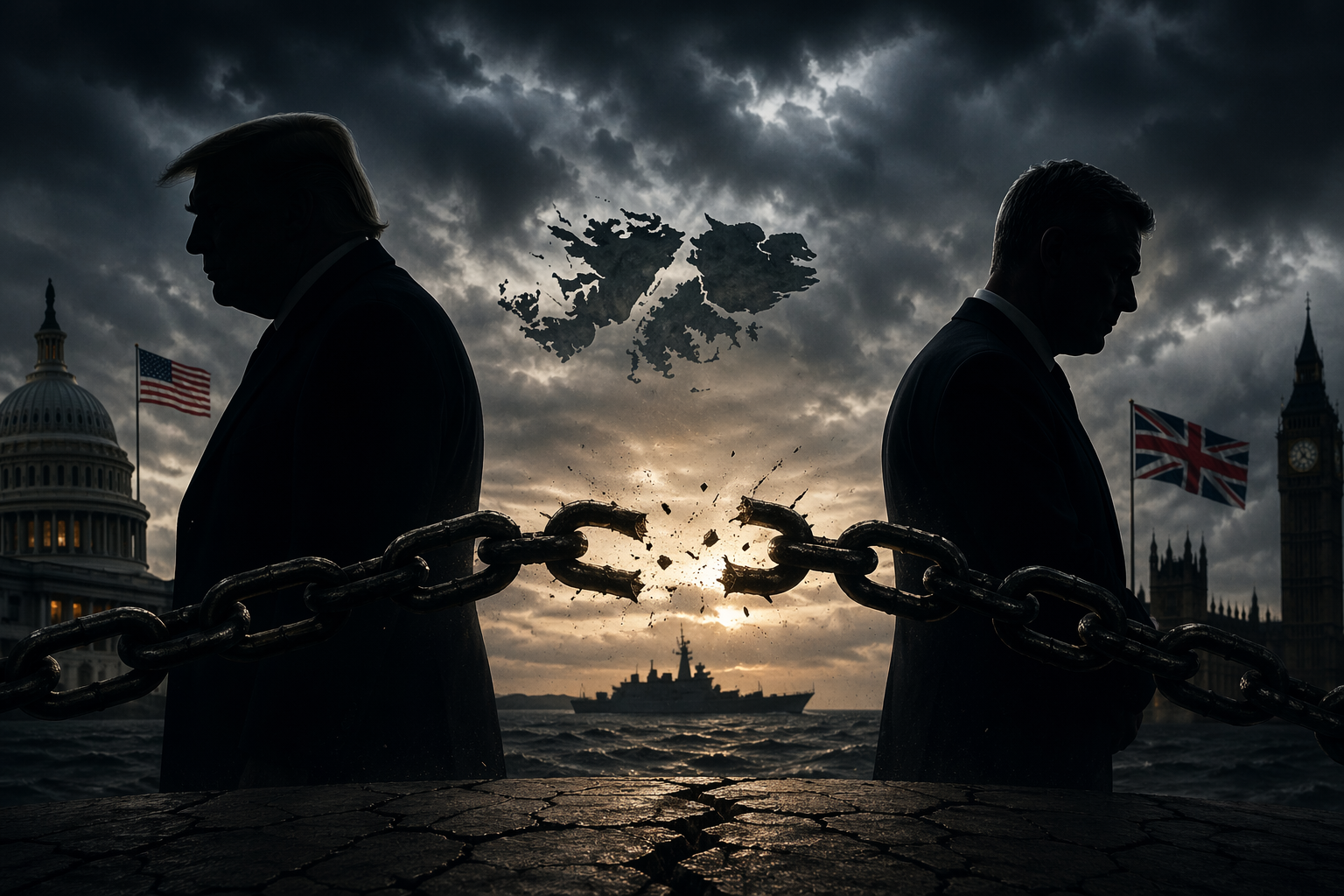
Washington’s Falklands Warning Exposes a Deeper Rift With Britain
US ‘Falklands Review’ Threat Signals a Dangerous Break in the Special Relationship
Washington’s willingness to weaponise sovereignty exposes a harsher reality: alliances are conditional, and hesitation comes at a price
The Falkland Islands were never supposed to become a bargaining chip.
Yet that is precisely what they have become.
A leaked internal US discussion has raised the possibility of reconsidering support for British sovereignty over the islands — not because of Argentina, not because of history, but as a pressure tactic against the United Kingdom itself.
This is not a routine diplomatic disagreement. It is a signal. And it lands at a moment when the relationship between Washington and London is already under strain.
The true narrative does not revolve around the Falklands.
It is about leverage.
A Dispute That Should Not Exist
The UK’s position is unequivocal: sovereignty rests with Britain, grounded in the islanders’ right to self-determination.
That has been the settled position for decades. It survived war. It survived diplomacy. It survived changing governments on both sides of the Atlantic.
So why is it being reopened now?
The answer sits thousands of miles away—in the Middle East.
The UK’s refusal to fully align with US military action in the Iran conflict created friction at the highest level.
That friction did not stay contained.
It escalated.
The Real Logic: Loyalty Has a Price
The leaked discussions suggest the US is exploring ways to “penalise” allies that do not fully support its strategic objectives.
That includes reassessing diplomatic backing for territories like the Falklands.
This is not subtle diplomacy. It is transactional geopolitics.
The message is simple:
Support us — or expect consequences
Align quickly — or lose influence
Hesitate—and your interests become negotiable
This scenario is where the Falklands shift from a territorial issue to a strategic warning.
Because if sovereignty can be questioned for leverage, nothing is truly off-limits.
Trump’s Pattern Was Always There
None of this is emerging in a vacuum.
Donald Trump has long framed alliances through a lens of contribution, strength, and loyalty. He has criticized allies for not doing enough, moved quickly to apply pressure, and shown a willingness to rethink long-standing assumptions.
The UK has already been on the receiving end of that frustration.
Earlier tensions around military cooperation, base access, and broader foreign policy decisions exposed a growing gap between expectations and delivery.
Trump’s criticism of Keir Starmer has been blunt, at times personal, and rooted in a perception that Britain has not acted decisively enough.
This moment—the Falklands—is simply the clearest expression of that worldview.
And it raises an uncomfortable question:
Should this have been anticipated?
Starmer’s Position: Principle Over Pressure
Keir Starmer’s response has been firm: the UK will not shift its position on sovereignty, regardless of external pressure.
That stance reflects both political necessity and strategic reality.
Backing down would not just weaken Britain’s position on the Falklands. It would signal that sovereignty itself can be negotiated under pressure.
But there is a trade-off.
Standing firm protects principle—but risks deepening the rift.
What Media Misses
Most coverage frames this as a diplomatic spat.
It is not.
It is a structural shift in how power is applied between allies.
The assumption that the “Special Relationship” guarantees stability is being tested—and quietly dismantled.
The US is signaling that:
Alliances are conditional
Support is transactional
Even historic commitments can be re-evaluated
The Falklands are not the issue.
They are the example.
What Happens Next
Three paths now sit ahead.
Most Likely:
The US walks back any formal shift, framing the discussion as exploratory rather than policy. The alliance holds, but with visible strain.
Most Dangerous:
The rhetoric hardens. The Falklands become a recurring pressure point. Argentina re-enters the conversation with renewed diplomatic momentum.
Most Underestimated:
A long-term recalibration of UK strategy — less reliance on US alignment, more diversification of alliances, and a more independent foreign policy posture.
Because once sovereignty becomes negotiable in theory, it forces countries to rethink everything in practice.
The Bigger Meaning
This moment cuts deeper than a single policy leak.
It exposes a reality many prefer to ignore:
Alliances are not built on sentiment. They are built on alignment.
And when alignment breaks, even the most entrenched assumptions can shift.
The Falklands are still British.
But the certainty around them just changed.
That is the real story.
And it will not stay contained to the South Atlantic.
