Hungary’s Election Could End Orbán’s 16-Year Rule — And Redraw Europe’s Political Map Overnight
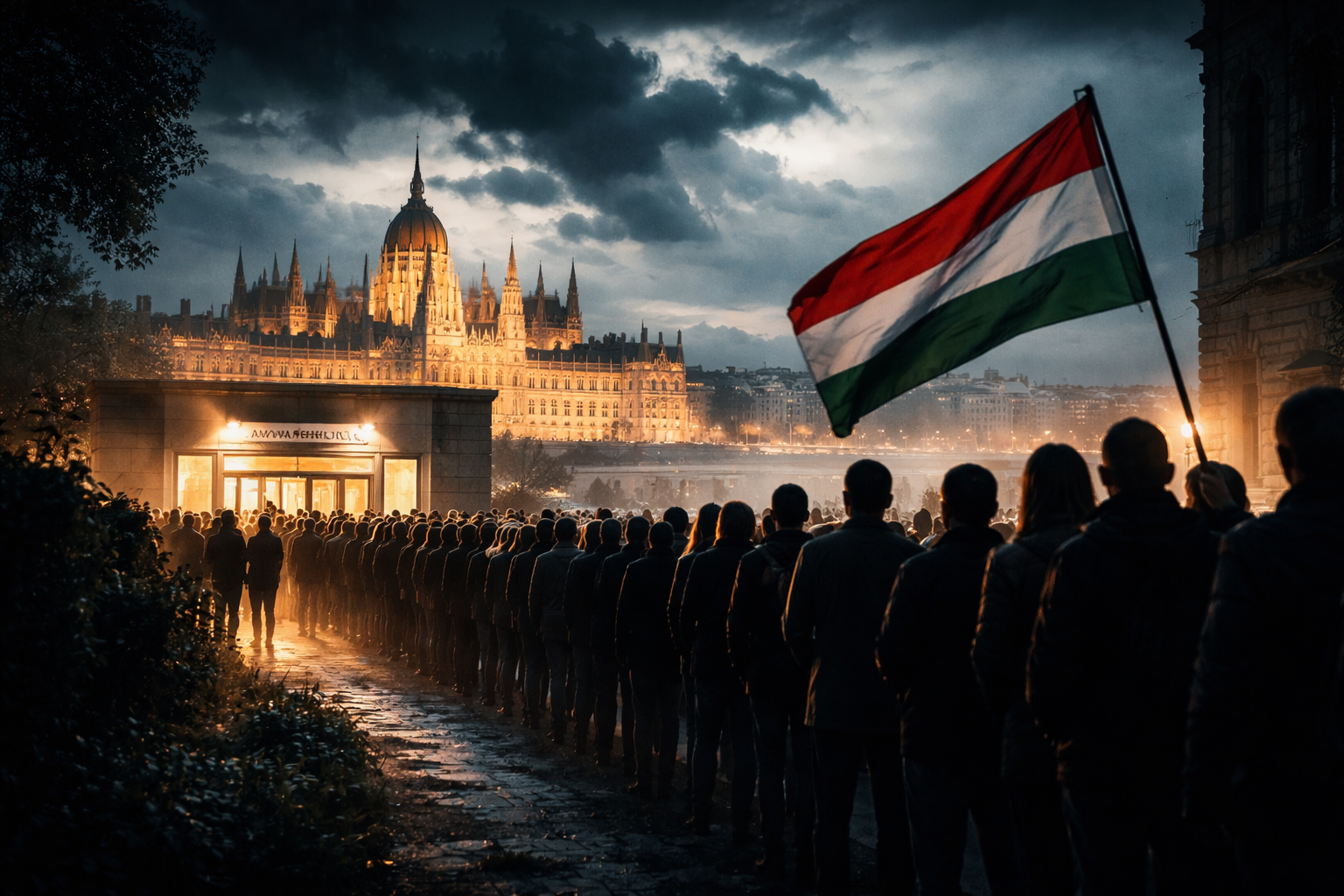
Hungary Votes in a High-Stakes Election That Could Oust Viktor Orbán
An election once considered predictable has become a high-risk political rupture—one that could reshape Hungary’s direction, test the durability of “illiberal democracy,” and send shockwaves across Europe.
A Vote That Suddenly Feels Unpredictable
For years, elections in Hungary followed a familiar pattern: Viktor Orbán wins, consolidates power, and reshapes the political landscape further in his favor.
This time is different.
Hungarians are voting in what is widely described as the most competitive election in over a decade—one that could end Orbán’s 16-year hold on power.
The scale of the shift is striking. Polls leading into election day showed the opposition Tisza party, led by Péter Magyar, not just competitive but ahead.
That alone marks a rupture.
But the deeper story is not just about whether Orbán loses. It is about why this election has become so volatile—and what it reveals about Hungary’s trajectory.
The Collapse of Political Certainty
Orbán’s dominance was never accidental. Over more than a decade, his government reshaped institutions, electoral rules, and the media environment in ways that entrenched his party’s advantage.
Critics argue his actions created a system where opposition fragmentation made change nearly impossible. That assumption is now breaking down.
The opposition landscape has consolidated dramatically behind a single challenger. Smaller parties have stepped aside or collapsed, effectively turning the election into a two-sided contest.
This matters more than any single policy debate.
Hungary is no longer facing a fragmented opposition. It is facing a unified challenge.
That alone transforms the mathematics of power.
Why Orbán Is Suddenly Vulnerable
The shift is not just structural—it is also driven by changing voter sentiment.
Years of economic pressure, rising prices, and strain on public services have eroded the sense of stability that once underpinned Orbán’s appeal.
At the same time, corruption allegations and governance concerns have become more politically potent. The opposition has built its campaign around these issues, positioning the election as a referendum on accountability and state integrity.
There is also a quieter but equally important change: Hungary’s relationship with the European Union.
Polling suggests a strong majority of Hungarians still support EU membership and want improved relations with Brussels.
That creates a tension at the heart of Orbán’s political model, which has often relied on confrontation with EU institutions.
The electorate is not rejecting Europe.
But parts of the political system have drifted away from it.
East or West? The Geopolitical Question Beneath the Vote
This election is not only domestic. It carries significant geopolitical weight.
Opposition leader Péter Magyar has framed the vote as a choice between “East and West”—a shorthand for Hungary’s positioning between Russia and the European Union.
Orbán’s government has maintained a more Russia-friendly stance than most EU states, including resistance to certain Ukraine-related policies and tensions with Brussels.
A change in leadership would not instantly reverse Hungary’s foreign policy—but it could shift tone, alignment, and cooperation.
That matters for:
EU unity on security and sanctions
NATO cohesion
Energy policy and regional stability
This is why observers from beyond Hungary are closely monitoring the election.
It is not just about who governs Budapest.
It is about how firmly Hungary sits within the Western political system.
What Media Misses
Most coverage frames the issue as a simple contest: Orbán versus the opposition.
That is not the real story.
The deeper shift is psychological.
For the first time in years, a critical mass of voters appears to believe change is actually possible.
That belief alters behavior:
Turnout increases
Undecided voters engage
Tactical voting becomes rational
In other words, the election is not just competitive—it feels competitive.
And once that perception takes hold, political systems that once looked stable can move rapidly.
The Role of Uncertainty
Despite the opposition’s apparent momentum, the outcome remains unclear.
A large share of voters remains undecided, and Hungary’s electoral system—combined with rural-urban divides—can still favor the incumbent.
There are also concerns around:
Media influence
Electoral fairness
Potential irregularities
These factors mean that even a narrow lead in polling does not guarantee victory.
This is a high-volatility election.
Not a settled one.
What Happens Next
There are three plausible scenarios.
1. Orbán Holds Power
If Orbán wins, even narrowly, it would reinforce his model of governance and likely deepen tensions with the EU.
It would also signal that structural advantages and political control remain decisive.
2. Opposition Victory
If the opposition wins, the implications are immediate and complex:
Institutional reform becomes likely
EU relations may reset
Internal political resistance could intensify
But a victory would not equal instant transformation. Hungary’s political system has been reshaped over years, and unwinding that is neither quick nor straightforward.
3. Contested Outcome
Given the stakes and tensions, a disputed result cannot be ruled out.
That scenario would introduce a different kind of instability—one centered on legitimacy rather than governance.
Why This Election Matters Beyond Hungary
This vote is a test case.
It asks a broader question:
Can we reverse a long-entrenched political system—one built on institutional advantage, media influence, and electoral dominance—through democratic means?
Europe is watching because the answer has implications far beyond Hungary.
If Orbán loses, it suggests that even highly entrenched systems remain vulnerable to political realignment.
If he wins, it reinforces the durability of a model that many in Europe view with concern.
The Moment Before the Result
Right now, Hungary sits in a rare political moment: uncertainty.
This is not the usual slow, managed uncertainty of politics, but a genuine, system-level unpredictability.
That is why turnout is high. That is why the stakes feel elevated.
And that is why this election matters.
Because when a system that looked stable suddenly doesn’t, the result is rarely just a change in leadership.
It is a change in trajectory.
