The War-Readiness Shift: Why Europe Is Rearming Faster Than Expected
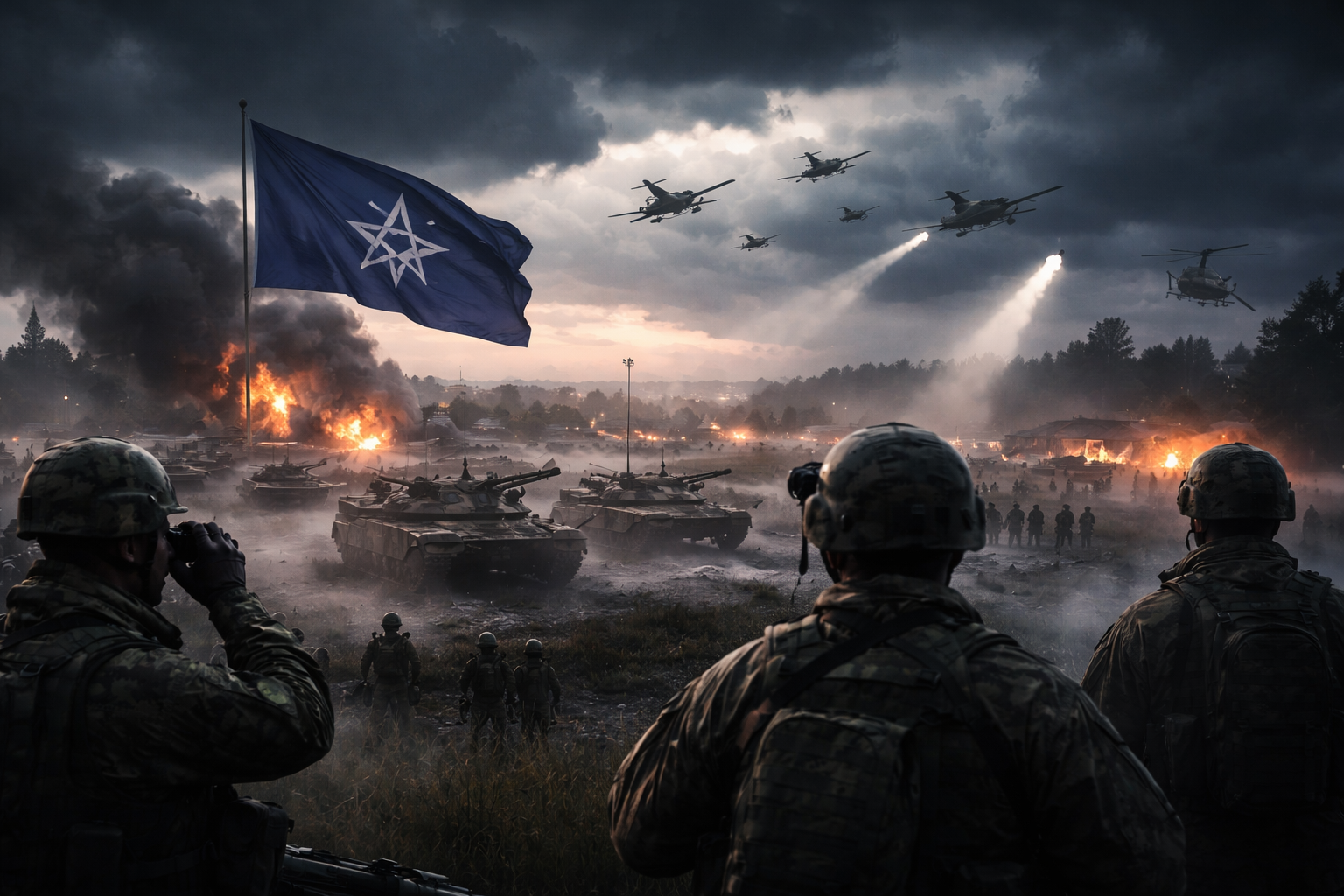
European defence buildup and military exercises
Europe Is Quietly Preparing for War—And Britain Is Racing To Catch Up
The shift isn’t just about budgets or weapons. It’s about mindset—and that’s what makes it far more serious.
The Language Has Changed—And That Changes Everything
For decades, European defense policy was built around a simple assumption: war on the continent was unlikely.
That assumption is now collapsing.
Across the UK and Europe, the conversation is no longer about preventing conflict. It is increasingly about preparing for it. This preparation is not just rhetorical or abstract, but also structural, operational, and psychological in nature.
Warnings are no longer subtle. One senior academic recently said that nearly all indicators of a major conflict are “flashing red,” pointing to simultaneous tensions involving Russia, China, and the Middle East.
At the same time, governments are quietly aligning policy with that assessment.
The real story lies in this alignment.
Britain’s Shift: From Underprepared To Urgent
The UK sits at the center of this shift—and also slightly behind it.
On one level, the signals are obvious. Political leaders are openly discussing the largest peacetime rearmament in modern British history, including troop expansion and major spending increases.
On another, the signals are more revealing.
Britain is preparing to revive Cold War-era contingency planning—systems designed not just for military engagement but for civilian resilience, infrastructure survival, and national continuity.
That matters.
Because it represents a move away from expeditionary warfare thinking—Afghanistan and Iraq—toward something far more serious:
The possibility of direct, systemic conflict affecting the homeland.
And this shift is happening against a backdrop of real incidents. British forces have already been deployed to monitor suspected Russian submarine activity near critical undersea infrastructure, reflecting a growing fear of “invisible warfare” targeting cables, pipelines, and energy systems.
This scenario is not theoretical.
It is already happening in fragments.
Europe’s Bigger Move: Rearmament At Scale
While Britain recalibrates, Europe is scaling.
The European Union has already outlined a massive defense investment trajectory, with plans that could mobilize up to €800 billion to strengthen military capability, industrial production, and strategic autonomy.
At the same time, NATO has effectively reset expectations.
Member states have agreed to move toward defense and security spending equivalent to 5% of GDP by 2035—a transformative shift from the long-standing 2% benchmark.
That is not incremental change.
That is structural rearmament.
And it is paired with operational expansion:
New NATO missions in strategically critical regions like the Arctic
Increased joint procurement and defence industrial coordination
Expanded multinational deployments across Europe’s eastern flank
The direction is clear.
Europe is not just strengthening deterrence.
It is building capacity for sustained conflict.
The Trigger Points Are Multiplying
This shift is not happening in isolation. It is being driven by overlapping crises that reinforce each other.
Russia remains the central threat in European security thinking, particularly following years of war in Ukraine and ongoing hybrid operations targeting infrastructure and political stability.
China adds a second layer—less immediate geographically but strategically decisive. The possibility of conflict over Taiwan would not stay regional; it would reshape global supply chains, alliances, and military commitments.
Then there is the Middle East, where escalating tensions and military deployments have already drawn Western forces into a more active defensive posture.
These are not separate theaters.
They are interconnected pressure points within a single system.
And that system is becoming more volatile.
What Media Misses
The most important shift is not the weapons.
It is the mindset.
For years, European defense discussions were framed around capability gaps: more tanks, more aircraft, more funding.
Now, the conversation is shifting toward resilience and duration.
Can countries sustain prolonged disruption?
Can infrastructure survive targeted attacks?
Can societies absorb shocks without fragmenting?
This is why policy language increasingly includes terms like “whole-of-society security,” “critical national infrastructure protection,” and “resilience spending.”
In other words:
The question is no longer just how to fight a war.
It is how to live through one.
Britain’s Structural Weakness
This is where the UK faces a more uncomfortable reality.
Despite renewed urgency, there are persistent concerns about readiness gaps—ranging from force size and equipment to industrial capacity and long-term planning clarity.
Parliamentary scrutiny has already highlighted a lack of detailed strategy around key concepts like “sovereign capability” and defense industrial resilience.
At the same time, the military itself is smaller than it was in previous decades, and key assets—particularly naval capacity—have declined significantly since the Cold War era.
This creates a tension:
Britain wants to project strength and leadership within NATO.
But it is still rebuilding the foundations required to do so.
The NATO Question Is Now Central
Overlaying all of this is a deeper uncertainty about NATO itself.
The alliance remains the cornerstone of European defense, but no one can take its future for granted anymore.
Political tensions, particularly involving the United States, have introduced a new variable: the possibility—however remote—of reduced American commitment.
That possibility alone is enough to drive European rearmament.
Because the logic is simple:
If the US becomes less reliable, Europe must become more capable.
And that shift—from reliance to responsibility—is one of the most profound changes in European security since the end of the Cold War.
What Happens Next
Three trajectories now define the near future.
The Most Likely Path:
Gradual but sustained increases in defense spending, industrial output, and military coordination. Europe becomes more capable, but the transition remains uneven.
The Most Dangerous Path:
A sudden escalation—whether in Eastern Europe, the Middle East, or the Indo-Pacific—forces rapid mobilization before achieving full readiness.
The Most Underestimated Path:
Hybrid conflict intensifies: cyberattacks, infrastructure sabotage, and economic disruption. No formal war, but constant pressure.
In reality, all three may unfold simultaneously.
The Real Meaning Of This Moment
It is tempting to view all of this as a reaction.
It is not.
It is a transition.
For thirty years, Europe operated under a post-Cold War assumption: security was stable, conflict was distant, and defense could be managed rather than prioritized.
That era is ending.
What is emerging in its place is something more complex—and more demanding:
A security environment where war is not inevitable but is once again plausible.
And where preparedness is no longer optional.
The shift is quiet.
But it is profound.
And once it is fully understood, it becomes difficult to unsee.
