

Iran Declares US- and Israel-Linked Ships “Legitimate Targets,” Raising the Risk of a Global Energy Shock
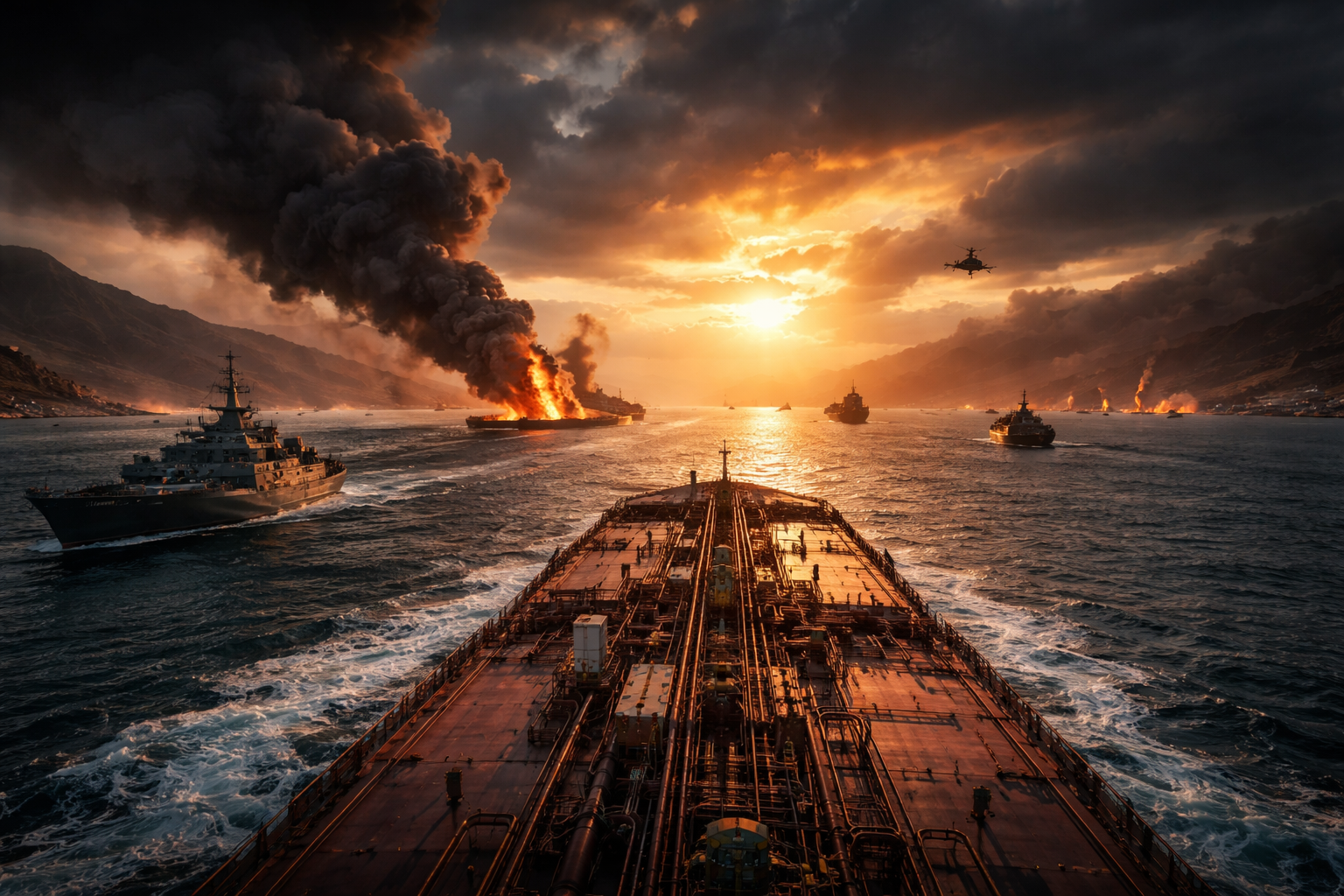
Iran Threatens Global Oil Supply by Targeting Ships in Hormuz
Iran’s New War Strategy: Hit the Ships, Spike the Oil
The war between Iran, the United States, and Israel has entered a dangerous new phase. Tehran has now declared that ships connected to the U.S., Israel, or their allies are “legitimate targets,” a move that directly threatens one of the most critical arteries of the global economy.
Iranian officials warn that oil tankers headed toward those countries may face attacks, potentially causing a dramatic surge in oil prices as the conflict escalates.
The threat is not theoretical. Several vessels have already been struck near the Strait of Hormuz, and naval forces are now operating in close proximity amid an escalating military campaign across the region.
This moment matters because roughly one-fifth of the world’s oil flows through the narrow waterway Iran now threatens to disrupt.
The story turns on whether Iran is willing—or able—to sustain a prolonged campaign against global shipping.
Key Points
Iran has declared ships linked to the U.S., Israel, or their allies “legitimate targets” as the war escalates.
The recent attacks on several commercial vessels near the Strait of Hormuz have heightened concerns about a potential maritime conflict.
The strait carries about 20% of the world’s oil supply, making any disruption a potential global energy shock.
Tehran has warned oil prices could surge toward $200 per barrel if the confrontation spreads.
The United States has already destroyed Iranian mine-laying vessels in the area while escorting commercial shipping.
Governments and energy markets worldwide are now preparing for possible supply disruptions, which could include stockpiling reserves and seeking alternative energy sources to mitigate the impact of potential oil shortages.
The War Moves to the World’s Most Important Shipping Chokepoint
The Strait of Hormuz has long been the strategic pressure point in any confrontation with Iran.
The narrow channel—only about 21 miles wide at its tightest point—connects the Persian Gulf to the global ocean. Tankers carrying crude oil and liquefied natural gas from Saudi Arabia, the UAE, Kuwait, Iraq, and Qatar must pass through it to reach world markets.
Around one-fifth of the global oil supply moves through the strait each day, making it one of the most economically sensitive locations on Earth.
Since the U.S.-Israeli strikes on Iran began in late February 2026, Tehran has increasingly signaled that it could disrupt shipping as retaliation.
Now that threat appears to be turning into operational policy.
Iranian officials claim they can target vessels linked to the U.S. or Israel, as well as their allies. Recent incidents in the strait have reportedly struck at least three ships.
Even a handful of attacks is enough to trigger shockwaves in global energy markets.
Shipping companies, insurers, and commodity traders are extremely sensitive to risk in the region. If the perception of potential tanker attacks spreads, many vessels will cease sailing through the area.
How the Maritime Front Escalated
The maritime threat did not emerge overnight.
The conflict itself began with a coordinated U.S.-Israeli strike campaign inside Iran, targeting military infrastructure and leadership nodes beginning on February 28, 2026.
Iran retaliated with missile and drone attacks across the region, including strikes on U.S. bases and targets connected to Israel.
From Tehran’s perspective, expanding the battlefield into shipping lanes offers a powerful lever.
Iran’s conventional military cannot easily match U.S. or Israeli airpower. But it does have significant asymmetric capabilities at sea:
naval mines
anti-ship missiles
fast attack boats
drones
Even small attacks or the mere threat of mines can halt traffic through narrow waterways.
The United States has already reported destroying multiple Iranian vessels believed to be laying mines near the strait, a sign the maritime confrontation is actively unfolding.
The result is a classic escalation spiral: each side increases pressure in a domain where the other is vulnerable.
Why the Energy Market Is Watching Every Hour
Energy markets respond not only to physical supply disruptions but also to perceived risk.
That is why even limited attacks on ships can trigger large price swings.
A partial blockage of the Strait of Hormuz could cause a dramatic overnight drop in global oil supply. Gulf exporters have few alternative routes.
Iranian officials have warned the conflict could push oil prices as high as $200 per barrel if disruptions intensify.
Whether that prediction materializes is uncertain. But the possibility alone has already prompted governments to prepare contingency measures.
Some countries have begun discussing releases from strategic petroleum reserves to stabilize markets.
Energy traders are also closely monitoring insurance rates for shipping through the region. War-risk premiums can surge quickly, effectively shutting down routes even if vessels remain physically capable of sailing.
What Most Coverage Misses
Much of the discussion around a Hormuz crisis focuses on the idea of a complete blockade.
In reality, Iran does not need to close the strait to cause economic shock.
A handful of successful attacks—or even credible threats—can be enough to disrupt global shipping. The maritime insurance system is extremely sensitive to risk. If insurers raise premiums or refuse coverage, tanker operators may simply avoid the route.
This phenomenon is why maritime pressure has historically been one of Iran’s most effective asymmetric strategies.
The key mechanism is psychological and financial rather than purely military. Even limited incidents can trigger cascading effects across energy markets, freight costs, and national inflation rates.
In other words, the real leverage comes not from shutting the strait entirely but from making it appear too dangerous to use.
The Strategic Calculus for Iran and the United States
Both sides face powerful incentives—but also constraints.
For Iran, attacking shipping raises the economic cost of war for the United States and its allies. A spike in global oil prices can create political pressure on Western governments.
But Tehran also risks alienating countries that rely on Gulf energy exports. Nations such as India, China, Japan, and European states depend heavily on oil shipments from the region.
For Washington, the goal is to keep shipping lanes open without escalating into a broader regional war.
That likely means increased naval escorts for commercial vessels, expanded surveillance of the strait, and continued strikes against Iranian maritime assets if necessary.
Each step, however, brings military forces into closer proximity—and increases the risk of a miscalculation at sea, which could lead to unintended confrontations or escalation of hostilities between the involved nations.
The Next Moves That Will Decide the Crisis
The maritime front is now one of the most volatile parts of the war.
Three signals will determine whether the situation becomes a full-scale global energy crisis.
First is whether Iran continues attacking commercial vessels or shifts back to military targets.
Second is whether shipping companies decide the risk is too high and begin rerouting tankers away from the Gulf.
Third is whether the United States and its allies escalate naval operations to guarantee passage through the Strait of Hormuz.
If those pressures converge, the conflict could move from a regional war to a global economic shock.
The strategic significance of the moment lies in a narrow stretch of water only a few miles wide—yet capable of reshaping the world economy overnight.
