Iran Draws a Red Line—with a Stopwatch
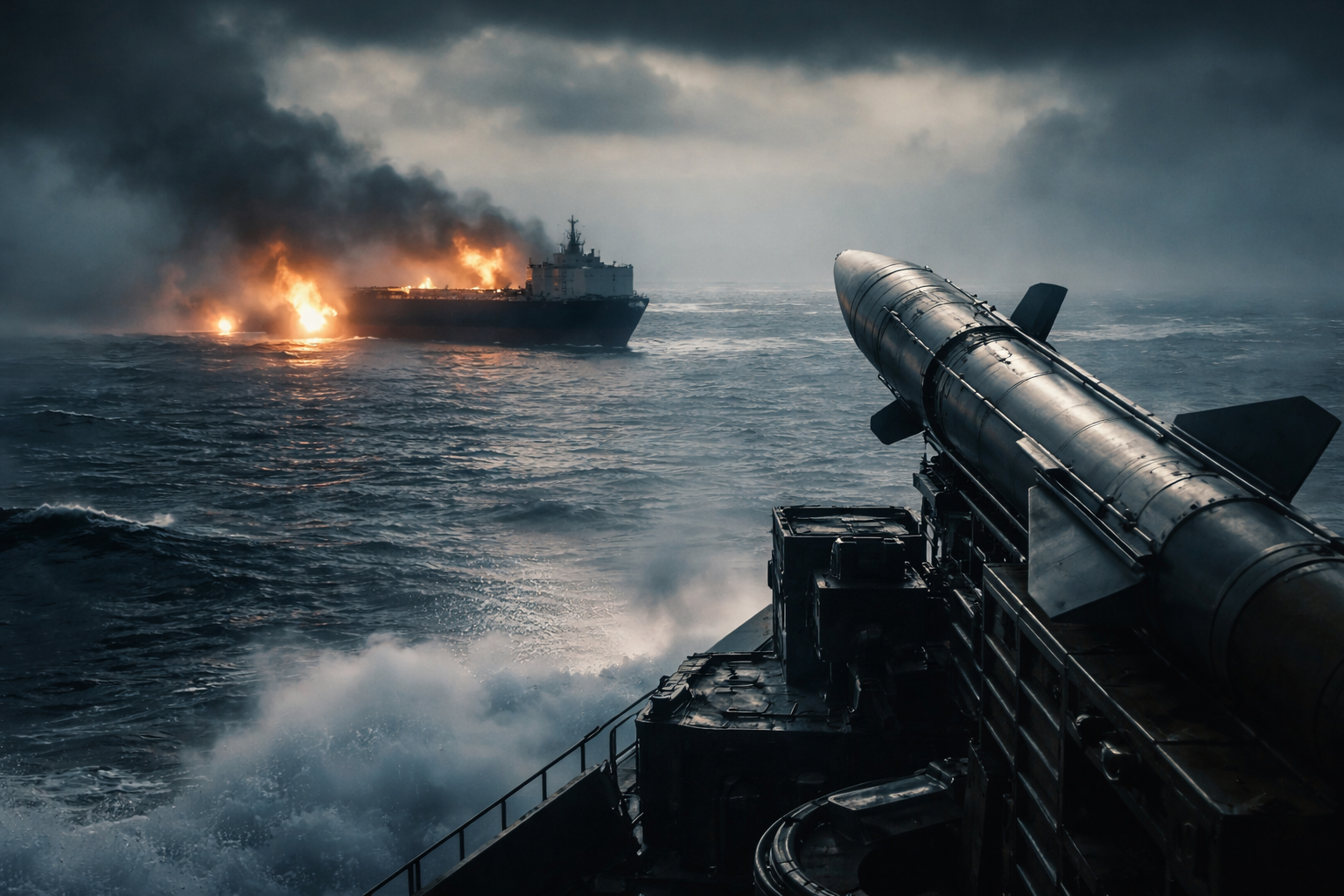
Iran warns it will retaliate fast if attacked as US threats sharpen. Here’s the trigger list, likely responses, and spillovers.
Iran Warns of Rapid Retaliation as US Threats Return—The Triggers That Could Break the Standoff
Iran’s senior messaging has sharpened into a single idea: any US attack gets an immediate, forceful response—even as Washington’s public posture hardens around “time is running out” and a fresh push for a nuclear deal.
What makes this moment fragile is not the volume of threats. It’s the speed implied on both sides: rapid retaliation language from Tehran and a US mix of military signaling and deadline rhetoric that compresses decision time.
It's important to note that escalation is less likely to start with a major decision in a capital, but rather, it's more likely to start with a swift, unclear incident (at sea, via proxies, or in cyberspace) that compels leaders to "respond" before the facts are entirely clear.
The story turns on whether both sides can keep the messaging maximal while keeping the operational environment quiet enough to avoid an incident that creates a one-way escalatory clock.
Key Points
Iran’s top-line warning has shifted from deterrence-by-threat to deterrence-by-speed, with officials framing readiness to respond “immediately and powerfully” to any aggression.
President Trump has publicly tied urgency to a nuclear deal and warned the “next attack” would be “far worse,” while US force posture signaling continues around the region.
Recent weeks show a parallel track: diplomatic messaging and sanctions escalation, including US action targeting vessels linked to Iran’s “shadow fleet.”
Regional basing and host-country anxiety matter: Tehran has warned that US bases in neighboring states could be hit if Iran is attacked—raising the political cost for everyone nearby.
Markets and shipping risk can flip quickly because the most plausible triggers—maritime harassment, proxy attacks, and cyber—are high-tempo and deniable until they aren’t.
The most dangerous scenario is not “total war tomorrow,” but a sequence: incident → limited response → retaliation → widening targets.
Background
The current escalation theater sits on top of two overlapping conflicts: Iran’s internal unrest and the external contest over its nuclear program.
In early January, President Trump publicly threatened intervention tied to the crackdown on protests, while Iranian officials warned that foreign interference would trigger regional destabilization.
At the United Nations, the US expressed its support for the Iranian people and reaffirmed its willingness to consider "all options." Iran, for its part, signaled a lawful, proportionate response to any aggression.
At the same time, the sanctions track has tightened. The US Treasury has targeted vessels described as part of Iran’s “shadow fleet,” arguing that revenues are diverted to security services and weapons programs rather than the Iranian people.
There has also been a noticeable shift in force posture and signaling. US military exercises and naval deployments have been framed as readiness and deterrence, while Tehran has framed the buildup as a direct threat and placed its forces on high alert.
Analysis
Why the US Threats Sound “Revived” Now
Washington’s rhetoric has converged around a deadline frame: negotiate a nuclear deal quickly or face consequences. Trump’s warning that the “next attack will be far worse” explicitly links the current standoff to prior strikes on Iranian nuclear installations, increasing the credibility—and the risk—of repetition.
But the constraint is political and operational: even credible signaling does not equal inevitable action. Reuters reporting indicates Trump had not made up his mind on a military strike and that a weakened Iran could be seen as an argument for coercive diplomacy rather than immediate war.
That ambiguity is intentional—yet it creates a volatility problem: the more each side threatens, the more they narrow their off-ramps.
Iran’s Retaliation Menu Is Built for Speed and Leverage
Iran’s messaging is aimed at deterrence through certainty: if attacked, Iran will strike back—potentially against US forces, Israel, and supporters—rather than accept a “limited” hit as containable.
The tactical logic is asymmetric: Iran does not need to defeat the US in a conventional sense to raise costs. It needs to impose enough pain—military, political, and economic—that Washington and regional partners fear the next step.
The biggest constraint is calibration. Iran must show resolve without triggering an overwhelming response. That tension is why deniable tools—proxies, cyber, and maritime harassment—remain structurally attractive even when leaders speak in maximalist terms.
The maritime lane also serves as a market lane.
Shipping risk narratives can move within hours because the “surface area” for disruption is wide: ports, chokepoints, tankers, insurance, and naval escort dynamics.
Even without a formal blockade, the perception of risk can change routing decisions, insurance premiums, and near-term energy price expectations. A single incident involving a commercial vessel—especially if attribution is contested—can force governments into public commitments before private backchannels have time to work.
That is why both sides talk in terms of readiness and rapid response: they are signaling to each other but also to markets.
Cyber and Proxies: The Escalation Tools That Stay “Unclear” Until They Don’t
When leaders promise immediate retaliation, the question is where that retaliation lands.
Cyber operations and proxy actions offer two advantages: plausible deniability and controllable tempo. However, they also pose a hidden drawback: they serve as the most straightforward avenues for misattribution and tit-for-tat expansion, particularly when they impact civilian infrastructure or international shipping.
The signposts here are rarely speeches. They are operational: unusual alerts at bases, embassy security escalations, changes in maritime advisories, and sudden communications outages.
What Most Coverage Misses
The key point is that politics in third-country bases may determine the nature of "retaliation" and "response" more quickly than battlefield capabilities.
Here’s the mechanism: Iran has warned that if it is attacked, US bases in neighboring countries could be hit—which forces host governments into a choice they do not want: enable US action and accept retaliation risk, or restrict access and fracture the coalition. That dynamic can push Washington toward options that minimize host-nation vetoes (standoff strikes, offshore platforms, cyber, covert action)—which can look “smaller” but still trigger large retaliation.
What would confirm such an event in the next hours/days/weeks:
Gulf states could make public statements about their "non-involvement," airspace permissions, or base constraints.
Visible dispersal behavior: aircraft moved, heightened base force protection, selective withdrawals, or rapid returns after alerts ease.
What Happens Next
In the next 24–72 hours, the most affected actors are not just Washington and Tehran, but the states and companies that sit in the middle: host countries with US bases, commercial shipping operators, insurers, and energy importers. The near-term risk is not a planned invasion—it is compressed decision-making after an incident, because both sides have publicly committed to speed.
In the next weeks, watch for three decision points:
The first is whether the talks, whether direct or indirect, are publicly acknowledged or explicitly terminated.
Whether sanctions expand from personnel to the logistics of oil movement, exerting pressure on Iran's revenue and creating incentives for retaliation in debatable domains, will also be a key decision point.
The shift in force posture from signaling to operational readiness, which includes sustained dispersal, persistent high alerts, and expanded exercises, is a crucial consideration.
The main consequence mechanism is simple: the tighter the coercion timeline, the more valuable fast, asymmetric retaliation becomes, because it aims to reshape the other side’s political calculus before diplomacy can settle.
Real-World Impact
A shipping operations team reroutes a tanker away from perceived hotspots, adding days of transit time, because insurers price in a short-term risk spike even without confirmed attacks.
A regional airline adjusts flight paths after temporary airspace disruptions, raising costs and creating cascading delays because “permission to fly” is not the same as “confidence in safety.”
A commodities desk sees prices swing based on headlines, not fundamentals, because traders are trying to price the probability of disruption rather than the disruption itself.
A multinational with staff in the Gulf quietly reviews evacuation thresholds because the binding risk is not Tehran or Washington’s intent—it’s whether a base, port, or convoy becomes a target.
The 72-Hour Miscalculation Test
This standoff is designed to deter. But deterrence gets brittle when both sides promise speed.
If Washington believes pressure can force a deal, it will keep tightening timelines. If Tehran believes timelines are coercion, it will keep highlighting rapid retaliation. The danger is the gray zone in between: one maritime incident, one proxy strike, one cyber event that looks state-linked—followed by a response that is politically hard to walk back.
The fork in the road is clear: a negotiated path that slows the clock or an incident-driven path that accelerates it. Watch for shifts in basing permissions, dispersal behavior, and maritime security postures—because the next phase will be decided less by speeches than by the operational choices made under pressure.
