Iran Reasserts Control of Hormuz as Shipping Collapses Into Chaos
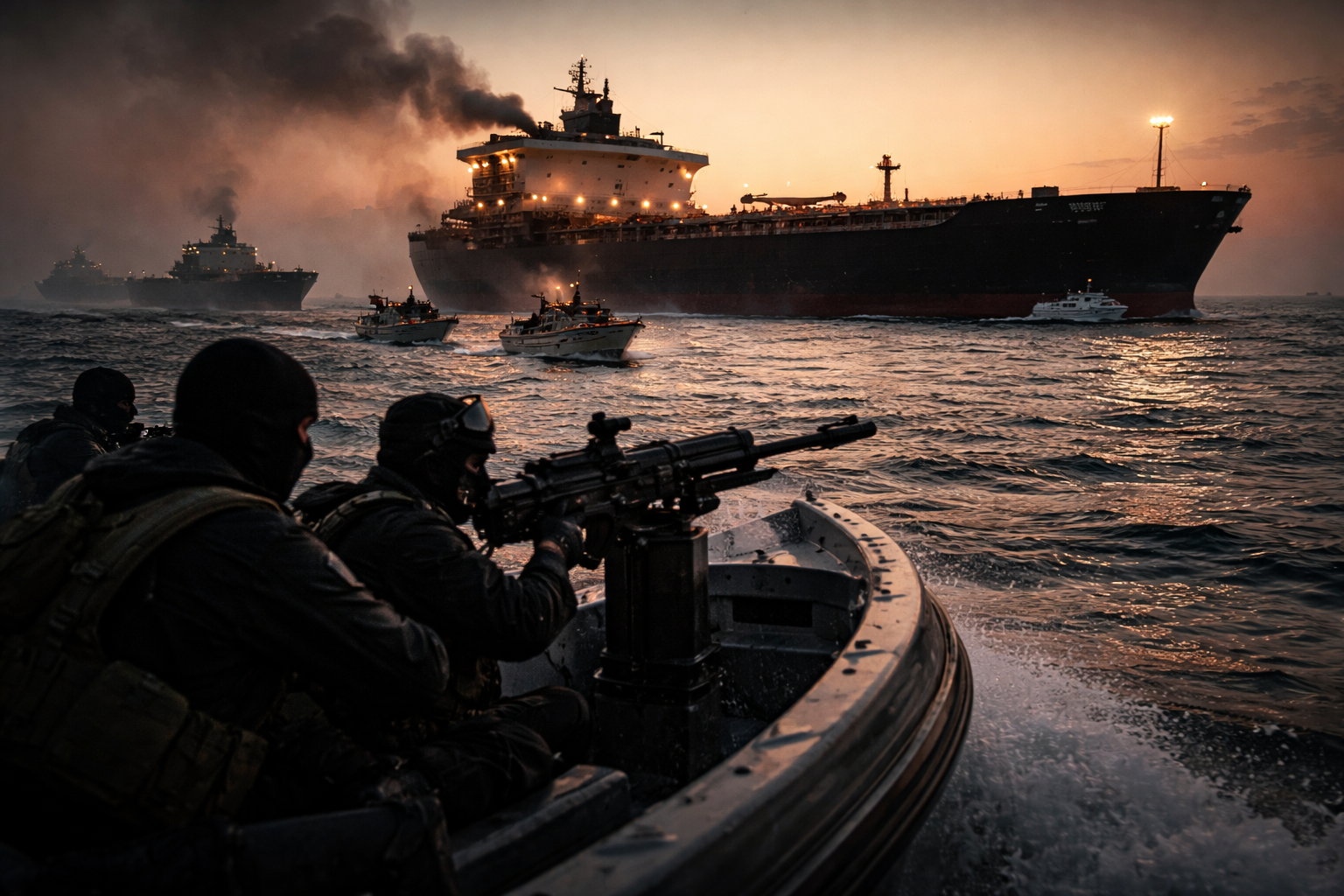
Oil Lifeline Under Fire: Why Tankers Are Suddenly Turning Around
The Strait of Hormuz Is Closing Again—And the World Is Starting to Feel It
A fragile reopening collapses into confrontation as ships turn back, warning shots echo, and a global energy choke point slips further out of control
The illusion lasted days.
After weeks of near-total disruption, a handful of tankers edged back into the Strait of Hormuz. Markets steadied. Diplomacy hinted at movement. For a brief moment, the world’s most critical oil artery looked as though it might reopen.
Then the ships turned around.
Within hours, vessels that had begun the passage reversed course mid-route. Others never entered. Gunfire was reported near commercial traffic. And Iran moved again to reassert control over the waterway—effectively snapping the system back into crisis mode.
What looked like progress has now hardened into something more dangerous: a controlled shutdown, enforced in real time, with global consequences.
The Moment the Reopening Failed
The sequence matters.
A limited reopening allowed a small number of tankers through under tightly managed conditions. But this waphase wasever a return to normal shipping. It was conditional, fragile, and dependent on broader geopolitical concessions that never fully materialized.
As those conditions broke down, so did access.
Tankers attempting exit routes abruptly reversed direction
Others were warned off or directly threatened
Commercial traffic slowed to near-zero again
Armed presence intensified along the route
Ship-tracking data shows that vessels reached key exit points—then turned back, choosing uncertainty over escalation.
This is not hesitation. It is risk calculation.
Why Tankers Are Turning Around
No shipping company wants to test a live standoff.
The Strait of Hormuz is not just another maritime route. It is a narrow corridor through which roughly a fifth of global oil flows under normal conditions.
Currently, that corridor is no longer predictable.
Armed patrols are actively monitoring movement
Warning shots and reported attacks have reappeared
Command over passage is being enforced dynamically
Rules of transit are unclear, shifting, and conditional
In that environment, the calculation becomes simple:
Turn back, or risk becoming the ship that proves the threat is real.
That is why traffic does not gradually decline. It collapses.
This Is Not a Blockade — ’s Something More Precise
The easy description is “closure.” The reality is more controlled.
This is a dynamic blockade where things move. It is a managed denial system.
Some ships pass under specific conditions
Others are turned away
Enforcement changes by hour, not by policy
The threat is visible enough to deter without needing constant escalation
That ambiguity is the point.
It allows pressure without total war. It keeps leverage intact while avoiding irreversible escalation.
And it forces every actor—shipping firms, governments, and energy markets—to operate inside uncertainty.
The Strategic Logic Behind the Escalation
This is not random disruption. It follows a clear logic.
Iran is linking maritime access to broader political demands—specifically the lifting of external pressure on its shipping and ports.
Control of Hormuz becomes leverage.
If Iranian shipping is restricted, global shipping is restricted
If economic pressure increases, energy flows tighten
If negotiations stall, transit conditions worsen
This scenario turns a geographic choke point into a negotiating instrument.
And it works because the stakes are global.
The Scale Most People Miss
The Strait of Hormuz is not just important. It is structurally irreplaceable in the short term.
Before the crisis:
Around 20–25% of global seaborne oil moved through this route
Traffic averaged close to 100 ships per day
Now:
Traffic has collapsed by more than 90%
Hundreds of vessels remain stranded or delayed
Global supply chains are beginning to feel secondary effects
This is not a disruption that reroutes easily.
It reshapes the entire system.
What Media Misses
The focus is often on whether the strait is “open” or “closed.”
That framing is already outdated.
The real shift is this:
Control has replaced access as the central variable.
The question is no longer, “Can ships pass?”
It is, “Who decides, in real time, which ships pass—and at what cost?”
That changes everything.
It turns a shipping route into a bargaining tool.
It turns movement into permission.
It turns uncertainty into leverage.
The Immediate Consequences
The effects are already cascading outward.
Energy markets are reacting to every shift in access signals. Oil prices initially stabilized on reopening hopes—then spiked again as restrictions returned.
Shipping companies are recalculating routes, insurance exposure, and crew risk in real time.
And governments are being forced into a dilemma:
Escalate militarily to secure passage
Or accept a constrained, unstable flow of energy
Neither option is clean.
What Happens Next
Three paths are now visible.
Most Likely
Continued controlled disruption. Limited passage, periodic reversals, and ongoing uncertainty as negotiations stall and resume.
Most Dangerous
A confrontation at sea—miscalculation, escalation, or a major incident involving a commercial vessel that forces a wider military response.
Most Underestimated
A prolonged semi-closure that quietly reshapes global energy logistics—new routes, new alliances, and a permanent reduction in reliance on the strait.
The crisis does not need to explode to change the system.
It only needs to persist.
The Real Meaning of This Moment
The tankers turning back are not just reacting to danger.
They're signaling a deeper shift.
The Strait of Hormuz is no longer simply a route. It is a pressure point being actively controlled, negotiated, and weaponized.
And once that dynamic becomes normal—even temporarily—it is difficult to reverse.
Because the lesson is clear:
If control of a single narrow passage can disrupt the global economy so quickly, then stability itself becomes conditional.
Not guaranteed.
Not assumed.
But it was negotiated ship by ship, hour by hour.
