

Israel Hits Beirut Again: Is This the Start of a Wider War?
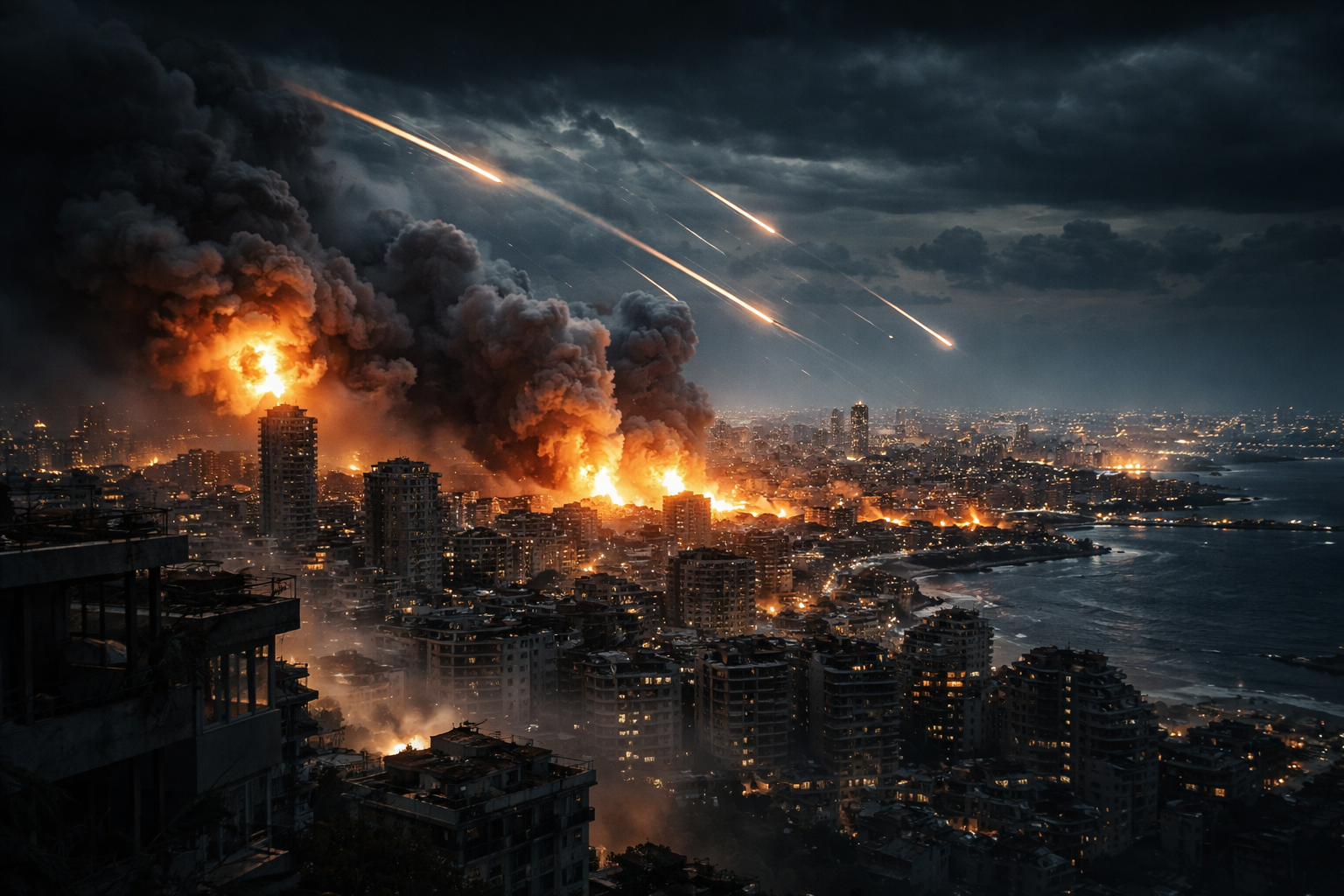
Beirut Bombed: Inside Israel’s Expanding War Strategy
Israel Strikes Beirut: What’s Really Happening—and Why It Could Escalate Fast
Israeli airstrikes have hit Beirut again—part of a rapidly escalating war between Israel and the Iran-backed militant group Hezbollah. The strikes are not isolated. They are tied to a broader regional conflict that now spans Lebanon, Israel, and Iran, with the risk of a much wider war.
The immediate trigger is clear: Hezbollah launched rockets into northern Israel earlier this month, breaking a fragile ceasefire. Israel responded with a sustained military campaign targeting Hezbollah positions across Lebanon—including in Beirut, the country’s capital.
But the deeper story is not just retaliation. These strikes signal a shift in strategy—from border containment to systemic dismantling of Hezbollah’s infrastructure, even inside dense urban areas.
The story turns on whether Israel is trying to deter Hezbollah—or fundamentally reshape southern Lebanon’s security landscape by force.
Key Points
Israeli airstrikes hit Beirut’s southern suburbs in the latest escalation, with multiple missiles striking buildings linked to Hezbollah activity.
The conflict began intensifying on March 2, 2026, after Hezbollah fired rockets into Israel, triggering a large-scale Israeli response.
Israel is now targeting infrastructure, leadership, and logistics networks—not just frontline positions.
Lebanon has displaced over 1 million people, causing widespread damage to civilian infrastructure and services.
Israel is simultaneously expanding ground operations in southern Lebanon to create a “buffer zone.”
The conflict is linked to a broader regional war involving Iran, heightening the risk of further escalation.
Where This Escalation Really Begins
To understand the Beirut strikes, you have to go back to early March.
On March 2, Hezbollah launched rockets into northern Israel—its first major attack since a 2024 ceasefire. This was framed as retaliation linked to the broader Iran-Israel conflict.
Israel’s response was immediate and far larger in scale than previous exchanges. Airstrikes began not just along the southern border but deep inside Lebanon, including Beirut.
This matters because Beirut is not just any city. It is Lebanon’s political and economic center—and striking it signals a deliberate escalation beyond typical border warfare.
Why Beirut Is Being Targeted
Beirut—especially its southern suburbs (often called Dahieh)—is a known stronghold of Hezbollah.
Israel claims these areas house the following:
Command centers
Weapons storage
Financial networks
Senior leadership
Recent strikes have specifically targeted buildings and infrastructure believed to be associated with these networks.
This is a strategic shift.
Instead of only hitting rocket launch sites near the border, Israel is aiming at the entire ecosystem that enables Hezbollah to operate—urban, financial, and political.
How the Conflict Escalated So Quickly
The pace of escalation has been unusually rapid.
Within weeks:
Airstrikes expanded across Lebanon
Ground troops were deployed to the south
Infrastructure like bridges was destroyed to restrict movement
Evacuation orders displaced hundreds of thousands
Israel is also signaling longer-term intent.
Officials have openly discussed creating a “security zone” in southern Lebanon—similar to past buffer zones designed to keep militant groups away from Israeli territory.
That suggests the conflict is not a short-term operation.
The Human and Political Fallout
The consequences inside Lebanon are severe.
Over a million people displaced
Civilian casualties rising, including children
Infrastructure—bridges, hospitals, water systems—damaged or destroyed
This situation is creating internal pressure inside Lebanon.
The government has taken the unusual step of declaring Hezbollah’s military actions illegal, reflecting growing tension between the state and the group.
At the same time, Hezbollah remains powerful—and deeply embedded in parts of Lebanese society.
That creates a dangerous internal dynamic: a country caught between external war and internal fracture.
What Most Coverage Misses
Most reporting frames the situation as a simple cycle: Hezbollah attacks → Israel retaliates.
That’s incomplete.
The real hinge is that Israel is no longer just responding—it is trying to change the rules of the conflict.
Three key shifts matter:
First, geography. Strikes in Beirut show Israel is willing to hit political and urban centers, not just border zones.
Second, infrastructure targeting. Destroying bridges and supply routes suggests a strategy of isolating Hezbollah, not just weakening it.
Third, long-term positioning. The push for a buffer zone indicates Israel may be preparing for a sustained presence or lasting territorial control.
Such a move shift changes the nature of the conflict—from deterrence to restructuring.
Why This Matters Beyond Lebanon
The issue issue is not just a Lebanon-Israel conflict.
It is part of a wider regional war involving Iran.
Iran has already launched missile attacks into Israel
Hezbollah is acting as a key regional proxy
Israel is striking across multiple fronts
This significantly increases the stakes.
A localized conflict risks becoming a multi-front regional war—pulling in additional actors and potentially global powers.
What Happens Next
There are three realistic paths from here.
First, containment. A ceasefire stabilizes the situation, and strikes reduce in intensity.
Second, escalation. Israel expands ground operations and deepens its campaign in Beirut and beyond.
Third, regional spillover. Iran increases direct involvement, triggering a wider war.
The signals to watch are clear:
Expansion of Israeli ground forces
Increased Iranian missile activity
Diplomatic moves by major powers
Each would indicate a different trajectory.
The Strategic Fork in the Road
This conflict is no longer just about rockets and retaliation.
It is about whether Israel can fundamentally weaken Hezbollah without triggering a wider regional war—and whether Lebanon can survive being the battlefield for that attempt.
The outcome will shape not just the Israel-Lebanon border but also the balance of power across the Middle East for years to come.
