

How Modern Wars Crash the Global Economy Instantly
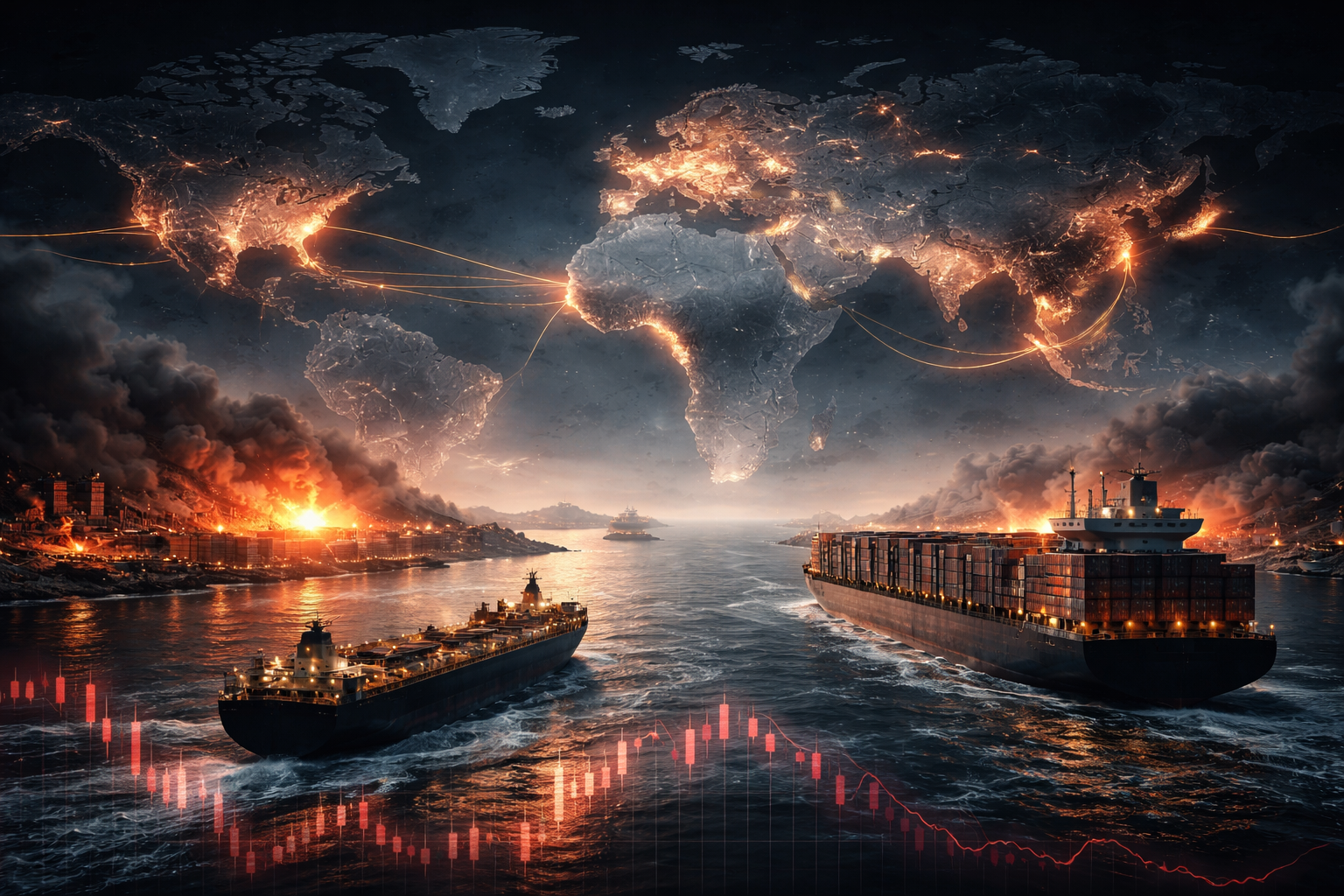
The Hidden Way Modern Wars Trigger Global Economic Panic
Modern Wars Now Hit the Global Economy in Hours, Not Years
Modern wars can hit the global economy fast because the first shock is no longer just bombs on factories or armies crossing borders. It is the immediate repricing of energy, shipping, insurance, finance, and political risk across a tightly wired world economy. When a major conflict threatens a chokepoint like the Strait of Hormuz or the Red Sea routes, markets do not wait for total physical destruction.
They move at once. Oil jumps, freight costs rise, insurers charge more, airlines reroute, firms delay orders, and central banks start worrying about inflation before many households even understand what changed. The result is that a regional war can become a global economic event within hours.
That is the core answer to the reader’s likely question: modern wars crash the global economy instantly because globalization created a system that is efficient in peacetime but fragile under violent disruption. A handful of sea lanes, energy hubs, financial pipes, and digital networks now carry a disproportionate share of world commerce. Once those arteries look unsafe, the economic shock spreads far beyond the battlefield.
The story turns on whether the world can still absorb a war shock before panic in price-setting, shipping, and finance turns a temporary disruption into a broader inflation and growth crisis.
Key Points
Modern wars hit the economy through speed, not just scale. Energy traders, shipowners, insurers, lenders, and governments reprice risk immediately, often before physical shortages fully appear.
The fastest transmission channels are oil, gas, shipping lanes, and freight insurance. In 2024, around 20 million barrels a day moved through the Strait of Hormuz, equal to about one-fifth of global petroleum liquids’ consumption.
Shipping disruptions do not remain confined to shipping. UN Trade and Development has warned that sustained freight shocks can push up global consumer prices, with especially harsh effects on poorer and import-dependent economies.
Inflation is a political accelerant. Central banks treat large energy shocks as dangerous because they can spill into wages, business pricing, bond yields, and consumer expectations.
Modern conflict also works through finance and sanctions. War can fragment payment systems, reroute trade, reduce cross-border investment, and deepen bloc-based economic separation.
Fuel, food, mortgages, transport costs, and delayed investment contribute to the real-world pain. Even when the war stays local, the cost shock does not.
Where the Instant Shock Begins
The old image of wartime economic damage is industrial ruin. That still matters, but modern crises usually begin with exposure rather than destruction. The critical question extends beyond the initial impact. The market's fear of potential hits is what matters. If traders think a shipping lane may close or a major producer may lose export capacity, prices can surge long before inventories run dry. That is why the economic damage often starts in screens, contracts, and routing decisions before it shows up in port queues or empty shelves.
Energy sits at the center of this system because it touches almost everything else. Oil fuels transport, gas powers industry and electricity, and both feed into chemicals and fertilizers. The U.S. Energy Information Administration says the Strait of Hormuz carried about 20 million barrels a day in 2024, roughly one-fifth of global petroleum liquids consumption, and a large share of LNG trade also depends on the same route. That makes any military threat there a direct threat to inflation, trade costs, and business confidence worldwide.
Shipping is the second shock absorber that often fails first. The Red Sea crisis showed how quickly violence can force vessels onto longer routes, strain capacity, raise fuel use, and push up insurance premiums. UNCTAD reported that by mid-2024, tonnage transiting the Suez Canal had fallen sharply and freight rates had surged again, with knock-on effects for consumer prices and growth. The World Bank likewise warned that higher freight and insurance costs were feeding inflationary pressure well beyond the region itself.
The Chain Reaction From Battlefield to Household Budget
Once energy and shipping costs jump, the shock spreads in layers. The first layer is direct: petrol, diesel, jet fuel, and electricity become pricier. The second is industrial: chemicals, steel, food processing, shipping, logistics, and manufacturing face higher input costs. The third is financial: bond yields can rise, rate-cut hopes fade, and investors reassess growth. Then comes the political layer, when governments face pressure to shield households even as higher inflation constrains what central banks can do.
This is why even a short war scare can do economic damage. Businesses do not need certainty to pull back. They only need enough uncertainty to delay hiring, capex, inventories, or expansion. Consumers react too. When fuel spikes and mortgage markets twitch, sentiment weakens quickly. That drop in confidence can become a second shock of its own, especially in already fragile economies.
Food is a good example of how indirect the damage can be. Fertilizer, shipping, and energy all feed agricultural costs. If conflict drives up gas prices or disrupts fertilizer flows, the pressure may not be visible in supermarkets on day one, but it begins almost immediately in farm economics, procurement, and futures expectations. That is one reason commodity shocks linked to war can linger even after the headlines cool.
What Most Coverage Misses
What most coverage misses is that modern war shocks are often driven less by total supply loss than by the sudden collapse of cheap, predictable movement. The global economy is built not just on access to goods but on confidence that they can move on time, at known cost, through insurable routes. Once that confidence breaks, firms pay more to reroute, hedge, hold inventory, or wait. That is where the instant damage comes from.
In other words, the first economic casualty is often efficiency. For decades, supply chains were optimized for speed and cost. War punishes exactly that design. Longer routes tie up ships, absorb container capacity, and create delays even where no missile has landed. UNCTAD noted that rerouting around southern Africa increased distance and fuel burn, while the World Bank highlighted the inflationary effect of those added logistics costs.
The second blind spot is expectations. Central banks and markets have learned from the inflation surge after Russia’s full-scale invasion of Ukraine. That means firms and households may now react faster to energy shocks, raising prices or demanding compensation sooner than before. ECB analysis says large energy shocks can have non-linear inflation effects, which is another way of saying that once the move is big enough, the consequences escalate faster than many models assume.
Who Gains, Who Loses, and Why Power Shifts Fast
Wars that hit chokepoints and commodities do not affect everyone equally. Energy importers usually lose first. Countries with stronger reserves, domestic production, or alternative routes get more room to maneuver. Exporters may experience a temporary surge in revenue, but damage to infrastructure or unsafe shipping can offset this gain. Shipping firms, defense producers, and some commodity traders may benefit in the short term, while households, small manufacturers, airlines, and poorer importing states tend to take the pain.
There is also a quieter power shift. The more wars disrupt trade and payments, the more states and firms try to reduce dependence on rivals. That means more stockpiling, duplication, friend-shoring, strategic reserves, and bloc-based trade. The IMF has noted that war and sanctions are helping reshape trade, portfolio flows, and payment networks along geopolitical lines. That may make the world more resilient in some corridors, but it also makes it less efficient and more expensive.
The Next Test for the Global Economy
The bigger question is not whether modern wars can shock the global economy instantly. They can, and they do. The real question is whether governments, firms, and central banks can stop an initial war shock from hardening into a wider regime of persistently higher costs, weaker growth, and chronic geopolitical fragmentation.
The signposts are concrete. Watch whether oil and gas flows are physically interrupted or merely threatened. Watch whether shipping rerouting becomes prolonged rather than temporary. Watch whether freight and insurance costs feed into broader consumer prices. Watch whether central banks start talking less about patience and more about second-round effects. And watch whether businesses shift from waiting out a shock to redesigning supply chains around a more dangerous world. If that shift takes hold, the economic story is no longer about one war. It is about a new era in which conflict acts like an instant tax on globalization itself.
