

Why Oil Still Controls the World
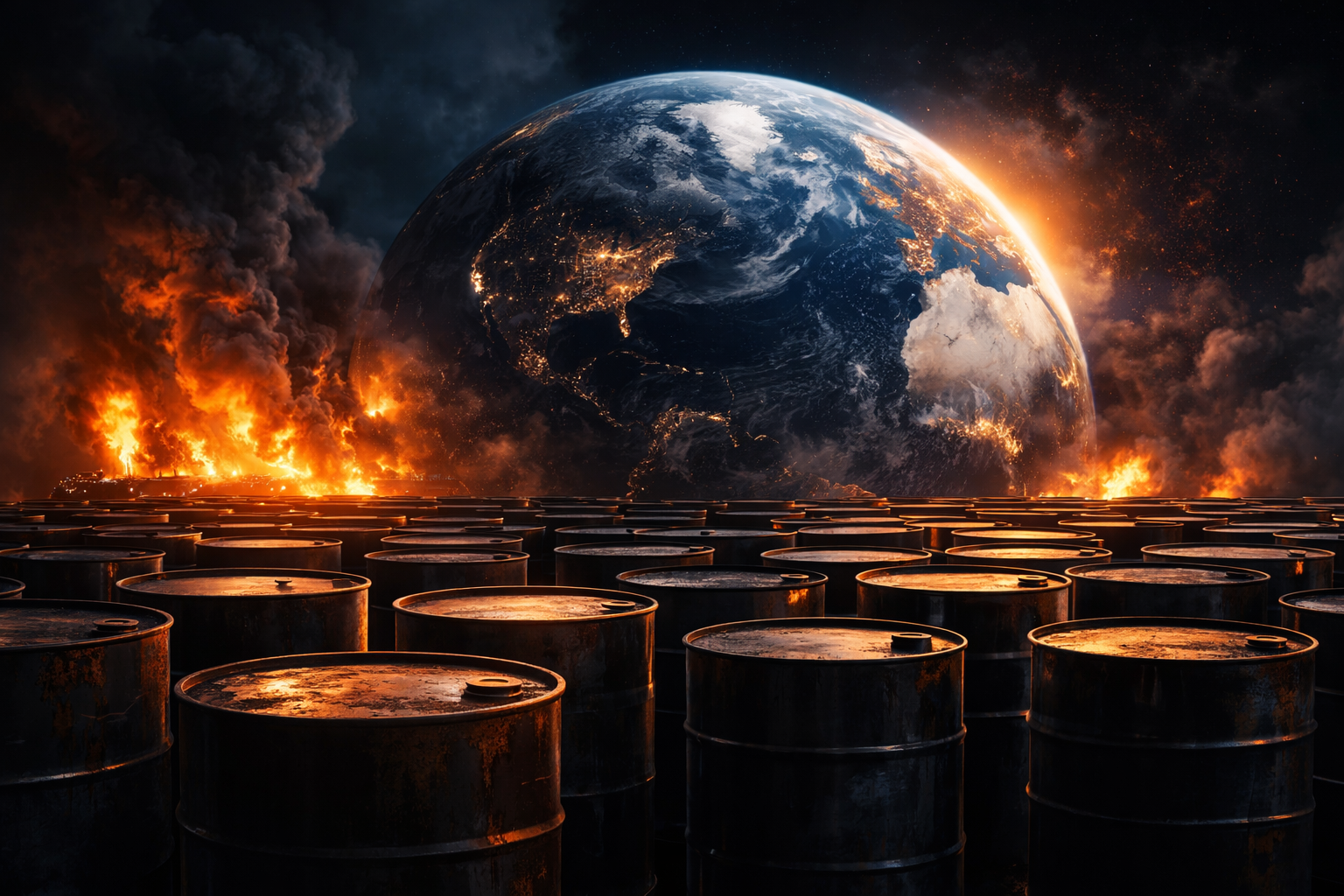
Why Oil Still Controls the World Even After the Energy Transition Began
Oil still controls the world because it is not just a fuel. It is a transport system, a military enabler, a chemical feedstock, a shipping vulnerability, and a pricing signal that moves through the global economy faster than almost any other commodity. Even as electricity grows and clean energy expands, oil remains embedded in the hardest parts of modern life to replace: aviation, shipping, heavy transport, petrochemicals, and the logistics chains that keep food, medicine, industry, and consumer goods moving.
That is why oil still shapes power. It helps determine which states matter, which sea lanes must be defended, which wars trigger market panic, and why inflation can jump when a narrow waterway thousands of miles away comes under threat. The obvious story is that the world still burns a lot of oil. The more important story is that oil remains locked into the systems that make global commerce and state power work.
The story turns on whether the world can replace oil’s system role before it replaces oil’s fuel role.
Key Points
Oil still matters because it powers sectors that are hard to electrify quickly, especially road freight, aviation, shipping, and parts of heavy industry. Road transport alone accounts for roughly 45% of global oil demand, while aviation and petrochemicals continue to add demand.
Oil is also a raw material, not just an energy source. It sits inside plastics, solvents, synthetic materials, and industrial chemicals that run through modern manufacturing and everyday consumer life.
Global oil dependence is amplified by geography. A small number of maritime chokepoints, especially the Strait of Hormuz, can disrupt energy flows and rapidly raise shipping costs, insurance costs, and inflation pressure.
Oil shocks do not stay in the oil market. Persistent price increases can push up headline inflation and drag down global output, which is why central banks, finance ministries, and markets still watch oil so closely.
Military power still depends heavily on liquid fuels. Armed forces can improve efficiency and resilience, but ships, aircraft, armored vehicles, and expeditionary logistics remain deeply tied to fuel supply.
The future is not a simple switch from oil to electricity. The real battle is over how fast economies can unwind oil from transport, industry, chemicals, and geopolitics at the same time.
Where This Story Really Begins
The modern world was built around oil because oil solved several problems at once. It is energy-dense, portable, storable, and globally tradable. Coal powered the first industrial age, but oil powered motion. It let armies move faster, aircraft fly farther, trucks replace rails on short and medium routes, and global trade become more flexible and more centralized around ports, roads, and distribution hubs.
That mattered because the twentieth century was not just an age of industrial growth. It was an age of mobility. Oil became the fuel of movement, and movement became the foundation of military reach, consumer abundance, suburbanization, containerized trade, and just-in-time manufacturing. Once those systems were built around liquid fuels, they created their own lock-in. Replacing a power plant is hard. Replacing an entire transport civilization is harder.
That lock-in still matters. Oil’s share of total energy demand has fallen over time and dropped below 30%, but it remains the single largest source in the global mix. More importantly, it remains concentrated in sectors where substitution is slow, expensive, or technically awkward.
The Sectors That Keep Oil on the Throne
The simplest reason oil still controls the world is that the world still needs liquid fuels for the parts of the economy that cannot easily pause. Trucks move food. Diesel powers farm machinery, construction equipment, backup systems, and freight networks. Jet fuel keeps aviation running. Marine fuels keep shipping lanes alive. Even where electrification is advancing, many of the heaviest and most globally integrated systems still lean on petroleum.
That is why oil’s decline is uneven. Passenger cars may become less oil-intensive over time, especially in places with strong electric vehicle adoption, but that does not remove oil from aviation, shipping, freight, petrochemicals, defense, and industrial logistics. The result is not a clean break. It is a long disentangling.
The chemical side matters too. Oil is not only burned. It is transformed. Petroleum feedstocks help make plastics, polyurethane, solvents, asphalt, synthetic materials, and a wide range of industrial intermediates. That means oil demand is tied not only to transport but also to packaging, construction, health care, electronics, clothing, and manufacturing supply chains. Petrochemicals are expected to account for a large share of future oil demand growth, which is one reason the oil story remains bigger than the car story.
The Geography of Oil Is the Geography of Power
Oil would matter less if it were evenly distributed and easily rerouted. It is neither. Supply is concentrated, shipping routes are narrow, and disruptions travel quickly through prices, freight rates, insurance, and political risk.
That is why oil keeps geopolitics hard-edged. The Strait of Hormuz carries around a quarter of global seaborne oil trade, making a narrow maritime passage a problem for the entire world economy. When a chokepoint like that looks vulnerable, the effect is not limited to the countries nearby. Energy traders, shipping firms, insurers, central banks, manufacturers, and governments all react.
The same logic applies more broadly across maritime trade. More than 80% of world trade volume moves by sea, and key chokepoints such as Suez and Panama have shown how quickly disruption can extend routes, raise costs, and strain supply chains. Oil sits at the center of this because it is both cargo and fuel. It moves through the world’s most fragile arteries while also powering the vessels, trucks, and aircraft that the rest of trade depends on.
Why Oil Still Moves Inflation, Politics, and Fear
Oil still controls the world because it is one of the fastest ways local conflict becomes global economics. A supply disruption, or even the risk of one, can ripple into transport costs, utility bills, food prices, airline fares, factory inputs, and inflation expectations.
That is why governments never treat oil as just another commodity. A persistent 10% increase in oil prices can lift global headline inflation and reduce global output. That makes oil a political force as much as an economic one. Voters feel it at the pump, firms feel it in margins, and central banks feel it in the awkward gap between weak growth and sticky prices.
This is also why strategic stockpiles exist. When disruptions hit, states do not respond as if they are dealing with a normal market fluctuation. They respond as if system stability is at risk, because it is. Emergency reserve releases are not just about crude volumes. They are about buying time for economies whose transport and industrial systems remain oil-exposed.
What Most Coverage Misses
What most coverage misses is that oil’s power now rests less on total energy share alone and more on concentration in critical nodes. Oil can lose share in the overall energy mix and still remain systemically decisive because it dominates the sectors where failure is least tolerable.
That distinction matters. Electricity can grow fast, solar can boom, and passenger vehicles can gradually become less oil-intensive, yet oil can still retain outsized political and economic power if aviation, freight, shipping, petrochemicals, and defense remain hard to substitute. In other words, oil does not need to rule everything to keep ruling the parts that make the rest work.
The second missed point is that oil is not merely about producers versus consumers. It is about routing, refining, logistics, and conversion. Crude in the ground is not the whole game. Refineries, tankers, ports, pipelines, storage, and military protection of sea lanes are part of the same power structure. That is why an economy can be less dependent on imported crude than before and still remain highly exposed to oil shocks.
The Military Dimension Never Really Went Away
Oil also keeps its grip because state power still runs on liquid fuel. Armies may modernize, electrify parts of their fleets, and improve efficiency, but operational reach still depends heavily on fuel logistics. Aircraft, naval fleets, armored formations, and expeditionary supply chains remain tied to petroleum-based energy.
That makes oil a defense issue, not just an economic one. Fuel convoys, tanker access, base resilience, and refueling capacity all shape military capability. Even efforts to reduce operational fuel use are often framed not as climate symbolism but as battlefield advantage: fewer vulnerable convoys, longer endurance, and greater resilience under pressure.
This matters because it links oil directly to deterrence and war planning. A world in which oil matters to military mobility is a world in which energy security remains inseparable from hard power.
The Long Unwinding
Oil will not lose control through one breakthrough or one policy shift. It will lose control only when several systems change together: vehicles, fuels, industrial heat, shipping, aviation, chemical feedstocks, urban design, supply chains, and strategic doctrine.
That is the real fork in the road. One path is a slow transition in which oil demand flattens or falls in some sectors but remains geopolitically decisive because the hardest sectors lag. The other path is a deeper restructuring in which electrification, alternative fuels, material substitution, efficiency, and redesigned logistics reduce oil’s grip not only on energy consumption but also on trade, inflation, and state power.
The signposts are clear enough: faster substitution in aviation and shipping, weaker petrochemical dependence, less chokepoint vulnerability, lower pass-through from oil prices to inflation, and armed forces that need fewer fuel-intensive supply lines. Until those shifts become real at scale, oil will remain more than a commodity. It will remain one of the operating systems of the modern world.
