

Israel–Hezbollah Escalation Signals A Dangerous Shift From Border Conflict To Regional War Risk
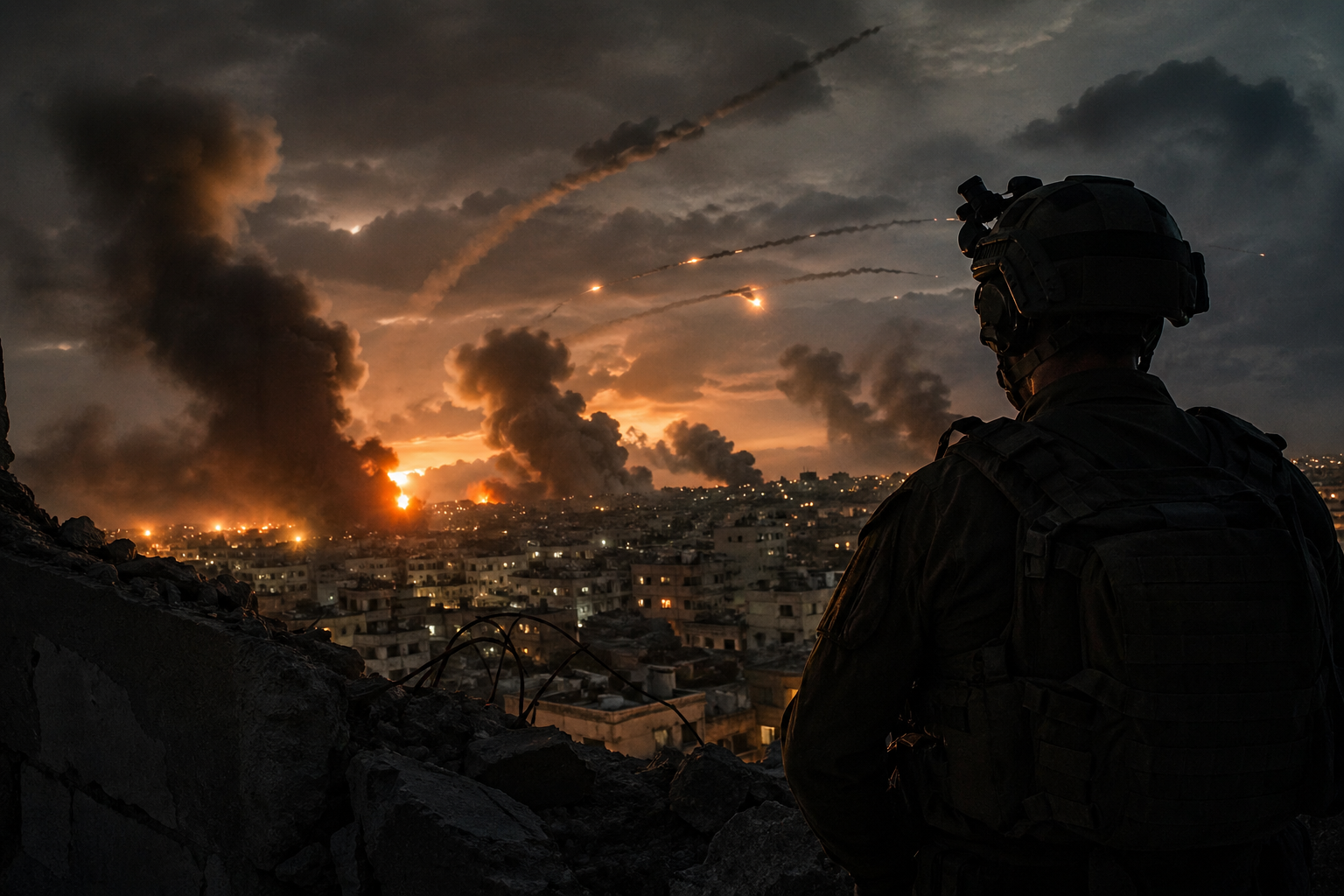
Why The Israel–Lebanon Front Now Threatens A Regional Explosion
The Crisis Behind The Israel–Hezbollah Escalation And Why It Could Spread
The line between a contained border conflict and a full-scale regional war is thinner than it looks. Right now, people test that line daily in southern Lebanon and northern Israel.
What began as a limited front tied to the wider Middle East conflict has evolved into something far more dangerous: sustained strikes, collapsing ceasefire credibility, and a diplomatic track that is visibly failing.
The result is a simple but escalating reality — the conflict is no longer just about Israel and Hezbollah. It is about how easily something much larger could pull the entire region in.
What Is Happening Right Now
Fighting between Israel and Hezbollah has intensified despite a recently brokered ceasefire that was supposed to stabilize the situation.
On the ground, the pattern is clear:
Hezbollah continues drone and rocket attacks on Israeli positions
Israel responds with airstrikes across southern Lebanon and beyond
Civilian displacement is rising
Casualties continue to accumulate
Recent strikes have killed and injured people on both sides, while Israeli forces have issued evacuation orders for multiple villages in southern Lebanon.
This is not a frozen conflict. It is active, sustained, and escalating.
Even more telling: both sides are openly accusing each other of violating the ceasefire—a signal that the agreement itself is losing credibility.
The Ceasefire That Was Never Fully Real
The current truce was fragile from the start.
It was:
Temporary (designed as a short-term pause)
Partial (not all actors formally agreed)
Politically complex (tied to wider Iran-related tensions)
Critically, Hezbollah was not a formal signatory, meaning one of the main actors in the conflict was never fully bound by it.
That single fact undermines the entire structure.
Since the ceasefire began, violations have been frequent, and both sides appear to be preparing for continued confrontation rather than genuine de-escalation.
Why This Matters Now
This conflict is not just another round of border tension.
Several factors make this moment more dangerous than previous escalations:
1. The Conflict Is Already Large-Scale
Since early 2026, the conflict has killed thousands and displaced more than a million people in Lebanon alone.
That scale changes the stakes. This is no longer symbolic pressure—it is a live war environment.
2. The Iran Factor Is Built In
Hezbollah is closely aligned with Iran, and the wider regional conflict already includes tensions involving Israel, the United States, and Iran.
Earlier strikes targeting Iranian leadership triggered renewed attacks from Hezbollah, linking the Lebanon front directly to the broader regional confrontation.
That connection is the core escalation risk.
3. Military Objectives Are Expanding
Israel has signaled intentions beyond simple retaliation, including
Pushing Hezbollah forces north of key geographic lines
Establishing deeper security zones
Sustained targeting of infrastructure
At the same time, Hezbollah continues to demonstrate operational capability, including advanced drone use that challenges Israeli defenses.
This is not a de-escalating battlefield. It is an adaptive one.
Diplomacy Is Failing — And Everyone Knows It
Efforts to stabilize the situation through diplomacy are ongoing—but visibly strained.
There have been:
US-mediated talks between Israel and Lebanon
Attempts to define limited agreements
Proposals for longer-term arrangements
Yet none of these have produced a durable framework.
Hezbollah has rejected direct negotiations outright, framing them as illegitimate.
At the same time, broader diplomatic efforts involving Iran have stalled, removing a key pressure-release mechanism in the region.
The result is a familiar but dangerous pattern:
Talks continue
Fighting continues
Trust collapses
The Risk Of Regional War
The real concern is not the current level of violence.
It is what happens if escalation crosses certain thresholds.
There are three major pathways to a wider regional war:
1. Direct Iran Involvement
If Iran directly engages — beyond proxy support — the conflict would shift immediately from regional tension to regional war.
Given existing hostilities and recent escalations, that risk is no longer theoretical.
2. Multi-Front Expansion
Israel is already operating across multiple fronts in the wider conflict.
If pressure increases simultaneously in Lebanon, Gaza, and elsewhere, the system becomes unstable.
At that point, escalation is no longer controlled — it becomes reactive.
3. Collapse Of State Control In Lebanon
Lebanon is already under extreme strain:
Political fragmentation
Economic crisis
Internal divisions over Hezbollah’s role
Further escalation risks pushing the country into deeper instability or internal conflict, complicating any military or diplomatic resolution.
What Most People Miss
The most overlooked reality is this:
The danger is not a single dramatic escalation event.
It is the accumulation of smaller, continuous escalations.
Each strike, each retaliation, and each failed negotiation does not trigger war on its own.
But together, they erode the barriers that prevent it.
This is how regional wars often begin — not with a single moment, but with a pattern that becomes impossible to reverse.
The Strategic Reality
Neither side appears ready to fully back down.
Israel is pursuing long-term security objectives along its northern border
Hezbollah is maintaining pressure as part of a broader regional alignment
Both sides believe they are acting defensively.
That creates a structural problem:
Two defensive strategies can still produce an offensive war.
Where This Goes Next
In the short term, the most likely outcome is continued controlled escalation:
Ongoing strikes
Limited tactical gains
Diplomatic efforts that struggle to keep pace
But the longer the conflict continues, the harder it becomes to contain.
Because eventually, one of three things happens:
A strike goes too far
A miscalculation triggers a chain reaction
A wider actor steps in directly
At that point, containment ends.
Final Take
This is not yet a full regional war.
But it is no longer safely contained.
The warning signs are already visible:
A failing ceasefire
Active cross-border warfare
Stalled diplomacy
Expanding strategic goals
The Middle East has seen this pattern before.
What makes this moment different is how many layers of conflict now connect at once.
And once conflicts start linking together, they stop behaving predictably.
