

Why UAE Leaving OPEC Could Redraw The Global Energy Map
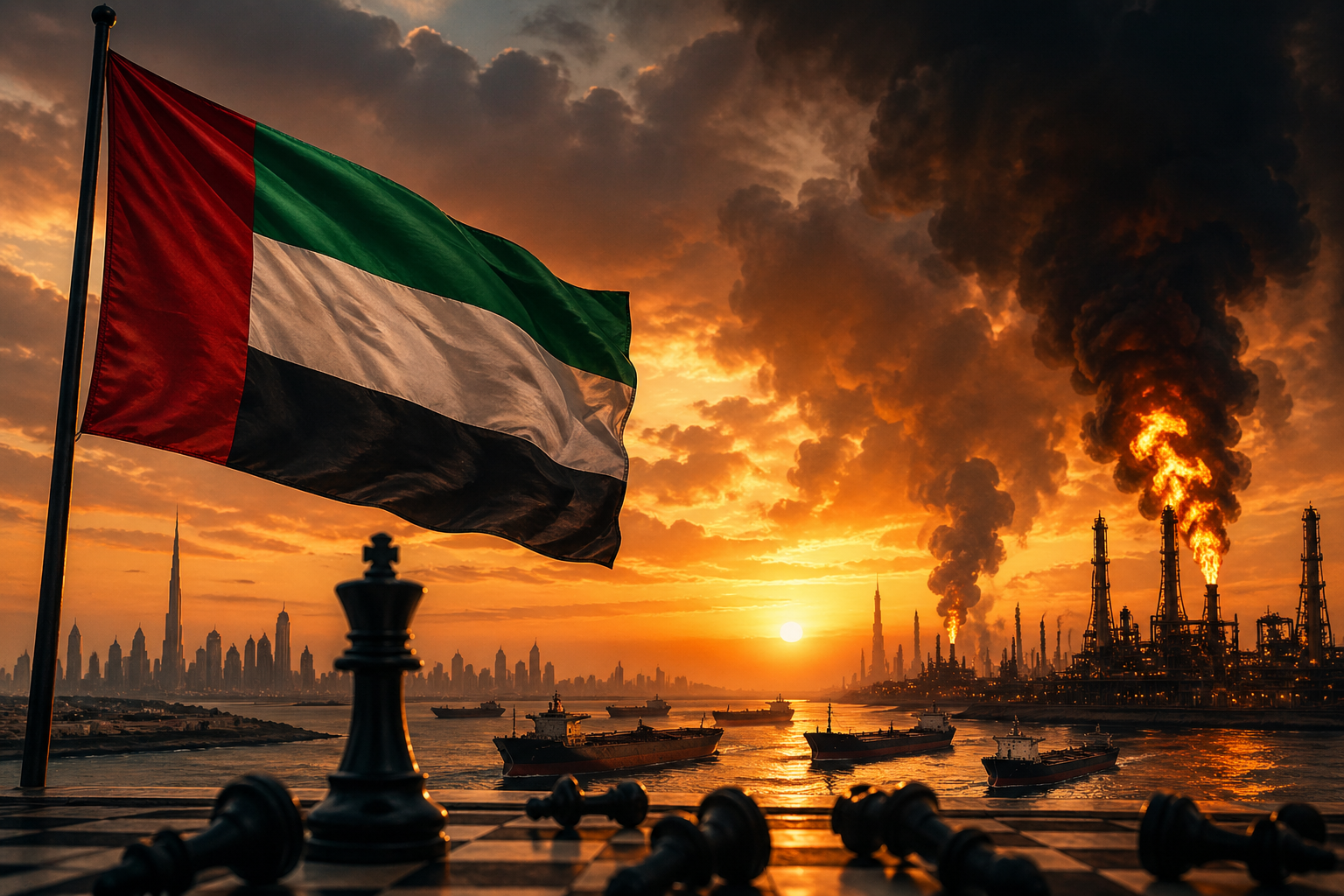
The Iran War Just Broke OPEC Unity — Here’s Why It Matters
The Oil Cartel Just Cracked—What UAE’s Exit Really Means
The global oil system just lost one of its anchors—at the worst possible moment.
The Organization of the Petroleum Exporting Countries has always relied on one thing above all: unity. Even when members disagreed, the illusion of coordination kept markets stable. That illusion is nhas broken.
The United Arab Emirates has confirmed it is leaving OPEC, effective May 1, 2026 — a move driven by strategic independence, regional instability, and frustration during an active war involving Iran.
This is not just a policy shift. It is a structural break in global energy power—happening in the middle of a live geopolitical shock.
What Happened — And Why Now
The UAE’s exit comes during one of the most volatile energy environments in decades.
The Iran war has disrupted the Strait of Hormuz—a narrow maritime corridor through which roughly a fifth of global oil normally flows.
That disruption has already
Pushed oil prices above $100 per barrel
Blocked or slowed millions of barrels per day in shipments
Created extreme uncertainty in global supply chains
At the same time, the UAE — one of OPEC’s most capable producers — has grown increasingly frustrated with the bloc’s constraints.
Inside OPEC, production quotas limit how much oil each country can pump. Outside it, the UAE can move faster, produce more, and act in its interest.
Officially, the decision is “strategic.” Unofficially, it reflects something deeper:
Security concerns during the Iran conflict
Friction with Saudi-led coordination
A desire for flexibility in a rapidly shifting market
The result is simple: the UAE no longer believes OPEC serves its interests.
The Global Impact — A Fracture In Oil Power
OPEC was never just an organization. It was a power structure.
For decades, it helped coordinate supply, stabilize prices, and give oil-producing nations leverage over global markets.
The UAE’s departure weakens that structure in three key ways:
1. Loss Of Control Over Supply
The UAE is one of the largest and lowest-cost producers in the world. Its exit removes a major player from coordinated output agreements.
That means:
Less predictability in supply decisions
Greater volatility in oil prices
Reduced ability for OPEC to stabilise markets
2. Visible Internal Division
OPEC has survived disagreements before, but rarely during an active geopolitical crisis.
This exit signals the following:
Gulf unity is no longer guaranteed
Strategic interests are diverging
Other members could follow
3. Shift Toward Competitive Production
Freed from quotas, the UAE can increase output independently.
Estimates suggest it could eventually add up to 1 million barrels per day to global supply once conditions stabilize.
That creates a new dynamic:
Not coordination — competition.
What Most People Miss
The immediate story is about oil. The deeper story is about control.
For years, global energy operated on a fragile balance:
OPEC managed supply
The West managed demand
Markets assumed both sides would behave predictably
That system is now breaking down.
The UAE’s move reveals something critical:
In a world of war, chokepoints, and shifting alliances, coordinated control becomes less valuable than strategic autonomy.
This is not just about leaving OPEC.
It is about preparing for a future in which:
Supply chains are contested
Energy routes are weaponised
National interests override collective agreements
Impact On The United States
For the U.S., the implications are mixed but strategically significant.
Short-Term
Higher oil prices driven by war disruption
Continued volatility in energy markets
Pressure on inflation
Medium-Term
A weaker OPEC aligns with long-standing U.S. goals
More independent producers reduce cartel power
Potential for increased global supply once conflict eases
The UAE’s exit has even been framed as a geopolitical win for Washington, which has historically criticized OPEC’s price control influence.
Strategic Takeaway
The U.S. benefits from fragmentation — but not from instability.
Currently, it is getting both.
Impact On The United Kingdom
The UK is more exposed than it might seem.
Energy Costs
Oil price spikes feed directly into fuel costs
Higher transport and production costs ripple through the economy
Inflation Pressure
Rising energy prices increase overall inflation
This puts pressure on interest rates and borrowing costs
Already, UK government borrowing costs are approaching levels not seen since the 2008 financial crisis.
Economic Sensitivity
Unlike major producers, the UK is a net energy importer in practical terms.
That means:
Less control over price shocks
Greater exposure to global instability
Higher cost-of-living pressure
The Structural Break — Why This Moment Matters
This event is not just another OPEC disagreement.
This is the first major Gulf producer walking away during an active war that directly threatens global oil flows.
That combination matters.
Because it signals three long-term shifts:
1. The End Of Reliable Cartel Discipline
OPEC’s ability to act as a unified force is now visibly weakened.
2. Energy Becoming More Geopolitical
Oil is no longer just a commodity. It is a strategic asset shaped by conflict, alliances, and security threats.
3. A More Volatile Future
Without coordination, markets become more reactive—and less predictable.
What Happens Next
In the immediate term, the Iran war remains the dominant factor.
Shipping disruption, not production, is the real constraint right now.
But once that stabilizes, the consequences of the UAE’s exit will become clearer:
More independent production decisions
Faster supply increases from non-coordinated players
A potential race for market share
And possibly:
Further exits
A reconfiguration of OPEC
Or the slow decline of its influence
The Bottom Line
The UAE has not just left OPEC.
It has exposed a deeper truth:
The global oil system is no longer held together by cooperation—it is being reshaped by conflict.
What looked like a stable power bloc is now a contested landscape.
And this moment — a war, a chokepoint, and a strategic exit — may mark the beginning of a new energy era defined not by coordination, but by fragmentation.
